The Ultimate Beginner's Home Gym Guide (2026)
Complete beginner's guide to building your first home gym. Equipment, space, budget, safety, and a full 12-week training program. Everything in one place.
GarageGymBuilders is reader-supported. We may earn a commission through links on this page. Learn more.
If you're reading this, you probably just decided to build a home gym. Good decision. Home gyms are cheaper than commercial gyms long-term, more convenient, more private, and more effective because you can train whenever you want. But there's a lot to figure out — equipment, space, budget, safety, programming.
This guide covers everything. Bookmark it. Come back to it as you progress. This is the pillar article that links to every other guide on the site.
Who This Guide Is For
This guide is for:
- Absolute beginners who've never owned a home gym before
- People considering whether a home gym is right for them
- People with a budget between $300 and $3,000 to spend
- Anyone confused by the dozens of equipment categories and brands
This guide is NOT for:
- Elite powerlifters or Olympic lifters (see our powerlifting setup)
- People setting up commercial facilities
- Anyone looking for a single product recommendation (see our best gear)
Table of Contents
- Should You Build a Home Gym?
- How Much Space Do You Need?
- Budget Planning
- The 7 Essential Pieces of Equipment
- Safety Fundamentals
- Flooring and Setup
- A 12-Week Beginner Program
- Common Mistakes to Avoid
- Next Steps
Should You Build a Home Gym?
The Case For
- Long-term cost — A commercial gym membership at $50/month costs $6,000 over 10 years. A complete home gym costs $1,000-2,000 once. You break even in 2-3 years.
- Convenience — No commute, no waiting for equipment, no crowded hours.
- Privacy — No one watches you train. No one judges your lifts. Just you and iron.
- Consistency — People with home gyms train more often than people with commercial memberships. The #1 barrier to training is leaving the house.
- Customization — Your gym, your rules. Play your music, train at 4 AM, don't clean up after yourself.
The Case Against
- Upfront cost — $500-2,000 in the first month, vs. $50/month spread out.
- Space required — You need 80-150 sq ft for a functional home gym.
- Social aspect — No gym buddies, no spotters, no community vibe.
- Limited variety — Commercial gyms have 50+ machines. You'll have 5-10.
- Self-motivation — No classes, no trainers, no other people to keep you going.
The Verdict
For 90% of people training 3+ times per week for 1+ year, a home gym is the better choice. The cost pays off, the convenience wins, and the consistency improves. The exceptions are people who thrive on social energy at commercial gyms or who only train sporadically.
How Much Space Do You Need?
Minimum Viable: 50 Square Feet
A 7' x 7' space fits:
- Adjustable dumbbells in a cradle
- A foldable bench
- A doorway pull-up bar
- Resistance bands
This is an apartment-friendly setup. No barbell training possible, but you can do serious strength work with dumbbells and bodyweight. Read our home gym small spaces guide.
Functional: 80-100 Square Feet
An 8' x 10' space (or similar) fits:
- A compact power rack
- A 7' Olympic barbell
- A full weight plate set
- An adjustable bench
- Some floor space to move
This is the minimum for a real home gym with barbell training. Most garage corners, bedrooms, and basement corners work.
Ideal: 120-200 Square Feet
A 10' x 15' or similar space fits:
- Full power rack with attachments
- Barbell and plate collection
- Adjustable bench
- Adjustable dumbbells OR fixed dumbbell rack
- Cardio equipment (rower or bike)
- Room for flooring
This is the sweet spot for a complete home gym. A single-car garage is typically 240 sq ft — plenty.
Ceiling Height Matters
Measure your ceiling. You need:
- 7' minimum for most power racks
- 8' for pull-ups and overhead press without hitting the ceiling
- 9' for comfortable kipping pull-ups and muscle-ups
Low ceilings eliminate some rack options. Check manufacturer specs before buying.
Budget Planning
$500 Starter Build
What you can buy:
- Adjustable dumbbells ($150-250)
- Foldable bench ($110)
- Resistance bands ($60)
- Jump rope ($15)
- Horse stall mats ($60)
What you get: Serious strength training with dumbbells, bodyweight work, and conditioning. Enough to make real progress for 6-12 months.
See our full home gym under $500 build.
$1,000 Intermediate Build
Add to starter:
- Power rack ($330)
- Olympic barbell + plate set ($340)
- Better bench ($130)
What you get: A complete strength gym with squat, bench, deadlift, and all accessories. This is the sweet spot for most home gym owners.
See our full home gym under $1,000 build.
$2,000 Complete Build
Add to intermediate:
- Adjustable dumbbells ($430)
- More plates ($150)
- Premium barbell ($200)
- Cardio equipment ($250-500)
What you get: Everything a serious home gym needs. You won't outgrow it for years.
See our full home gym under $2,000 build.
Try Our Calculator
Not sure where to start? Use our budget calculator — select your goal, space, and budget, and we'll recommend specific catalog products that fit.
The 7 Essential Pieces of Equipment
1. Power Rack ($200-500)
The centerpiece of any serious home gym. A four-post rack with safety bars lets you squat, bench, and press alone without a spotter. Read our power rack buying guide.
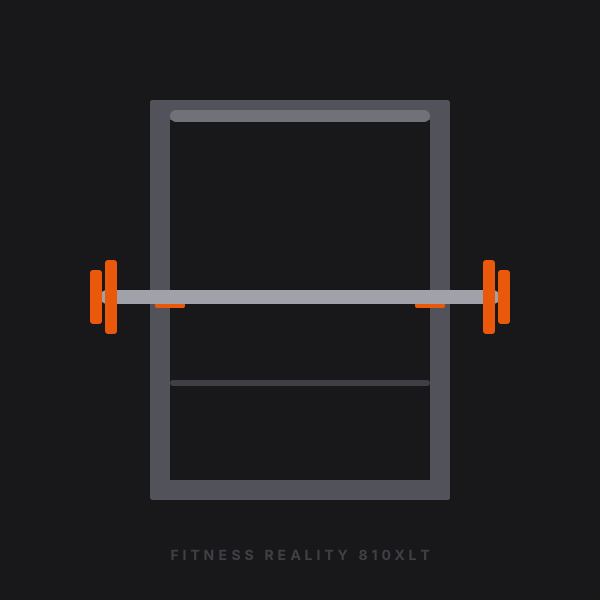
Fitness Reality 810XLT Super Max Power Cage
Capacity
800 lbs
Steel
2x2" 14-Gauge Steel
Footprint
50.5" L x 46.5" W x 83.5" H
Price
$329.99
- 4.5+ star rating on Amazon with 5,000+ reviews
- Excellent value under $350
- 800 lb weight capacity
- Includes multi-grip pull-up bar
- Standard 2x2 hole spacing for attachments
- Optional lat pulldown attachment available
- 14-gauge steel is thinner than premium racks
- Plastic J-cup liners can wear over time
- Not ideal for lifters squatting 600+ lbs
The Fitness Reality 810XLT is our top pick for most budgets. 800 lb capacity, safety bars, multi-grip pull-up bar. Read the full review.
2. Olympic Barbell ($100-250)
The bar you'll use for squat, bench, deadlift, overhead press, and rows. A $150 Amazon bar is fine for years of training. Read our barbell buying guide.
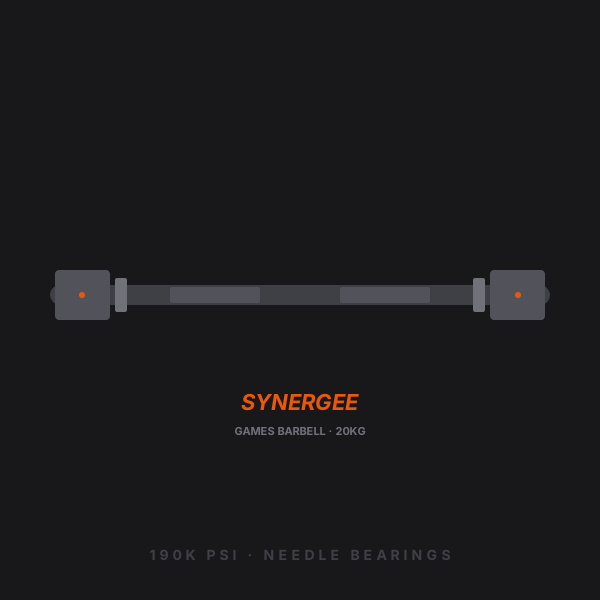
Synergee Games 20kg Olympic Barbell
Capacity
1,000 lbs rated capacity
Steel
Black Phosphate Steel / Needle Bearings
Footprint
28.5mm Shaft, 7ft Olympic Bar
Price
$199.95
- 4.7+ star rating on Amazon
- 1,000 lb capacity at mid-range price
- Needle bearings provide smooth spin for Olympic lifts
- 190K PSI tensile strength
- Dual knurling marks for powerlifting and Olympic lifts
- Best Amazon-available upgrade from budget bars
- Black phosphate finish requires regular oiling
- Not made in the USA
- Knurling is slightly less aggressive than premium bars
3. Weight Plates ($200-500)
The weight you actually lift. Cast iron is cheapest and fine for most users. Skip bumper plates unless you're Olympic lifting. Read our weight plate buying guide.
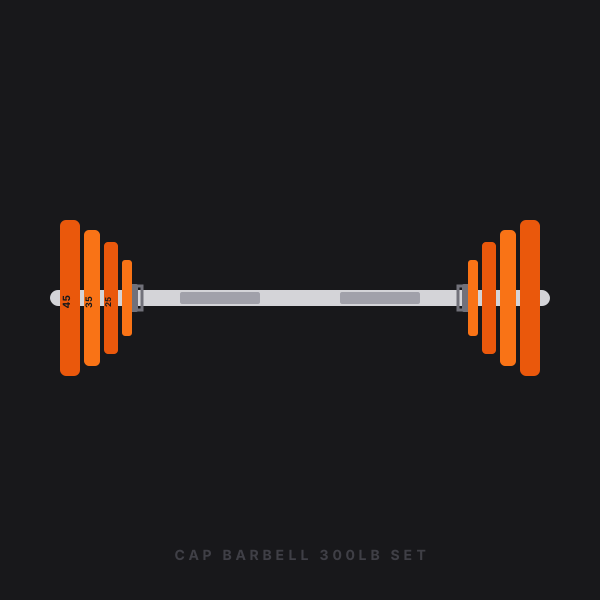
CAP Barbell 300 lb Olympic Weight Set
Capacity
300 lbs total (255 lbs plates + 45 lb bar)
Steel
Cast Iron Plates / Chrome Bar
Footprint
7ft Olympic Bar (28mm shaft)
Price
$339.99
- 4.5+ star rating with 8,000+ reviews
- Complete barbell + plate set in one purchase
- Standard Olympic 2" sleeves fit all racks
- Includes: 2x45, 2x35, 2x25, 2x10, 4x5, 2x2.5 lb plates
- Cast iron plates are durable and accurate
- Best value starter weight set available
- Bar is entry-level (bushing sleeves, mild knurling)
- Plates are not calibrated for competition use
- No bumper plates — not safe to drop on concrete
- Chrome plating on bar chips over time
4. Adjustable Bench ($80-200)
For bench press, incline work, and step-ups. Foldable benches save space. Read our bench buying guide.
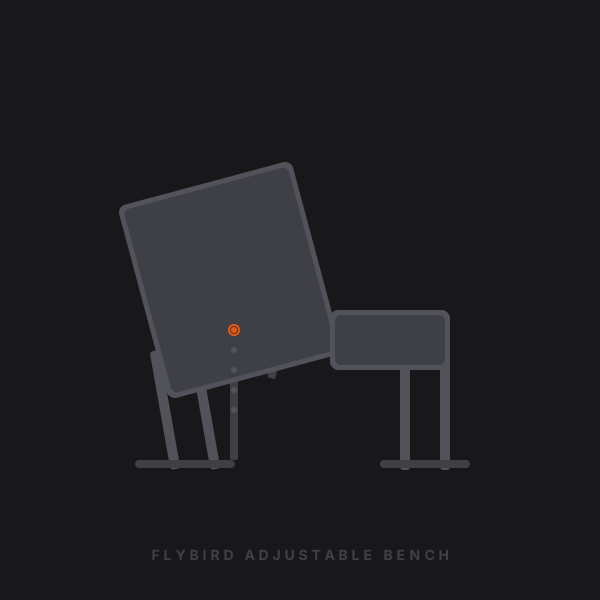
FLYBIRD Adjustable Weight Bench
Capacity
800 lbs (ASTM Certified)
Steel
Commercial-Grade Steel Frame
Footprint
48.4" L x 16.5" W x 17" H (folded)
Price
$109.99
- 4.6+ star rating on Amazon with 25,000+ reviews
- Unbeatable value under $120
- ASTM-certified 800 lb weight capacity
- 8 backrest angles (90° to -30° FID)
- Folds flat for easy storage in small spaces
- Quick 10-minute assembly
- Gap between seat and backrest at steep inclines
- No decline position on some variants
- Pad is narrower (10.2") than premium benches (12")
- Feet can slide on smooth concrete without rubber mats
5. Adjustable Dumbbells ($150-500)
For accessory work, presses, rows, and single-arm training. Bowflex 552 is the universal recommendation. Read our adjustable dumbbell guide.
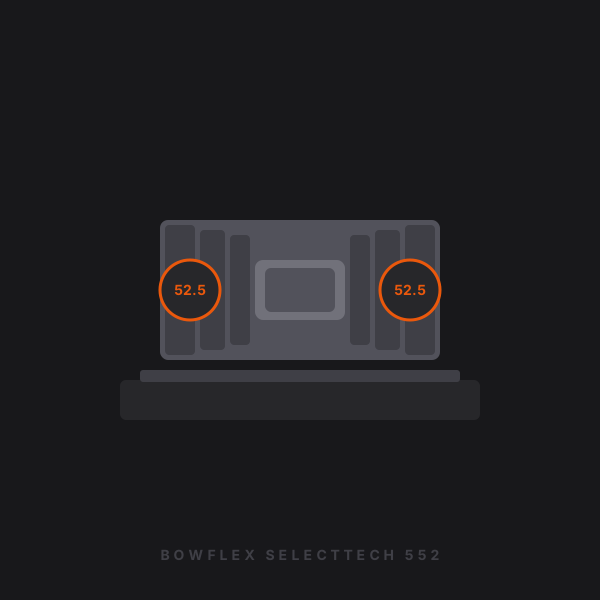
Bowflex SelectTech 552 Adjustable Dumbbells
Capacity
5-52.5 lbs each
Steel
Steel Plates / Nylon Dial Mechanism
Footprint
16.9" L x 8.3" W x 9" H each
Price
$429.00
- 4.7+ star rating on Amazon with 15,000+ reviews
- Replaces 15 sets of dumbbells (5-52.5 lbs)
- Fastest weight change system on the market (2 seconds)
- 2.5 lb increments up to 25 lbs
- Compact cradle storage footprint
- Sold as a pair
- Cannot be dropped — internal mechanism is fragile
- Length at 52.5 lbs feels awkward on some exercises
- Price has increased from original $349 MSRP
- 5 lb increments above 25 lbs
6. Flooring ($50-200)
Protects your floor, reduces noise, and improves traction. Horse stall mats from Tractor Supply are the cheapest option. Read our flooring guide.
7. Pull-Up Bar (Included in rack or $30-150)
For back and arm development. Most power racks have one built into the top. If not, a doorway bar works. Read our pull-up bar guide.
Safety Fundamentals
Rule 1: Always Use Safety Bars
Your power rack has horizontal safety bars (also called pins or spotter arms). Set them just below your working range so that if you fail a rep, the bar rests on them instead of your chest or neck.
Never squat or bench heavy without safety bars set. This is the #1 reason power racks are better than squat stands for solo training.
Rule 2: Anchor Your Rack (If Heavy Loading)
Tall power racks can tip over if you pull on them aggressively (kipping pull-ups, muscle-ups) or if a kid climbs them. Bolt your rack to the concrete or wood subfloor. Read our how to anchor a power rack guide.
Rule 3: Start Light
The most common home gym injury happens in month one, when enthusiasm exceeds technique. Start with the empty bar (45 lbs). Master the movement. Add weight slowly. Your ego will heal faster than your back.
Rule 4: Have a Phone Nearby
If you train alone, keep your phone within reach. If you get pinned under a bar or injured, you need to be able to call for help.
Rule 5: Never Squat Without a Rack
Heavy squats without a rack and safety bars are how people get seriously injured. Don't try to "muscle through" without proper safety equipment. If you can't afford a rack yet, stick to goblet squats, lunges, and split squats.
Read our full garage gym safety guide for more.
Flooring and Setup
Flooring Layers (Under a Power Rack)
From bottom to top:
- Concrete slab — your foundation
- Vapor barrier (optional) — sheet plastic, prevents moisture
- Horse stall mats — 3/4" thick rubber, $55 each from Tractor Supply
- Foam/bumper plates at impact zones — where deadlifts land
This three-layer system protects your floor, reduces noise, and provides traction. Total cost: ~$200 for a full gym.
Lighting
Garage gyms are typically poorly lit. Add:
- 4-6 LED shop lights ($20 each)
- Mounted on the ceiling joists
- Daylight white (5000K) color temperature
- Total cost: $80-150
Read our garage gym lighting guide.
Ventilation
Garage gyms get hot and humid. Options:
- Box fan ($30) — minimum
- Industrial standing fan ($100) — better
- Portable AC ($300-500) — for hot climates
- Mini-split AC ($1,500 installed) — premium
Read our summer cooling guide and ventilation guide.
A 12-Week Beginner Program
This program assumes you have at minimum a power rack, barbell, plates, and bench. If you don't have a barbell yet, substitute goblet squats for back squats and dumbbell presses for bench press.
The Plan
- 3 days per week (Monday, Wednesday, Friday)
- Alternating Workout A and Workout B
- 12 weeks total
- Start with the empty bar on all lifts
- Add 5 lbs every session until you fail twice, then reset 10%
Workout A: Squat Focus
- Back Squat: 3 sets of 5 reps
- Bench Press: 3 sets of 5 reps
- Bent-Over Row: 3 sets of 5 reps
- Plank: 3 sets of 30 seconds
Workout B: Deadlift Focus
- Back Squat: 3 sets of 5 reps
- Overhead Press: 3 sets of 5 reps
- Deadlift: 1 set of 5 reps
- Pull-Ups (or assisted): 3 sets to failure
Week 1 Schedule
- Monday: Workout A
- Wednesday: Workout B
- Friday: Workout A
Week 2 Schedule
- Monday: Workout B
- Wednesday: Workout A
- Friday: Workout B
Alternate this pattern for 12 weeks.
Rest Between Sets
- Compound lifts (squat, deadlift, bench, press): 2-3 minutes
- Accessory lifts (rows, pull-ups, plank): 60-90 seconds
Warm-Up Protocol
Before any working set, do the following with the empty bar:
- 10 reps at the empty bar
- 5 reps at 50% of your working weight
- 3 reps at 75% of your working weight
- 1 rep at 90% of your working weight
- Begin working sets
Common Mistakes to Avoid
Mistake 1: Buying the Cheapest Everything
Cheap doesn't mean bad, but the absolute cheapest options (rusty used racks, no-name barbells, wobbly benches) are false economies. Spend slightly more for verified 4.5+ star Amazon items. See our catalog for our tested picks.
Mistake 2: Skipping the Power Rack
"I'll just use squat stands to save money." No. Squat stands are fine for some lifts but less safe than power racks for solo training. Pay the extra $100 for a full cage with safety bars.
Mistake 3: Buying Before Measuring
Measure your space, doorways, and ceiling height BEFORE buying equipment. Many racks are too tall for 8' ceilings. Many benches are wider than apartment doorways. Measure twice, buy once.
Mistake 4: Cardio Equipment First
New lifters often buy treadmills or ellipticals first. Bad priority. Strength equipment is the foundation — cardio can be walks, runs, jump rope, or a bike trainer. Buy cardio equipment last.
Mistake 5: No Flooring
Bare concrete is hard on your feet and hard on your equipment. Horse stall mats are $55 and transform the experience. Don't skip them.
Mistake 6: Training Alone With Bad Safety Setup
Never bench heavy without safety bars. Never squat without safety bars. If you fail a rep without safeties, you can die. This is not hyperbole.
Mistake 7: Program Hopping
Beginners often jump between programs every few weeks. Don't. Pick a simple 3-day full-body program (like the one above) and run it for at least 12 weeks before changing anything. Consistency beats optimization.
Read our full garage gym mistakes to avoid guide.
Next Steps
You made it to the end of the guide. Here's what to do next:
1. Use the Calculator
Calculate your ideal build based on your goal, space, and budget.
2. Read the Matching Build Guide
- Home Gym Under $500
- Home Gym Under $750
- Home Gym Under $1,000
- Home Gym Under $2,000
- Home Gym Under $3,000
3. Check Specialty Guides for Your Goal
4. Learn the Terminology
Browse the home gym glossary to get familiar with training terms.
5. Read the Programming Guide
Home gym programming guide for long-term planning.
Common Questions
The Bottom Line
Building a home gym is one of the best decisions you can make for your health and finances. Start with the basics, focus on safety, follow a simple program, and add equipment as you progress. Don't wait for the perfect setup — start with what you have and build from there.
Welcome to the home gym community. Now go lift.
— Marcus Reid, Head of Reviews
Related Content
Marcus Reid
Powerlifter and mechanical engineer who has been building and breaking home gym equipment for 15 years.
Read full bioMore in Guides
Bodybuilding Home Gym Setup: Equipment & Training Guide (2026)
How to build the perfect bodybuilding home gym. Equipment priorities, essential machines, and the setup for serious muscle building.
CrossFit Home Gym Setup: Complete Equipment Guide (2026)
How to build a complete CrossFit home gym. Equipment list, budget options, and programming for garage gym CrossFit training.
Garage Gym Summer Cooling: Train Through the Heat (2026)
How to keep your garage gym cool in summer. Fans, AC, ventilation, and timing strategies for hot weather training.