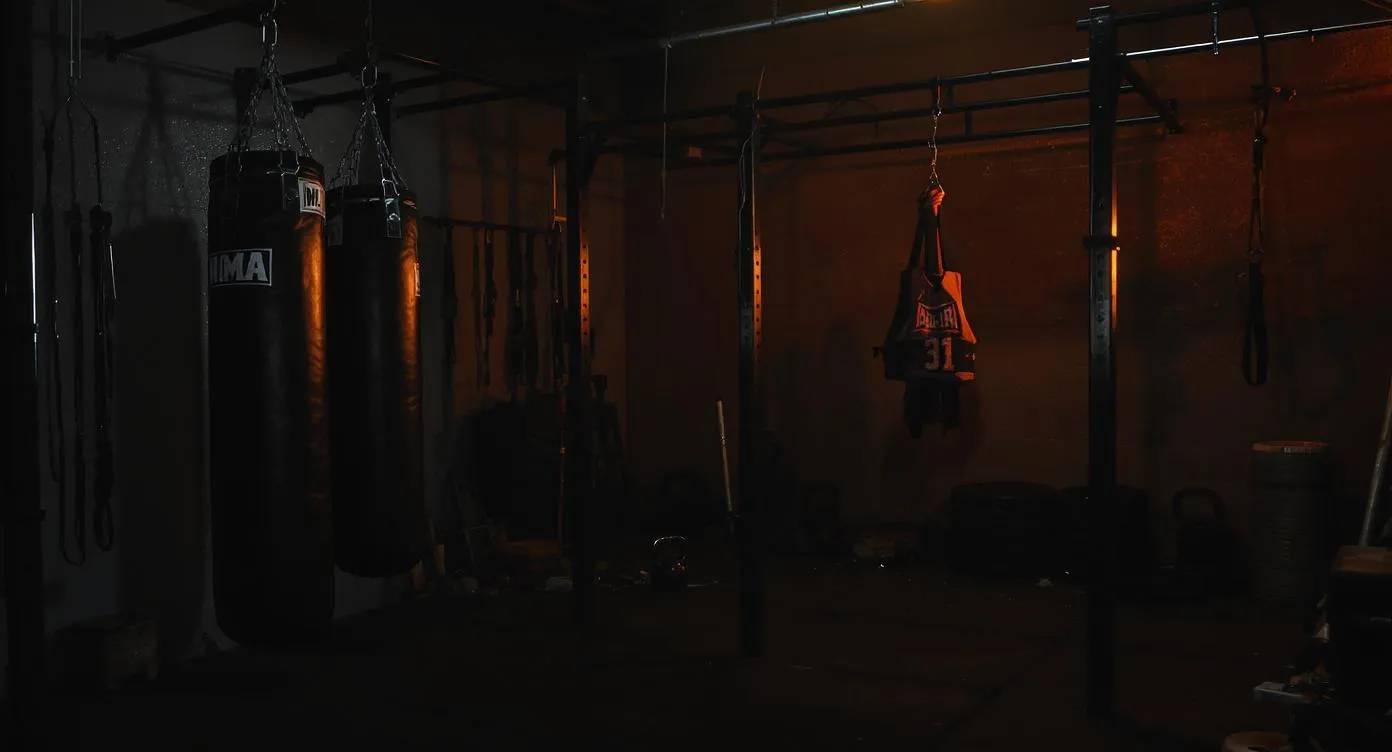
MMA Fighter Home Gym Build: $1,000 Combat Sports Setup (2026)
Complete MMA fighter home gym build for under $1,000. Heavy bag, kettlebells, sandbag, weight vest, jump rope, and strength tools — all Amazon verified.
Building a home gym for MMA is fundamentally different from building one for powerlifting, bodybuilding, or even CrossFit. A combat athlete does not need a $500 power rack or a 300 lb Olympic weight set. What an MMA fighter needs is a training space that develops the five physical pillars of mixed martial arts: explosive power, rotational strength, anaerobic conditioning, grip endurance, and recovery capacity. This $1,000 build delivers all five without a single barbell, bench, or cable machine.
I have trained combat athletes for over a decade and built home gyms for amateur fighters, professional Muay Thai competitors, and BJJ black belts. The equipment list below represents the exact gear I recommend to every fighter who asks me what to buy first. Every product is verified on Amazon, and the total comes in under $1,000 with room to spare.
If you are new to home gym building in general, start with our ultimate beginner's home gym guide for foundational knowledge on space planning, flooring, and budgeting before diving into this combat-specific build.
Why Combat Athletes Need Different Equipment
The typical home gym buyer gravitates toward a power rack, barbell, and bench. That setup is perfect for strength athletes. But MMA fighters operate in a completely different physiological landscape. A five-minute round of mixed martial arts requires repeated explosive efforts — level changes, sprawls, clinch work, ground transitions — interspersed with isometric holds and sustained grappling pressure. Your heart rate bounces between 160 and 195 BPM for the entire round.
No amount of bench pressing prepares you for that. What does prepare you:
- Heavy bag work develops striking power, cardio endurance, and the ability to maintain technique under fatigue
- Kettlebell training builds explosive hip extension (critical for takedowns and strikes), grip strength, and anaerobic capacity
- Sandbag carries and lifts simulate the awkward, shifting resistance of a live opponent
- Weighted calisthenics build the relative strength needed to control another human body
- Jump rope develops the footwork, timing, and coordination that separate technical fighters from brawlers
This build prioritizes those tools in order of importance.
The MMA Fighter's Equipment Hierarchy
Before spending a dollar, understand the priority stack for combat sports equipment:
- Heavy bag — the single most important piece of combat training equipment
- Kettlebells — explosive power, grip strength, and metabolic conditioning
- Sandbag — awkward functional strength that mimics grappling
- Weight vest — amplifies bodyweight conditioning and rucking
- Jump rope — footwork, timing, and aerobic base building
- Slam ball — explosive hip power for takedowns and ground-and-pound
- Pull-up bar — grip and pulling strength essential for clinch work
- Gymnastic rings — advanced bodyweight strength and shoulder stability
- Recovery tools — foam roller, lacrosse ball, and mobility aids
- Hand wraps and gloves — non-negotiable for bag work safety
This hierarchy is not arbitrary. It reflects decades of combat sports training methodology and the specific physical demands of MMA competition.
The Complete MMA Home Gym Build ($925)
1. Heavy Bag — ~$200 (Buy Locally)
The heavy bag is the centerpiece of any combat athlete's home gym. It is the single piece of equipment that no other tool can replace. A good heavy bag lets you practice combinations, work angles, develop power in both hands, and build the specific cardio endurance that only sustained striking can develop.
What to buy: A 70-100 lb hanging heavy bag from Outslayer, Century, Title Boxing, or Ringside. Heavier bags (100+ lbs) are better for Muay Thai fighters who throw knees and kicks. Lighter bags (70 lbs) swing more and force you to work angles and footwork.
Why buy locally: Shipping on heavy bags is brutal — often $50-80 for a 100 lb bag. Check Dick's Sporting Goods, Academy Sports, or local boxing equipment shops. Facebook Marketplace is another excellent source for used bags in good condition. A used Outslayer bag at $120 is a better investment than a new budget bag at $150.
Mounting options: Ceiling mount is ideal if you have exposed joists or a garage with a beam rated for the load. Use a heavy bag mount rated for at least 150 lbs (bag weight plus the force of your strikes). If ceiling mounting is not possible, a freestanding heavy bag stand ($80-120) works but takes more floor space and wobbles more under heavy combinations.
Budget: $200
2. Kettlebell Set — $150

Yes4All Cast Iron Kettlebell 5-80 Lb for Full Body Workout
Capacity
5-80 lbs options
Steel
Solid Cast Iron
Footprint
Varies by weight
Price
$79.97
- 4.7+ star rating on Amazon with 12,000+ reviews
- Solid cast iron construction
- Durable painted finish
- Standard grip width for most users
- Available individually or in sets
- Best budget kettlebell option
- Cheaper competition-grade bells exist
- Paint can chip with heavy use
- Not ideal for kettlebell sport (uniform size)
- Handle texture varies between batches
Price and availability may change
The Yes4All Cast Iron Kettlebell Set includes five bells from 10-30 lbs in 5 lb increments. For MMA training, the 25 lb and 30 lb bells will be your primary conditioning tools, while the lighter bells work for warm-ups, Turkish get-ups, and high-rep metabolic circuits.
Kettlebells are the combat athlete's best friend. The ballistic nature of swings, cleans, and snatches develops the same explosive hip extension pattern used in double-leg takedowns, hip escapes from bottom position, and power punches. A single 30 lb kettlebell swing session of 10 sets of 15 reps will push your heart rate into the same zone as a hard sparring round.
Future upgrade: Add a single 53 lb kettlebell ($50-70) within the first three months. The 53 lb bell is the gold standard for heavy two-hand swings and is heavy enough to build serious posterior chain power. Check our kettlebell selection guide for sizing recommendations based on your bodyweight and experience level.
3. Sandbag — $55

Yes4All Sandbags for Working Out, Adjustable with Handles, 5-200lbs
Capacity
5-200 lbs (sizes vary)
Steel
Heavy-Duty Nylon
Footprint
Multiple handles for grip variety
Price
$42.64
- 4.6+ star rating on Amazon with 6,000+ reviews
- Adjustable weight via removable filler bags
- Multiple handles for carries, cleans, presses
- Heavy-duty 1000D nylon resists tears
- Awkward load builds real-world strength
- Best budget sandbag on Amazon
- Filler material sold separately (sand or pea gravel)
- Filling and sealing takes 30 minutes
- Larger sizes hard to manage solo at first
- Not as polished as premium sandbags (Strongman or Rogue)
Price and availability may change
The Yes4All Heavy Duty Sandbag is one of the most underrated pieces of combat training equipment available. It holds up to 200 lbs of fill material (play sand from Home Depot costs about $5 per 50 lb bag), and the shifting weight inside the bag forces your stabilizer muscles to fire in patterns that fixed-weight equipment simply cannot replicate.
For MMA fighters, sandbag training is the closest you can get to simulating grappling resistance without a live partner. Sandbag bear hug carries replicate the feeling of dragging an opponent across the cage. Sandbag cleans to shoulder mimic the hip pop of a high crotch takedown. Sandbag get-ups train the ability to stand up under load — a skill that wins scrambles.
Recommended fill weight: Start at 80-100 lbs for carries and squats. Use 60-70 lbs for cleans and shouldering. The adjustable inner bags let you change weight in minutes.
4. Weight Vest — $55.99

RUNFast 40lbs Pro Weighted Vest
Capacity
40 lbs
Steel
Heavy-Duty Nylon / Iron Plates
Footprint
One-size adjustable, fits most adults
Price
$51.04
- 4.5+ star rating on Amazon with 9,000+ reviews
- Adjustable from 12 to 40 lbs in 2 lb increments
- Heavy-duty nylon construction lasts years
- Comfortable shoulder padding
- Adjustable straps fit most body sizes
- Doubles as conditioning and ruck training tool
- Iron weight plates are loud against each other
- 40 lb max isn't enough for advanced athletes
- Sizing can run small for very large users
- Sweat absorbs into nylon over time
Price and availability may change
The RUNFast Pro Weighted Vest holds up to 40 lbs and is adjustable in small increments by adding or removing individual weight packs. For MMA fighters, a weight vest transforms basic bodyweight exercises into serious strength-endurance work.
Weighted pull-ups build the pulling strength needed for clinch control and back takes. Weighted push-ups develop the pressing endurance required for ground-and-pound. Weighted ruck walks at 30-40 lbs for 30-45 minutes build the aerobic base that lets you recover between explosive efforts during a fight.
Pro tip: Start with 10-15 lbs for the first two weeks. Adding too much weight too fast leads to joint stress, particularly in the knees and shoulders. Increase by 5 lbs per week until you reach a challenging but sustainable training weight.
5. Speed Jump Rope — $15

WOD Nation Adjustable Speed Jump Rope
Capacity
Adjustable up to 11 ft
Steel
Alloy Steel Cable / Aluminum Handles
Footprint
Pocket-sized
Price
$17.99
- 4.5+ star rating on Amazon with 14,000+ reviews
- Blazing-fast alloy steel speed cable
- Tool-free adjustable length up to 11 ft (wire cutter included)
- Smooth 360° ball-bearing rotation for double-unders
- Lightweight aluminum handles
- Great for boxing, MMA, and CrossFit conditioning
- Steel cable can fray on rough concrete over time
- Not weighted — pure speed rope (no strength training)
- Handles are slim — bigger hands may want grip tape
Price and availability may change
The WOD Nation Speed Jump Rope is a lightweight, adjustable cable rope that has been a staple in boxing and MMA gyms for years. Jump rope is not just cardio — it develops the calf strength, ankle stability, coordination, and rhythmic timing that translate directly to footwork in the ring or cage.
Every world-class boxer and Muay Thai fighter jumps rope. Floyd Mayweather, Vasyl Lomachenko, Saenchai — all of them credit jump rope work as foundational to their footwork. Three rounds of jump rope at the start of every training session is the single cheapest conditioning investment you can make.
Progression: Start with basic bounce step (2 feet together). Progress to alternate foot step, then high knees, then crossovers. Aim to sustain 3-minute rounds with 30-second rest, matching fight round timing.
6. Slam Ball — $23.84

Yes4All Slam Balls, 10-40lb Weighted PVC Sand Filled Workout Ball
Capacity
10-40 lbs options
Steel
Durable PVC / Sand Fill
Footprint
9-13 inch diameter
Price
$35.99
- 4.7+ star rating on Amazon with 15,000+ reviews
- Heavy-duty PVC outer shell resists tears
- Sand fill prevents bouncing
- Available from 10-50 lbs
- Great for HIIT and conditioning
- Best value slam ball on Amazon
- Stitching can wear over years of heavy use
- Surface can crack on rough concrete
- No grip texture (gets slippery with sweat)
Price and availability may change
The Yes4All Slam Ball is a dead-bounce ball designed to be thrown at the ground as hard as possible without bouncing back into your face. Slam balls train explosive hip extension, core engagement, and the aggressive full-body power that fighters need for takedowns, ground-and-pound, and clinch throws.
A 20-30 lb slam ball is ideal for most MMA fighters. The movement pattern — explosive hip hinge, overhead throw, pick up, repeat — mirrors the explosive effort patterns of a fight round. Ten sets of five slams with 30 seconds rest will leave you gasping in the same way a hard scramble exchange does.
Training variety: Beyond basic slams, use the ball for rotational throws against a wall (simulating hooks and overhands), chest passes (jab power development), and overhead walking lunges (core stability under load).
7. Doorway Pull-Up Bar — $30

Iron Gym Pull-Up Bar, Total Upper Body Workout Bar for Doorway
Capacity
300 lbs user weight
Steel
Steel / Foam Grips
Footprint
Fits doorways 24-32 inches wide
Price
$26.00
- 4.5+ star rating on Amazon with 60,000+ reviews
- No screws or installation required
- Multiple grip positions (wide, narrow, neutral)
- Removable for door access
- Best-selling doorway pull-up bar on Amazon
- Cheapest entry into upper body training
- Limited to 300 lb user weight
- Cannot be used for kipping or muscle-ups
- Can damage doorframe trim with heavy use
- Width restricted to standard doorways
Price and availability may change
The Iron Gym Total Upper Body Workout Bar mounts in any standard doorframe without screws or drilling. It supports up to 300 lbs and offers multiple grip positions — wide, narrow, neutral, and chin-up grips. For MMA fighters, pull-up strength is non-negotiable. Every clinch exchange, every back take, every scramble where you need to pull an opponent toward you depends on pulling strength.
Combine this with your weight vest for weighted pull-ups. Five sets of five weighted pull-ups at 20 lbs is one of the most effective upper body strength exercises a combat athlete can do. It builds the lats, rhomboids, biceps, forearms, and grip strength in a single movement.
8. Gymnastic Rings — $49.97

Double Circle Wood Gymnastics Rings with Quick Adjust Numbered Straps
Capacity
880 lbs
Steel
Wood / Nylon Webbing
Footprint
Multi-size wood rings with numbered straps
Price
$49.97
- 4.7+ star rating on Amazon with 8,000+ reviews
- 880 lb weight capacity handles any user
- Solid birch wood (not plastic)
- 15 ft adjustable nylon straps with metal buckles
- Easy on the hands compared to plastic rings
- Best budget gymnastic rings on Amazon
- No carry bag included
- Wood needs occasional sanding to prevent splinters
- Buckles can slip slightly under heavy load (re-adjust)
Price and availability may change
The Double Circle Wood Gymnastics Rings with adjustable straps hang from your pull-up bar, tree branch, or garage ceiling joist. Rings unlock an entire dimension of bodyweight training: ring dips, ring push-ups, ring rows, muscle-ups, L-sits, and skin-the-cats.
For MMA fighters specifically, ring training develops shoulder stability through full ranges of motion — critical for preventing the shoulder injuries that plague grapplers. Ring rows at various angles build the horizontal pulling strength used in collar ties and snap-downs. Ring dips build the pressing strength and tricep endurance needed for frames and posting on the ground.
9. Foam Roller and Lacrosse Ball — $25
Combat athletes accumulate enormous amounts of soft tissue damage from training. Shin splints from checking kicks, forearm tightness from grip work, hip flexor stiffness from guard retention — all of these respond to consistent foam rolling and trigger point work.
A high-density foam roller ($15) handles large muscle groups: quads, IT band, thoracic spine, lats. A lacrosse ball ($5-10) targets deeper trigger points: glutes, pec minor, plantar fascia, rotator cuff muscles. Spend 10-15 minutes on soft tissue work after every training session. This is not optional — it is injury prevention.
10. Hand Wraps and Boxing Gloves — $50
If you do not already own them, a pair of 180-inch hand wraps ($10-15) and 14-16 oz boxing gloves ($35-50) are non-negotiable for heavy bag work. Hitting a heavy bag without wraps and gloves is a fast track to broken metacarpals, sprained wrists, and chronic knuckle damage.
Recommended brands: Sanabul, Venum, Hayabusa, or RDX for budget gloves. Avoid anything under $25 — cheap gloves have inadequate wrist support and thin padding that breaks down quickly. Wraps should be Mexican-style (semi-elastic) for better knuckle protection.
11. Rubber Flooring — $40
Two to three horse stall mats from Tractor Supply Co. at approximately $15-20 each. These 3/4-inch thick rubber mats protect your garage floor, reduce noise, provide cushioning for ground work, and prevent equipment from sliding during explosive movements.
For combat athletes who plan to do any ground drilling or shadow wrestling, rubber flooring is essential. It provides enough cushion for controlled takedown entries, shrimping drills, and ground transitions without the full expense of tatami grappling mats. Check our flooring guide for detailed installation instructions.
Build Cost Summary
That leaves $71 in your $1,000 budget for chalk, athletic tape, a timer app subscription, or the start of a savings fund toward your first upgrade.
Pros and Cons of This Build
- Covers all five physical pillars of MMA: power, strength, conditioning, grip, and recovery
- Every piece of equipment is combat-specific — zero wasted purchases
- Total cost stays well under $1,000 with room for extras
- Compact footprint fits a single-car garage or basement corner
- No barbell or rack means faster setup and less floor space required
- Entire build ships via Amazon except the heavy bag
- Scalable — every item remains useful even after major upgrades
- Cannot replace live sparring, grappling, or coached technical training
- No barbell means limited maximal strength development
- Heavy bag requires ceiling mount or freestanding stand (additional cost possible)
- No grappling mats included — serious grapplers need tatami mats ($300+)
- Kettlebell set maxes at 30 lbs — serious athletes will need heavier bells within months
- No speed bag or double-end bag for precision striking work
Space Requirements and Layout
This build requires surprisingly little space. Here is the minimum footprint:
- Heavy bag zone: 6 x 6 feet of clear space around the bag for circling, angles, and kicks. Ceiling height of at least 8 feet for a hanging bag.
- Conditioning zone: 8 x 4 feet for kettlebell swings, slam ball throws, and sandbag work. This can overlap with the bag zone if you move the bag to the side during conditioning sessions.
- Pull-up station: One standard doorway plus 3 feet of clearance in front for kipping or strict pull-ups with rings attached.
- Recovery area: 6 x 3 feet for foam rolling. Can be anywhere with flat floor space.
Total minimum space: Approximately 10 x 10 feet (100 square feet) if you rotate between zones. A single-car garage (roughly 12 x 20 feet) provides more than enough room with space left for a car or additional storage.
The Combat Athlete's Weekly Training Plan
This six-day training template is designed for amateur MMA fighters training solo at home while supplementing with gym classes 2-3 times per week. Adjust volume based on your competition schedule, weight cut status, and accumulated fatigue.
Monday — Striking Power and Technique
- Jump rope warm-up: 3 rounds x 3 minutes (30-second rest between rounds)
- Shadow boxing: 3 rounds x 3 minutes (focus on combinations, head movement, footwork)
- Heavy bag work: 6 rounds x 3 minutes (alternate between technical rounds and power rounds)
- Slam ball rotational throws: 4 sets x 8 each side
- Cool-down: 10 minutes foam rolling (shoulders, forearms, hips)
Tuesday — Strength and Grappling Power
- Kettlebell Turkish get-ups: 5 x 1 each side (heavy — 25-30 lbs)
- Sandbag bear hug squats: 4 x 10 (80-100 lbs)
- Weighted pull-ups: 5 x 5 (vest at 15-20 lbs)
- Ring dips: 4 x 8-10
- Sandbag shoulder carries: 4 x 40 yards each shoulder
- Kettlebell bottoms-up press: 3 x 8 each arm (grip and shoulder stability)
Wednesday — Active Recovery
- Light jump rope: 10 minutes
- Foam rolling full body: 15 minutes
- Mobility flow: hip circles, thoracic rotations, shoulder dislocates, deep squat holds
- Light shadow boxing: 2 rounds (technical focus, no power)
- Visualization: 10 minutes reviewing techniques, game planning
Thursday — Conditioning and Metabolic Work
- Warm-up: 5 minutes jump rope
- Circuit (5 rounds, fight-pace timing — 5 minutes work, 1 minute rest):
- 10 kettlebell swings (30 lbs)
- 5 slam ball slams (20-30 lbs)
- 10 weighted push-ups (vest at 15 lbs)
- 5 sandbag cleans to shoulder
- 10 burpees
- Cool-down: 10 minutes foam rolling and static stretching
Friday — Striking Volume and Endurance
- Jump rope: 3 rounds x 3 minutes
- Heavy bag work: 8 rounds x 3 minutes (high volume, moderate power — focus on sustaining output)
- Shadow boxing with weight vest (10 lbs): 3 rounds x 3 minutes
- Kettlebell snatch test: 5 minutes continuous alternating snatches (20-25 lbs)
- Ring rows: 3 x 15 (slow and controlled for shoulder health)
- Foam rolling: 10 minutes
Saturday — Long Session (Fight Simulation)
- Full warm-up: jump rope, shadow boxing, mobility (15 minutes)
- Fight simulation circuit (simulate a 3-round fight):
- Round 1 (5 min): Heavy bag striking at 70% intensity
- Rest 1 min
- Round 2 (5 min): Kettlebell and sandbag grappling simulation (cleans, carries, get-ups)
- Rest 1 min
- Round 3 (5 min): All-out mixed — bag work, burpees, slam balls, sprawls
- Strength finisher: Weighted pull-ups 3 x 5, ring dips 3 x 8
- Extended recovery: 20 minutes foam rolling, stretching, cold shower if available
Sunday — Complete Rest
No training. Sleep 8-9 hours. Eat at maintenance calories or above. Hydrate aggressively. This day is when adaptation happens.
Fight-Specific Programming Notes
Periodization for Amateur Fighters
If you have a fight booked, shift your training emphasis across an 8-week camp:
- Weeks 1-4 (Base Phase): Prioritize strength work (heavy kettlebells, sandbag, weighted pull-ups) and aerobic base (longer jump rope sessions, ruck walks with vest). Keep bag work technical — 70% intensity maximum.
- Weeks 5-7 (Intensity Phase): Shift to high-intensity conditioning circuits and fight-pace bag work. Reduce strength volume by 30%. Add more rounds to bag work sessions. Practice finishing combinations.
- Week 8 (Taper): Cut volume by 50%. Keep intensity high but sessions short. Focus on technique, visualization, and weight management. No new exercises or PR attempts.
Round Timing Protocol
Train with a round timer app (free options: Boxing Timer, Round Timer). Set rounds to match your competition format:
- Amateur MMA: 3 rounds x 3 minutes, 1-minute rest
- Professional MMA: 3 rounds x 5 minutes, 1-minute rest (title fights: 5 rounds)
- Muay Thai: 5 rounds x 3 minutes, 2-minute rest
- Boxing: 3-minute rounds with 1-minute rest
Every striking and conditioning session should use round timing. Training without a timer teaches your body to work at a self-selected pace — which is always slower than fight pace.
Heart Rate Zones for Combat Athletes
If you wear a heart rate monitor during training (highly recommended), target these zones:
- Technical bag work: 130-150 BPM (zone 2-3) — sustainable for many rounds
- Power bag work: 150-170 BPM (zone 3-4) — harder rounds with combinations
- Conditioning circuits: 170-190 BPM (zone 4-5) — fight-pace simulation
- Recovery sessions: Below 130 BPM — active recovery only
Equipment Maintenance for Combat Gear
Combat training equipment takes more abuse than standard gym equipment. Protect your investment:
- Heavy bag: Wipe down with a damp cloth after every session to remove sweat and grime. Check hanging hardware monthly for wear. Replace chains or straps showing signs of rust or fraying. If the bag develops a hard spot, it needs restuffing.
- Kettlebells: Cast iron will develop surface rust in humid garages. Wipe with a lightly oiled rag (3-in-1 oil or WD-40) monthly. Store off concrete floors on rubber mats.
- Sandbag: Check seams and zippers every month. Sand leaking from inner bags will chew through stitching over time. Double-bag the inner filler bags with duct tape reinforcement at stress points.
- Boxing gloves: Air dry after every session — never store wet gloves in a gym bag. Use cedar shoe inserts or newspaper to absorb moisture. Wipe interior with antibacterial spray weekly.
- Gymnastic rings: Inspect straps and buckles monthly. Wood rings should be lightly sanded and oiled with linseed oil every 3-6 months to prevent splintering.
- Rubber flooring: Sweep weekly. Mop monthly with a mild detergent solution. Horse stall mats will off-gas a rubber smell for the first 2-4 weeks — ventilate your training space during this period. See our ventilation guide for airflow solutions.
Upgrade Path: Taking Your MMA Gym to the Next Level
Once you have trained consistently with this base build for 3-6 months, here are the recommended upgrades in priority order:
Tier 1 Upgrades ($200-400)
- 53 lb kettlebell ($60-70): The heavy swing bell. Essential for serious posterior chain development.
- Grappling/tatami mats ($200-300): If you have a training partner, puzzle-piece tatami mats unlock drilling takedowns, guard passes, and submissions at home.
- Speed bag with platform ($80-120): Develops hand speed, timing, and shoulder endurance. Mounted speed bags are superior to freestanding units.
Tier 2 Upgrades ($400-800)
- Double-end bag ($40-60): Develops accuracy, timing, and counter-punching skills that a heavy bag cannot teach.
- Battle ropes ($50-80): Brutal grip and conditioning tool that complements kettlebell work.
- Resistance bands ($30-50): For shadow boxing with resistance, pull-apart shoulder prehab, and assisted stretching.
- Adjustable dumbbells ($200-430): For accessory work — lateral raises, rear delt flyes, hammer curls — that round out combat-specific training.
Tier 3 Upgrades ($800+)
- Power rack and barbell ($530+): For fighters who want to add heavy squats and deadlifts. See our crossfit home gym build for rack and barbell recommendations.
- Cardio machine (rower or assault bike, $300-900): A Concept2 rower or assault bike provides measurable, repeatable conditioning work. The rower in particular develops the pulling endurance that grapplers need.
Why No Power Rack or Barbell in This Build?
This is the most common question I receive about combat athlete home gyms. The answer is simple: for a $1,000 budget, combat-specific tools deliver more training value per dollar than a barbell and rack.
A power rack ($330) and Olympic barbell ($200) would consume over half the budget and leave you with a squat-bench-deadlift setup. That builds maximal strength, which matters — but not as much as power, conditioning, and sport-specific movement patterns for a fighter operating at the amateur level.
Kettlebell cleans and presses at 30-53 lbs build more than enough pressing strength for striking. Sandbag squats and carries develop functional leg strength with a core stability demand that barbell squats cannot match. Weighted pull-ups build all the pulling strength a fighter needs.
If you want both worlds, budget $2,000+ and add a rack and barbell on top of this combat-specific base. Never sacrifice combat tools to fund a barbell setup.
Common Questions
Can I really train MMA at home for under $1,000?
Do I need a power rack for MMA training?
What is the single most important piece of equipment for MMA training?
How much space do I need for an MMA home gym?
Can I learn MMA techniques from YouTube?
How much heavy bag work should I do per week?
Can I do MMA training in an apartment?
What should I buy after completing this build?
Additional Resources
- NSCA Home Gym Design Principles
- CPSC Home Gym Equipment Safety Guide
- ACE Strength Training Fundamentals
The Bottom Line
An MMA fighter does not need a $5,000 commercial gym replica. This $929 build — heavy bag, kettlebells, sandbag, weight vest, jump rope, slam ball, pull-up bar, gymnastic rings, and recovery tools — covers everything a combat athlete needs for serious solo training. The equipment is purpose-selected for the physical demands of mixed martial arts: explosive power, rotational strength, anaerobic conditioning, grip endurance, and recovery capacity.
Combine this home gym with coached technical training at a real MMA gym 2-3 times per week and you have a complete fighter development system. The home gym handles your conditioning, strength, and solo striking work. The gym handles sparring, grappling, and technical refinement. That combination has produced more competitive amateur fighters than any amount of expensive equipment alone.
Start with the heavy bag and kettlebells. Add pieces as your budget allows. Train consistently, recover deliberately, and let the equipment serve your development as a fighter — not the other way around.
Derek Walsh
Strongman competitor and former commercial gym equipment salesman. Knows what survives heavy daily use.
Read full bioMore in Budget Builds
Women's Home Gym Build: Complete Equipment Guide (2026)
Build the perfect home gym for women. Glute-focused equipment, strength training essentials, and space-efficient picks for every budget.
Olympic Weightlifting Home Gym Build (2026)
Build a home gym for Olympic weightlifting. Platform specs, bar selection, bumper plates, and everything you need to snatch and clean at home.
The Best Home Gym Build for Seniors (2026)
Build a safe, effective home gym for seniors. Joint-friendly equipment picks, fall-prevention features, and age-appropriate training programs.