Bodybuilding
Hypertrophy training, isolation work, and variety for muscle growth.
Bodybuilding at Home: Yes, It Actually Works
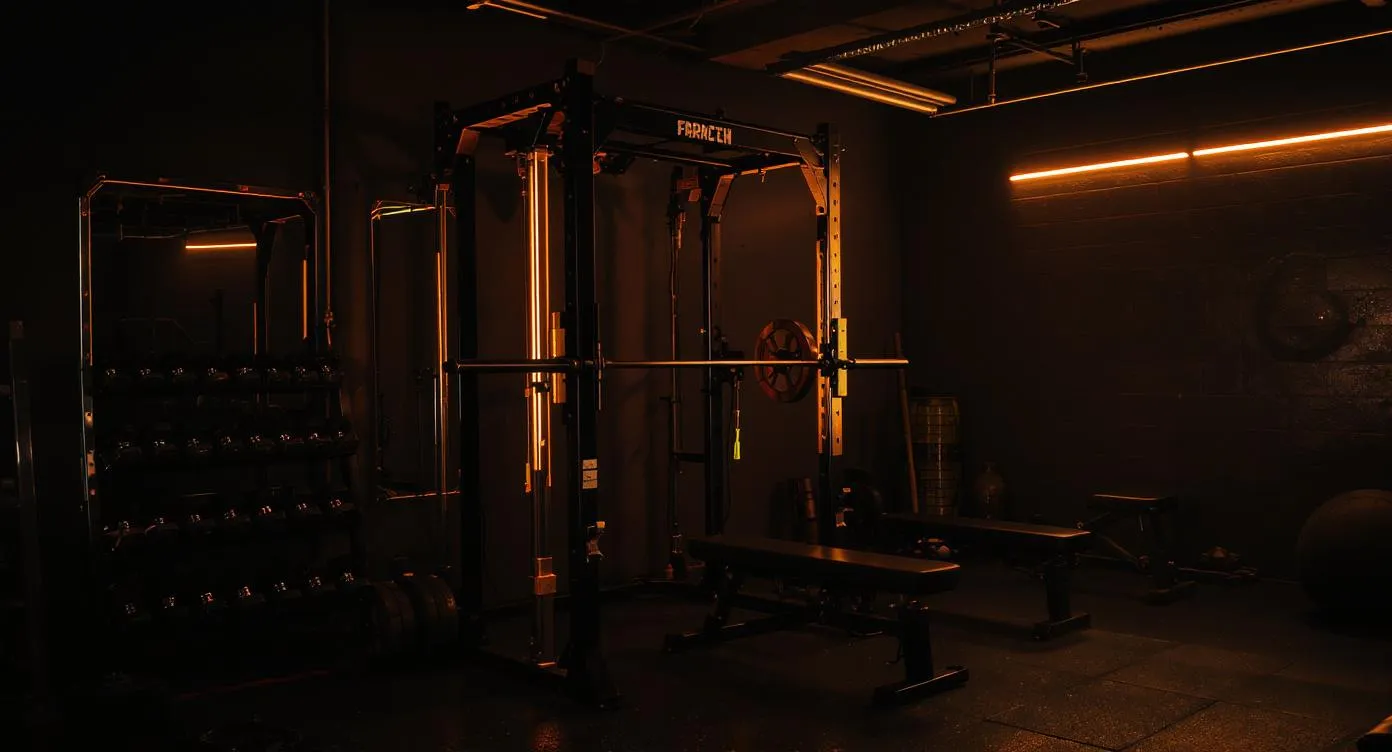
The myth that you need a commercial gym to build a great physique is exactly that — a myth. Some of the best-built guys in history trained out of basements, garages, and converted bedrooms. The equipment hasn't gotten significantly better in 50 years; what matters is consistent progressive overload, sufficient volume, and adequate protein.
A bodybuilder's home gym priorities differ from a powerlifter's. Powerlifters care about three lifts. Bodybuilders care about every muscle from every angle, which means variety, isolation, and high volume tools.

PowerBlock Elite USA 90 EXP Adjustable Dumbbells
Capacity
5-90 lbs each (with expansions)
Steel
Steel Plates / Urethane Coating
Footprint
12" L x 6" W x 9" H each
Price
$869.00
- 4.8+ star rating on Amazon with 2,000+ reviews
- Expandable from 50 lbs to 90 lbs per dumbbell
- Rated for drops from lifting height (unlike Bowflex)
- 2.5 lb increments for precise progression
- More compact than Bowflex at top weights
- USA-made with lifetime warranty
- Expensive compared to 52.5 lb alternatives
- Wider cage can feel awkward on curls
- Pin selection is slower than Bowflex dial
- Requires expansion kits to reach 90 lbs
Price and availability may change

FLYBIRD WB2 Weight Bench, Utility Adjustable Weight Bench
Capacity
800 lbs (ASTM Certified)
Steel
Commercial-Grade Steel Frame
Footprint
48.4" L x 16.5" W x 17" H (folded)
Price
$109.99
- 4.6+ star rating on Amazon with 25,000+ reviews
- Unbeatable value under $120
- ASTM-certified 800 lb weight capacity
- 8 backrest angles (90° to -30° FID)
- Folds flat for easy storage in small spaces
- Quick 10-minute assembly
- Gap between seat and backrest at steep inclines
- No decline position on some variants
- Pad is narrower (10.2") than premium benches (12")
- Feet can slide on smooth concrete without rubber mats
Price and availability may change
What You Actually Need
The bodybuilder's equipment hierarchy:
- Adjustable dumbbells — the most important purchase. One pair replaces 15 sets of fixed dumbbells in a compact footprint. Bowflex SelectTech 552 covers 5-52.5 lbs, PowerBlock Elite 90 covers 5-90 lbs.
- Power rack with cable system — the cable crossover system is the difference between "dumbbell gym" and "real bodybuilding gym." Cables provide constant tension throughout the entire range of motion, which dumbbells and barbells can't match.
- Adjustable bench (incline/decline) — for chest work at every angle.
- Pull-up bar with multiple grips — for back development.
- Dip belt — once you can do 10+ bodyweight dips, you need to add weight. Same for pull-ups.
- Hyperextension bench — the most underused tool in fitness for glute/hamstring/lower back development.
- Ab wheel — the cheapest, most effective core tool ever invented.
For the complete tested-and-priced bodybuilder build, see our bodybuilder home gym build ($1,500 total).
Programming for Hypertrophy
Bodybuilding programming is fundamentally different from strength training:
- Volume matters more than intensity. Total weekly sets per muscle group is the primary driver. 10-20 sets per muscle per week is the hypertrophy sweet spot.
- Reps in the 6-20 range work for hypertrophy. Lower reps (6-8) bias strength, higher reps (12-20) bias work capacity. Pick the range that matches the exercise.
- RPE 7-9 (1-3 reps in reserve) is the target. True failure isn't necessary on every set and increases recovery cost.
- Proximity to failure on the last set matters most. The last set in any sequence drives most of the hypertrophy. Push it.
- Progressive overload via weight, reps, or sets. You don't need to add weight every session — just one variable progressing counts.
A simple proven split: Push (chest/shoulders/triceps), Pull (back/biceps), Legs. Run it 6 days per week with one rest day, or 4 days per week (PPL + a fourth weak-point day). The full programming breakdown is in our home gym programming guide.
The Cable System Is the Secret
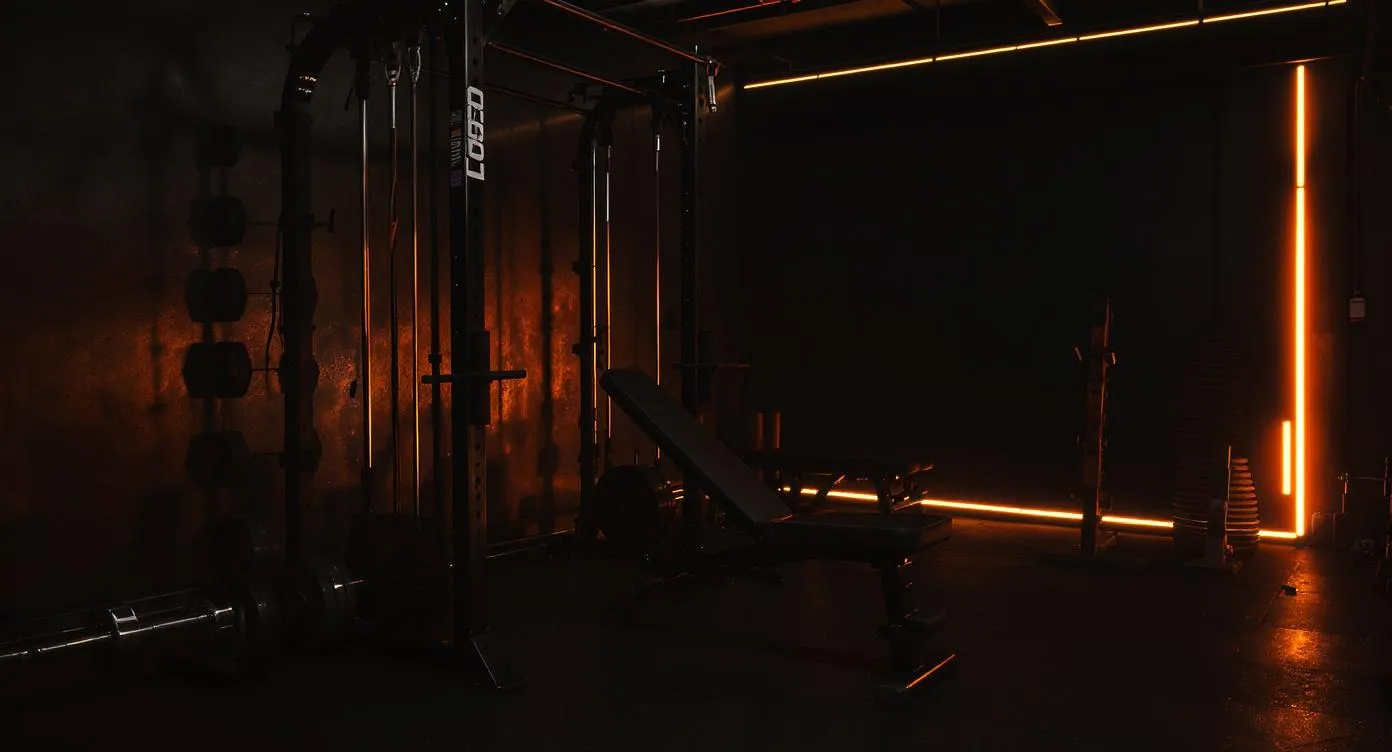
If you only upgrade one thing for bodybuilding, upgrade to a power rack with a built-in cable crossover system (like the Sportsroyals Power Cage). Cables let you do:
- Lat pulldowns (no separate machine needed)
- Cable rows (every back angle)
- Tricep pushdowns (the king of tricep exercises)
- Cable bicep curls (constant tension)
- Cable lateral raises (better than dumbbells for delts)
- Face pulls (postural correction + rear delts)
- Cable flyes (chest with constant tension)
- Cable crunches (loaded core work)
Without cables, your home gym is missing about 40% of bodybuilding's most effective exercises. With cables, you can run any commercial-gym hypertrophy program at home without modification.
Mind-Muscle Connection: Why It Matters for Hypertrophy
Powerlifters move weight from point A to point B. Bodybuilders make the target muscle do the work. This distinction — the mind-muscle connection — is supported by research and matters more than most lifters realize.
A 2016 study in the European Journal of Sport Science found that internal focus ("squeeze the chest") produced significantly greater muscle activation than external focus ("push the bar up") during bench press at moderate loads. The effect was largest in isolation exercises (curls, lateral raises, flyes) and smaller in heavy compound movements.
Practical application for home gym bodybuilders:
- On isolation exercises (curls, lateral raises, flyes, kickbacks): Focus entirely on the target muscle. Slow the tempo to 2-3 seconds per phase. Feel the stretch and contraction on every rep.
- On compound exercises (squat, bench, row): Use a hybrid focus. Think about the target muscle during the concentric (lifting) phase, and the movement pattern during the eccentric (lowering) phase.
- On heavy compound exercises (deadlift, squat above 80% 1RM): Forget the mind-muscle connection. Focus on moving the weight efficiently. At high loads, the research shows no benefit from internal focus, and attempting it can reduce force output.
This is why bodybuilding training looks different from powerlifting training even when using the same equipment. The intent behind each rep matters.
Home Gym Bodybuilding vs Commercial Gym: What You're Missing (and What You're Not)
What a home gym gives you that a commercial gym can't:
- Unlimited time on every piece of equipment — no "working in" during your giant set
- Complete control over music, temperature, and atmosphere
- Zero commute time — that's an extra hour per day for training or recovery
- Consistent setup — your bench height, rack position, and cable settings are always the same
What you might miss (and how to compensate):
- Leg press and hack squat — substitute with front squats, goblet squats, and high-bar close-stance squats. Bulgarian split squats with dumbbells are arguably more effective for quad development than a leg press.
- Pec deck and chest fly machine — cable flyes from a power rack cable system replicate the movement pattern with constant tension. Dumbbell flyes on an adjustable bench are the second option.
- Lat pulldown with different handles — invest in a multi-grip lat bar attachment ($30-50) for your cable system. V-handle, wide bar, and close-grip handle attachments dramatically expand your pulling exercise selection.
- Preacher curl bench — use the incline bench with your arm draped over the edge. Or invest in a standalone preacher curl bench ($80-120) if bicep isolation is a priority.
Volume, Recovery, and the Long Game
Bodybuilding is a 5-year game, not a 5-month game. The lifters with the best physiques didn't grind harder than everyone else — they trained consistently for longer. Three principles to internalize:
- You don't need to be sore to grow. DOMS is a poor indicator of training quality. You need stimulus + recovery, not destruction.
- Sleep and protein matter more than the workout. Sleep 7-9 hours and eat 0.8-1g protein per lb of bodyweight. Without these, your training is wasted.
- Track everything. Log every workout. The single biggest difference between people who progress and people who don't is whether they're tracking their numbers.
Common Questions
Can I really build muscle without machines?
Are adjustable dumbbells enough or do I need a fixed set?
How important is the cable system for bodybuilding?
Do I need a leg press for legs?
How often should I train each muscle?
What's the biggest mistake home bodybuilders make?
Guides & How-Tos(2)
Bodybuilding Home Gym Setup: Equipment & Training Guide (2026)
How to build the perfect bodybuilding home gym. Equipment priorities, essential machines, and the setup for serious muscle building.
How to Choose Adjustable Dumbbells: Complete Buyer's Guide (2026)
Everything you need to know before buying adjustable dumbbells. Weight range, change mechanism, drop safety, and our recommendations for every lifter.
Product Reviews(10)
CAP Barbell Hex Dumbbells Review: The Indestructible Budget Choice
Hands-on review of the CAP Barbell Cast Iron Hex Dumbbells. Cheapest fixed dumbbells on Amazon — but are they good enough for serious training?
DMoose Dip Belt Review: 350 lbs of Weighted Pull-Ups for $40
Hands-on review of the DMoose Dip Belt. Best budget dip belt on Amazon — but does it hold up to heavy loading?

Sportsroyals Power Cage Review: 1,600 lb Capacity for $550?
Our hands-on review of the Sportsroyals Power Cage with Cable Crossover. Is this the best value home gym rack on Amazon?
Valor Fitness Wall Mount Cable Machine Review: Best Wall-Mount Cable Machine?
30-day hands-on review of the Valor Fitness Wall Mount Cable Machine wall-mounted cable station. Is a $329.98 cable machine worth it for home gyms? We tested every exercise.
Bowflex SelectTech 552 Review: Still Worth It in 2026?
A brutally honest review of the Bowflex SelectTech 552 adjustable dumbbells after 12 months of heavy use.
Sportsroyals Power Tower Review: Best Power Tower Under $200?
We trained on the Sportsroyals Power Tower for 4 months — pull-ups, dips, leg raises, and weighted calisthenics. Full breakdown of stability, weight capacity, build quality, and how it compares to budget alternatives.

PowerBlock Elite 90 Review: Are These Worth $870?
We tested the PowerBlock Elite 90 EXP adjustable dumbbells for 4 months. Are they worth the premium price over Bowflex 552s?
Yes4All 5-Tier A-Frame Dumbbell Rack Review: Worth the Money?
Hands-on review of the Yes4All 5-Tier A-Frame Dumbbell Rack. Is $39.99 worth it for your home gym?
Perfect Fitness Ab Carver Pro Review (2026)
Hands-on review of the Perfect Fitness Ab Carver Pro Wheel. Best ab wheel on Amazon with carbon steel spring assistance and wide stable design.
Marcy Hyperextension Roman Chair Review: Roman Chair on a Budget
Hands-on review of the Marcy Hyperextension Roman Chair. Best Roman chair under $150 for back, glute, and core training.
Best Gear Roundups(10)
Bowflex 552 vs PowerBlock 90: Which Adjustable Dumbbells Should You Buy?
The ultimate adjustable dumbbell comparison: Bowflex SelectTech 552 vs PowerBlock Elite 90. We tested both — here's which one wins for your home gym.
CAP Hex Dumbbells vs Bowflex 552: Fixed or Adjustable?
Fixed cast iron dumbbells vs adjustable. CAP Barbell Hex vs Bowflex SelectTech 552 — which is the smarter buy for your home gym?
Is the PowerBlock Elite 90 Worth $869? (Honest Verdict)
The PowerBlock Elite 90 costs nearly $900. We tested them head-to-head against cheaper options to find out if the premium price is justified.
Is the Bowflex SelectTech 552 Worth It in 2026?
We've tested the Bowflex SelectTech 552 for over 6 months. Here's our honest take on whether these adjustable dumbbells are worth $429 for your home gym.
Mikolo F4 vs Sportsroyals Power Cage: Which Amazon Rack Wins?
Head-to-head comparison of the two best budget power cages on Amazon: Mikolo F4 vs Sportsroyals. We tested both for 6 months — here's which one wins and why.
ULTRA FUEGO Power Cage vs Sportsroyals Power Cage (2026)
ULTRA FUEGO Power Cage ($389.99) vs Sportsroyals Power Cage ($309.98) — is the $160 upgrade worth it? We tested both racks to find out.
Best Cable Machines for Home Gyms in 2026
We tested wall-mounted pulleys, functional trainers, and cable crossovers for home gyms. Here are the 5 best cable machines ranked by value, space efficiency, and build quality.
The Best Dip Belts for Weighted Pull-Ups & Dips (2026)
We tested the best dip belts for weighted pull-ups, dips, and belt squats. Our top picks for budget, mid-range, and premium.
DMoose vs Spud Inc Dip Belt: Which Is Worth the Price?
DMoose Dip Belt vs Spud Inc Deluxe — budget vs premium dip belt comparison for weighted pull-ups, dips, and belt squats.
The 5 Best Adjustable Dumbbells for Home Gyms (2026)
We tested every major adjustable dumbbell on Amazon. Here are the best options for garage gym training at every budget.