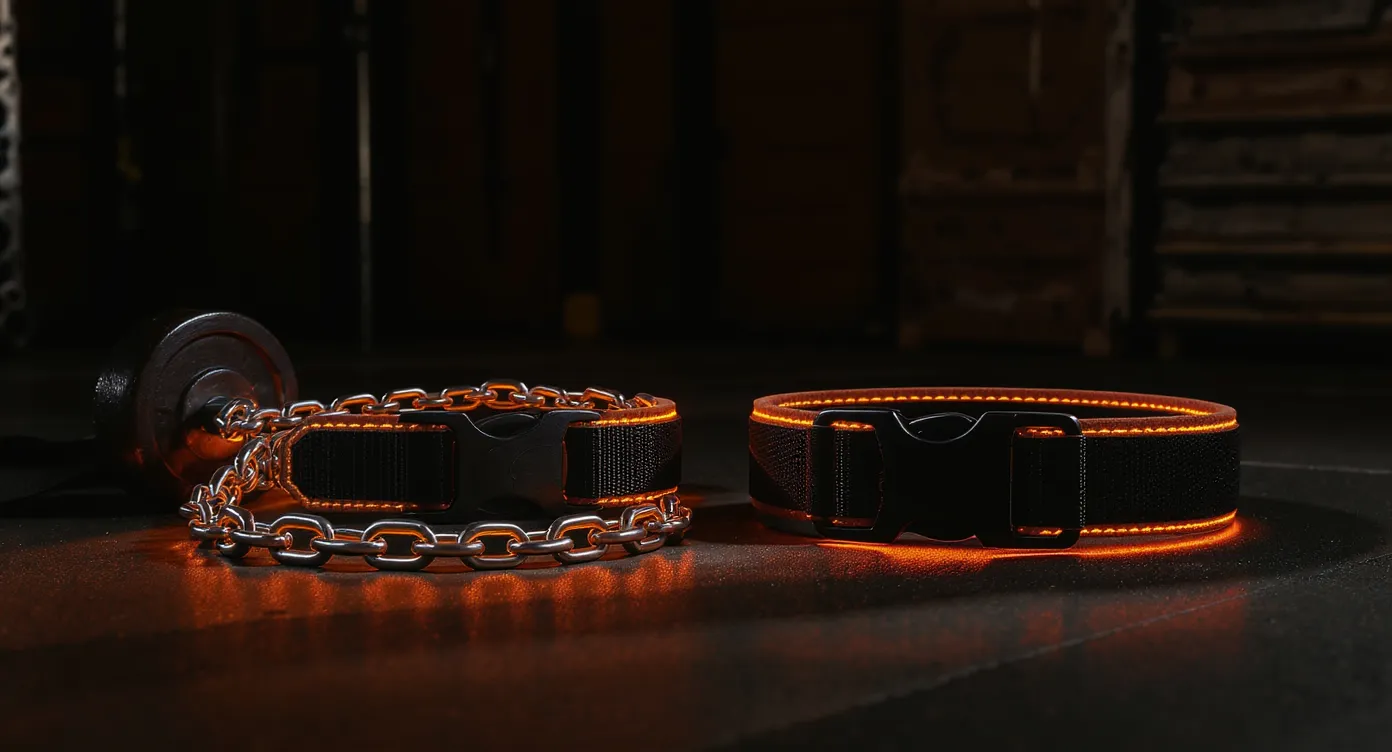
DMoose vs Spud Inc Dip Belt: Which Is Worth the Price?
DMoose Dip Belt vs Spud Inc Deluxe — budget vs premium dip belt comparison for weighted pull-ups, dips, and belt squats.
Once bodyweight pull-ups and dips stop challenging you, adding external load is the single fastest way to keep progressing. A quality dip belt turns two basic exercises into lifelong strength builders. The market has consolidated around two clear winners at opposite price points: the DMoose Dip Belt at roughly $50 and the Spud Inc Deluxe Dip Belt at around $85. One ships from Amazon Prime tomorrow; the other comes straight from a Tennessee workshop with a cult following among competitive powerlifters.
After months of testing both under real garage-gym conditions — loading plates for weighted chin-ups, heavy dips, and makeshift belt squats — this comparison covers every angle that actually matters: comfort under serious load, long-term durability, connection design, versatility, and overall value for your home gym dollar.
The Quick Answer
Buy the DMoose if: You load under 200 lbs, you want fast Amazon Prime delivery, you are new to weighted calisthenics, or you need the cheapest legitimate option available today.
Buy the Spud Inc if: You load over 250 lbs, you perform regular belt squats, you want a lifetime piece of equipment made in the USA, or chain-style belts irritate your inner thighs.
Head-to-Head Specifications
Design Philosophy: Chain vs Strap
The fundamental difference between these two belts is not padding or price — it is the connection system. Understanding this distinction explains why each belt excels in different scenarios.
DMoose: Traditional Chain Design
The DMoose uses a steel chain that threads through a D-ring on either side of the neoprene pad. A carabiner clips through a chain link at your chosen length, forming a loop from which the weight hangs. This is the classic dip belt design dating back decades.
Chain systems offer easy adjustability. You clip the carabiner into a different link to shorten or lengthen the drop. They also make loading Olympic plates trivially simple — you slide a plate onto the chain and go. For standard weighted pull-ups and dips with one to four plates, the chain system is fast, intuitive, and reliable.
The downsides emerge under heavy loads or during movements where the chain contacts your inner thighs. Metal links can pinch skin, feel uncomfortably cold in a winter garage, and create pressure points against bone. If your garage gym drops below 40 degrees Fahrenheit in January, that first rep of chain-loaded dips will remind you.
Spud Inc: Strap Design
Spud Inc took a fundamentally different approach. Their Deluxe belt uses a heavy-duty nylon strap instead of a chain. The strap feeds through a D-ring system and connects to the load. There is zero metal contacting your body during the movement.
The strap distributes force across a wider surface area, eliminates pinch points entirely, and remains comfortable against bare skin regardless of temperature. For belt squats — where the load passes directly between your inner thighs during every rep — this is a transformative advantage. The strap flexes with your anatomy rather than fighting it.
The trade-off is slightly slower plate loading (you thread the strap through the plate hole rather than simply sliding it on) and fewer incremental length adjustments compared to chain links. In practice, once you set your preferred strap length, you rarely change it.
Padding and Comfort Under Load
Light Loads (Under 90 lbs Added)
At these loads — typical for someone doing weighted pull-ups with one 45-lb plate or weighted dips with a 25-lb plate — both belts feel comfortable. The DMoose's neoprene conforms to your hips nicely. The Spud Inc's wider nylon pad sits flat and secure. Neither causes discomfort. At this level, padding quality is essentially irrelevant to your purchasing decision.
Moderate Loads (90-200 lbs Added)
Here the Spud Inc starts to pull ahead. With 135 lbs hanging from your hips, pressure concentration matters. The DMoose's approximately 4-inch neoprene pad compresses under load and starts to feel narrower. It remains usable — many lifters train at this range with chain belts for years without complaint — but you notice the force distribution.
The Spud Inc's 5+ inch nylon pad stays firm and flat. Nylon does not compress the way neoprene does, so the effective load-bearing surface stays wider. The difference is subtle but cumulative over a training session with multiple heavy sets.
Heavy Loads (200+ lbs Added)
Above 200 lbs added, the DMoose becomes noticeably uncomfortable for most users. The neoprene padding has fully compressed, the chain digs into your thighs, and the belt tends to shift position between reps. It is usable but unpleasant.
The Spud Inc remains manageable well past 300 lbs. Competitive powerlifters regularly load 400+ lbs for belt squats using this exact belt. The wide nylon pad and strap system were specifically engineered for these loads.
DMoose Dip Belt: Pros and Cons
- Excellent value at the $50 price point for most home gym owners
- Amazon Prime shipping means you can start loading dips by tomorrow
- Steel chain makes plate changes fast and length adjustment simple
- Handles up to 350 lbs which exceeds what 95% of lifters will ever need
- Neoprene padding is comfortable enough for standard weighted calisthenics
- Neoprene pad compresses under heavy use and loses shape over 3-5 years
- Chain links can pinch inner thigh skin especially during belt squats
- Cold chain in winter garage gyms is genuinely unpleasant on bare skin
- 350-lb rating leaves limited margin for advanced powerlifters loading 200+ lbs
- Limited warranty means replacement cost if the chain or D-ring fails
Spud Inc Deluxe Dip Belt: Pros and Cons
- 600+ lb capacity handles any realistic load with massive safety margin
- Nylon strap eliminates all chain pinching and cold-metal discomfort
- 5-inch wide padding stays supportive even past 300 lbs added
- Made in USA with a lifetime warranty — genuinely buy-it-for-life quality
- Superior design for belt squats where the connection passes between legs
- $85 price point is 70% more expensive than the DMoose
- Only available direct from Spud Inc website with 1-2 week shipping times
- Strap threading for plate changes is slightly slower than chain clip system
- Overkill capacity and durability if you never load past 135 lbs
- Cannot easily micro-adjust connection length like clicking chain links
Belt Squat Performance
Belt squats deserve their own section because the movement exposes the biggest functional gap between these two belts. During a belt squat, you stand on elevated platforms (boxes, plates, or a dedicated station) with the weight hanging from your hips between your legs. As you squat, the load passes directly past your inner thighs repeatedly.
With the DMoose's chain, this means metal links rubbing against your adductors on every rep. Even with compression shorts, the chain finds skin. At heavier loads, it becomes a limiting factor — not your legs, not your cardio, but the discomfort of chain against inner thigh.
The Spud Inc's nylon strap passes between your legs like a wide, flat band. No pinching, no rubbing, no cold metal. If belt squats are a regular part of your programming — and they should be if you want to build quad strength without spinal loading — the Spud Inc is worth the premium on this feature alone.
For more ideas on training without spinal compression, check our powerlifting home gym setup guide which covers belt squat station options in detail.
Durability and Lifespan
DMoose: 5-7 Year Realistic Lifespan
The DMoose is well-constructed for its price. The steel chain will not fail under rated loads. The carabiner is solid. The failure point is the neoprene padding and the stitching at the D-ring attachment points. After 3-5 years of regular heavy use (3-4 sessions per week with 100+ lbs), the neoprene compresses permanently, the stitching at stress points begins to fray, and the belt loses its structural integrity.
For a $50 piece of equipment, 5-7 years of service represents excellent value. But it is not a forever purchase.
Spud Inc: 15-25 Year Realistic Lifespan
The Spud Inc is built the way gym equipment was built before planned obsolescence. The nylon webbing is the same material used in tow straps and climbing gear. The stitching is industrial bar-tack. The D-rings are thick steel with no weak points.
You can find 10-year-old Spud Inc belts on the used market that look barely worn. The nylon does not compress, stretch, or degrade the way neoprene does. With the lifetime warranty backing it up, this is genuinely a single-purchase-for-life piece of equipment.
Cost-Per-Year Analysis
When you factor in realistic lifespans, the math shifts:
- DMoose: $40 divided by 6 years average = $6.67 per year
- Spud Inc: $85 divided by 20 years average = $4.25 per year
The Spud Inc costs less per year of ownership despite the higher upfront price. However, this only matters if you value the belt for its full lifespan. If you sell your home gym in 3 years or switch to a different training style, the DMoose's lower upfront cost wins.
Availability and Shipping
This is where the DMoose has an undeniable practical advantage. You can order it right now on Amazon with Prime delivery and have it in your garage by tomorrow or the next day. No waiting, no planning ahead, no wondering when it ships.
The Spud Inc ships direct from their facility in Seneca, South Carolina. Expect 1-2 weeks for delivery. They occasionally sell out of popular items. There is no Amazon listing and no rush shipping option.
If you need a dip belt this week — maybe you are programming weighted chin-ups starting Monday — the DMoose is the only realistic option. The Spud Inc requires you to plan ahead.
Who Should Buy the DMoose

DMoose Fitness Dip Belt with 36-Inch Steel Chain
Capacity
350 lbs added load
Steel
Neoprene Padding / Stainless Steel Chain / Coated D-Ring
Footprint
36-inch stainless steel chain
Price
$39.99
- 4.7 star rating on Amazon with 7,000+ reviews
- Heavy-duty 350 lb added load capacity
- Thick neoprene padding distributes weight comfortably
- 36-inch heavy-duty stainless steel chain
- Works for weighted dips, pull-ups, belt squats
- Coated D-ring resists scratching your plates
- Chain length can be awkward for very short users
- Neoprene can absorb sweat — needs occasional cleaning
- No quick-release buckle — chain threads through the D-rings
Price and availability may change
The DMoose Dip Belt is the right choice for the majority of home gym owners. If you train weighted pull-ups and dips 2-3 times per week with loads between 25-135 lbs added, this belt does everything you need at a price that makes the decision trivially easy.
It is especially well-suited for intermediate lifters who have outgrown bodyweight but are not yet at the elite level where 200+ lb additions become standard. Pair it with a solid pull-up bar and you have a complete upper-body strength progression system for under $100 total.
New to weighted calisthenics? Start here. You can always upgrade later if you outgrow it — and you will still have gotten excellent value from years of use.
Who Should Buy the Spud Inc
The Spud Inc Deluxe is the right choice for serious strength athletes who treat their dip belt as a primary training tool rather than an occasional accessory. If you perform belt squats weekly, load past 200 lbs for weighted dips, or simply want to buy the last dip belt you will ever own, the Spud Inc delivers.
Competitive powerlifters, advanced calisthenics athletes, and anyone who trains belt squats as a squat variation will appreciate the strap design immediately. The comfort difference under heavy load is not subtle — it is the difference between dreading belt squat day and looking forward to it.
Alternative Considerations
If neither of these options fits your situation, consider these alternatives:
-
Harbinger Polypropylene Dip Belt (~$30): Even cheaper than the DMoose but with thinner padding and lower build quality. Fine for occasional use with light loads. We cover budget options in our best home gym accessories under $50 roundup.
-
Rogue Dip Belt (~$80): Chain design like the DMoose but with Rogue's build quality. Good middle ground if you want a chain belt built to a higher standard but do not need the Spud Inc's strap system.
-
DIY Approach: A heavy ratchet strap from a hardware store and some padding can work in a pinch. Not recommended for loads above 90 lbs or long-term use, but it gets you started for under $20.
For a complete ranking of all options, see our dedicated best dip belts guide.
Training Tips for Either Belt
Regardless of which belt you choose, follow these principles for safe and effective weighted calisthenics in your garage gym:
-
Progress slowly. Add 5 lbs per session maximum. Weighted pull-ups stress the elbows and shoulders significantly more than bodyweight. Rushing load is the fastest path to elbow tendinitis.
-
Control the eccentric. With weight hanging from your hips, swinging is dangerous. Lower yourself under control on every rep. If you cannot control the descent, the weight is too heavy.
-
Position the belt on your hips, not your waist. The belt should sit on your iliac crest (hip bones), not your natural waist. This keeps the load centered and prevents the belt from riding up during the movement.
-
Use full ROM. Weighted half-reps build ego, not muscle. Full range pull-ups (dead hang to chin over bar) and full depth dips (upper arm parallel or below) with moderate weight beat heavy partials every time.
-
Pair with solid equipment. A dip belt is only as useful as the structure you hang from. Make sure your pull-up bar is rated for your bodyweight plus the added load, and your dip station is bolted down or heavy enough not to tip.
For complete programming guidance on building your weighted calisthenics routine, our home gym programming guide covers progression schemes for weighted pull-ups and dips specifically.
Final Verdict
The Spud Inc Deluxe is objectively the better dip belt. It uses superior materials, a more comfortable connection system, wider padding, and comes with a lifetime warranty from an American manufacturer. It handles loads that the DMoose physically cannot support. For belt squats specifically, it is in a different league entirely.
But "better" does not automatically mean "smarter purchase." The DMoose Dip Belt delivers 90% of the performance at 60% of the price with immediate Amazon availability. For the vast majority of garage gym owners who load between 25 and 150 lbs for weighted pull-ups and dips, the DMoose does everything they need without hesitation.
Our recommendation: Start with the DMoose. Train hard for a year or two. If you find yourself consistently loading past 180 lbs, adding belt squats to your routine, or noticing the chain discomfort during longer sessions, upgrade to the Spud Inc at that point. You will have gotten full value from the DMoose by then, and you will appreciate the Spud Inc's advantages because you actually need them — not because marketing told you so.
Frequently Asked Questions
Can I use a dip belt for belt squats?
How much weight can the DMoose Dip Belt actually hold?
Is the Spud Inc Dip Belt worth the extra $35?
Do I need a dip belt if I have adjustable dumbbells?
Which dip belt is better for a cold garage gym?
Can I use either belt with a weight vest instead?
Additional Resources
- NSCA Training Equipment and Accessories
- ACE Strength Training Fundamentals
- ASTM Fitness Equipment Safety Standards
Related Content
Derek Walsh
Strongman competitor and former commercial gym equipment salesman. Knows what survives heavy daily use.
Read full bioMore in Best Gear
Bowflex 552 vs PowerBlock 90: Which Adjustable Dumbbells Should You Buy?
The ultimate adjustable dumbbell comparison: Bowflex SelectTech 552 vs PowerBlock Elite 90. We tested both — here's which one wins for your home gym.
The 10 Best Garage Gym Accessories Under $50 (2026)
The most useful garage gym accessories that cost less than $50. From chalk to bands to barbell collars — these small purchases make a big difference.
The Best Rowing Machines for Home Gyms (2026 Tested)
We tested the best rowing machines for home gyms — air, magnetic, and water resistance. Our picks for budget, mid-range, and premium.
You Might Also Like
DMoose Dip Belt Review: 350 lbs of Weighted Pull-Ups for $40
Hands-on review of the DMoose Dip Belt. Best budget dip belt on Amazon — but does it hold up to heavy loading?
Teclor Parallettes Review: Unlock Calisthenics for $29.98
Hands-on review of the Teclor Parallettes Push-Up Bars. Best budget parallettes on Amazon for L-sits, planche progressions, and calisthenics.
Fat Gripz Original Review: Worth the Money?
Hands-on review of the Fat Gripz Original. Is $39.95 worth it for your home gym?