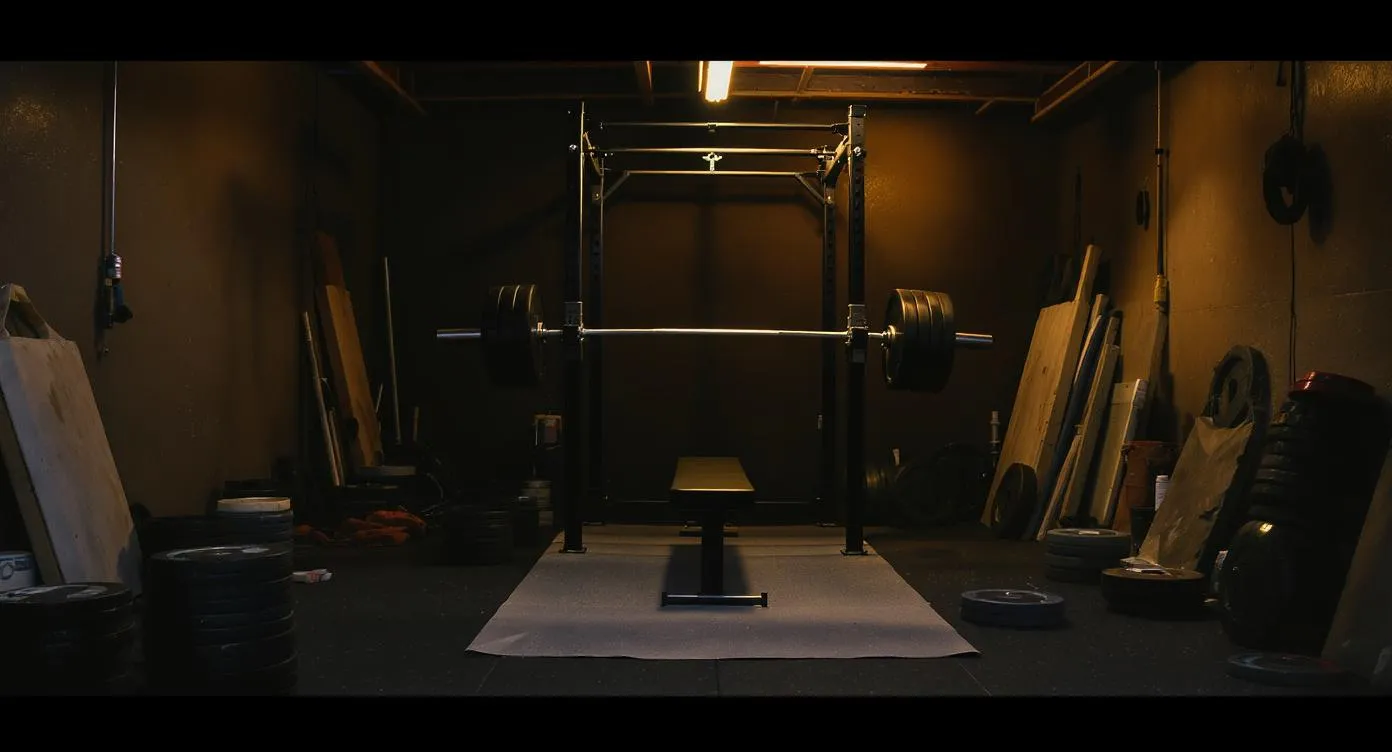
How to Build a Complete Home Gym on Any Budget (2026 Guide)
A no-BS guide to building a home gym from $300 to $3,000. Exact products, exact costs, and the order to buy them. We've built 12 gyms — here's what we learned.
Buy in this order: barbell + plates first ($200-$300), then a squat rack ($200), then a bench ($100-$150), then flooring ($50-$100). A fully functional home gym starts at $500 and covers every major compound lift.
You do not need $5,000 and a two-car garage to build a serious home gym. You need a plan, the right purchase sequence, and the discipline to skip the equipment that does not matter yet. We have built 12 home gyms at price points ranging from $300 to $3,000, tested them over months of real training, and documented every mistake along the way. This is the complete playbook.
Whether you are a total beginner or an intermediate lifter ditching your commercial gym membership, this guide walks you through the exact equipment, the exact order to buy it, how to avoid the most expensive mistakes, and how to maintain everything so it lasts for decades.
Why Build a Home Gym in 2026?
The math is simple. A mid-range commercial gym membership runs $40-$60 per month in most US cities. That is $480-$720 per year. A well-planned $1,000 home gym pays for itself in under two years, and after that, every workout is free for life. You also eliminate commute time (the average gym commute is 20 minutes each way), never wait for a squat rack on Monday evening, and train on your own schedule at any hour.
Beyond cost, home gyms offer training advantages that commercial facilities cannot match. You pick the music. You control the temperature. You never rush through a set because someone is hovering. And you can leave a loaded barbell between sets without worrying about gym etiquette.
The catch? You need to buy smart. A poorly planned home gym becomes a $2,000 clothes rack. A well-planned one becomes the best investment you make for your health.
The Golden Rule: Buy Equipment in This Exact Order
No matter your budget, buy equipment in this priority sequence. Every purchase should build on the one before it:
- Barbell + Plates — the absolute foundation of every serious strength program
- Squat Rack or Power Cage — makes the barbell safe and unlocks back squats and bench press
- Adjustable Bench — opens up bench press, incline work, seated overhead press, and dumbbell movements
- Flooring — protects your subfloor, deadens noise, and prevents equipment from sliding
- Accessories — lifting belt, chalk, barbell collars, wrist straps
- Cardio Equipment — only after your strength foundation is covered
- Specialty Equipment — adjustable dumbbells, cable machines, specialty bars
Most people buy in exactly the wrong order. They start with a pair of 25 lb dumbbells and a yoga mat, then wonder why their home gym feels incomplete six months later. Follow this sequence and every dollar compounds on the last.
If you want deeper guidance on choosing individual pieces, check out our ultimate beginner's home gym guide for a full walkthrough of every equipment category.
Tier 1: The $300-500 Starter Gym
This is the minimum viable gym. It handles every major compound lift: squats, bench press (floor press), overhead press, deadlifts, barbell rows, and pull-ups (if you have a doorway bar). Do not underestimate this setup. Thousands of lifters have built serious strength with nothing more than a barbell on a garage floor.
| Equipment | Product | Approx. Price |
|---|---|---|
| Barbell + Plates | CAP Barbell 300 lb Olympic Set | $340 |
| Flooring | BalanceFrom Puzzle Mat (24 sq ft) | $26 |
| Chalk | Liquid Grip Liquid Chalk | $16 |
Total: ~$382

CAP Barbell
CAP Barbell 300-Pound Olympic Set (Includes 7 Feet Bar)
4.5+ star rating with 8,000+ reviews
Complete barbell + plate set in one purchase
Price and availability may change
What You Can Do With This Setup
"But there is no rack!" Correct. At this budget, you train around that limitation. Front squats and Zercher squats replace back squats. Floor press replaces bench press. Pendlay rows and deadlifts work exactly as normal. This is not a compromise — it is a legitimate training methodology that many strength coaches program intentionally.
The CAP Barbell 300 lb Olympic set includes a 7-foot Olympic barbell (28 mm shaft, 2-inch sleeves) and 255 lbs of cast iron plates. The bar itself is entry-level — expect around 110,000 PSI tensile strength with no center knurl — but the plates are indestructible cast iron that you will use for the next 20 years regardless of how many upgrades you make.
Training programs that work with this setup: Starting Strength (modified for front squats), GZCLP, Stronglifts 5x5 (modified), any basic linear progression program.
- Lowest cost entry point into serious barbell training
- CAP plates last forever and work with any future barbell upgrade
- Floor press builds massive tricep and chest strength
- Zercher and front squats build core strength that transfers to back squats
- Entire setup fits in a 6x6 foot space
- No back squats or proper bench press without a rack
- CAP barbell has limited knurling and low tensile strength
- 300 lb total limits advanced lifters on deadlifts within 6-12 months
- Floor press has shorter range of motion than full bench press
When to Move to Tier 2
Upgrade when you can comfortably front squat your bodyweight for sets of five, or when the floor press limitation starts holding back your chest development. For most beginners, that is 3-6 months of consistent training.
Tier 2: The $700-1,000 Real Gym
This is where your home gym becomes a genuine training facility. A power cage makes every barbell lift safer with adjustable safety bars, and a bench unlocks proper back squats, bench press, overhead press from the rack, and pull-ups (most cages include a pull-up bar).
| Equipment | Product | Approx. Price |
|---|---|---|
| Everything in Tier 1 | — | $382 |
| Power Cage | ULTRA FUEGO Power Cage | $389.99 |
| Bench | FLYBIRD Adjustable Bench | $110 |
| Collars | Synergee Barbell Collars | $25 |
| Belt | Dark Iron Lifting Belt | $55 |
Total: ~$902

ULTRA FUEGO
ULTRA FUEGO Power Cage, Multi-Functional Power Rack
4.5+ star rating on Amazon with 5,000+ reviews
Excellent value under $350
Price and availability may change

FLYBIRD
FLYBIRD WB2 Weight Bench, Utility Adjustable Weight Bench
4.6+ star rating on Amazon with 25,000+ reviews
Unbeatable value under $120
Price and availability may change
Why the ULTRA FUEGO Power Cage
The ULTRA FUEGO Power Cage is the best value power cage under $500 in 2026. It has a 800 lb weight capacity, 19 height adjustments for the J-hooks and safety bars, a multi-grip pull-up bar, and an optional lat pulldown attachment ($130 additional) that adds cable work later. The steel gauge is 14-gauge square tubing — not competition-grade, but more than adequate for anyone lifting under 500 lbs. For a deeper look at budget rack options, see our best power racks under $500 roundup.
Why the FLYBIRD Adjustable Bench
The FLYBIRD adjustable bench offers seven back positions (flat through 90 degrees) and three seat positions at a price point that undercuts competitors by $50-$100. It has a 700 lb weight capacity, folds for storage, and weighs only 32 lbs. The padding is 2.5 inches thick — sufficient for pressing but not luxurious. If you want to compare it to alternatives, read our FLYBIRD vs Marcy bench comparison.
Safety Setup Tips
When you set up your power cage, get the safety bar height right from day one. For squats, set the safeties just below the bottom of your squat depth — roughly 1-2 inches below where the bar sits at your deepest position. For bench press, set them at chest height so the bar catches if you fail a rep. Practice failing safely with an empty bar before you load up weight.
Training programs that work with this setup: Starting Strength, 5/3/1 Wendler, GZCLP, nSuns 5/3/1, PHUL, any intermediate barbell program without modification.
- Full barbell training with proper safety bars
- Pull-up bar included on the cage
- Adjustable bench unlocks incline, decline, and seated work
- Dark Iron belt is genuine leather and lasts for years
- Can run any barbell program without modification
- No isolation work without dumbbells or cables
- ULTRA FUEGO footprint requires roughly 7x4 feet of floor space
- CAP barbell may feel limiting as you progress past intermediate
- No dedicated cardio option
Tier 3: The $1,500-2,000 Serious Gym
Dumbbells and cables transform your home gym from a barbell-only station into a facility that covers compound and isolation work equally well. Recovery tools keep you training consistently without accumulating nagging injuries.
| Equipment | Product | Approx. Price |
|---|---|---|
| Everything in Tier 2 | — | $902 |
| Adjustable Dumbbells | Bowflex SelectTech 552 | $429 |
| Cable Station | Valor Fitness Wall Mount Cable Machine Wall Mount | $329.98 |
| EZ Curl Bar | CAP Olympic EZ Curl Bar | $55 |
| Plate Tree | Titan Fitness Plate Tree | $90 |
| Foam Roller | TriggerPoint GRID | $34.46 |
| Straps + Wraps | Harbinger + Rip Toned | $28 |
Total: ~$1,788

Bowflex
BowFlex Results Series SelectTech Dumbbells
4.7+ star rating on Amazon with 15,000+ reviews
Replaces 15 sets of dumbbells (5-52.5 lbs)
Price and availability may change

Valor Fitness
Valor Fitness Wall Mounted Cable Machine, Dual Adjustable Pulley System with 16 Height Positions, Space-Saving Home Gym Strength Training Equipment
4.5+ star rating on Amazon with 1,500+ reviews
Wall-mounted — saves floor space
Price and availability may change
Adjustable Dumbbells: Bowflex SelectTech 552
The Bowflex SelectTech 552 adjusts from 5 lbs to 52.5 lbs per hand in 2.5 lb increments (up to 25 lbs) and 5 lb increments after that. The dial mechanism switches weight in under 3 seconds, which matters when you are supersetting exercises. They replace 15 pairs of traditional hex dumbbells and take up roughly 2 square feet of floor space.
The main limitation is the 52.5 lb maximum. If you are already pressing 60+ lb dumbbells, look at the PowerBlock Elite 90 (adjustable to 90 lbs) or the Bowflex SelectTech 1090 (adjustable to 90 lbs). For a full breakdown of the options, check our best adjustable dumbbells guide.
Cable Station: Valor Fitness Wall Mount Cable Machine
A cable station adds dozens of exercises that barbells and dumbbells cannot replicate effectively: cable crossovers, face pulls, tricep pushdowns, cable curls, lat pulldowns, and seated cable rows. The Valor Fitness Wall Mount Cable Machine is a wall-mounted unit that takes up minimal floor space while providing a full high-and-low pulley system with a 150 lb weight stack.
Recovery Matters
The TriggerPoint GRID foam roller and a basic stretching routine take 10 minutes after each session and dramatically reduce delayed onset muscle soreness (DOMS). This is not optional fluff — it is what keeps you training four days per week instead of three, which compounds into meaningful strength gains over months.
At this tier, your home gym covers everything a commercial gym offers for strength and hypertrophy training. The only gap is dedicated cardio equipment.
Tier 4: The $2,500-3,000 Dream Gym
Cardio, specialty bars, and finishing touches make this a facility that rivals any commercial gym for serious strength and conditioning work.
| Equipment | Product | Approx. Price |
|---|---|---|
| Everything in Tier 3 | — | $1,791 |
| Rower or Air Bike | Concept2 RowErg or Sunny Health SF-B223018 | $699.99-990 |
| Safety Squat Bar | Titan SSB V2 | $180 |
| Dip Belt | DMoose Dip Belt | $50 |
| Massage Gun | Theragun Mini | $149 |
| Knee Sleeves | Nordic Lifting 7mm | $40 |
Total: ~$2,959-3,200
Cardio: Concept2 RowErg vs Sunny Health SF-B223018
Both are elite conditioning tools. The Concept2 RowErg is the gold standard rowing machine — used by every CrossFit box, Olympic rowing program, and serious home gym worldwide. It provides full-body cardio that is easy on the joints and brutally effective for both steady-state and interval training.
The Sunny Health SF-B223018 is the more compact option and delivers the most punishing cardio experience available in a home gym. Air resistance means the harder you push, the harder it pushes back. A 10-minute Sunny Health Fan Bike session will humble any lifter.
Choose the rower if you want full-body conditioning with a smooth, rhythmic movement pattern. Choose the air bike if you want maximum intensity in minimum time and have less floor space. Either way, you are covered.
Specialty Bar: Titan Safety Squat Bar V2
A safety squat bar (SSB) is the single best specialty bar investment you can make. It shifts the load forward, hammers your upper back and quads, and — critically — lets you squat heavy without loading your shoulders and elbows. If you have any shoulder mobility issues from years of bench pressing, an SSB is therapeutic. The Titan SSB V2 weighs 62 lbs, has a 1,500 lb capacity, and costs a fraction of the Rogue or EliteFTS alternatives.
Weighted Dips and Pull-ups
The DMoose dip belt lets you add plates to dips and pull-ups, two of the most effective upper-body exercises that exist. Once you can do 3 sets of 10 bodyweight dips and pull-ups, adding external load is the fastest path to building your chest, triceps, back, and biceps.
Money-Saving Strategies That Actually Work
1. Buy the CAP 300 Set First, Upgrade the Bar Later
The CAP barbell-and-plate combo is the cheapest way to get 300 lbs of Olympic weight into your garage. The bar is mediocre (low-quality knurling, no center knurl, mild whip), but the cast iron plates are physically identical to plates costing three times as much. When your budget allows, buy a better barbell — the Synergee Regional ($200) or the Schwinn Airdyne Bar 2.0 ($195) — and keep the CAP plates forever. For a detailed comparison of budget barbells, see our CAP vs Synergee barbell breakdown.
2. Stalk Facebook Marketplace and Craigslist
Power racks, benches, and iron plates regularly sell for 40-60% of retail on local marketplaces. The annual cycle is predictable: people buy gym equipment during New Year resolution season in January and list it for sale by March. Summer moving season (June-August) is another gold mine. Set alerts for "power rack," "Olympic plates," and "squat rack" and check daily.
What to buy used: Iron plates (they are literally chunks of metal — they do not wear out), power racks (inspect for cracks at weld points), benches (check the padding and adjustment mechanism).
What to buy new: Barbells (bent shafts and worn bearings are invisible until you load them), cable machines (frayed cables are a safety hazard), resistance bands (worn rubber snaps without warning).
3. Do Not Buy Cardio Until You Have Lifted for 6 Months
Strength training is cardio for beginners. Your heart rate during a set of 20-rep squats or a barbell complex will exceed what most people hit on a treadmill. A heavy deadlift session burns 300-500 calories. Add a dedicated cardio machine once your strength base is established and you genuinely need structured conditioning work beyond barbell complexes and bodyweight circuits.
4. Skip Cheap Adjustable Dumbbells
Adjustable dumbbells under $300 (the old-school screw-collar type with standard plates) are slow to change, annoying to use, and the collars loosen during pressing movements. Either invest in proper selectorized adjustables like Bowflex SelectTech or PowerBlock ($400+) or build a hex dumbbell collection over time by buying pairs as you find deals. There is no good middle ground.
5. Gym Flooring Is Non-Negotiable — Even on a Budget
Even a $26 BalanceFrom EVA foam puzzle mat protects your subfloor from dropped weights, reduces noise transmission to rooms below, prevents equipment from sliding on smooth concrete, and gives you a more comfortable surface for floor work. If you are on a concrete garage floor, foam mats also insulate against cold in winter. For a deep dive into flooring options, read our garage gym flooring guide.
6. Buy Accessories Last, Not First
Lifting belts, wrist wraps, knee sleeves, and straps are useful tools — but they are useless without a barbell to use them with. Resist the temptation to buy $200 worth of accessories before you own a single plate. Prioritize the big equipment purchases and add accessories as specific needs arise during your training.
The One-Purchase Shortcut
If you want to buy one thing today and start training immediately:
CAP Barbell
CAP Barbell 300-Pound Olympic Set (Includes 7 Feet Bar)
4.5+ star rating with 8,000+ reviews
Complete barbell + plate set in one purchase
Price and availability may change
A barbell and 300 lbs of plates. You can squat (front squat, Zercher squat), deadlift, bench (floor press), overhead press, row, curl, Romanian deadlift, hip thrust, lunge, shrug, and do 40+ other exercises with nothing else. Zero accessories required. Add equipment as your budget allows over the coming months.
Setting Up Your Space: Minimum Requirements
Floor Space
A barbell is 7 feet long. You need at least 8 feet of length to load and unload plates. A power cage requires roughly 4 feet of width and 7 feet of depth. Total minimum training area: 8 x 8 feet (64 square feet). A single-car garage, spare bedroom, or basement corner works. If space is tight, read our home gym small spaces guide for layout strategies.
Ceiling Height
Standard power cages are 80-84 inches tall. With a pull-up bar, you need at least 12 inches of clearance above the cage for comfortable pull-ups. That means a minimum ceiling height of roughly 8 feet. Low-ceiling basements (7-foot ceilings) require a short cage or half rack.
Flooring Surface
Concrete garage floors are ideal — they are flat, load-bearing, and durable. Add rubber stall mats ($40 for a 4x6 foot horse stall mat from Tractor Supply) or EVA foam puzzle mats on top for protection and noise reduction. Wood subfloors in upstairs rooms need more consideration: build a lifting platform to distribute weight and protect the structure, and avoid dropping loaded barbells.
Ventilation and Temperature
Garages get hot in summer and cold in winter. A basic box fan ($20) handles warm-weather ventilation. For winter training, a ceramic space heater ($30-$50) takes the edge off. You do not need a climate-controlled space to train effectively — just enough airflow to avoid overheating during high-rep sets.
Maintenance: Protecting Your Investment
Home gym equipment lasts for decades with minimal care. Here is what actually matters:
Barbell Care
Wipe down your barbell after every session with a dry rag. Once per month, brush the knurling with a nylon brush to remove chalk buildup, then apply a light coat of 3-in-1 oil to the shaft and spin the sleeves to work oil into the bearings. This 5-minute routine prevents rust and keeps the sleeves spinning freely. Never store a barbell on a concrete floor — use J-hooks on your rack or a wall-mounted barbell holder.
Plate and Rack Care
Cast iron plates need zero maintenance beyond occasional wiping. If surface rust appears (common in humid garages), scrub with a wire brush and apply a coat of Rust-Oleum. Power cages should be checked monthly for loose bolts — vibration from heavy lifting gradually loosens hardware. Keep a socket wrench set near your gym and tighten anything that rattles.
Bench Upholstery
Vinyl bench padding degrades with sweat exposure over time. Wipe it down after every session and apply vinyl protectant spray quarterly. If the padding cracks or tears, replacement pads cost $30-$50 and are a straightforward DIY swap.
Flooring
EVA foam mats wear out in 2-3 years under heavy use. Rubber horse stall mats last essentially forever. Budget for mat replacement when you notice compression spots or crumbling edges.
Sample Beginner Program for Your New Home Gym
This 3-day-per-week program works with any tier above. Adjust exercises based on what equipment you have.
Day A — Squat Focus
- Back Squat (or Front Squat for Tier 1): 3x5
- Overhead Press: 3x5
- Barbell Row: 3x5
- Barbell Curl (if time): 2x10
Day B — Press Focus
- Bench Press (or Floor Press for Tier 1): 3x5
- Deadlift: 1x5
- Pull-ups or Chin-ups: 3 sets to near-failure
- Tricep Pushdowns (Tier 3+): 2x12
Alternate Day A and Day B across three training days per week (e.g., Monday A, Wednesday B, Friday A, then Monday B, Wednesday A, Friday B). Add 5 lbs to squat and deadlift each session, 2.5 lbs to bench and overhead press. This linear progression works for 3-6 months before you need a more advanced program.
Safety: Training Alone Without a Spotter
Every home gym lifter trains alone most of the time. That is fine if you set up properly:
- Always use safety bars in the power cage. Set them at the correct height for squats and bench press. Practice bailing with an empty bar until the movement is automatic.
- Learn the roll of shame for bench press. If you fail a rep and the safeties are not set, you can roll the bar down your torso to your hips and sit up. It is uncomfortable but not dangerous with reasonable loads.
- Never use clips on bench press when training alone. If you get pinned without safeties, you can tilt the bar to one side and dump the plates. This only works without clips.
- Leave your ego at the door. Home gym lifters have no audience to impress. Stay 1-2 reps from failure on working sets. Save true max attempts for days when you have a spotter.
- Keep your phone nearby. It sounds obvious, but having your phone within reach during every set ensures you can call for help in an emergency.
Equipment Reviews
Read our full hands-on reviews for every product mentioned in this guide:
Power Racks & Machines
- ULTRA FUEGO Power Cage Review
- Marcy Smith Machine SM-4033 Review
- Valor Fitness Wall Mount Cable Machine Cable Station Review
Dumbbells & Barbells
Benches & Accessories
- FLYBIRD Adjustable Bench Review
- Dark Iron Lifting Belt Review
- TriggerPoint GRID Foam Roller Review
- Theragun Mini Review
- Titan Plate Tree Review
Related Guides
- Best Home Gym Equipment Under $100
- Best Accessories Under $50
- The Ultimate Beginner's Home Gym Guide
- All Budget Build Content
Frequently Asked Questions
Is a home gym cheaper than a gym membership?
What's the absolute minimum budget for a real home gym?
Should I buy new or used gym equipment?
How much space do I need for a home gym?
What's the best first purchase for a home gym?
How do I maintain home gym equipment?
Additional Resources
Marcus Reid
Powerlifter and mechanical engineer who has been building and breaking home gym equipment for 15 years.
Read full bioMore in Guides
Strength vs Hypertrophy: How to Program for Your Goals (2026)
The definitive guide to programming for strength vs size in your home gym. Rep ranges, volume, intensity, and complete programs for both goals.
The Complete Home Gym Warm-Up Guide (2026)
Stop skipping your warm-up. Complete warm-up protocols for every training style, plus the equipment that makes preparation effortless at home.
Home Gym Deload Guide: When and How to Back Off (2026)
Learn when and how to deload in your home gym. Science-backed protocols, recovery strategies, and signs you need a rest week.
You Might Also Like
Best Cardio Machines for Home Gyms in 2026
Air bikes, spin bikes, rowers, treadmills, and compact striders — we tested the 6 best cardio machines for home gyms ranked by calorie burn, space, noise, and value.
Best Cable Machines for Home Gyms in 2026
We tested wall-mounted pulleys, functional trainers, and cable crossovers for home gyms. Here are the 5 best cable machines ranked by value, space efficiency, and build quality.
Valor Fitness Wall Mount Cable Machine Review: Best Wall-Mount Cable Machine?
30-day hands-on review of the Valor Fitness Wall Mount Cable Machine wall-mounted cable station. Is a $329.98 cable machine worth it for home gyms? We tested every exercise.