Theragun Mini Review: Is the Smallest Percussion Massager Worth $149?
We used the Theragun Mini daily for 4 months of post-workout recovery. Full breakdown of motor power, battery life, noise levels, portability, and how it compares to the full-size Theragun and budget alternatives.
Massage guns have become standard gym bag equipment, and the Theragun Mini is responsible for a lot of that. It is the size of a fist, weighs under a pound, and delivers percussive therapy that loosens tight muscles in 2-3 minutes. At $149, it costs ten times more than the generic Amazon massage guns and three times less than the full-size Theragun PRO. After four months of daily use — post-workout and on rest days — here is whether the premium price is justified.
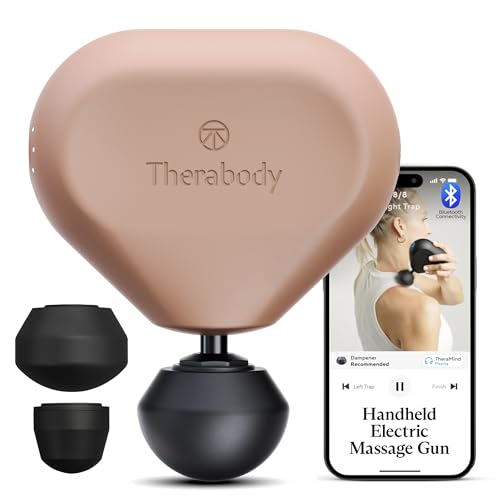
TheraGun Mini (3rd Generation) by Therabody – Ultra-Portable Massage Gun and Travel Essential for Fast, Effective Pain and Tension Relief Anywhere (Desert Rose)
Capacity
N/A — recovery tool
Steel
QX35 Motor / 3 Speed Settings
Footprint
30% smaller than 2nd Gen — palm-sized
Price
$219.99
- 4.6+ star rating on Amazon with 8,000+ reviews
- Ultra-portable — fits in a gym bag
- 3 speed settings (1750-2400 PPM)
- 150-minute battery life per charge
- Quiet — usable in shared spaces
- Best compact percussion massager
- Only 1 attachment head included
- Less powerful than full-size Theragun
- Premium price for mini size
Price and availability may change
At a Glance
Quick Specs · TheraGun Mini (3rd Generation) by Therabody – Ultra-Portable Massage Gun and Travel Essential for Fast, Effective Pain and Tension Relief Anywhere (Desert Rose)
What Percussive Therapy Actually Does
Before we review the device, let us be clear about what it does and does not do. A massage gun delivers rapid, repetitive pressure pulses into muscle tissue. The evidence-supported benefits are:
- Increased blood flow to the treated area, which can accelerate recovery
- Reduced perceived muscle soreness (DOMS) when used within 24 hours after training
- Temporary increase in range of motion — useful as a warm-up tool
- Pain gate mechanism — the vibration signals override pain signals, providing short-term relief
What it does not do: fix injuries, replace stretching and mobility work, or substitute for sleep and nutrition in recovery. It is a supplement to a recovery protocol, not a replacement.
The Device
The Theragun Mini 2nd Gen fits in your palm. It measures roughly 5.5 x 4 x 2.5 inches and weighs 1.43 lbs — lighter than most water bottles. The body is a matte-finish polymer that grips well with sweaty hands.
Three Speed Settings
- Speed 1 (1,750 PPM): Low percussion rate. This is the warm-up and cool-down setting, ideal for sensitive areas like the neck, forearms, and shins. The pressure is gentle enough for daily use without irritation.
- Speed 2 (2,100 PPM): Medium percussion rate. The workhorse setting for post-workout quad, hamstring, and shoulder recovery. Most of our use fell on this setting.
- Speed 3 (2,400 PPM): High percussion rate. This delivers aggressive therapy for deep knots, stubborn trigger points, and dense muscle groups like the glutes and upper back. Firm pressure at this speed can be uncomfortable on sore muscles — in a good way.
The Motor
The QX35 motor delivers a 12mm amplitude — the depth the attachment head travels into your muscle. This is where the Theragun Mini separates from budget guns. Most $30-50 massage guns deliver 6-8mm amplitude. The difference is significant: 12mm reaches deeper muscle fibers, particularly in thick muscle groups like the quads, glutes, and lats. A shallow 6mm percussion feels like a surface vibration. The 12mm Mini feels like it is actually reaching the tight tissue.
The motor also maintains speed under pressure. When you press the Mini hard into a dense muscle, it does not stall or slow down noticeably. Budget guns lose RPM under pressure, which reduces their effectiveness on the areas that need the most work.
Battery Life
Therabody rates the Mini at 150 minutes of battery life. In our testing, we averaged approximately 120-130 minutes of actual use before the battery indicator turned red. We used the device for 5-10 minutes per session, which translates to roughly 15-20 sessions per charge. Charging takes about 80 minutes via the included USB-C cable.
For a device you use daily, the battery life is excellent. We charged it roughly once every two weeks with daily post-workout use.
Noise Levels
At Speed 1, the Mini is quiet enough to use during a phone call. At Speed 2, it produces a low hum that is easily masked by background music. At Speed 3, it is noticeable but not disruptive — significantly quieter than a hair dryer and far quieter than first-generation massage guns.
If you train early morning and share a bedroom or apartment, the Mini at Speed 1-2 will not wake anyone in an adjacent room.
What We Love
- 12mm amplitude reaches deeper muscle tissue than any budget massage gun
- Maintains percussion speed under firm pressure — does not stall on dense muscles
- 150-minute battery life lasts 2+ weeks of daily use
- 1.43 lbs and palm-sized — fits in a gym bag, backpack, or desk drawer
- Three speed settings cover everything from gentle warm-up to aggressive deep tissue
- USB-C charging — no proprietary charger to lose
- QX35 motor is whisper-quiet at low speed
- Build quality matches the price — feels premium, not plastic
What Could Be Better
- Only one attachment head included (standard ball) — additional heads sold separately for $24.99
- 12mm amplitude is less than the full-size Theragun PRO (16mm) — not a substitute for professional deep tissue on large athletes
- Premium price at $149 when functional budget guns exist for $30-50
- No carrying case included — available separately for $19.99
- Round body shape can be hard to grip with oily or very sweaty hands
- Cannot reach your own mid and lower back effectively — you need a partner or a wall technique
- Speed 3 is intense on bony areas (shins, clavicle, elbows) — avoid or use only Speed 1 on these
How to Use the Theragun Mini for Recovery
Here is a post-workout protocol we developed over four months:
Post-Strength Training (5-7 minutes total)
- Quads: 60 seconds per leg, Speed 2, slow sweeping motions from hip to knee
- Hamstrings: 60 seconds per leg, Speed 2, focus on the belly of the muscle
- Upper back/traps: 60 seconds, Speed 2, avoid the spine — work the muscle tissue on either side
- Shoulders (front and rear delts): 30 seconds per side, Speed 1
- Forearms: 30 seconds per arm, Speed 1 — especially after heavy gripping work
Pre-Workout Warm-Up (2-3 minutes)
- Target the primary muscle groups for that session at Speed 1
- 30-60 seconds per muscle group
- Follow with dynamic stretching
- This increases blood flow and range of motion before loading
Rest Day Recovery (10 minutes)
- Full body sweep at Speed 1-2
- Extra time on sore or tight areas
- 60-90 seconds per muscle group
- Combine with gentle stretching for maximum effect
Theragun Mini vs Budget Massage Guns ($30-50)
The budget guns on Amazon deliver vibration. The Theragun Mini delivers percussion. The difference matters:
Amplitude: Budget guns typically offer 6-8mm amplitude. The Mini delivers 12mm. Deeper penetration reaches tight tissue that surface vibration cannot.
Stall force: Budget guns slow down or stall when you apply pressure. The Mini maintains speed under force. On dense muscle groups like the glutes and upper back, budget guns essentially become expensive vibrators — the percussion disappears under pressure.
Build quality: Budget guns use cheap plastic housings and generic brushless motors. They work for a few months, then develop rattling, battery issues, or motor failure. The Mini uses Therabody's QX35 motor and premium materials designed for years of daily use.
Is the $100+ premium worth it? For casual users who want occasional light recovery, a budget gun is fine. For athletes who train hard 4-6 days a week and rely on percussion therapy as part of a recovery protocol, the Mini's deeper amplitude and stall resistance make a meaningful difference.
Theragun Mini vs Theragun PRO ($399)
The PRO delivers 16mm amplitude (vs 12mm), has a rotating arm for reaching your own back, includes 5 attachment heads, and offers 5 speed settings. It is a significantly better device.
But the PRO costs $399, weighs 2.2 lbs, and is bulky. The Mini at $149 delivers approximately 75% of the PRO's effectiveness in a package that weighs 65% less and costs 63% less. For most lifters who are not professional or collegiate athletes, the Mini is the sweet spot of effectiveness and value.
4-Month Durability Report
After four months of daily use (averaging 5-7 minutes per session):
- Motor: No change in power or speed. Still maintains percussion under pressure.
- Battery: Still holds approximately 120 minutes of use per charge. No noticeable degradation.
- Attachment head: Shows minor wear marks on the surface foam. Still functional.
- Body: Minor cosmetic scuffs from being tossed in a gym bag. No cracks or structural issues.
- Charging port: USB-C connection still clean and reliable.
Who Should Buy the Theragun Mini
Buy it if:
- You train 4+ days per week and deal with regular muscle soreness
- You want a portable recovery tool that fits in a gym bag or desk drawer
- You value percussion depth over price — the 12mm amplitude matters
- You want a device that will last years with daily use
- You do not need to reach your own mid/lower back (or have a partner/wall technique)
Skip it if:
- Budget is tight — a $40 Amazon gun provides basic vibration therapy
- You need deep tissue work on your own back — the PRO's rotating arm is worth the upgrade
- You are looking for a full-body recovery solution — combine with foam rolling and stretching
- You rarely train hard enough to be sore — you will not use it enough to justify $149
Final Verdict
The best portable percussion massager available. The 12mm amplitude and stall-resistant motor deliver real recovery benefits, not just surface vibration. Small enough for a gym bag, quiet enough for an apartment, and built to last. The $149 price is justified by the quality gap over budget alternatives.
Price and availability may change
Therabody
TheraGun Mini (3rd Generation) by Therabody – Ultra-Portable Massage Gun and Travel Essential for Fast, Effective Pain and Tension Relief Anywhere (Desert Rose)
4.6+ star rating on Amazon with 8,000+ reviews
Ultra-portable — fits in a gym bag
Price and availability may change
Related Content
- Best Recovery Gear for Home Gyms
- Hypervolt GO 2 Review: Budget Percussion Alternative
- TriggerPoint GRID Foam Roller Review
- Chirp Wheel+ Review: Back Pain Relief
- 15 Home Gym Accessories That Actually Matter
- Home Gym Rehab and Recovery Guide
Frequently Asked Questions
Is the Theragun Mini strong enough for serious athletes?
How long does the Theragun Mini battery last?
Can you use the Theragun Mini on your back?
Should I buy additional Theragun Mini attachment heads?
Is the Theragun Mini too intense for beginners?
Theragun Mini or foam roller — which is better?
Additional Resources
Marcus Reid
Powerlifter and mechanical engineer who has been building and breaking home gym equipment for 15 years.
Read full bioMore in Reviews
Yes4All Kettlebell Set Review: Best Budget Kettlebells on Amazon?
Our review of the Yes4All Cast Iron Kettlebell Set. Are these the best budget kettlebells for home gym training on Amazon?
TRX Bandit Resistance Band Handles Review: Worth the Money?
Hands-on review of the TRX Bandit Resistance Band Handles. Is $49.95 worth it for your home gym?
POWER GUIDANCE Battle Rope Review: CrossFit Standard for $40
Hands-on review of the POWER GUIDANCE 30 ft Battle Rope. Best budget battle rope on Amazon for HIIT, CrossFit, and brutal conditioning.
You Might Also Like
Best Recovery Tools for Home Gyms in 2026
Tested: foam rollers, massage guns, back relief wheels, and stretching tools. The 7 best recovery products for home gym athletes ranked by effectiveness and value.
The Best Recovery Tools for Home Gyms (2026)
Foam rollers, massage guns, lacrosse balls, and stretching equipment. The recovery tools that actually work for home gym athletes.
Home Gym Deload Guide: When and How to Back Off (2026)
Learn when and how to deload in your home gym. Science-backed protocols, recovery strategies, and signs you need a rest week.