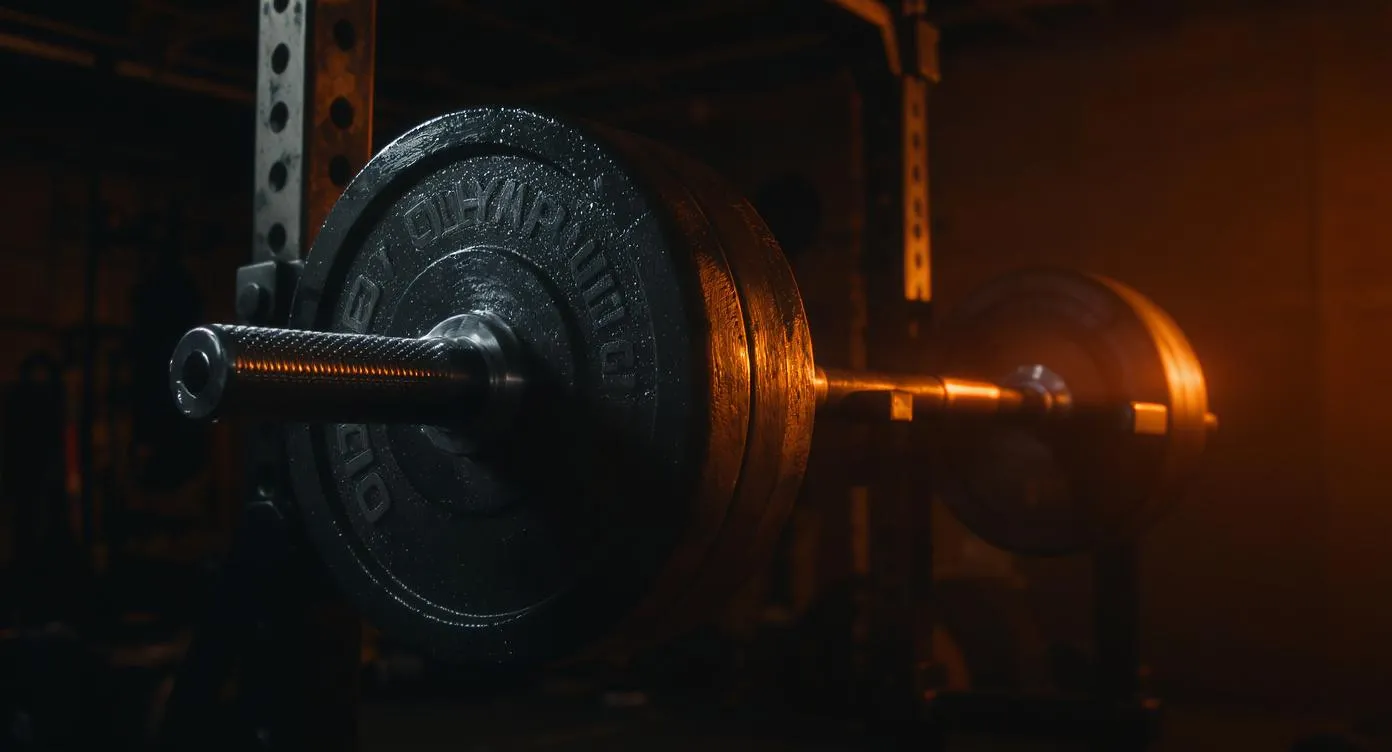
CAP Barbell Olympic EZ Curl Bar Review: Worth the Money?
Hands-on review of the CAP Barbell Olympic EZ Curl Bar. Is $54.99 worth it for your home gym?
The CAP Barbell Olympic EZ Curl Bar costs $54.99 on Amazon and carries a 4.6-star rating across more than five thousand verified reviews. Those two facts alone tell you most of what you need to know about where this bar sits in the market. It is not a premium piece of equipment. It is not trying to be. It is a functional, affordable specialty bar built for lifters who need a reliable curl bar without a commercial gym budget.
We bought one, lived with it for eight months, and used it across barbell curls, skull crushers, overhead tricep extensions, upright rows, and preacher curl variations on the Deltech Fitness DF308 preacher bench. Here is what we found — including the biomechanical details that actually matter when choosing between an EZ bar, a straight bar, and a premium alternative.
At a Glance
Quick Specs · CAP Barbell 47-Inch Olympic EZ Curl Bar for 2-Inch Weight Plates | Multiple Options
What We Love
- 4.6+ star rating on Amazon with 5,000+ reviews
- Angled grips reduce wrist and forearm strain on curls
- Standard 2" Olympic sleeves fit all Olympic plates
- Chrome-plated finish holding up well after 8 months
- 200 lb capacity is sufficient for isolation work at almost any skill level
- Works with Olympic collars, fractional plates, and bumper plates
- One of the lowest price points on any Olympic-sleeve specialty bar
- Knurling is comfortable for high-rep isolation sets without tearing skin
What Could Be Better
- 200 lb capacity limits loaded preacher curls for advanced lifters
- Bushing sleeves — no needle bearing spin
- Light knurling needs chalk on humid days
- Shorter sleeve length can limit plate loading combinations
- Chrome finish will eventually show wear in high-humidity unheated garages
- Not ideal for heavy close-grip press or JM press variations that need a stiffer shaft
The Biomechanics of the Angled Grip: Why It Matters
This is the core reason EZ curl bars exist and the detail most reviews gloss over. Understanding the angled grip — what it does anatomically and why it matters for your training — is more useful than any list of specifications.
When you perform a barbell curl with a straight bar, your hands are in full supination: palms facing completely upward, thumbs pointed away from your body. That grip loads the biceps brachii effectively, but it simultaneously creates torque at the wrist and elbow. The radius and ulna bones are crossed in full supination, which pulls on the wrist extensors and the tendons of the forearm. For many lifters — particularly those with a history of wrist impingement, golfer's elbow, or lateral epicondylitis — that torque accumulates into chronic irritation over months of training.
The CAP EZ curl bar grips are angled at approximately 30 to 35 degrees from fully supinated, placing your hands in a semi-supinated or neutral-supinated position. This uncrosses the radius and ulna slightly, relieving the torque on the distal radioulnar joint and reducing the stress on the wrist extensors. The result is that most lifters who experience wrist or forearm discomfort during straight bar curls find EZ bar curls pain-free.
The biomechanical trade-off: The semi-supinated grip reduces peak activation of the biceps brachii's short head compared to a fully supinated grip, because full supination of the forearm is one of the biceps' primary functions — not just elbow flexion. Studies using EMG analysis have shown that straight bar curls produce marginally higher biceps brachii activation than EZ bar curls, but the difference is small — typically in the 10 to 15% range — and for most natural lifters training to failure, the practical hypertrophy outcome is identical. A set of EZ bar curls taken to true muscular failure produces the same bicep growth stimulus as a set of straight bar curls to failure. The EZ bar's advantage is that it lets you reach failure without accumulating wrist and elbow damage in the process.
The angled grip also shifts relative emphasis toward the brachialis — the flat muscle that sits under the biceps and is a pure elbow flexor regardless of forearm rotation. The brachialis cannot supinate the forearm; it only flexes the elbow. In a semi-supinated grip, the biceps brachii contributes slightly less to the effort, which means the brachialis and brachioradialis must contribute proportionally more. Over time, this is actually a benefit for arm development: a well-developed brachialis pushes the biceps peak upward, creating the illusion of greater bicep size even when the biceps itself has not changed.
Sleeve Length and Rotation: What the Specs Actually Mean
The CAP EZ curl bar has Olympic 2-inch sleeves that accept all standard Olympic plates and collars. Sleeve length on this bar runs approximately 5 inches per side — adequate for most loading configurations, but worth understanding before you buy.
On a typical curl session, you are loading 25s, 35s, or at most 45-pound plates per side. Two standard 45s per side would bring you close to a 90-pound plate load — 180 lbs total plus the bar weight of roughly 18 to 20 lbs, which puts you near the 200-lb capacity limit anyway. So the sleeve length is not a practical constraint for this bar's rated capacity. Where it becomes limiting is if you prefer to use multiple smaller plates — two 25s and a 10, for example — rather than a single 45. Mixing plate sizes can crowd the sleeve quickly. If you tend to load with a variety of smaller plates, keep this in mind.
The sleeve rotation on this bar uses bushings rather than needle bearings. For curl exercises this distinction is minor but real. Needle bearings — like those found on the Synergee Olympic Barbell and other premium multi-purpose bars — allow the sleeve to rotate freely relative to the shaft. This reduces the torque transferred to your wrists when the bar wants to roll during a lift. For Olympic lifting and deadlifts, needle bearings are essential. For curl movements, where the bar is not trying to roll aggressively, bushing rotation is entirely adequate. You will not miss needle bearings on a curl bar unless you are doing heavy barbell reverse curls with loaded momentum, and even then the difference is subtle.
After eight months of use, the bushings on our review bar still rotate smoothly with no grinding or seizing. CAP's manufacturing quality control on this front has been consistent.
Knurling Analysis: Light but Purposeful
The CAP EZ curl bar has what knurling aficionados would call passive or light knurling. It is more of a crosshatch texture than aggressive diamond-pattern knurling. Compared to the sharp, aggressive knurl on a powerlifting deadlift bar, the CAP EZ bar's texture feels almost mild.
For a curl bar, this is the right call. Here is why: EZ curl bars are used almost exclusively for isolation movements at moderate loads — curls, skull crushers, extensions, rows. These exercises involve sustained hand-to-bar contact for sets of 8 to 20 reps with a relatively light load. Aggressive knurling at those rep ranges would gradually abrade your palms and lead to callus buildup that serves no purpose. More importantly, movements like skull crushers and overhead tricep extensions require you to adjust your grip mid-set and reposition your hands on the angled sections. Aggressive knurling makes those grip adjustments uncomfortable. Light knurling allows you to move your hands without tearing skin.
The one situation where light knurling is a genuine limitation: if you train in high humidity or sweat heavily, the passive texture gives very little grip security once your hands are wet. We use liquid chalk on humid summer days in our garage. If you train in climate-controlled space, you will likely never need it. If you train in a typical uninsulated garage that sees humidity above 60%, chalk is worth keeping nearby.
CAP EZ Curl Bar vs. a Straight Bar: The Real Comparison
Most home gym beginners default to whatever bar they already own — usually a standard 45-lb Olympic barbell — and perform curls with that. Here is why that approach costs you over time:
Wrist comfort: A straight Olympic bar puts your hands in full supination for curls. As volume accumulates across weeks and months, this position creates repetitive stress on the wrist extensors and the lateral elbow. The EZ bar's semi-supinated grip eliminates this stress pattern.
Grip width options: An Olympic barbell has one grip width for curls — whatever spacing you choose, but in a straight line. The CAP EZ bar has two distinct angled grip sections: a close-grip position for standard curls and a wider, more supinated outer position that shifts emphasis toward the biceps long head. That variety in a single bar is worth more than it looks on paper.
Weight accuracy: An Olympic barbell weighs 44 to 45 lbs depending on the bar. An EZ curl bar weighs 18 to 20 lbs. If you are curling 95 lbs with a straight bar, you are actually curling 95 lbs. If you load the same plates onto an EZ curl bar, you are curling roughly 70 to 75 lbs. This matters for tracking progress accurately. Always weigh your EZ curl bar if you care about precise load tracking — most manufacturers' listed weights are approximate.
Exercise range: The straight barbell is more versatile across compound movements. For upper body isolation work specifically — curls, extensions, rows, presses with a semi-neutral grip — the EZ bar is superior. These are not the same tool for the same job.
CAP EZ Curl Bar vs. Premium EZ Bars: The Upgrade Question
The premium EZ curl bar tier is populated by bars from Rogue ($120+), Rogue's offerings ($120+), and bars from REP Fitness and American Barbell. What do you actually get for the extra money?
Needle bearings: Premium EZ bars use needle bearings instead of bushings. As noted above, for curl movements this is a nice-to-have, not a necessity.
Knurling aggression and coverage: Premium bars tend to have more defined, more aggressive knurling that extends through more of the grip sections. For lifters with chronically dry hands who skip chalk, this matters. For everyone else, it is a minor upgrade.
Weight capacity: Many premium EZ bars are rated for 300 to 350 lbs. If your curl programming includes extremely heavy preacher curls — think sets of three to five reps with 150+ lbs on the bar — the 200-lb capacity limit of the CAP bar becomes relevant. Most trainees focused on hypertrophy will never approach this limit. Competitive bodybuilders and advanced lifters training the preacher curl as a strength movement should look at a higher-capacity bar.
Finish durability: Chrome finishes on premium bars tend to be thicker and more corrosion-resistant. For a heated indoor gym, the CAP's chrome is fine. For an unheated coastal garage or a humid basement, a higher-quality finish will outlast the CAP bar noticeably.
The honest verdict on upgrading: If you are a beginner or intermediate lifter training for general fitness or hypertrophy, and you curl under 120 lbs for sets, the CAP bar at $54.99 is the right buy. The difference between the CAP and a $120 premium bar will not change your training outcome in any meaningful way. If you are an advanced lifter, train in a particularly harsh environment, or want a tool that will last 15 years without maintenance, the premium investment makes sense. Check our best budget barbells guide for a full comparison across price tiers.
Programming the EZ Curl Bar: Bicep and Tricep Work
The EZ curl bar is more versatile than most lifters use it for. Here is how to get full value from this single piece of equipment.
Bicep curl programming:
The standard approach — sets of 3 to 4 at 8 to 12 reps — works, but you can extract more from the EZ bar by varying your grip position between sets. Use the inner angled grip for standard curls (emphasizes overall bicep development and brachialis), then shift to the outer, wider angled grip on a second exercise to shift more tension onto the biceps long head. The long head creates the peak, so the outer grip position is worth including in your programming if arm development is a priority.
Preacher curls with an EZ bar and the Deltech Fitness DF308 preacher bench are one of the most productive direct bicep movements in existence. The preacher pad eliminates elbow drift and body English; the EZ bar's angled grip removes wrist strain; the combination allows you to train the bicep through its full range of motion under consistent tension with no cheat. Three sets of preacher curls to failure at the end of a back session will produce measurable arm hypertrophy over a training block.
Tricep programming:
The EZ bar's angled grip is equally valuable for tricep work, where it reduces the ulnar deviation that straight bar skull crushers can create at the wrist joint over time.
Skull crushers with an EZ bar: lie flat on a bench, press the bar to arms-length overhead, then hinge at the elbow to lower the bar toward your forehead or just behind your crown. The EZ bar's grip angle keeps your wrists neutral through the movement. Use a moderate grip — not the outermost position — and keep elbows pointed at the ceiling throughout. Progressive overload here follows the same pattern as any other lift: add weight when you can complete the top of your rep range with clean technique.
Overhead tricep extension (also called French press): seated or standing, press the bar overhead, then lower it behind your head by hinging at the elbows. This movement emphasizes the long head of the triceps — the largest head, responsible for the bulk of the upper arm's posterior thickness — because the long head crosses the shoulder joint and is most stretched when the arm is raised overhead. Sets of 10 to 15 work well here; the movement is not suited to very heavy loading with an EZ bar due to the 200-lb capacity limit, but the long head responds well to moderate weight and high tension anyway.
Close-grip pressing with an EZ bar is possible but not ideal — the bar's 200-lb capacity and lighter shaft make it suboptimal for heavy pressing. For close-grip tricep work under heavy load, use a standard Olympic barbell.
Sample arm specialization finisher (20 minutes, add to any upper body day):
- EZ bar preacher curl: 3 sets x 10-12 reps, 90 seconds rest
- EZ bar skull crusher: 3 sets x 10-12 reps, 90 seconds rest
- EZ bar overhead tricep extension: 2 sets x 12-15 reps, 60 seconds rest
- EZ bar reverse curl (overhand grip): 2 sets x 12-15 reps, 60 seconds rest
That sequence covers all three heads of the triceps, both heads of the biceps, and includes the reverse curl for brachioradialis development — four exercises, one piece of equipment, twenty minutes. This is exactly the kind of efficient upper body isolation work the EZ curl bar was designed for.
8-Month Durability Update
Eight months in, the chrome plating on our CAP EZ curl bar remains intact with no flaking, chipping, or visible rust. We store it in an unheated garage that reaches 95 degrees in summer and drops below freezing in winter. The finish has developed a few hairline surface scratches where plates have been loaded and unloaded, but there is no corrosion and the chrome is not peeling. For a $54.99 bar, this longevity is genuinely impressive.
The bushing sleeves still rotate smoothly. The bar shaft has taken no permanent set — it is as straight today as it was on day one. We have loaded it to approximately 165 lbs on preacher curls (bar weight plus plates) without issue, which is well within its 200-lb capacity but represents a meaningful real-world stress test.
The knurling shows no wear. The crosshatch texture is exactly the same as when we received it. This is partly a function of light knurling being less likely to wear down, and partly a function of isolation movements not subjecting the knurling to the abrasive bar-to-skin dragging that heavy deadlifts create.
Final Verdict
A no-nonsense Olympic EZ curl bar that takes standard 2-inch plates and does exactly what it should. The camber angle is comfortable on wrists during curls and skull crushers, and the chrome finish resists rust in unheated garages. At 15 lbs unloaded it is lighter than some competitors, which is fine for isolation work but means it flexes under heavier loads. If your curl bar budget is under $50 and you own Olympic plates, this is the obvious pick.
Price and availability may change

CAP Barbell
CAP Barbell 47-Inch Olympic EZ Curl Bar for 2-Inch Weight Plates | Multiple Options
4.6+ star rating on Amazon with 5,000+ reviews
Angled grips reduce wrist strain on curls
Price and availability may change
Related Content
- Deltech Fitness DF308 Preacher Curl Bench Review
- Synergee Games Olympic Barbell Review
- Best Budget Barbells for Home Gyms
Frequently Asked Questions
What exercises can you do with an EZ curl bar?
Does the CAP EZ curl bar fit on a squat rack?
What is the difference between an EZ curl bar and a straight bar for curls?
How much does the CAP EZ curl bar weigh?
Will Olympic plates fit the CAP EZ curl bar?
Should I buy an EZ curl bar or a straight bar for arm training?
What is the weight capacity of the CAP EZ curl bar?
Additional Resources
Lena Park
Former NCAA Division I rower and USA Weightlifting coach. Specializes in conditioning equipment and women's training.
Read full bioMore in Reviews
Yes4All Kettlebell Set Review: Best Budget Kettlebells on Amazon?
Our review of the Yes4All Cast Iron Kettlebell Set. Are these the best budget kettlebells for home gym training on Amazon?
TRX Bandit Resistance Band Handles Review: Worth the Money?
Hands-on review of the TRX Bandit Resistance Band Handles. Is $49.95 worth it for your home gym?
POWER GUIDANCE Battle Rope Review: CrossFit Standard for $40
Hands-on review of the POWER GUIDANCE 30 ft Battle Rope. Best budget battle rope on Amazon for HIIT, CrossFit, and brutal conditioning.
You Might Also Like
Titan Safety Squat Bar vs Bells of Steel Trap Bar: Which Do You Need? (2026)
Titan SSB ($459.99) vs Bells of Steel Trap Bar ($199) — two of the best specialty bars under $200. We break down which one deserves a spot in your home gym first.
CAP Barbell vs Synergee Games Barbell: Budget vs Mid-Range Showdown
Comparing the two most popular Amazon barbells for home gyms. CAP Barbell (in 300 lb set) vs Synergee Games Barbell — which is worth your money?
The Best Budget Barbells Under $300 (2026 Tested)
We tested 8 budget Olympic barbells to find the best options for home gym lifters who don't want to spend Rogue money.