The Complete Home Gym Warm-Up Guide (2026)
Stop skipping your warm-up. Complete warm-up protocols for every training style, plus the equipment that makes preparation effortless at home.
Every serious lifter knows that the warm-up matters. Yet in home gyms across the country, people walk into cold garages, load up the bar, and start their working sets within two minutes. I have coached athletes for over fifteen years and I can tell you that the single fastest way to end up injured, stalled, or burnt out is treating your warm-up like an inconvenience. It is not filler. It is the foundation that determines whether your training session is productive or destructive.
The home gym environment creates unique warm-up challenges that commercial gym lifters never face. Your garage might be 45 degrees in January. There is no group energy, no one doing dynamic stretches next to you, no class instructor counting reps. You walk from a couch or a desk straight into heavy training with zero transition. Understanding these challenges — and building protocols that address them — is what separates lifters who train for decades from those who blow out a shoulder in year two.
This guide gives you everything: a general warm-up template, specific protocols for every major training day, evidence-based guidance on stretching, equipment recommendations, cold weather modifications, and adjustments for athletes over 40.
Why Warming Up Matters More at Home
Commercial gyms have built-in warm-up nudges. You walk through the door, change clothes, chat with someone, watch others stretch, maybe hop on a treadmill because it is right there. By the time you touch a barbell, your body temperature has already risen and your nervous system has shifted into training mode.
A home gym strips all of that away. The commute is ten seconds. There is no social transition. In a cold garage, your muscles are stiffer, your synovial fluid is thicker, and your tendons are less pliable than they would be in a climate-controlled facility. Research published in the Journal of Strength and Conditioning Research shows that muscle temperature directly affects contractile force production and injury risk — cold muscles generate less force and are significantly more susceptible to strain injuries.
There are three additional home gym factors that make warming up critical:
No spotter safety net. Most home gym lifters train alone. A properly warmed-up nervous system has better proprioception, coordination, and reaction time. If a rep goes sideways, your body responds faster when it is prepared. Our garage gym safety guide covers the equipment side of solo training, but the warm-up is the behavioral side.
No gradual equipment exposure. In a commercial gym, you might do a few sets on machines before moving to free weights. At home, you typically go straight to barbell compounds. That jump demands a more deliberate preparation protocol.
Psychological readiness. The warm-up is your mental on-ramp. It signals to your brain that training has begun. Without it, many home gym lifters report feeling distracted, unmotivated, or mentally flat during their working sets. A structured warm-up ritual solves this completely.
The General Warm-Up Protocol (5-10 Minutes)
Every training session should begin with the same general warm-up regardless of what follows. This is your non-negotiable baseline. It takes 5 to 10 minutes and accomplishes three things: elevate core temperature, increase joint lubrication, and activate the nervous system.
Phase 1: Raise Core Temperature (2-3 Minutes)
Choose one:
- Jump rope — 100-200 skips at moderate pace. This is the single best general warm-up tool for home gyms because it is cheap, takes zero space, and raises heart rate faster than walking or biking.
- Air bike or rowing machine — conversational pace. Not a workout, just circulation.
- Brisk walking with arm circles — if you have no equipment at all, walk laps around your garage while performing progressively larger arm circles.
The goal is a light sweat and a heart rate of roughly 100-120 BPM. You should feel warm but not winded. If you are breathing hard, you went too far.
Phase 2: Joint Lubrication (2-3 Minutes)
Perform 10 reps of each in sequence, spending no more than 10 seconds per exercise:
- Neck circles (5 each direction)
- Shoulder pass-throughs with a PVC pipe or resistance band
- Arm circles — small to large, forward and backward
- Torso rotations with arms extended
- Hip circles (5 each direction per leg)
- Bodyweight squats — slow, full range
- Ankle circles (5 each direction per ankle)
This sequence moves from top to bottom, hitting every major joint. The intent is to distribute synovial fluid across articular surfaces and take each joint through its full range before adding load.
Phase 3: Nervous System Activation (1-2 Minutes)
- 5 explosive jumping jacks or broad jumps
- 5 push-ups at moderate speed
- 10-second dead hang from your pull-up bar (grip activation, lat engagement, spinal decompression)
By the end of this sequence, you should feel alert, warm, and physically ready. Total time: under 10 minutes. Now you move to your specific warm-up.
Specific Warm-Up by Training Day
The general warm-up prepares your body globally. The specific warm-up prepares the muscles, joints, and movement patterns you are about to load heavily. Here is how to structure it for each major training day.
Squat Day
The squat demands mobility at the ankle, knee, and hip simultaneously while maintaining spinal stability. A proper squat warm-up addresses all four.
Foam rolling (2 minutes): Roll quads, adductors, and calves — 30 seconds per area. This is not deep tissue work; it is neural downregulation to reduce tone in muscles that might restrict range of motion.

TriggerPoint Grid 1.0 Foam Roller - 13" Multi-Density Massage Roller for Deep Tissue & Muscle Recovery - Relieves Tight, Sore Muscles & Kinks, Improves Mobility & Circulation - Targets Key Body Parts
Capacity
500 lbs
Steel
EVA Foam / Rigid Hollow Core
Footprint
13" x 5.5" diameter
Price
$32.92
- 4.7+ star rating on Amazon with 20,000+ reviews
- Multi-density GRID surface targets muscles differently
- Rigid hollow core won't flatten over time
- 500 lb weight capacity — built to last
- Compact 13" size for travel
- The gold standard in foam rollers
- Pricier than basic smooth rollers
- 13 inches too short for full-back rolling
- Firm surface may be intense for beginners
Price and availability may change
Dynamic mobility (3 minutes):
- 10 goblet squats with a light kettlebell or holding a plate (focus on sitting deep and pausing at the bottom for 2 seconds)
- 10 lateral lunges per side (adductor activation)
- 10 single-leg glute bridges per side (glute activation prevents knee cave)
- 10 banded monster walks (place a light band above your knees and take wide lateral steps)
Barbell ramp-up sets:
- Empty bar x 10 reps (focus on tempo and depth)
- 40% of working weight x 5 reps
- 60% of working weight x 3 reps
- 80% of working weight x 2 reps
- 90% of working weight x 1 rep (optional, for heavy sessions)
Rest 60-90 seconds between ramp-up sets. The goal is to groove the movement pattern and incrementally prepare your joints for the working load. Do not rush this.
Bench Day
The bench press demands shoulder stability, thoracic extension, scapular control, and lat tension. A cold bench session is how rotator cuffs get torn in garages.
Foam rolling (2 minutes): Thoracic spine (upper back over the roller, 10 slow extensions) and lats (side-lying, roll from armpit to mid-rib).
Dynamic mobility (3 minutes):
- 10 band pull-aparts (light resistance, squeeze shoulder blades together)
- 10 banded dislocates (slow, controlled, full range)
- 10 push-ups with a 2-second pause at the bottom
- 10 scapular push-ups (protraction and retraction only, arms straight)

Bodylastics PRO Series Resistance Band Set (6 Bands, 280 lbs)
Capacity
6 bands stackable to 280 lbs
Steel
Anti-Snap Natural Latex Tubing
Footprint
Handles, ankle straps, door anchor + carry bag
Price
$61.97
- 4.6 star rating on Amazon with 2,600+ reviews
- Patented anti-snap inner cord for safety
- 6 bands stackable up to 280 lbs total resistance
- Includes handles, ankle straps, and door anchor
- Lifetime replacement on bands
- Travel-friendly storage bag
- Resistance feels different than free weights
- Door anchor requires an inward-opening door
- Handles wear faster than the bands
Price and availability may change
Barbell ramp-up sets:
- Empty bar x 15 reps (focus on scapular retraction and leg drive)
- 40% x 8 reps
- 60% x 5 reps
- 75% x 3 reps
- 85% x 1 rep
Pay special attention to lat engagement during ramp-up sets. The lats stabilize the shoulder joint under load — if they are not firing, the smaller rotator cuff muscles bear disproportionate stress.
Deadlift Day
The deadlift loads the entire posterior chain under maximum tension. Your hamstrings, glutes, spinal erectors, and grip all need preparation. This is also the lift where cold weather creates the highest injury risk, because the lower back and hamstrings are particularly temperature-sensitive.
Foam rolling (2 minutes): Glutes (sit on the roller, cross one ankle over the opposite knee, roll), hamstrings, and thoracic spine.
Dynamic mobility (3 minutes):
- 10 hip hinges with a PVC pipe on your back (touching head, upper back, and sacrum — the pipe should maintain contact with all three points)
- 10 Romanian deadlifts with an empty bar
- 10 banded good mornings (light band around the back of your neck and under your feet)
- 20-second dead hang (grip and lat preparation)
Barbell ramp-up sets:
- 135 lbs x 5 reps (or 40% of working weight)
- 60% x 3 reps
- 75% x 2 reps
- 85% x 1 rep
For deadlifts specifically, keep ramp-up volume low. The lift is systemically taxing and excessive warm-up sets can fatigue you before the working sets begin. Quality over quantity here.
Olympic Lifting Day (Cleans, Snatches, Jerks)
Olympic lifts are the most technically demanding barbell movements and require the longest specific warm-up. Mobility demands are extreme — full overhead squat depth, thoracic extension, wrist flexibility, and explosive hip drive all must be online before you touch a loaded bar.
Foam rolling and soft tissue (3 minutes): Thoracic spine, lats, quads, calves. Add wrist circles and forearm rolling if your wrist mobility is limited.
Dynamic mobility (5 minutes):
- 10 overhead squats with a PVC pipe
- 10 snatch-grip behind-the-neck presses (PVC or empty bar)
- 10 front squats with empty bar (focus on elbow position and upright torso)
- 5 drop snatches from standing (empty bar — catch in a quarter squat, progressively deeper)
- 10 muscle snatches with empty bar
Barbell ramp-up (working up from empty bar):
- Empty bar complexes: 3 hang cleans + 3 front squats + 3 push presses (x 2 sets)
- 50% x 3 reps of the primary movement
- 65% x 2 reps
- 75% x 1 rep
- 85% x 1 rep
Budget a full 15 minutes for an Olympic lifting warm-up. This is not wasted time — it is where technical proficiency is built and maintained.
Dynamic Stretching vs. Static Stretching: What the Evidence Says
This is one of the most misunderstood topics in training, and it matters enormously for your warm-up design.
Dynamic stretching before training is beneficial. A 2012 meta-analysis published in the British Journal of Sports Medicine found that dynamic stretching performed as part of a warm-up improves power output, sprint speed, and jump height compared to no stretching. Dynamic stretching involves moving through ranges of motion actively — leg swings, walking lunges, arm circles, high knees.
Static stretching before training impairs performance. The same body of evidence consistently shows that holding static stretches for 30+ seconds before resistance training reduces maximal strength by 5-8% and decreases power output. A comprehensive review by the National Strength and Conditioning Association (NSCA) confirms that static stretching should be reserved for post-workout or dedicated mobility sessions, not pre-training warm-ups.
The exception: If you have a specific mobility restriction that prevents you from achieving the positions required for your training — for example, tight hip flexors preventing adequate squat depth — brief static stretches of 15-20 seconds targeting that specific area, followed immediately by dynamic movement through that range, can be effective. This is called the "stretch-and-activate" method, and it works because the activation portion counteracts the temporary force reduction caused by the stretch.
The practical takeaway: Your warm-up should be almost entirely dynamic. Save the yoga mat stretches for after training or for separate mobility sessions.
- Dynamic stretching improves power output and jump height before training
- Active warm-up raises muscle temperature which directly reduces injury risk
- Movement-based preparation enhances coordination and proprioception for complex lifts
- Dynamic mobility addresses range of motion without reducing force production
- Structured warm-up protocols create psychological readiness and training focus
- Static stretching before lifting reduces maximal strength by 5-8%
- Holding stretches over 30 seconds impairs explosive power output
- Passive stretching does not raise core temperature or activate the nervous system
- Over-stretching before training can temporarily increase joint laxity and instability
- Long static stretching routines delay the start of productive training
Warm-Up Equipment Worth Owning
You do not need much, but a few inexpensive tools make your warm-up dramatically more effective. Every item below earns its space in even the smallest garage gym.
Resistance Bands
A set of loop bands (light to heavy) is the single most versatile warm-up tool you can own. Band pull-aparts for shoulder health, monster walks for hip activation, banded good mornings for posterior chain priming, and pass-throughs for shoulder mobility. One set covers warm-ups for every training day. See our best resistance bands roundup for specific recommendations.
Foam Roller
A high-density foam roller addresses soft tissue restrictions that limit range of motion. Two minutes of foam rolling before dynamic stretching can meaningfully improve squat depth, overhead position, and thoracic extension. It also serves double duty as a post-workout recovery tool. Check our best recovery tools guide for top picks.
Yoga Mat
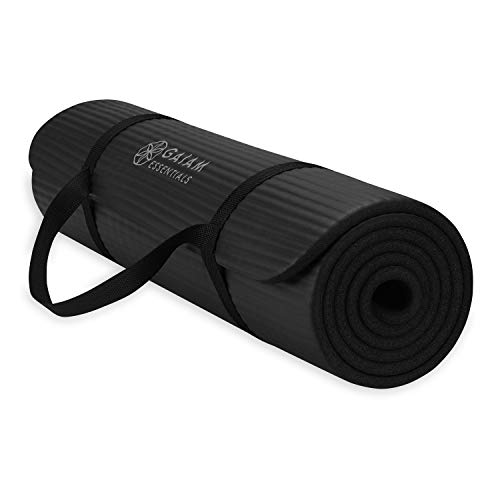
Gaiam Yoga Mat, Pilates & Exercise Mat, Thick 2/5" (10mm) Workout Mat with Easy-Cinch Carrying Strap for Home & Gym Workouts
Capacity
N/A — exercise mat
Steel
NBR Foam / Non-Slip Surface
Footprint
72" x 24" x 10mm thick
Price
$23.07
- 4.5+ star rating on Amazon with 50,000+ reviews
- Extra thick 10mm cushioning for joint protection
- Non-slip textured surface
- Includes carry strap for portability
- Great for stretching, ab work, and yoga
- Best budget exercise mat on Amazon
- Not firm enough for standing balance poses
- Absorbs sweat — needs regular cleaning
- 10mm thickness makes balance poses harder
Price and availability may change
A dedicated mat creates a designated warm-up area. This sounds trivial but it matters psychologically — unrolling the mat signals the start of your preparation. Practically, it provides cushioning for floor-based mobility work (hip circles, glute bridges, dead bugs) that you would skip on cold concrete.
Fat Gripz
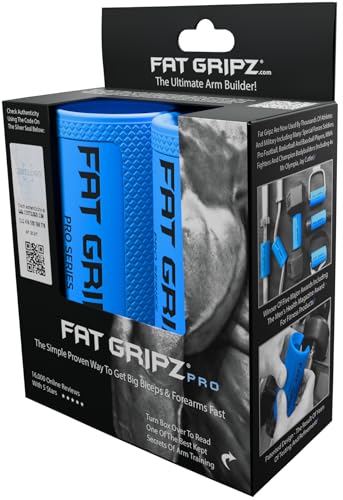
Fat Gripz - Grip Strength Trainer And Arm Builder (4x Men's Health Award Winner) (Pro 2.25")
Capacity
Fits any barbell or dumbbell
Steel
Military-Grade Compound Rubber
Footprint
Clip-on, fits in gym bag
Price
$29.95
- 4.7+ star rating on Amazon with 8,000+ reviews
- Instantly thickens any bar to 2.25" diameter
- Activates more forearm and grip muscles
- Military-grade rubber won't crack or tear
- Fits barbells, dumbbells, pull-up bars, cable attachments
- Used by NFL, MLB, and military training programs
- Reduces max weight you can lift by 20-30%
- Can slip on sweaty chrome bars — use chalk
- Only one size per pair (no progression)
Price and availability may change
Slide these onto the bar during your ramp-up sets and your grip, forearms, and rotator cuff muscles activate far more aggressively than with a standard bar. Remove them for working sets. This is an advanced warm-up strategy used by strongman competitors and powerlifters to prime the upper body for heavy pulling and pressing. They also reduce elbow stress during warm-up sets by distributing load across a larger grip surface.
PVC Pipe
A $5 PVC pipe from any hardware store is invaluable for shoulder pass-throughs, overhead squat mobility work, and hip hinge patterning. Cut one to 4 feet and keep it next to your rack permanently.
Cold Weather Warm-Up Modifications
Training in an unheated garage when it is 30-50 degrees outside changes the warm-up equation significantly. Cold ambient temperatures lower muscle and tendon temperature, increase synovial fluid viscosity (making joints feel stiff), and reduce nerve conduction velocity (making coordination worse). You must account for this.
Double your general warm-up time. What takes 5 minutes in a 70-degree gym takes 10 minutes when your garage is 40 degrees. You need more time to raise core temperature.
Wear layers and remove them gradually. Start in a hoodie, beanie, and sweatpants. Remove the hoodie after your general warm-up. Remove the beanie during specific warm-up sets. Train in a base layer for working sets. This prevents the temperature shock of going from cold to exertion.
Add an extra ramp-up set at every level. If your normal squat warm-up is bar x 10, 135 x 5, 185 x 3, 225 x 2 — in cold weather make it bar x 10, bar x 10, 95 x 8, 135 x 5, 185 x 3, 225 x 2. The extra volume at lighter weights ensures your joints are fully prepared.
Use a space heater directed at your training area. Even a small 1500-watt heater can raise the temperature in a 200-square-foot area by 10-15 degrees within 20 minutes. Turn it on before you begin your warm-up. See our winter garage gym training guide for comprehensive cold-weather strategies.
Pay extra attention to hands and feet. Grip strength drops dramatically in cold conditions. Use chalk earlier. Consider wearing lifting shoes to insulate your feet from cold flooring — barefoot deadlifting on 35-degree concrete is a recipe for cramped feet and compromised positioning.
Prioritize the foam roller. Cold muscles benefit even more from myofascial release. Spend an extra minute on any area that feels particularly stiff or restricted. The quads, hip flexors, and thoracic spine are especially affected by cold.
Warm-Up for Older Athletes (40+)
If you are over 40, everything in this guide applies to you, but with increased urgency and duration. The physiological changes of aging — reduced tendon elasticity, decreased synovial fluid production, slower nerve conduction, reduced blood flow to connective tissue — all mean that your warm-up must be longer, more thorough, and absolutely non-negotiable.
Our complete home gym training guide for athletes over 40 covers programming in depth, but here are the warm-up-specific adjustments:
Budget 15-20 minutes minimum. A 5-minute warm-up that works for a 25-year-old is insufficient after 40. Your tissues need more time to reach operating temperature and optimal elasticity.
Add joint-specific mobility work. Spend 60 seconds on each major joint you will load that day. Shoulder circles, hip CARs (Controlled Articular Rotations), wrist circles, and ankle mobility drills should become permanent fixtures. PubMed research on CARs and joint health supports their role in maintaining joint function during aging.
Incorporate balance challenges. Single-leg stands, tandem walks, and single-leg Romanian deadlifts with bodyweight serve double duty — they warm up stabilizer muscles while building the balance capacity that declines with age.
Use lighter ramp-up weights with more sets. Instead of jumping from 50% to 75% to 90%, use 40%, 50%, 60%, 70%, 80%, and then 90%. Smaller jumps give tendons and ligaments more time to adapt to increasing loads.
Listen to your body and extend when needed. Some days your joints feel great at 15 minutes. Other days, particularly after poor sleep or high stress, you need 25 minutes before heavy loads feel right. Build that flexibility into your schedule by planning sessions that allow extra warm-up time when needed.
Never skip warm-up sets, even when you feel good. The over-40 lifter who says "I feel great today, let me just jump to my working weight" is the one I see in the injury recovery section of this website. Feeling good is not the same as being prepared. Run the protocol every time. Our rehab and recovery guide covers what happens when you do not.
Common Warm-Up Mistakes in Home Gyms
Mistake 1: Treating cardio as a warm-up. Twenty minutes on the air bike raises your heart rate and core temperature, but it does not prepare your shoulders for bench pressing or your hips for squatting. General cardiovascular activity is only phase one. You still need joint-specific mobility and movement-specific ramp-up sets.
Mistake 2: Static stretching before lifting. As covered above, this reduces strength output. Save it for after.
Mistake 3: Rushing ramp-up sets. Your warm-up sets are not annoying obstacles between you and your working weight. They are technique practice under increasing load. Treat every warm-up rep with the same focus as a working rep.
Mistake 4: Identical warm-ups for every session. A squat day warm-up should look different from a bench day warm-up. The general warm-up stays the same; the specific warm-up must target the muscles and joints you are about to stress.
Mistake 5: Warming up once and then resting too long. If you warm up, then spend 10 minutes changing music or checking your phone, you have lost much of the benefit. Move directly from warm-up into your first working set within 2-3 minutes.
How long should a home gym warm-up take?
Can I skip the warm-up if I'm short on time?
Should I stretch before or after lifting?
What is the best warm-up for a cold garage gym?
Do I need special equipment for warming up?
How do warm-up needs change as I get older?
Should I foam roll before or after training?
Is jumping straight to my working weight dangerous?
Related Content
- Building a Home Gym After 40: Equipment & Training Guide — full programming and equipment advice for midlife athletes
- Garage Gym Safety: Complete Guide to Training Alone — solo training protocols, spotter alternatives, and safety equipment
- Home Gym for Injury Rehab & Recovery — equipment and programming for training through and recovering from injuries
- Best Resistance Bands for Home Gyms — detailed reviews of the bands referenced in this warm-up guide
- Best Recovery Tools for Home Gyms — foam rollers, percussion devices, and mobility accessories compared
Derek Walsh
Strongman competitor and former commercial gym equipment salesman. Knows what survives heavy daily use.
Read full bioMore in Guides
Strength vs Hypertrophy: How to Program for Your Goals (2026)
The definitive guide to programming for strength vs size in your home gym. Rep ranges, volume, intensity, and complete programs for both goals.
Home Gym Deload Guide: When and How to Back Off (2026)
Learn when and how to deload in your home gym. Science-backed protocols, recovery strategies, and signs you need a rest week.
CrossFit Home Gym Setup: Complete Equipment Guide (2026)
How to build a complete CrossFit home gym. Equipment list, budget options, and programming for garage gym CrossFit training.