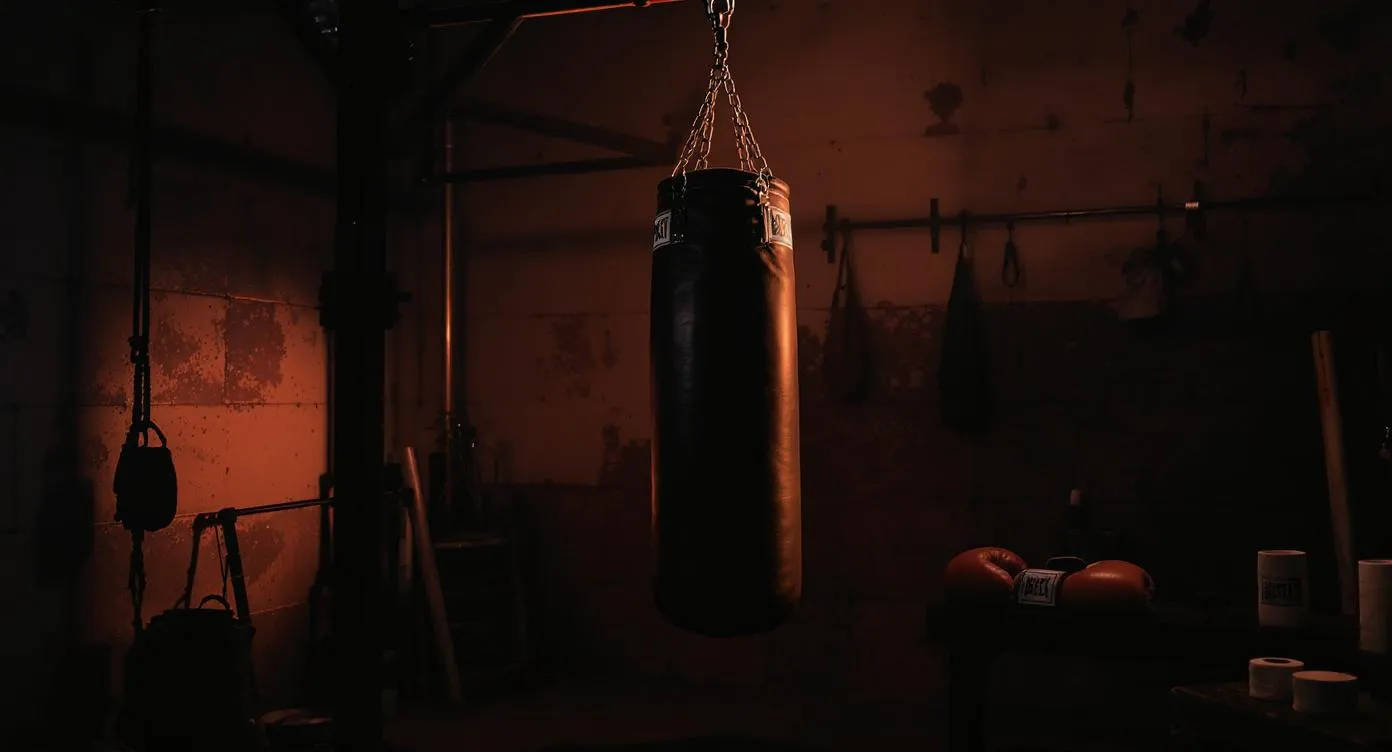
Home Gym for Boxing: Equipment & Training Guide (2026)
How to build a complete boxing gym at home. Heavy bag, gloves, jump rope, and strength training equipment for fighters and fitness boxers.
Boxing is one of the most effective total-body training systems ever developed. A single 45-minute session burns 500-800 calories, builds rotational core power, develops hand-eye coordination, and delivers a mental sharpness that treadmill cardio simply cannot match. Building a home boxing gym eliminates the two biggest barriers to consistent training: commute time and schedule restrictions. You train when you want, as hard as you want, with zero waiting for equipment.
This guide provides a complete blueprint for building a functional boxing gym in your garage, basement, or spare room. Whether you are training for fitness, skill development, or amateur competition, the equipment recommendations, training programming, and setup instructions below will get you punching within a week.
Who This Guide Is For: Three Training Tiers
Before spending a dollar, identify your tier. Each level builds on the previous one, so start at Tier 1 regardless of your ambitions.
Tier 1: Fitness Boxer (Budget: $200-$400)
This covers 90% of home boxing enthusiasts. You want the cardio, the stress relief, and the physique benefits without stepping into a ring. Equipment needed:
- Heavy bag (70-100 lbs)
- Boxing gloves (14 oz)
- Hand wraps (180-inch, two pairs)
- Jump rope
- Round timer app (free)
Training frequency: 3-5 days per week. Expected results: visible fat loss in 4-6 weeks, improved coordination in 2-3 weeks, stress reduction from day one.
Tier 2: Skill-Focused Boxer (Budget: $400-$800)
You want to develop legitimate boxing technique — clean combinations, defensive head movement, counter-punching timing. This tier adds precision training tools:
- Double-end bag (develops timing and accuracy)
- Speed bag with platform (hand speed and rhythm)
- Full-length mirror (minimum 4 ft x 6 ft for shadow boxing form checks)
- Slip bag or slip rope (defensive head movement)
Training frequency: 4-6 days per week. At this level, shadow boxing becomes equally important as bag work.
Tier 3: Competitive Fighter (Budget: $800+ Home Setup)
If you plan to compete in amateur or professional boxing, your home gym supplements real gym time. You cannot learn to spar alone — period. This tier adds:
- Maize bag (uppercut and body shot angles)
- Medicine balls (6 lb, 10 lb, 14 lb for core conditioning)
- Resistance bands for shoulder endurance
- Gym membership for sparring and coaching
Training frequency: 6 days per week, typically two sessions per day (skill work morning, conditioning evening).
Essential Equipment: Detailed Buying Guide
Heavy Bag: The Cornerstone of Your Boxing Gym
The heavy bag is your primary training partner. It absorbs thousands of punches per session and teaches you how power transfers from feet through hips into fists. Getting the right bag matters more than any other purchase.
Weight selection by body weight:
- Under 150 lbs: 70 lb bag
- 150-200 lbs: 80-100 lb bag
- Over 200 lbs: 100-120 lb bag
The rule is simple: if the bag swings wildly when you throw a cross, it is too light. You should be able to plant your feet and throw full-power combinations without the bag flying away from you.
Hanging vs. freestanding:
- Hanging bags absorb power better with natural swing and return
- More realistic feel for combination punching
- Last 5-10 years with proper maintenance
- Available in heavier weights (up to 150 lbs)
- Less floor space needed when not in use (can be pushed aside)
- Requires ceiling joist or beam mounting (not suitable for all spaces)
- Installation requires tools and hardware ($30-50 extra)
- Can damage ceiling structure if improperly mounted
- Not apartment-friendly due to vibration and noise transfer
- Needs minimum 8-foot ceiling clearance
Fill material matters. Bags filled with shredded textile and sand provide the best feel — firm enough to build bone density in your hands, soft enough to prevent joint damage. Avoid water-filled bags for serious training; they slosh unpredictably and do not provide consistent resistance. Avoid all-sand bags as well — they become rock-hard at the bottom and cause wrist injuries.
Top heavy bag picks for home gyms:
- Outslayer 100 lb Muay Thai bag — Best overall for serious training. Made in USA, lifetime warranty, perfect density. Dimensions: 6 ft tall x 14 inches diameter.
- Ringside Powerhide 100 lb — Excellent synthetic leather, pre-filled and ready to hang. Good value at the $150-180 range.
- Century Wavemaster XXL (freestanding) — Best apartment option. 270 lb base when filled with sand, minimal sway. Footprint: 24-inch diameter base.
Boxing Gloves: Protecting Your Hands and Wrists
Your gloves are the interface between your fists and the bag. Cheap gloves lead to wrist sprains, bruised knuckles, and skin tears. Invest in quality here.
Sizing guide:
- 12 oz: Competition and advanced bag work (experienced fighters only)
- 14 oz: Best all-around size for home training, bag work, and mitt work
- 16 oz: Sparring only (maximum padding for your partner's safety)
For home gym use, a single pair of 14 oz gloves handles everything. Look for multi-layered foam padding (not single-density foam), a secure wrist strap with velcro closure, and genuine or high-grade synthetic leather that will not crack after six months.
Recommended gloves:
- Hayabusa T3 (14 oz, $80-100) — Splinted wrist support, excellent wrist alignment, premium build
- Venum Elite (14 oz, $50-70) — Triple-density foam, good ventilation, strong value
- Rival RS1 Ultra Sparring 2.0 (16 oz, $90-110) — If you plan to spar at a gym, these protect both you and your partner
Hand Wraps: Non-Negotiable Protection
Hand wraps stabilize the 27 small bones in each hand and support your wrist joint during impact. Training without wraps, even on a light bag, risks metacarpal fractures and chronic wrist tendinitis.
Buy 180-inch Mexican-style semi-elastic wraps. The elasticity allows a snug wrap that conforms to your hand shape. Cotton wraps (non-elastic) loosen during training and provide less support. Own at least two pairs — one dries while the other is in use. Wash them weekly in a mesh laundry bag.
Jump Rope: The Boxer's Cardio Weapon

WOD Nation Adjustable Speed Jump Rope
Capacity
Adjustable up to 11 ft
Steel
Alloy Steel Cable / Aluminum Handles
Footprint
Pocket-sized
Price
$17.99
- 4.5+ star rating on Amazon with 14,000+ reviews
- Blazing-fast alloy steel speed cable
- Tool-free adjustable length up to 11 ft (wire cutter included)
- Smooth 360° ball-bearing rotation for double-unders
- Lightweight aluminum handles
- Great for boxing, MMA, and CrossFit conditioning
- Steel cable can fray on rough concrete over time
- Not weighted — pure speed rope (no strength training)
- Handles are slim — bigger hands may want grip tape
Price and availability may change
Every elite boxing gym in the world starts training sessions with jump rope. It builds calf endurance (critical for staying on your toes), develops rhythm and timing, and elevates your heart rate faster than running. The WOD Nation Speed Jump Rope is a proven choice with adjustable cable length and ball-bearing handles for smooth rotation. For more rope options at various price points, see our best jump ropes roundup.
Jump rope sizing: Stand on the center of the rope with one foot. The handles should reach your armpits (not your shoulders — that is too long). Most adult men use an 9-10 foot rope; women typically use 8-9 feet.
Round Timer
A round timer is essential for structured training. Boxing rounds are 3 minutes with 1-minute rest periods. Free apps like "Boxing Timer" work fine, but a dedicated gym timer mounted on the wall (like the Gymboss Interval Timer) eliminates phone distractions. Check our Gymboss Timer review for details.
Flooring: Protecting Your Space and Your Joints
Boxing training involves constant movement on the balls of your feet, plus the impact vibration from heavy bag work transfers directly into your floor. You need proper flooring for joint protection and noise reduction.
Best options:
- 3/4-inch horse stall mats — The gold standard for garage gyms. Dense rubber, virtually indestructible, excellent shock absorption. Cut to fit with a utility knife. Cost: $2-3 per square foot.
- Interlocking EVA foam tiles — Good for apartments (lighter, quieter), but wear faster and shift during lateral footwork. Acceptable for light training only.
Cover at minimum an 8 ft x 8 ft area around your heavy bag, plus a 6 ft x 10 ft strip for shadow boxing and jump rope. For a comprehensive flooring breakdown, read our garage gym flooring guide.
Setting Up Your Heavy Bag: Step-by-Step
Proper bag installation prevents ceiling damage, reduces noise, and ensures safe training. Do this right the first time.
Ceiling-Mounted Hanging Bag Setup
Materials needed:
- Heavy bag ceiling mount (spring-loaded or swivel type, rated for 150+ lbs)
- 4 lag bolts (3/8 inch x 4 inches minimum)
- Stud finder
- Drill with 1/4-inch pilot bit
- Socket wrench
Installation steps:
-
Locate a ceiling joist or beam. Use a stud finder to identify a solid wood joist — never mount to drywall alone. In garages with exposed rafters, bolt directly to a 2x8 or larger beam. For finished ceilings, confirm the joist is at least a 2x6.
-
Mark and drill pilot holes. Position the mount plate so all four bolt holes align with the joist. Drill 1/4-inch pilot holes 3.5 inches deep.
-
Install lag bolts. Drive 3/8-inch lag bolts using a socket wrench. Do not over-torque — stop when the mount plate is flush and firm. Each lag bolt into solid wood holds 200+ lbs in shear, so four bolts provide massive safety margin.
-
Attach chain and bag. Use a heavy-duty S-hook or carabiner rated for 300+ lbs. The bag should hang so the center strikes align with your solar plexus height (roughly 4 feet from the floor for most adults).
-
Test before full power. Push the bag firmly in all directions. Check for any ceiling flex or bolt movement. If anything shifts, remove and remount into a different joist.
Clearance requirements: Maintain 3-4 feet of space in all directions around the bag. You need room to circle, throw hooks from angles, and move backward after combinations. Total footprint: 8 ft x 8 ft minimum.
Freestanding Bag Setup
- Fill the base with dry play sand (not water). Sand weighs approximately 100 lbs per cubic foot and will not slosh, leak, or grow algae.
- Place the entire unit on a rubber mat (at least 3 ft x 3 ft) to prevent base sliding on concrete or hardwood.
- Position away from walls — freestanding bags tip at extreme angles and you need clearance.
Complete Training Programs
Beginner Program: Weeks 1-4 (3 Days Per Week)
This program assumes zero boxing experience. The focus is building proper mechanics before intensity.
Day 1 — Technique Focus
- Jump rope: 3 x 2 min (30 sec rest)
- Shadow boxing with mirror: 3 x 3 min (focus on jab only — stance, extension, retraction)
- Heavy bag: 4 x 2 min rounds (jab and cross only, moderate power)
- Core work: 3 x 20 sit-ups, 3 x 30 sec plank
Day 2 — Conditioning Focus
- Jump rope: 5 x 2 min (alternate single skip and boxer skip)
- Shadow boxing: 2 x 3 min (jab-cross combinations, footwork emphasis)
- Heavy bag: 3 x 3 min rounds (last 30 seconds of each round: maximum output)
- Bodyweight circuit: Push-ups, burpees, mountain climbers — 30 sec each, 4 rounds
Day 3 — Combination Development
- Jump rope: 3 x 2 min
- Shadow boxing: 3 x 3 min (introduce lead hook: jab-cross-hook)
- Heavy bag: 5 x 3 min rounds (mix combinations, practice moving after every combo)
- Cool-down: 5 min shadow boxing at 30% effort, stretching
Intermediate Program: Weeks 5-12 (4-5 Days Per Week)
By now your jab-cross should feel natural. Time to add defensive skills and combination variety.
Weekly structure:
- Monday: Heavy bag power rounds (5 x 3 min, focus on maximum power in 3-4 punch combos)
- Tuesday: Conditioning — jump rope intervals, burpees, medicine ball slams
- Wednesday: Technique — shadow boxing emphasis, double-end bag if available, new combinations
- Thursday: Heavy bag volume (8 x 3 min rounds, moderate power, high output)
- Friday: Mixed session — all tools, fight simulation rounds
Key combinations to develop:
- Jab-cross (1-2)
- Jab-cross-lead hook (1-2-3)
- Jab-body cross-head hook (1-2b-3)
- Double jab-cross-lead hook-cross (1-1-2-3-2)
- Jab-cross-lead hook-rear uppercut (1-2-3-6)
Advanced Program: Competitive Preparation (6 Days Per Week)
This mirrors what amateur boxers do in fight camp. Add this only after 6+ months of consistent training.
Morning session (30 min): Road work or jump rope intervals — 5-mile run at moderate pace, or 10 x 3-min jump rope rounds.
Evening session (60 min):
- Shadow boxing: 4 x 3 min (full offense and defense, visualize an opponent)
- Heavy bag: 6 x 3 min (vary power, speed, combinations each round)
- Double-end bag: 3 x 3 min (timing and accuracy)
- Speed bag: 3 x 3 min (rhythm and shoulder endurance)
- Conditioning: 4 rounds of fight-specific exercises (burpees, mountain climbers, sprawls)
- Core: 100 sit-ups, 2-min plank, 50 Russian twists with medicine ball
Strength Training for Boxers
Contrary to outdated myths, strength training improves boxing performance when programmed correctly. The key is training for explosive power, not bodybuilding hypertrophy.
Priority exercises for punching power:
- Barbell squat — generates force from the ground up. 3-5 sets of 3-5 reps, heavy.
- Romanian deadlift — posterior chain strength for hip rotation. 3 x 6-8 reps.
- Landmine press — mimics the pressing angle of a cross. 3 x 8 each arm.
- Medicine ball rotational throws — directly trains the rotational power pattern of hooks and crosses. 3 x 8 each side.
- Pull-ups — lat strength for pulling your hands back quickly (retraction speed). 4 x max reps.
Train strength 2-3 days per week, never on the same day as high-volume bag work. See our home gym programming guide for how to structure concurrent strength and sport training.
Safety and Injury Prevention
Boxing training carries inherent risk if you ignore fundamentals. These rules prevent the most common injuries:
Hand and Wrist Protection
- Always wrap your hands — even for 5-minute light sessions. Wrist sprains and metacarpal fractures heal slowly and recur easily.
- Replace gloves when padding compresses — if you can feel the impact through your gloves on moderate punches, the foam has broken down. Most gloves last 12-18 months of regular use.
- Hit with the first two knuckles (index and middle finger). The ring and pinky knuckles connect to thin metacarpal bones that fracture easily. If you consistently land on the outside of your fist, your punch form needs correction.
Shoulder and Elbow Care
- Never lock your elbow on straight punches. Maintain a micro-bend at full extension to prevent hyperextension injuries.
- Warm up shoulders before bag work. Arm circles, band pull-aparts, and light shadow boxing for 3-5 minutes prevents rotator cuff strain.
- Stop training if you feel sharp pain. Dull muscle fatigue is normal; sharp joint pain is a warning sign.
Space and Environmental Safety
- Ensure your training area is clear of obstacles, sharp edges, and slippery surfaces.
- Adequate ventilation matters — boxing raises your heart rate to 85-95% of max, and overheating in enclosed spaces causes dizziness and poor coordination.
- Keep water within reach. Hydrate between every round.
For comprehensive safety guidance including emergency considerations, see our garage gym safety guide.
Equipment Maintenance
Heavy Bag Care
- Wipe down with a damp cloth weekly to prevent surface cracking from sweat and oil buildup.
- Check chains, swivels, and mounting hardware monthly for wear. Replace S-hooks if they show signs of opening.
- Rotate the bag 90 degrees monthly so it wears evenly (leather bags develop soft spots on the most-hit surface).
- Synthetic leather bags last 3-5 years; genuine leather bags last 8-15 years with conditioning treatment annually.
Glove Maintenance
- Never store gloves in your gym bag — they develop bacteria and deteriorate from trapped moisture.
- After every session, open the velcro straps and stuff gloves with newspaper or cedar blocks to absorb moisture.
- Use glove deodorizers or a light baking soda sprinkle inside weekly.
- Air dry completely before next use (12-24 hours minimum).
Hand Wrap Care
- Machine wash in a mesh laundry bag on cold cycle every 3-5 uses.
- Air dry only — dryer heat destroys the elastic fibers.
- Replace wraps every 6-12 months when elasticity is lost.
Common Questions
How much space do I need for a home boxing gym?
What size heavy bag should I buy for home use?
Can I set up a boxing gym in an apartment?
How often should I train boxing at home?
Do boxers need to lift weights?
What's the best first combination to learn?
Can I learn boxing without a coach?
How do I reduce heavy bag noise in my garage?
Additional Resources
Related Content
- Home Gym for MMA
- WOD Nation Jump Rope Review
- CrossFit Home Gym Setup
- Home Gym for Runners
- Home Gym Under $500
- Best Jump Ropes
- Garage Gym Safety
The Bottom Line
A home boxing gym delivers elite-level cardiovascular training, full-body power development, and unmatched stress relief for an initial investment of $200-$400. The heavy bag is your primary training partner — invest in quality there. Wrap your hands every session without exception. Start with the jab-cross and build complexity over months, not days. Add a jump rope, a timer, and proper flooring, and you have everything needed for years of progressive training. Boxing is the most rewarding cardio discipline you can pursue at home — the skill element means you never plateau, never get bored, and always have something new to work toward.
Derek Walsh
Strongman competitor and former commercial gym equipment salesman. Knows what survives heavy daily use.
Read full bioMore in Guides
Strength vs Hypertrophy: How to Program for Your Goals (2026)
The definitive guide to programming for strength vs size in your home gym. Rep ranges, volume, intensity, and complete programs for both goals.
The Complete Home Gym Warm-Up Guide (2026)
Stop skipping your warm-up. Complete warm-up protocols for every training style, plus the equipment that makes preparation effortless at home.
Home Gym Deload Guide: When and How to Back Off (2026)
Learn when and how to deload in your home gym. Science-backed protocols, recovery strategies, and signs you need a rest week.