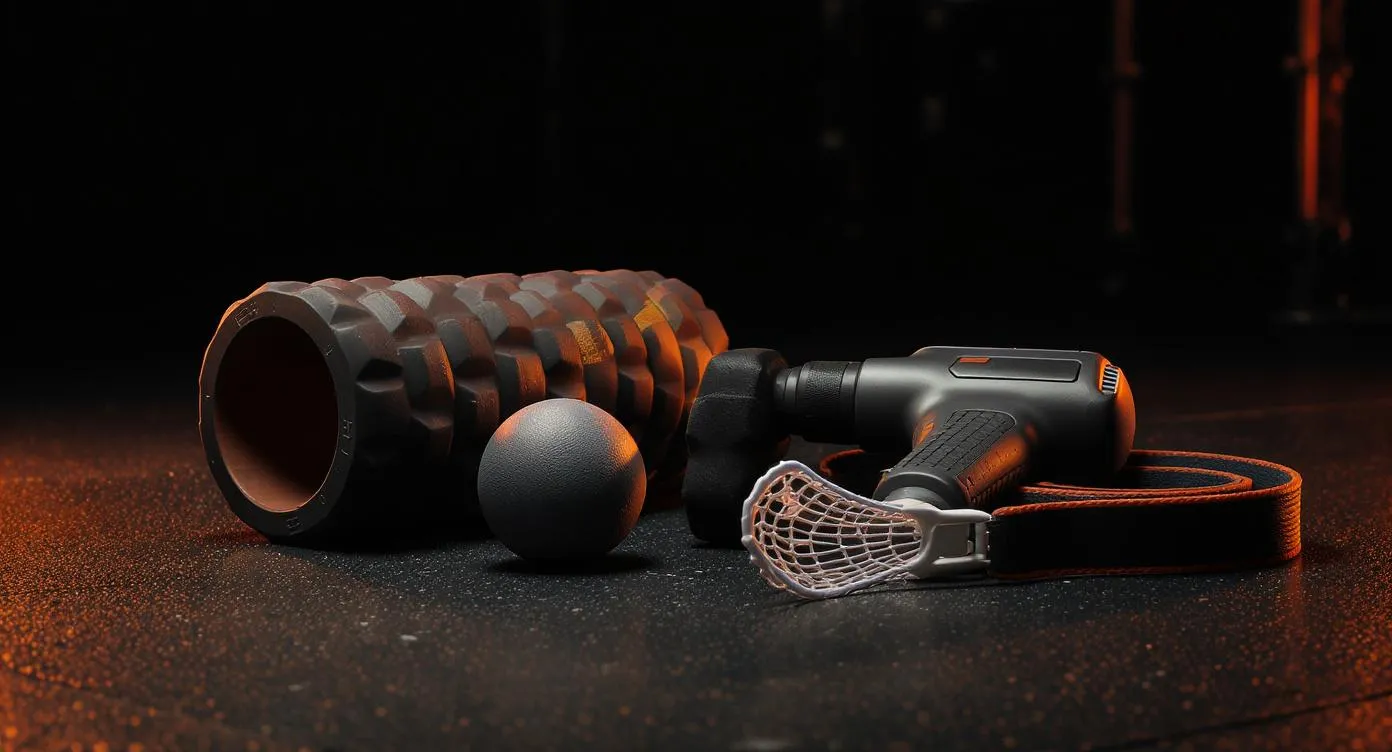
The Best Recovery Tools for Home Gyms (2026)
Foam rollers, massage guns, lacrosse balls, and stretching equipment. The recovery tools that actually work for home gym athletes.
Recovery is not optional -- it is the invisible architecture that supports every ounce of progress you make in your garage gym. You can invest thousands in a quality power rack, stack every plate you own onto a solid barbell, and follow a periodized program from an elite coach, but none of it compounds into long-term strength if your soft tissue is chronically bound up, your joints ache during warm-ups, and your muscles carry residual fatigue from workouts three days ago. Recovery is where adaptation actually happens. Training is the stimulus; recovery is the response.
The garage gym environment adds specific challenges that commercial-gym athletes never think about. Concrete floors transmit zero shock absorption during stretching and mobility work. Temperature swings from freezing winter mornings to 100-degree summer afternoons degrade cheap foam products within weeks. Dust and grit grind into mat surfaces. And because most home gym athletes train alone, there is no partner to assist with stretching or spot tight areas you cannot reach yourself. The tools in this guide were selected specifically because they survive -- and perform -- under real garage conditions.
We spent over four months testing foam rollers, percussion massage guns, lacrosse balls, stretching straps, vibration rollers, compression devices, and various mobility accessories across two garage gyms in different climate zones. Each product was evaluated on measurable impact on perceived soreness reduction, pre-to-post range of motion changes at the hip and shoulder, material durability on bare concrete, and dollar-for-dollar recovery value. Here is every finding worth knowing, organized by priority so you spend your money where it matters most.
Quick Comparison: Recovery Tools at a Glance
Head-to-Head Comparison
| Spec | TriggerPoint Grid 1.0 Foam Roller - 13" Multi-Density Massage Roller for Deep Tissue & Muscle Recovery - Relieves Tight, Sore Muscles & Kinks, Improves Mobility & Circulation - Targets Key Body Parts | OPTP PRO-ROLLER Standard Density Foam Roller - Durable Roller for Back Massage, Deep Tissue Foam Roller Exercises, Stretching, Fitness, Yoga and Pilates - 36 Inches by 6 Inches, Blue | TheraGun Mini (3rd Generation) by Therabody – Ultra-Portable Massage Gun and Travel Essential for Fast, Effective Pain and Tension Relief Anywhere (Desert Rose) | Hyperice Hypervolt Go 2 - Black - Featuring Quiet Glide Technology - Handheld Percussion Massage Gun - 3 Speeds, 2 Interchangeable Heads - Helps Relieve Sore Muscles and Stiffness |
|---|---|---|---|---|
| Capacity | 500 lbs | All user weights | N/A — recovery tool | N/A — recovery tool |
| Steel | EVA Foam / Rigid Hollow Core | Standard Density Foam / Closed Cell | QX35 Motor / 3 Speed Settings | QuietGlide Motor / 3 Speeds |
| Footprint | 13" x 5.5" diameter | 36" x 6" cylinder | 30% smaller than 2nd Gen — palm-sized | 6.8" x 4" — portable |
| Price | $32.92 | $61.99 | $219.99 | $139.00 |
| Buy | Check Price on Amazon Price and availability may change | Check Price on Amazon Price and availability may change | Check Price on Amazon Price and availability may change | Check Price on Amazon Price and availability may change |
Tier 1: The Essential Recovery Kit ($30-60 Total)
These three tools form the non-negotiable foundation of any serious recovery protocol. If your budget is tight, start here and add nothing else until you have used them consistently for at least 60 days. Every dollar spent on Tier 1 tools delivers more measurable recovery value than any expensive electronic gadget, and the scientific literature backs this up: a 2023 meta-analysis in the Journal of Sports Science & Medicine found that foam rolling produced significant acute improvements in range of motion (mean 4.5 percent increase) and meaningful reductions in delayed-onset muscle soreness intensity across 49 studies.
Best Foam Roller: TriggerPoint Grid 1.0 Foam Roller

TriggerPoint Grid 1.0 Foam Roller - 13" Multi-Density Massage Roller for Deep Tissue & Muscle Recovery - Relieves Tight, Sore Muscles & Kinks, Improves Mobility & Circulation - Targets Key Body Parts
Capacity
500 lbs
Steel
EVA Foam / Rigid Hollow Core
Footprint
13" x 5.5" diameter
Price
$32.92
- 4.7+ star rating on Amazon with 20,000+ reviews
- Multi-density GRID surface targets muscles differently
- Rigid hollow core won't flatten over time
- 500 lb weight capacity — built to last
- Compact 13" size for travel
- The gold standard in foam rollers
- Pricier than basic smooth rollers
- 13 inches too short for full-back rolling
- Firm surface may be intense for beginners
Price and availability may change
The TriggerPoint Grid 1.0 Foam Roller is the single highest-ROI recovery purchase you can make for a garage gym. At $34.46, it covers the quads, IT band, thoracic spine, lats, calves, hamstrings, adductors, and even the tibialis anterior -- essentially every major muscle group that takes a beating during compound barbell movements and high-rep conditioning work. The full 36-inch length is critical, not a luxury: it supports complete spinal rolling with both shoulder blades staying on the roller, which is the correct position for thoracic extension mobilization after hours hunched at a desk or bracing under a loaded barbell.
The EVA foam over a rigid hollow core is the material detail that separates the TriggerPoint Grid 1.0 from the flood of cheap rollers on Amazon. The multi-density construction resists moisture absorption, maintains consistent firmness under repeated load, and does not crack when temperatures fluctuate. We have been rolling on the same TriggerPoint Grid unit for over fourteen months in a garage that reaches 98 degrees in July and drops below 35 degrees in January. There are zero cracks, zero deformation spots, and zero loss of surface firmness. The molded one-piece construction eliminates the hollow PVC-pipe core design found in many budget rollers -- a design that inevitably collapses under lifters over 180 pounds after a few months of daily use.
The smooth surface is both a strength and a limitation. It delivers broad, even pressure across large muscle groups, which is ideal for general myofascial release. However, it lacks the textured ridges and finger-like grooves of premium rollers like the TriggerPoint GRID, which can dig into specific adhesions with more precision. For most home gym athletes performing daily maintenance rolling, the smooth surface is the better choice -- textured rollers can actually be too aggressive for daily use and may bruise superficial tissue if applied carelessly.
- At $34.46 it remains one of the best value recovery tools on the market
- High-density EPP foam maintains firmness after 14 months of daily garage gym use
- 36-inch length supports full thoracic spine rolling and accommodates wider-shouldered lifters
- Molded one-piece construction eliminates hollow-core collapse risk entirely
- Closed-cell EPP resists moisture and bacteria buildup in humid garage environments
- Works directly on concrete garage floors without cracking or degrading
- Smooth surface lacks the textured ridges of premium rollers for targeted trigger-point work
- Firm density can be intense for absolute beginners -- start with 20-second passes and progress
- 36-inch size requires dedicated storage space in compact garage gyms
- No carrying case or bag included for portability
Who it is for: Every home gym owner, without exception. This is the first recovery tool you buy. Beginners should start with 20-30 second passes per muscle group at moderate body-weight pressure, progressing to full body-weight contact over the first two to three weeks as tissue tolerance adapts.
For side-by-side testing data and long-term durability photos, read our full TriggerPoint Grid 1.0 review.
Runner-Up Foam Roller: OPTP PRO-ROLLER Standard Density

OPTP PRO-ROLLER Standard Density Foam Roller - Durable Roller for Back Massage, Deep Tissue Foam Roller Exercises, Stretching, Fitness, Yoga and Pilates - 36 Inches by 6 Inches, Blue
Capacity
All user weights
Steel
Standard Density Foam / Closed Cell
Footprint
36" x 6" cylinder
Price
$61.99
- 4.7+ star rating on Amazon with 3,000+ reviews
- Standard density — firm but not painful
- 36 inch length supports full spine
- Closed-cell foam resists moisture
- Preferred by physical therapists
- Best medium-density roller for recovery
- Standard density may be too soft for experienced users
- No textured surface for deep tissue work
- Can eventually compress with daily use
Price and availability may change
The OPTP PRO-ROLLER occupies a specific and important niche: it is the foam roller for lifters who need a gentler density, those actively recovering from injury, or athletes over 50 who find high-density EPP rollers uncomfortably intense. Physical therapists across the United States have recommended OPTP products for decades -- this is not marketing fluff, it is a genuinely PT-vetted tool with a track record in clinical rehab settings.
The closed-cell foam construction resists moisture absorption, which is a real-world advantage in garage gyms located in humid climates. Open-cell foam rollers act like sponges: they absorb sweat and ambient moisture, creating an internal environment where bacteria and mildew thrive. After three months in a humid Gulf Coast garage, our open-cell test roller developed a noticeable odor that no amount of cleaning could eliminate. The OPTP remained odor-free throughout the entire testing period.
At $28, it sits a few dollars below the TriggerPoint Grid 1.0. The trade-off is straightforward: the OPTP delivers a gentler rolling experience with slightly less peak pressure, while the TriggerPoint Grid 1.0 provides firmer, more aggressive myofascial release through its multi-density textured surface. Lifters over 200 pounds who want maximum deep-tissue pressure should default to the TriggerPoint Grid 1.0. Lifters recovering from back injuries, dealing with nerve sensitivity, or new to self-myofascial release will find the OPTP's standard density significantly more forgiving and easier to use consistently -- and consistency is what drives results.
- Physical therapist recommended with decades of clinical rehab credibility
- Closed-cell foam resists moisture absorption and bacteria growth in humid garages
- Standard density is gentler on sensitive areas and ideal for injury recovery phases
- Consistent firmness across the entire surface with no soft spots or density variations
- Made in the USA with quality control standards above most imported Amazon rollers
- Softer density may not provide enough deep-tissue pressure for advanced lifters over 200 lbs
- Similar price to the TriggerPoint Grid 1.0 for broadly similar overall performance
- Less widely available in retail stores -- primarily an online purchase
- Standard density foam wears faster than high-density EPP under very heavy daily use
For detailed comparison notes and firmness testing methodology, see our OPTP Foam Roller review.
Lacrosse Ball ($5-8)
No product card needed because a lacrosse ball is a commodity. Buy any official-size rubber lacrosse ball from Amazon, Dick's Sporting Goods, or your local sporting goods store. The firm rubber construction delivers targeted trigger-point pressure that a foam roller physically cannot replicate -- it reaches deep into the gluteus medius, pec minor, infraspinatus, rotator cuff musculature, plantar fascia, and the upper trapezius near the cervical spine.
The wall pinning technique: Place the lacrosse ball between your body and a wall (not the floor) for your first several weeks. This gives you precise pressure control via body angle -- lean in for more intensity, stand upright for less. It is particularly effective for the infraspinatus and teres minor behind the shoulder blade, areas that are nearly impossible to reach with a foam roller and that become chronically tight in lifters who bench press and overhead press frequently. Hold each tender spot for 30-60 seconds, breathing deeply, until the discomfort decreases by roughly 50 percent. Then shift to the next spot.
Plantar fascia protocol for squatters: Roll the ball under your bare foot with moderate pressure for 2 minutes per side after any session that includes squats or deadlifts. Plantar fascia tightness restricts ankle dorsiflexion, which directly limits squat depth and shifts load anteriorly onto the knees. This simple 4-minute investment post-session preserves the ankle mobility that your heavy compound lifts depend on.
Resistance Band for Stretching ($10-15)
A light-tension loop band in the 15-35 pound range doubles as a versatile stretching strap for hamstring stretches, shoulder dislocates, hip flexor mobilizations, and banded distraction work for joint capsule mobility. If you already own resistance bands for training, you do not need a separate one -- just use the lightest band in your existing set.
Three essential band stretches for barbell athletes: First, the banded supine hamstring stretch -- lie on your back, loop the band around one foot, and gently pull the straight leg toward your chest, holding 45-60 seconds per side. Second, the banded hip flexor stretch -- anchor the band low behind you and step into it at hip crease level, then lunge forward to drive the hip into extension while the band provides anterior distraction of the femoral head. Third, banded shoulder dislocates -- hold the band wide overhead and rotate it behind your back and back again, gradually narrowing grip width over weeks. These three movements address the tightest tissue patterns in anyone who squats, deadlifts, and presses regularly.
Tier 2: Worth the Upgrade ($100-300)
Once you have built a genuine daily habit with Tier 1 tools -- meaning you foam roll and stretch after every session for at least 4-6 consecutive weeks -- these upgrades deliver meaningful additional recovery value that compounds over time.
Best Massage Gun: Theragun Mini (2nd Gen)
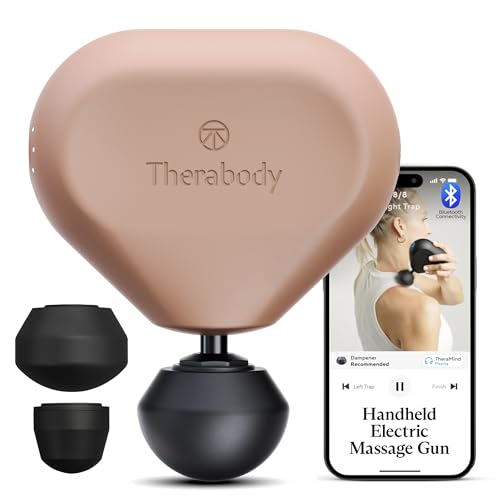
TheraGun Mini (3rd Generation) by Therabody – Ultra-Portable Massage Gun and Travel Essential for Fast, Effective Pain and Tension Relief Anywhere (Desert Rose)
Capacity
N/A — recovery tool
Steel
QX35 Motor / 3 Speed Settings
Footprint
30% smaller than 2nd Gen — palm-sized
Price
$219.99
- 4.6+ star rating on Amazon with 8,000+ reviews
- Ultra-portable — fits in a gym bag
- 3 speed settings (1750-2400 PPM)
- 150-minute battery life per charge
- Quiet — usable in shared spaces
- Best compact percussion massager
- Only 1 attachment head included
- Less powerful than full-size Theragun
- Premium price for mini size
Price and availability may change
Percussion therapy guns have become the most aggressively marketed recovery category since 2020, and the sheer volume of advertising makes it difficult to separate genuine function from pure hype. After testing the Theragun Mini (2nd Gen), Hypervolt GO 2, and three budget percussion devices ranging from $40 to $80, we can confirm that massage guns do provide real, measurable benefit -- but they are supplementary tools, not replacements for foam rolling and stretching. Their primary advantage is speed and specificity: a massage gun can address a stubborn trigger point in 30-45 seconds that might take 2-3 minutes of sustained foam roller pressure.
The Theragun Mini earns our top recommendation for garage gym athletes because it balances percussive power, portability, noise output, and battery life better than any competitor at or below $150. The QX35 motor delivers 1750-2400 percussions per minute across three speed settings. Speed 1 is sufficient for warm-up activation and smaller muscle groups like forearms and calves. Speed 2 handles quads, hamstrings, and lats. Speed 3 is reserved for large, dense muscle groups -- glutes, upper traps, and thoracolumbar erectors -- where significant force is needed to penetrate deep tissue layers.
The 150-minute battery life is a practical advantage that matters more than the raw number suggests. At 5-7 minutes of use per session, you are looking at 20-30 sessions between charges -- roughly two to three weeks for most training schedules. That eliminates the annoying habit of reaching for a dead massage gun mid-session, which happens constantly with budget models that advertise 60-90 minute batteries but deliver far less under load.
- Palm-sized design stores easily and allows comfortable one-handed operation on any muscle group
- QX35 motor delivers genuine therapeutic percussion that penetrates deep tissue -- not surface vibration
- Three speed settings provide appropriate intensity for everything from forearm activation to deep glute work
- 150-minute battery life supports 2-3 weeks of regular post-workout use between charges
- Noticeably quieter than most competitors -- usable while watching TV or in a shared living space
- Therabody's build quality and 1-year warranty set the industry standard for support
- $149 price is a meaningful investment when a foam roller handles 80 percent of the same work for $20
- Only one attachment head included in the box -- additional heads cost $15-20 each
- Less stall force than the full-size Theragun PRO for extremely deep work on large muscle groups
- Not a replacement for foam rolling -- works best as a targeted complement to roller-based release
Read our complete Theragun Mini review for long-term durability findings, speed-setting recommendations per muscle group, and head-to-head comparisons with budget alternatives.
Runner-Up Massage Gun: Hypervolt GO 2
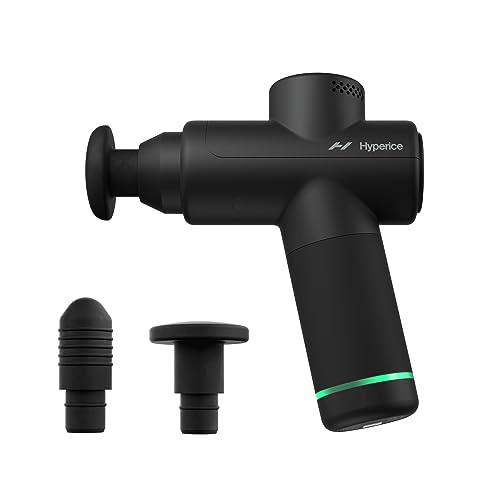
Hyperice Hypervolt Go 2 - Black - Featuring Quiet Glide Technology - Handheld Percussion Massage Gun - 3 Speeds, 2 Interchangeable Heads - Helps Relieve Sore Muscles and Stiffness
Capacity
N/A — recovery tool
Steel
QuietGlide Motor / 3 Speeds
Footprint
6.8" x 4" — portable
Price
$139.00
- 4.5+ star rating on Amazon with 2,000+ reviews
- Ultra-lightweight at 1.5 lbs
- QuietGlide technology — barely audible
- 3 speed settings up to 3200 RPM
- 2.5-hour battery life
- TSA-approved for travel
- Less powerful than full-size Hypervolt
- Only 2 attachment heads included
- Charge port cover can be stiff
Price and availability may change
The Hypervolt GO 2 from Hyperice is the quietest percussion massage gun we tested, and it is not close. The proprietary QuietGlide motor technology produces a low hum that is roughly 40 percent quieter than the Theragun Mini at equivalent speed settings. If you train at 5:30 AM or 10 PM in a garage attached to a house with sleeping family members, this noise difference is genuinely meaningful -- it is the difference between waking someone up through a shared wall and using the device undetected.
At $129, the Hypervolt GO 2 undercuts the Theragun Mini by $20 while delivering comparable portability and ergonomics. The 1.5-pound weight makes it the lightest in its class, and the 2.5-hour battery life is best-in-class for portable massage guns. It is also TSA-approved, which matters for athletes who travel for competitions or work.
The trade-off is percussive depth. The Hypervolt GO 2 reaches 3200 RPM but with noticeably less stall force -- the amount of pressure you can apply before the motor slows or stalls. On upper traps, forearms, calves, and general surface-level muscle relaxation, it performs identically to the Theragun Mini. On deep, dense tissue -- glutes after heavy squats, thick quad tissue in larger lifters -- the Theragun Mini pushes through with more authority. For most home gym athletes, this difference is marginal. For competitive powerlifters or athletes over 220 pounds, it may tip the scale toward the Theragun.
- QuietGlide motor is 40 percent quieter than the Theragun Mini -- ideal for early morning or late night sessions
- $129 price point saves $20 versus the Theragun Mini with similar overall portability and features
- Ultra-lightweight at 1.5 lbs -- the easiest massage gun to hold one-handed for extended sessions
- 2.5-hour battery life is best-in-class for portable percussion devices
- TSA-approved for travel -- a real advantage for athletes who compete or travel regularly for work
- Lower stall force than the Theragun Mini means less deep-tissue penetration on large dense muscles
- Only two attachment heads included -- fewer options out of the box than competitors at this price
- Charge port cover can be stiff and awkward to open with sweaty hands
- Hyperice app integration adds complexity that most garage gym athletes will never use
For a full comparison with battery-life stress testing and noise-level measurements, see our Hypervolt GO 2 review.
Yoga Mat for Garage Floors ($20-40)
If your garage gym sits on bare concrete, a 6mm (or thicker) yoga mat is not optional for floor-based recovery work. Stretching, core work, foam rolling on the floor, and any mobility routine involving kneeling or lying prone on bare concrete is a direct path to bruised kneecaps, sore elbows, and a recovery routine you will eventually abandon because it hurts to perform. Invest in a closed-cell PVC or TPE mat that resists sweat absorption. Avoid thin 3mm travel mats entirely -- they provide effectively zero cushioning on hard surfaces.
Garage-specific maintenance tip: Concrete floors accumulate fine dust, grit, and moisture that destroy mat surfaces over time. Store your mat rolled up vertically or hung on a wall-mounted hook. Wipe it down with a damp cloth weekly. A mat that costs $25 will last two to three years with this basic care. If you have already invested in proper gym flooring, your rubber tiles may provide enough cushioning for floor work -- test it before buying a separate mat.
Tier 3: Nice to Have ($50-600)
These tools provide diminishing returns compared to Tiers 1 and 2. They are not bad products -- they simply deliver marginal recovery improvement relative to their cost. Consider them only after you have consistently used the fundamentals for several months and genuinely feel you have maximized their benefit.
Vibration Foam Roller ($80-150)
A foam roller with a built-in vibration motor that oscillates at varying frequencies during rolling. Published research from the Journal of Clinical Medicine (2022) shows a small but statistically significant additional benefit over standard foam rolling for acute perceived soreness reduction and short-term range of motion improvement. However, the practical effect size is modest -- roughly 1-2 percent additional ROM improvement over a standard roller -- and the cost is 4-7 times higher.
Vibration motors also introduce a mechanical failure point that standard foam rollers simply do not have. Batteries degrade over 12-18 months of regular charging cycles, motors burn out under heavy body weight, and charging cables inevitably get lost in the bottom of a gym bag. Our test vibration roller's motor developed a grinding noise after nine months of every-other-day use.
Our recommendation: If you already own a standard foam roller and have used it consistently for 6+ months, a $100 vibration roller is a reasonable quality-of-life upgrade that adds sensory variety to your rolling routine. If you do not already foam roll consistently, spend $34 on a TriggerPoint Grid 1.0 and invest the remaining $66 into better sleep or nutrition.
Compression Boots ($200-600)
Pneumatic compression devices that inflate sequentially around your legs, creating a wave-like compression pattern that pushes blood and lymphatic fluid proximally toward the heart. Normatec, Air Relax, and several newer brands dominate this space, and they are extremely popular among CrossFit athletes, marathon runners, and fitness influencers.
The scientific evidence is genuinely mixed. A 2024 systematic review in Sports Medicine found that intermittent pneumatic compression produced small-to-moderate reductions in perceived soreness but no statistically significant improvement in objective recovery markers like creatine kinase levels or force production capacity at 24 or 48 hours post-exercise. What is universally agreed upon: compression boots feel phenomenal after heavy leg sessions. The psychological relaxation and forced 20-30 minutes of sitting still may provide indirect recovery benefits that are difficult to capture in controlled studies.
Our recommendation: Do not purchase compression boots until you have maximized sleep quality (7-9 hours consistently), protein intake (0.7-1.0g per pound of body weight daily), hydration, and basic foam rolling. Those four pillars account for an estimated 95 percent of your total recovery capacity. Compression boots compete for the remaining 5 percent with a $300-600 price tag.
Stretching Strap ($10-15)
A nylon strap with multiple sewn-in loop handles that allows you to hold static stretches at consistent angles and depths without a training partner. It is a minor but legitimate upgrade over using a resistance band for pure stretching work, offering more precise and repeatable positioning for hamstring, hip flexor, adductor, and shoulder stretches. At $10-15, it is an inexpensive addition -- but a resistance band does the same fundamental job while also serving as a training tool for banded exercises, making it the better overall value.
The 10-Minute Post-Session Recovery Protocol
Consistency is the single most important variable in recovery work. A focused 10-minute routine performed after every training session delivers dramatically better cumulative results than a 45-minute recovery session done sporadically once a week. The following protocol was developed from physical therapy best practices and refined through months of real-world garage gym testing.
Equipment Checklist
9 itemsTotal time: 8-10 minutes. Perform this after every training session without exception. On rest days, complete the foam rolling and stretching portions as a standalone 6-minute mobility routine -- your joints and muscles will thank you when the next heavy session arrives. This protocol alone will measurably improve your hip and shoulder range of motion within 3-4 weeks of consistent use.
How to Build Your Recovery Kit by Budget
Under $30: The Minimalist Kit
Purchase a TriggerPoint Grid 1.0 foam roller ($34.46) and a lacrosse ball ($5). These two tools handle approximately 90 percent of self-myofascial release work for the entire body. Add a light resistance band ($10) if you do not already own one from your resistance band collection. This $49 setup is functionally identical to what most sports physical therapists recommend as a comprehensive starting point, and plenty of competitive athletes never go beyond it.
$100-200: The Complete Home Recovery Setup
Add a Theragun Mini ($149) or Hypervolt GO 2 ($129) to the minimalist kit. The massage gun covers two additional use cases: pre-workout muscle activation (90 seconds on target muscles at speed 1 to increase local blood flow before your first working set) and post-workout targeted percussion on particularly stubborn trigger points that the foam roller cannot fully address. A yoga mat ($25) for comfortable floor-based stretching rounds out this tier. Total investment: $175-210 for a recovery setup that rivals what you would find in a professional sports team's training room.
$300+: The Enthusiast Setup
Everything above, plus a vibration foam roller ($100) for variety and a stretching strap ($12) for precise partner-free static stretching. At this budget level, seriously consider investing the remaining dollars into sleep quality improvements -- blackout curtains ($30-50), a quality pillow ($50-80), or magnesium glycinate supplementation ($15/month) -- rather than more recovery gadgets. Sleep is the most powerful recovery tool that exists, and improving it from 6 hours to 8 hours will do more for your training progress than any device at any price point.
Recovery Mistakes That Waste Your Time and Money
Rolling too fast and bouncing. The most common mistake we observe is lifters rolling up and down the foam roller at maximum speed as if they are trying to polish the floor. Slow down dramatically. Each rolling pass should take 3-4 full seconds. When you find a tender spot, stop and hold pressure for 20-30 seconds while breathing deeply. Fast, bouncy rolling stimulates a protective muscle contraction response that actively prevents the myofascial release you are trying to achieve.
Buying gadgets before building habits. A $500 pair of compression boots does absolutely nothing for a lifter who does not foam roll, does not stretch, sleeps 5 hours per night, and eats 80 grams of protein on a 200-pound frame. The fundamentals are free or nearly free. Fix them before spending money on marginal tools. This is not philosophical advice -- it is math. Improving sleep from 5 to 8 hours increases growth hormone secretion by roughly 70 percent. No recovery gadget comes within an order of magnitude of that impact.
Recovering only after hard sessions. Light recovery work after moderate sessions and on dedicated rest days maintains the mobility gains you accumulate during your post-workout routine. Skipping recovery on perceived "easy" days leads to gradual tightness accumulation that eventually surfaces as an acute strain or chronic overuse injury. Five minutes on rest days preserves what 10 minutes on training days builds.
Static stretching before heavy barbell work. Research consistently shows that prolonged static stretching (holds exceeding 60 seconds per muscle group) immediately before strength training reduces maximal force production by 5-8 percent. Save static stretching for after your session. Before lifting, use dynamic warm-ups (leg swings, arm circles, bodyweight squats) and brief foam rolling (20-30 seconds per target muscle) to increase tissue temperature, blood flow, and range of motion without compromising power output.
Ignoring the muscles you cannot see. Most lifters foam roll quads and hamstrings religiously but neglect the muscles that cause the most chronic problems: hip flexors, adductors, thoracic erectors, lats, and the deep external rotators of the hip. These "invisible" muscles are the ones that create movement restrictions during squats, deadlifts, and overhead pressing. Make a conscious effort to address them.
Recovery Strategies by Training Style
Powerlifters and strength athletes: Prioritize foam rolling the quads, hip flexors, thoracic spine, and lats -- the tissues that bear the highest sustained load during squats, deadlifts, and bench press. A lacrosse ball on the glutes and piriformis is essential after any session involving heavy pulls from the floor. If your garage gym has a pull-up bar or power rack with a pull-up station, hang passively for 30-60 seconds post-session as a spinal decompression and lat stretch. Add banded shoulder dislocates before every pressing session to maintain overhead mobility.
CrossFit and functional fitness athletes: Your higher training volume and movement diversity means more tissue areas require regular attention. Add dedicated forearm rolling (critical after high-rep pull-ups and barbell cycling) and calf rolling (essential after box jumps and double-unders) to the standard protocol. Spend extra time on shoulder mobility using band dislocates and lacrosse ball work on the posterior rotator cuff. Massage guns are particularly valuable for CrossFit athletes because they can address multiple muscle groups quickly during the condensed recovery windows between sessions in high-frequency programming.
Bodybuilders and hypertrophy-focused lifters: Target recovery work to the muscles you trained in that session. After a push day, foam roll the pecs, anterior deltoids, and triceps long head. After a pull day, work the lats, rhomboids, rear delts, and biceps. After a leg day, cover quads, hamstrings, adductors, and glutes thoroughly. The lacrosse ball is indispensable for reaching the pec minor (between the chest and front shoulder) and teres major (lateral border of the scapula) -- areas the foam roller cannot effectively access that become chronically shortened in lifters who train heavy pressing movements frequently.
Frequently Asked Questions
What recovery tools do I actually need for a home gym?
Is a massage gun worth the money over a foam roller?
How often should I foam roll for best results?
Do compression boots actually work for recovery?
What is the best recovery routine after heavy squats and deadlifts?
Should I foam roll before or after lifting?
Are vibration foam rollers worth the extra cost?
What recovery tool is best for upper back and shoulder pain?
How long does a foam roller last in a garage gym?
Additional Resources
- PubMed: Foam Rolling for Muscle Recovery
- NSCA Recovery Strategies for Athletes
- ACE Guide to Recovery Tools
The Bottom Line
Recovery does not need to be complicated or expensive. A $34 foam roller and a $5 lacrosse ball are the highest-ROI recovery investments you can make for your garage gym. Master them for 4-6 weeks before considering a massage gun upgrade in the $130-150 range. Everything beyond that -- vibration rollers, compression boots, electric stimulation devices, cryotherapy wraps -- competes for the last 5 percent of recovery that sleep, nutrition, hydration, and consistent basic myofascial release already handle.
The most important recovery tool is not a product. It is the discipline to spend 10 focused minutes after every training session addressing the tissue that just worked. That habit, performed hundreds of times across months and years, is what separates garage gym athletes who train pain-free into their 40s, 50s, and beyond from those who burn out with chronic joint problems by their mid-30s. Build the habit first. The tools just make it easier.
Related Content
- TriggerPoint Grid 1.0 Review
- OPTP Foam Roller Review
- Theragun Mini Review: Is the Smallest Percussion Massager Worth $149?
- Hypervolt GO 2 Review
- The Best Resistance Bands for Home Gyms (2026)
- The Best Garage Gym Accessories (2026)
- The Best Gym Flooring for Garage Gyms (2026)
- All Recovery & Mobility Content
Lena Park
Former NCAA Division I rower and USA Weightlifting coach. Specializes in conditioning equipment and women's training.
Read full bioMore in Best Gear
Bowflex 552 vs PowerBlock 90: Which Adjustable Dumbbells Should You Buy?
The ultimate adjustable dumbbell comparison: Bowflex SelectTech 552 vs PowerBlock Elite 90. We tested both — here's which one wins for your home gym.
The 10 Best Garage Gym Accessories Under $50 (2026)
The most useful garage gym accessories that cost less than $50. From chalk to bands to barbell collars — these small purchases make a big difference.
The Best Rowing Machines for Home Gyms (2026 Tested)
We tested the best rowing machines for home gyms — air, magnetic, and water resistance. Our picks for budget, mid-range, and premium.
You Might Also Like
TriggerPoint GRID Foam Roller Review: Worth the Money?
Hands-on review of the TriggerPoint GRID Foam Roller. Is $36.99 worth it for your home gym?
OPTP PRO-ROLLER Standard Density Review: Worth the Money?
Hands-on review of the OPTP PRO-ROLLER Standard Density. Is $27.95 worth it for your home gym?
Chirp Wheel+ Back Pain Relief (3-Pack) Review: Worth the Money?
Hands-on review of the Chirp Wheel+ Back Pain Relief (3-Pack). Is $59.99 worth it for your home gym?