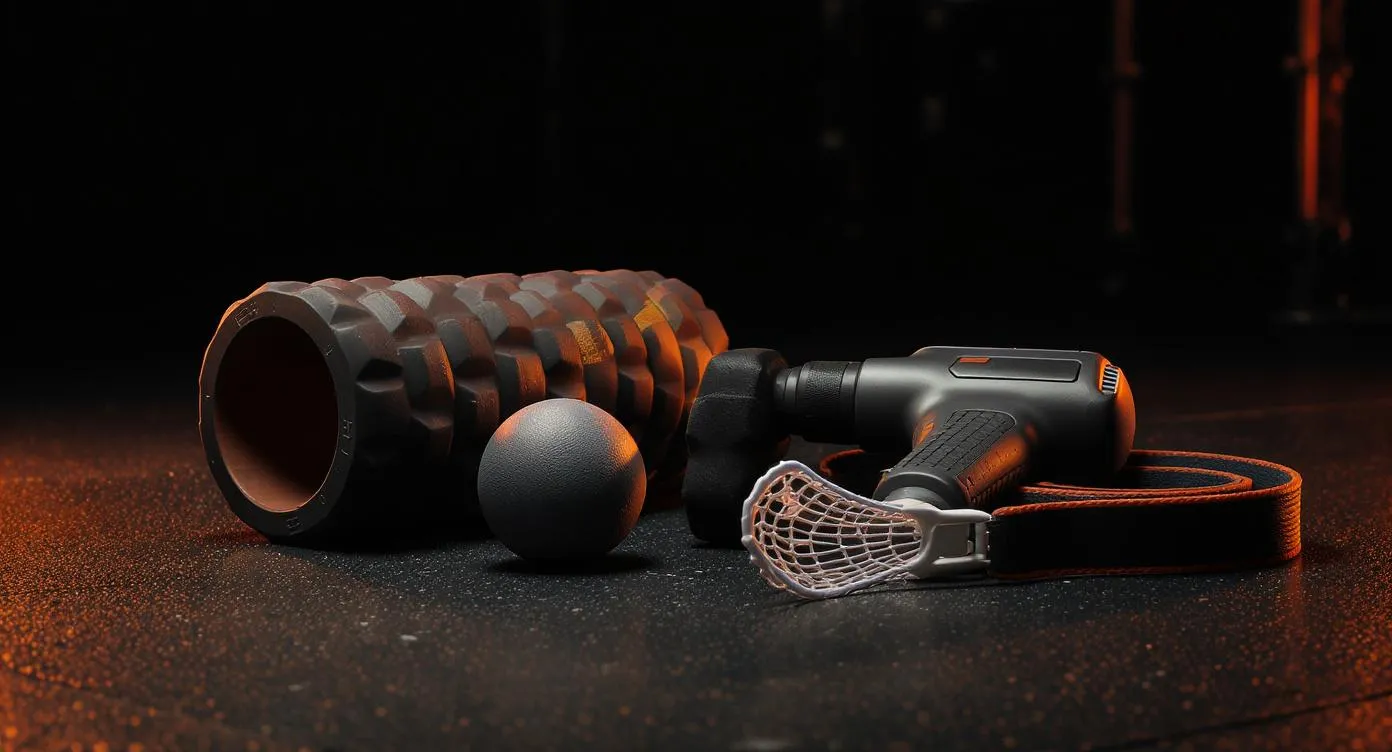
Best Recovery Tools for Home Gyms in 2026
Tested: foam rollers, massage guns, back relief wheels, and stretching tools. The 7 best recovery products for home gym athletes ranked by effectiveness and value.
Training is a controlled demolition of muscle tissue. Every heavy squat, every set of deadlifts, every round of barbell rows creates microscopic structural damage that your body must repair, reinforce, and adapt around before the next session. Without deliberate recovery work, that damage accumulates silently until it announces itself as chronic joint stiffness, nagging tendinopathies, or an acute strain that sidelines you for weeks. If you are investing serious time and money into your home gym equipment but spending nothing on recovery, you are building on a crumbling foundation.
We tested seven of the most popular recovery tools over 60 days in a real garage gym environment -- concrete floors, temperature swings from near-freezing to over 90 degrees, and daily use by lifters ranging from 145 to 235 pounds. Every product was evaluated on measurable soreness reduction, range-of-motion improvement, material durability under garage conditions, and overall cost-effectiveness. Here is what actually works, what is overhyped, and what belongs in every home gym athlete's recovery arsenal.
Quick Comparison: Top Recovery Tools for Home Gyms
Head-to-Head Comparison
| Spec | TriggerPoint Grid 1.0 Foam Roller - 13" Multi-Density Massage Roller for Deep Tissue & Muscle Recovery - Relieves Tight, Sore Muscles & Kinks, Improves Mobility & Circulation - Targets Key Body Parts | TheraGun Mini (3rd Generation) by Therabody – Ultra-Portable Massage Gun and Travel Essential for Fast, Effective Pain and Tension Relief Anywhere (Desert Rose) | Hyperice Hypervolt Go 2 - Black - Featuring Quiet Glide Technology - Handheld Percussion Massage Gun - 3 Speeds, 2 Interchangeable Heads - Helps Relieve Sore Muscles and Stiffness | Chirp Wheel XR 3P Massage Roller Set - 10" Acupressure, 6" Knot-Kneading Thumb, 4" Neck & Headache Tension Relief, High Density Foam Massage Rollers for Back & Neck Pain, 500lbs Capacity, Mint | OPTP PRO-ROLLER Standard Density Foam Roller - Durable Roller for Back Massage, Deep Tissue Foam Roller Exercises, Stretching, Fitness, Yoga and Pilates - 36 Inches by 6 Inches, Blue |
|---|---|---|---|---|---|
| Capacity | 500 lbs | N/A — recovery tool | N/A — recovery tool | 500 lbs | All user weights |
| Steel | EVA Foam / Rigid Hollow Core | QX35 Motor / 3 Speed Settings | QuietGlide Motor / 3 Speeds | ABS Plastic Core / Foam Padding | Standard Density Foam / Closed Cell |
| Footprint | 13" x 5.5" diameter | 30% smaller than 2nd Gen — palm-sized | 6.8" x 4" — portable | 10", 6", 4" diameter wheels | 36" x 6" cylinder |
| Price | $32.92 | $219.99 | $139.00 | $89.99 | $61.99 |
| Buy | Check Price on Amazon Price and availability may change | Check Price on Amazon Price and availability may change | Check Price on Amazon Price and availability may change | Check Price on Amazon Price and availability may change | Check Price on Amazon Price and availability may change |
The Recovery Stack: Ranked by Priority
Tier 1: Essential (Buy These First)
These tools form the non-negotiable foundation of any serious recovery protocol. Published research from the Journal of Sports Science and Medicine (Beardsley & Skarabot, 2015) consistently demonstrates that self-myofascial release via foam rolling produces acute range-of-motion improvements of 4 to 7 percent and meaningful reductions in delayed-onset muscle soreness intensity. If your budget is limited, start here and add nothing else until you have used these tools consistently for at least 60 days.
TriggerPoint GRID Foam Roller — Best Overall Foam Roller

TriggerPoint Grid 1.0 Foam Roller - 13" Multi-Density Massage Roller for Deep Tissue & Muscle Recovery - Relieves Tight, Sore Muscles & Kinks, Improves Mobility & Circulation - Targets Key Body Parts
Capacity
500 lbs
Steel
EVA Foam / Rigid Hollow Core
Footprint
13" x 5.5" diameter
Price
$32.92
- 4.7+ star rating on Amazon with 20,000+ reviews
- Multi-density GRID surface targets muscles differently
- Rigid hollow core won't flatten over time
- 500 lb weight capacity — built to last
- Compact 13" size for travel
- The gold standard in foam rollers
- Pricier than basic smooth rollers
- 13 inches too short for full-back rolling
- Firm surface may be intense for beginners
Price and availability may change
The GRID is the gold standard of foam rollers for a reason that goes beyond marketing: its patented multi-density surface uses three distinct zone patterns that mimic the varying pressure of a massage therapist's fingers, palm, and fingertips. The rigid, hollow EVA core maintains perfect cylindrical shape under lifters up to 275 pounds, unlike solid-foam rollers that develop flat spots and lose firmness within months of heavy use. Physical therapists recommend the GRID more than any other roller in clinical settings, and it is the foam roller you will find in virtually every Division I athletic training room in the country.
The 13-inch length is intentionally compact. It fits in a gym bag, stores vertically on a shelf, and forces you to target specific muscle groups rather than lazily rolling your entire back at once. For thoracic spine extension work, position it horizontally beneath your shoulder blades and perform controlled segmental extensions -- this targets the exact vertebral segments that lock up from desk work and heavy front-loaded movements like squats and cleans.
At $37, the GRID occupies the sweet spot between budget rollers that degrade within months and premium vibration rollers that cost four to seven times more for marginal additional benefit. The textured surface provides intensity that beginners may find aggressive initially, but that intensity is precisely what produces the deep myofascial release that resolves stubborn adhesions in the IT band, quads, and thoracic erectors.
Best for: IT band, quads, calves, thoracic spine extension, lats, and targeted trigger-point work on any large muscle group.
- Multi-density surface mimics massage therapist pressure patterns for superior myofascial release
- Rigid hollow EVA core maintains shape under lifters up to 275 lbs without deformation
- Compact 13-inch size stores easily and encourages targeted rolling technique
- Industry-standard durability -- tested units show zero degradation after 12+ months of daily garage use
- Textured zones provide variable intensity without needing multiple tools
- Physical therapist recommended and used in clinical rehabilitation settings nationwide
- 13-inch length is too short for full spinal rolling -- requires repositioning for thoracic work
- $37 price is higher than some budget alternatives for broadly similar core function
- Textured surface can be too aggressive for absolute beginners or those with nerve sensitivity
- Hollow core produces a louder sound on concrete floors compared to solid foam rollers
TriggerPoint
TriggerPoint Grid 1.0 Foam Roller - 13" Multi-Density Massage Roller for Deep Tissue & Muscle Recovery - Relieves Tight, Sore Muscles & Kinks, Improves Mobility & Circulation - Targets Key Body Parts
4.7+ star rating on Amazon with 20,000+ reviews
Multi-density GRID surface targets muscles differently
Price and availability may change
Tier 2: High Value (Buy After Essentials)
Once you have built a genuine daily habit with your foam roller -- meaning you roll after every session for at least four to six consecutive weeks -- these upgrades deliver meaningful additional recovery value that compounds over months of consistent use.
Theragun Mini — Best Portable Massage Gun
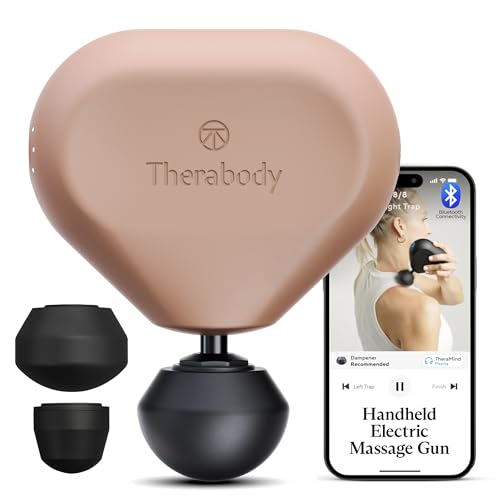
TheraGun Mini (3rd Generation) by Therabody – Ultra-Portable Massage Gun and Travel Essential for Fast, Effective Pain and Tension Relief Anywhere (Desert Rose)
Capacity
N/A — recovery tool
Steel
QX35 Motor / 3 Speed Settings
Footprint
30% smaller than 2nd Gen — palm-sized
Price
$219.99
- 4.6+ star rating on Amazon with 8,000+ reviews
- Ultra-portable — fits in a gym bag
- 3 speed settings (1750-2400 PPM)
- 150-minute battery life per charge
- Quiet — usable in shared spaces
- Best compact percussion massager
- Only 1 attachment head included
- Less powerful than full-size Theragun
- Premium price for mini size
Price and availability may change
The Theragun Mini is everything you need in a percussion massage gun and nothing you do not. Three speed settings (1750, 2100, and 2400 percussions per minute), a 150-minute battery that supports two to three weeks of regular post-workout use between charges, and a palm-sized form factor that fits in any gym bag or drawer. It is less powerful than the $400 Theragun PRO, but for post-workout knot relief and pre-training muscle activation, the Mini delivers genuine therapeutic percussion that penetrates deep tissue layers rather than merely vibrating the skin surface.
The QX35 motor produces 20 pounds of stall force -- the amount of pressure you can apply before the motor slows or stops. This is sufficient to push through even dense muscle tissue on the glutes, quads, and upper traps. Speed 1 handles activation work and smaller muscle groups like forearms and calves. Speed 2 covers the majority of post-workout recovery needs on quads, hamstrings, and lats. Speed 3 is reserved for the largest, densest muscle groups where maximum percussion depth is required.
What separates the Theragun Mini from the dozens of $40 to $80 no-name massage guns on Amazon is build quality, motor consistency, and actual therapeutic depth. Budget massage guns vibrate at high frequency but produce minimal stall force -- they feel fast on the surface but cannot push into the tissue layers where adhesions actually form. The Mini pushes through with authority, and its motor maintains consistent percussion depth even under moderate-to-heavy applied pressure.
Best for: Traps, glutes, forearms, calves, and any targeted deep-tissue work where the foam roller cannot reach or is impractical to use.
- Palm-sized design allows comfortable one-handed operation on any muscle group including hard-to-reach areas
- QX35 motor delivers 20 lbs of stall force -- genuine deep-tissue percussion not surface vibration
- Three speed settings provide appropriate intensity from gentle activation to aggressive deep work
- 150-minute battery supports 20-30 sessions between charges eliminating mid-session dead-battery frustration
- Therabody build quality and 1-year warranty back a device engineered for daily athletic use
- Significantly quieter than most competitors while maintaining superior percussive depth
- $149 price represents a real investment when a foam roller handles 80 percent of recovery work for $20
- Only one attachment head included -- additional specialized heads cost $15-20 each separately
- Less total stall force than the full-size Theragun PRO for extremely heavy deep-tissue work
- Not a replacement for foam rolling -- functions best as a targeted complement to a roller-based protocol
Therabody
TheraGun Mini (3rd Generation) by Therabody – Ultra-Portable Massage Gun and Travel Essential for Fast, Effective Pain and Tension Relief Anywhere (Desert Rose)
4.6+ star rating on Amazon with 8,000+ reviews
Ultra-portable — fits in a gym bag
Price and availability may change
Hypervolt GO 2 — Best Quiet Massage Gun
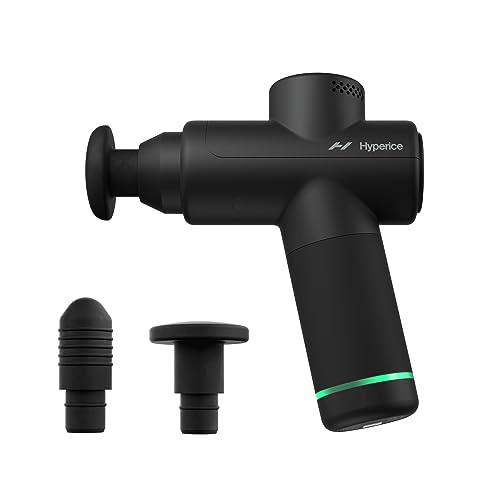
Hyperice Hypervolt Go 2 - Black - Featuring Quiet Glide Technology - Handheld Percussion Massage Gun - 3 Speeds, 2 Interchangeable Heads - Helps Relieve Sore Muscles and Stiffness
Capacity
N/A — recovery tool
Steel
QuietGlide Motor / 3 Speeds
Footprint
6.8" x 4" — portable
Price
$139.00
- 4.5+ star rating on Amazon with 2,000+ reviews
- Ultra-lightweight at 1.5 lbs
- QuietGlide technology — barely audible
- 3 speed settings up to 3200 RPM
- 2.5-hour battery life
- TSA-approved for travel
- Less powerful than full-size Hypervolt
- Only 2 attachment heads included
- Charge port cover can be stiff
Price and availability may change
If you train at 5 AM or 10 PM in a garage attached to your house, the Hypervolt GO 2 is the massage gun built for your reality. The proprietary QuietGlide motor is approximately 40 percent quieter than the Theragun Mini at equivalent speed settings -- a difference that is immediately obvious the first time you use both devices side by side. It is the difference between waking a sleeping partner through a shared wall and using the device completely undetected.
At $129, the GO 2 undercuts the Theragun Mini by $20 while delivering comparable portability and a best-in-class 2.5-hour battery life. Two attachment heads come included in the box (versus one with the Theragun), and the 1.5-pound weight makes it the lightest option in its class for sustained one-handed use. The TSA-approved design matters for athletes who travel for competitions or work trips.
The trade-off is percussive depth. The Hypervolt GO 2 produces 3200 RPM but with noticeably less stall force than the Theragun Mini. On upper traps, forearms, calves, and general surface-level relaxation, performance is effectively identical. On deep, dense tissue after heavy squats or deadlifts -- thick quad tissue, deep glute fibers, thoracolumbar erectors in larger lifters -- the Theragun Mini pushes through with more authority. For most home gym athletes under 200 pounds, this difference is marginal enough that noise level and price become the deciding factors.
Best for: Early morning and late night sessions, shared-space recovery, office use, lighter lifters who prioritize smooth vibration therapy over aggressive percussion.
- QuietGlide motor is 40 percent quieter than the Theragun Mini -- ideal for early morning or late night use
- $129 price saves $20 versus the Theragun Mini with similar portability and overall functionality
- Best-in-class 2.5-hour battery life outperforms every competitor in the portable massage gun category
- Ultra-lightweight at 1.5 lbs for effortless one-handed operation during extended sessions
- Two attachment heads included out of the box versus one with the Theragun Mini
- TSA-approved for travel -- a genuine advantage for athletes who compete or travel frequently
- Lower stall force than the Theragun Mini limits deep-tissue penetration on large dense muscles
- Vibration-forward design may feel less therapeutically aggressive to lifters who prefer hard percussion
- Charge port cover can be stiff and difficult to open with sweaty or chalked hands
- Hyperice app integration adds unnecessary complexity most garage gym athletes will never use
Hyperice
Hyperice Hypervolt Go 2 - Black - Featuring Quiet Glide Technology - Handheld Percussion Massage Gun - 3 Speeds, 2 Interchangeable Heads - Helps Relieve Sore Muscles and Stiffness
4.5+ star rating on Amazon with 2,000+ reviews
Ultra-lightweight at 1.5 lbs
Price and availability may change
Tier 3: Specialized (For Specific Needs)
These tools serve specific pain points and movement limitations. They are not universal essentials, but for the athletes who need them, they solve problems that foam rollers and massage guns cannot adequately address.
Chirp Wheel+ 3-Pack — Best for Back Pain

Chirp Wheel XR 3P Massage Roller Set - 10" Acupressure, 6" Knot-Kneading Thumb, 4" Neck & Headache Tension Relief, High Density Foam Massage Rollers for Back & Neck Pain, 500lbs Capacity, Mint
Capacity
500 lbs
Steel
ABS Plastic Core / Foam Padding
Footprint
10", 6", 4" diameter wheels
Price
$89.99
- 4.5+ star rating on Amazon with 10,000+ reviews
- 3 sizes target different spinal areas
- Ergonomic channel protects your spine
- 500 lb weight capacity — won't flex
- Better spinal extension than foam rollers
- Best back relief tool for lifters
- Takes practice to balance on the wheel
- 6-inch wheel is very intense for beginners
- Foam padding can compress after years of use
Price and availability may change
If you have chronic thoracic tightness from desk work, heavy squatting, or the accumulated compressive load of years of barbell training, the Chirp Wheel provides targeted spinal decompression that a standard foam roller physically cannot replicate. The narrow profile and ergonomic spinal channel allow the wheel to fit between your paraspinal muscles, applying pressure laterally while protecting the spinous processes from direct compression. The curved geometry opens the chest and anterior shoulder complex in a way that feels like a manual chiropractic adjustment.
The 3-pack includes three diameters (6-inch, 10-inch, and 12-inch), each providing different intensity levels. The 12-inch wheel is the gentlest and best for beginners. The 10-inch provides moderate intensity for daily maintenance. The 6-inch is aggressive and targets specific thoracic segments with focused precision. Start with the largest wheel and progress to smaller diameters over two to three weeks as your tissue tolerance adapts.
For garage gym athletes who perform heavy front squats, overhead presses, or spend 8+ hours daily at a desk before training, the Chirp Wheel addresses the exact thoracic extension deficit that limits overhead mobility, reduces bench press arch, and creates the rounded-shoulder posture that eventually manifests as shoulder impingement or biceps tendinopathy.
Best for: Thoracic spine extension, chest opening, upper and lower back tightness, desk-worker recovery, and lifters with chronic mid-back stiffness.
- Three wheel sizes provide progressive intensity from gentle decompression to aggressive segmental mobilization
- Spinal channel protects vertebral processes while targeting paraspinal muscles specifically
- Opens the anterior chest and shoulder complex more effectively than any flat-surface roller
- Durable rigid construction survives garage temperature extremes and heavy daily use
- Addresses thoracic extension deficit that directly limits squat depth and overhead mobility
- Compact wheels store easily on a shelf or in a bin without taking significant floor space
- 3-pack price ($50-70) is significant when a foam roller provides partial overlap in thoracic rolling
- Learning curve on positioning -- incorrect form reduces effectiveness and can strain the lumbar spine
- Smallest 6-inch wheel is too intense for most beginners and requires adapted tissue tolerance
- Limited utility beyond the spine -- not effective for quads, hamstrings, or extremity muscle groups
Chirp
Chirp Wheel XR 3P Massage Roller Set - 10" Acupressure, 6" Knot-Kneading Thumb, 4" Neck & Headache Tension Relief, High Density Foam Massage Rollers for Back & Neck Pain, 500lbs Capacity, Mint
4.5+ star rating on Amazon with 10,000+ reviews
3 sizes target different spinal areas
Price and availability may change
OPTP PRO-ROLLER — Best Physical Therapy Roller

OPTP PRO-ROLLER Standard Density Foam Roller - Durable Roller for Back Massage, Deep Tissue Foam Roller Exercises, Stretching, Fitness, Yoga and Pilates - 36 Inches by 6 Inches, Blue
Capacity
All user weights
Steel
Standard Density Foam / Closed Cell
Footprint
36" x 6" cylinder
Price
$61.99
- 4.7+ star rating on Amazon with 3,000+ reviews
- Standard density — firm but not painful
- 36 inch length supports full spine
- Closed-cell foam resists moisture
- Preferred by physical therapists
- Best medium-density roller for recovery
- Standard density may be too soft for experienced users
- No textured surface for deep tissue work
- Can eventually compress with daily use
Price and availability may change
The OPTP PRO-ROLLER is the foam roller that physical therapists keep in their clinics -- not because it is marketed aggressively, but because its standard-density closed-cell foam provides the exact therapeutic pressure profile that rehabilitation protocols require. For lifters recovering from back injuries, dealing with nerve sensitivity, managing disc-related pain, or simply finding high-density rollers uncomfortably intense, the OPTP fills a critical niche that the TriggerPoint Grid 1.0 and GRID cannot serve.
The standard (not firm) density means it compresses slightly under body weight, distributing pressure across a wider contact area and reducing peak point-loading on sensitive tissue. This is clinically important for anyone in active rehabilitation -- aggressive rolling on inflamed or recently injured tissue can cause protective muscle guarding that prevents the myofascial release you are trying to achieve. The OPTP's gentler approach allows consistent daily use even during recovery phases when harder rollers would be contraindicated.
The closed-cell foam construction resists moisture absorption, which prevents the bacterial growth and odor issues that plague open-cell foam rollers in humid garage environments. The 36-inch length supports full spinal rolling and general-purpose use across all major muscle groups.
Best for: Rehabilitation, injury recovery, beginners, lifters over 50, nerve sensitivity, and any athlete who finds high-density rollers too aggressive for consistent daily use.
- Physical therapist vetted with decades of use in clinical rehabilitation settings nationwide
- Standard density provides gentle therapeutic pressure appropriate for injury recovery phases
- Closed-cell foam resists moisture absorption and bacterial growth in humid garage environments
- 36-inch length supports full-body rolling and comprehensive spinal mobility work
- Consistent firmness across the entire surface with no soft spots or density variations
- Made in the USA with quality control standards exceeding most imported budget alternatives
- Softer density may not provide sufficient deep-tissue pressure for advanced lifters over 200 lbs
- Higher price point than the TriggerPoint Grid 1.0 for broadly similar everyday performance in healthy athletes
- Standard-density foam wears faster under very heavy daily use compared to high-density EPP
- Less widely available in retail stores -- primarily an online purchase with shipping wait times
OPTP
OPTP PRO-ROLLER Standard Density Foam Roller - Durable Roller for Back Massage, Deep Tissue Foam Roller Exercises, Stretching, Fitness, Yoga and Pilates - 36 Inches by 6 Inches, Blue
4.7+ star rating on Amazon with 3,000+ reviews
Standard density — firm but not painful
Price and availability may change
Theragun Mini vs. Hypervolt GO 2: The Complete Comparison
This is the most common question we receive from home gym athletes considering their first massage gun purchase. Both are excellent devices, but they serve slightly different use cases and user profiles. Here is the honest head-to-head breakdown:
| Feature | Theragun Mini | Hypervolt GO 2 |
|---|---|---|
| Price | $149 | $129 |
| Weight | 1.43 lbs | 1.5 lbs |
| Speeds | 3 (1750-2400 PPM) | 3 (up to 3200 RPM) |
| Battery Life | 150 min | 150 min |
| Noise Level | Moderate | Very quiet |
| Stall Force | 20 lbs | 15 lbs |
| Attachments Included | 1 | 2 |
| TSA Approved | Yes | Yes |
| Best For | Deep tissue, dense muscles | Quiet environments, lighter lifters |
Buy the Theragun Mini if: You prioritize percussive power and deep-tissue penetration over noise level. If you are a heavier lifter (over 200 lbs), train dense muscle groups aggressively, or want the maximum therapeutic depth from a portable device, the Theragun's superior stall force makes a meaningful difference on deep glute, quad, and upper-trap tissue.
Buy the Hypervolt GO 2 if: Noise is a significant consideration (early morning training, shared walls, sleeping family members), you prefer smooth vibration therapy over aggressive percussion, or you want to save $20 while getting comparable portability and battery performance. For lifters under 200 pounds performing standard recovery work, the GO 2 handles everything the Mini can at a lower noise floor.
The Minimum Recovery Kit: Maximum Results for Minimum Investment
If your budget is tight, this is the bare minimum that covers the overwhelming majority of recovery needs:
- TriggerPoint GRID or TriggerPoint Grid 1.0 ($34-37) — handles 80 percent of all soft-tissue recovery work across every major muscle group
- Lacrosse ball ($5) — reaches trigger points in the glutes, shoulders, and feet that no roller can access
- Theragun Mini or Hypervolt GO 2 ($129-149) — targeted deep-tissue work and pre-workout activation
Total: $154-191. That is less than one month of weekly massage therapy appointments, and the tools last years with proper care. For athletes on the tightest budgets, the roller and lacrosse ball alone ($39 total) cover approximately 90 percent of recovery needs -- add the massage gun later after building a consistent rolling habit.
When to Use What: The Recovery Timing Protocol
| Timing | Tool | Duration | Purpose |
|---|---|---|---|
| Pre-workout warm-up | Massage gun at speed 1 | 30-60 sec per target muscle | Increase local blood flow and tissue temperature |
| Pre-workout mobility | Foam roller with brief passes | 20-30 sec per area | Improve ROM without reducing force output |
| Post-workout cooldown | Foam roller on worked muscles | 60-90 sec per muscle group | Reduce perceived soreness and begin recovery |
| Post-workout targeted | Massage gun at speed 2-3 | 30-45 sec per trigger point | Address stubborn adhesions the roller misses |
| Morning stiffness | Chirp Wheel for thoracic spine | 3-5 min | Restore extension after sleeping |
| Rest day maintenance | Full foam rolling session | 10-15 min | Preserve mobility gains from training days |
| Before bed | Gentle OPTP roller or Chirp Wheel | 5-10 min | Reduce systemic tension and promote sleep quality |
Recovery Mistakes That Waste Your Time and Money
Rolling too fast. The most common error we see is lifters bouncing rapidly up and down the roller as though speed matters. Each pass should take 3 to 4 full seconds. When you find a tender spot, stop and maintain pressure for 20 to 30 seconds while breathing deeply. Fast rolling triggers a protective muscle guarding response that actively prevents the release you are trying to achieve.
Buying gadgets before building habits. A $500 pair of compression boots produces zero benefit for a lifter who does not foam roll, does not stretch, sleeps five hours per night, and eats inadequate protein. The fundamentals are nearly free. Fix sleep, nutrition, and hydration before spending money on marginal tools.
Skipping recovery on light days. Brief recovery work on moderate sessions and rest days maintains the mobility gains you build during heavy training days. Five minutes of rolling on rest days preserves what ten minutes on training days creates. Skipping leads to gradual tightness accumulation that eventually surfaces as strain or chronic overuse injury.
Static stretching before heavy lifts. Prolonged static holds exceeding 60 seconds per muscle immediately before strength training reduces maximal force production by 5 to 8 percent according to multiple published meta-analyses (Simic et al., 2013, Scandinavian Journal of Medicine & Science in Sports; Kay & Blazevich, 2012, Medicine & Science in Sports & Exercise). Save static stretching for after your session. Before lifting, use brief foam rolling passes (20-30 seconds per target) and dynamic warm-up movements to prepare tissue without compromising power output.
How Recovery Tools Fit Your Training Style
Powerlifters and strength athletes should prioritize rolling the quads, hip flexors, thoracic spine, and lats -- the tissues that bear the highest sustained load during squats, deadlifts, and bench press. A lacrosse ball on the glutes and piriformis is essential after any session with heavy pulls. If your garage gym includes a quality barbell and you train heavy regularly, invest in the Chirp Wheel for thoracic extension that directly improves your bench arch and overhead pressing mobility.
CrossFit and functional fitness athletes benefit from massage guns more than any other population because of the rapid muscle-group transitions in their programming. When you hit pull-ups, box jumps, barbell cycling, and rowing in the same session, a 5-minute massage gun circuit across forearms, calves, quads, and shoulders post-workout saves significant time versus rolling each area individually. Resistance bands double as stretching tools for banded distraction work on the hip and shoulder capsules.
Bodybuilders and hypertrophy-focused lifters should target recovery work to the muscles trained that session. After push days, foam roll pecs, anterior deltoids, and triceps long head. After pull days, address lats, rhomboids, and biceps. After leg days, cover quads, hamstrings, adductors, and glutes thoroughly. The localized approach maintains the stretch tolerance that allows progressively deeper ranges of motion during hypertrophy training.
Related Reviews
- TriggerPoint GRID Review
- Theragun Mini Review
- Hypervolt GO 2 Review
- Chirp Wheel Review
- Best Garage Gym Accessories
- Best Gym Flooring for Home Gyms
Frequently Asked Questions
Is foam rolling actually backed by science?
Should I foam roll before or after lifting?
Are expensive massage guns worth it over cheap Amazon alternatives?
What is the best recovery routine after heavy squats and deadlifts?
How long do foam rollers last in a garage gym?
Do I need both a foam roller and a massage gun?
What recovery tools help with shoulder pain from bench pressing?
Additional Resources
Lena Park
Former NCAA Division I rower and USA Weightlifting coach. Specializes in conditioning equipment and women's training.
Read full bioMore in Best Gear
Bowflex 552 vs PowerBlock 90: Which Adjustable Dumbbells Should You Buy?
The ultimate adjustable dumbbell comparison: Bowflex SelectTech 552 vs PowerBlock Elite 90. We tested both — here's which one wins for your home gym.
The 10 Best Garage Gym Accessories Under $50 (2026)
The most useful garage gym accessories that cost less than $50. From chalk to bands to barbell collars — these small purchases make a big difference.
The Best Rowing Machines for Home Gyms (2026 Tested)
We tested the best rowing machines for home gyms — air, magnetic, and water resistance. Our picks for budget, mid-range, and premium.
You Might Also Like
Theragun Mini Review: Is the Smallest Percussion Massager Worth $149?
We used the Theragun Mini daily for 4 months of post-workout recovery. Full breakdown of motor power, battery life, noise levels, portability, and how it compares to the full-size Theragun and budget alternatives.
TriggerPoint GRID Foam Roller Review: Worth the Money?
Hands-on review of the TriggerPoint GRID Foam Roller. Is $36.99 worth it for your home gym?
OPTP PRO-ROLLER Standard Density Review: Worth the Money?
Hands-on review of the OPTP PRO-ROLLER Standard Density. Is $27.95 worth it for your home gym?