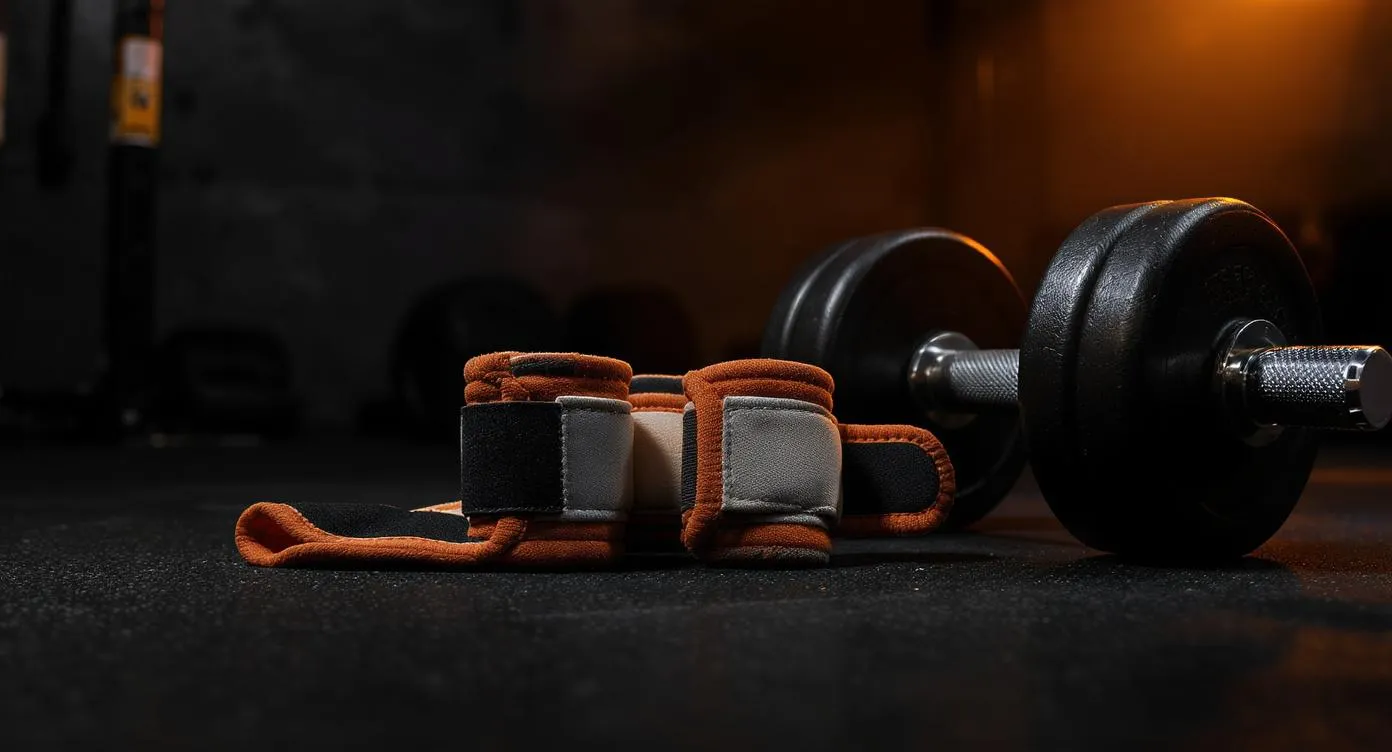
Rip Toned Wrist Wraps Review: Cheapest Wrap Upgrade on Amazon
Hands-on review of the Rip Toned 18 inch Wrist Wraps. Best budget wrist wraps on Amazon for bench press, overhead press, and heavy pushing.
If you bench press 225 lbs or more, your wrists are taking a beating every single session. Most lifters feel it first as a nagging ache in the bottom of the press, then as discomfort that lingers for days after a heavy training block. The solution is not rest, not stretching, and not backing off the weight. The solution is wrist wraps — and the Rip Toned Wrist Wraps are the single most purchased wrist wraps on Amazon, with over 25,000 reviews and a 4.6-star average that has held steady for years. I've been training with a pair in a cold Minnesota garage since 2023. Here's everything you need to know before you buy.

Rip Toned Wrist Wraps for Weightlifting – USPA & USAPL Approved 18" Wrist Straps for Powerlifting – Adjustable, Durable Gym Wraps with Thumb Loop – Maximum Support for Men & Women
Capacity
Suitable for any lifting weight
Steel
Nylon / Elastic / Thumb Loop
Footprint
18 inch length, 3 inch width
Price
$17.99
- 4.6+ star rating on Amazon with 25,000+ reviews
- 18 inch length gives multiple wrap options
- Thumb loop keeps wrap secure
- Heavy-duty velcro closure
- Lifetime replacement warranty
- Best budget wrist wraps on Amazon
- 18 inches may be too long for small wrists
- Velcro wears out after 3-4 years of heavy use
- Not IPF-approved (check your federation rules)
Price and availability may change
What Wrist Wraps Actually Do
Before going further, let's be precise about function — because there is a persistent misconception about wrist wraps in the home gym world.
A wrist wrap does not fix technique. It does not correct a broken wrist position on the bench press. What it does is provide external circumferential support to the wrist joint, which limits hyperextension under load and reduces the compressive stress on the radiocarpal and midcarpal joints during heavy pressing. When you're benching 275 lbs and the bar is loaded back toward your palm, your wrist is trying to extend under significant force. A tight wrap acts like a brace, stiffening the joint and keeping it in a more neutral position through the full range of motion.
The practical effect: you can press harder, for longer, with less wrist pain during and after heavy sessions. For lifters working through a strength peak or accumulating heavy volume over multiple training days per week, wrist wraps are not optional equipment — they are basic joint maintenance.
What wrist wraps are not is a substitute for wrist strength. Beginners who wear wraps on every warm-up set and every working set are robbing themselves of the adaptive stimulus that makes wrist tendons and ligaments tougher over time. The rule I follow: wraps go on for sets at 80% of your training max and above. Below that, train raw.
Wrist Wraps vs Wrist Straps — A Critical Distinction
This confusion costs beginners money constantly.
- Wrist wraps (this product): Support the wrist joint during pressing movements. They wrap around your wrist and velcro closed. They do nothing for your grip.
- Wrist straps: Improve your ability to hold onto the bar during pulling movements. They connect your wrist to the bar. They do nothing for joint support.
These are completely different tools for completely different problems. Wrist wraps belong on the bench and overhead press. Wrist straps belong on the deadlift, rack pulls, and heavy rows. If someone tells you to use straps for bench press or wraps for deadlift, they are confused about the equipment. You likely need both in your home gym, but they serve separate functions and it would be a mistake to conflate them.
The Specs
Quick Specs · Rip Toned Wrist Wraps for Weightlifting – USPA & USAPL Approved 18" Wrist Straps for Powerlifting – Adjustable, Durable Gym Wraps with Thumb Loop – Maximum Support for Men & Women
What We Love
- 4.6+ star rating with 25,000+ verified Amazon reviews — sustained over multiple years
- 18 inch length provides multiple tightness options for different wrist sizes
- Thumb loop secures the start position and prevents shifting during fast lifts
- Heavy-duty velcro closure stays locked under submaximal and maximal loads
- Lifetime replacement warranty — Rip Toned honors it without friction
- Two stiffness options let you match the wrap to your training demands
- Best price-to-quality ratio of any wrist wrap on Amazon at this price point
- Available in 18 inch and 24 inch lengths to suit different hand sizes and preferences
What Could Be Better
- 18 inch length can feel bulky on smaller wrists — 12 inch or shorter wraps may suit petite hands better
- Velcro degrades after 3-4 years of daily heavy use — replaceable but not indefinite
- Not IPF-approved for sanctioned powerlifting meets — competition lifters need SBD or Inzer
- Medium and heavy stiffness options require some prior knowledge to choose correctly
- Thumb loop stitching can fray on the heavy stiffness version after very heavy prolonged use
Stiffness Levels Explained
This is where most buyers make mistakes, and it is worth covering in detail.
Rip Toned sells this wrap in two stiffness ratings: medium and heavy. The stiffness of a wrist wrap refers to how much the material resists bending once wrapped and tightened. A stiffer wrap provides more rigid support and restricts wrist movement more aggressively. A softer wrap conforms to the joint more, allows slightly more natural movement, and is more comfortable over high-rep sets.
Medium Stiffness
The medium wrap is the correct choice for roughly 90% of home gym lifters. It provides legitimate, meaningful wrist support for heavy bench, overhead press, and dumbbell pressing movements. It breaks in within two to three sessions and never feels foreign on your wrist after that. High-rep sets at 65-75% of your max feel completely natural in a medium wrap, and near-max sets feel braced and secure. The medium stiffness also works well for volume days where you might be wearing wraps across multiple sets at moderate intensities.
If you are a recreational lifter, a bodybuilder focused on hypertrophy, a CrossFitter doing high-rep push press, or someone who trains three to four days per week without a competitive powerlifting goal, buy the medium stiffness. You will not outgrow it unless you push into elite strength territory.
Heavy Stiffness
The heavy stiffness option is a different tool. It is considerably more rigid out of the box and takes longer to break in — expect four to six sessions before it stops feeling like a cast on your wrist. Once broken in, it provides noticeably more support during max-effort pressing. The tradeoff is that it becomes uncomfortable during volume work at moderate intensities. Many powerlifters who use a heavy stiffness wrap keep a second pair of medium wraps for warm-up sets and working sets, then switch to the heavy pair for their top singles.
The heavy stiffness is appropriate for powerlifters and strongman competitors who are regularly training their competition maxes, for lifters who have existing wrist injuries that require more aggressive bracing, and for anyone whose bench press is advanced enough that medium stiffness no longer feels sufficient under peak loads.
For general home gym use, the heavy stiffness is overkill. It restricts the natural wrist motion that your body needs to self-regulate joint stress, and it makes training feel mechanical rather than athletic.
18 Inch vs 24 Inch Length
Rip Toned sells this wrap in both 18 inch and 24 inch lengths. Length affects how many times you can wrap around the wrist, which in turn affects support tightness and coverage.
18 Inch
The 18 inch version is the most popular option and what most reviews are based on. For an average male wrist — roughly 6.5 to 7.5 inches in circumference — 18 inches allows approximately two and a half to three full passes around the joint, which is exactly the coverage zone you want: below the wrist joint, across it, and slightly above. This is the right length for most lifters.
The 18 inch wrap is also easier to apply solo. You can thumb-loop, wrap, and velcro in under 30 seconds once you have practiced the motion a few times. For high-frequency training where you are removing and reapplying wraps between sets, this matters more than you might expect.
24 Inch
The 24 inch version is better suited to lifters with larger wrists, lifters who prefer to apply maximum tension with many passes, or lifters transitioning from very stiff competition wraps that cover a larger surface area. A 24 inch wrap on an average wrist gives you four or more passes, which means you can achieve a much tighter finish without running out of material. Some heavy bench pressers specifically prefer this because they want the entire distal forearm stabilized, not just the wrist joint itself.
The 24 inch wrap takes longer to apply and remove, which matters on exercises like front squats where you need to get in and out of the wrap between sets quickly. It also sits higher on the forearm, which can interfere with the front rack position on cleans and front squats if applied too high.
My recommendation: 18 inch for most people, 24 inch if your wrists are large, if you have previously used competition-grade wraps and want comparable coverage, or if you are a heavier presser whose working sets regularly exceed 315 lbs on the bench.
Wrapping Technique: Step by Step
A wrap worn incorrectly is worse than no wrap at all. It either provides false support that encourages poor positioning, or it cuts off circulation. Here is the correct sequence:
Step 1: Position the thumb loop. Slide the loop around your thumb before you begin wrapping. The loop anchors the start of the wrap and prevents the material from shifting across the joint as you tighten. Do not skip this — it is the most important step.
Step 2: Begin below the wrist joint. Start the first pass across the palm side of the wrist, just below the radiocarpal joint. This gives you a firm base that the subsequent passes build on.
Step 3: Cross the joint twice. Bring the wrap upward over the back of the hand, back around the palm side, and cross the joint again. Two passes directly over the joint are your primary support zone. Keep even tension — you should feel the joint becoming stiffer with each pass, not just the wrap getting tighter around the skin.
Step 4: Finish above the joint. Bring the final pass slightly above the wrist joint toward the lower forearm. Velcro closed here. This locks the full support structure in place and prevents the bottom passes from unwinding under load.
Step 5: Check tightness. Make a fist. Your fingers should flex without numbness or tingling. The wrap should feel firm, not painful. If your fingertips are going cold within two minutes, you have wrapped too tight — loosen one pass. If the wrap feels soft or shifts during your first rep, tighten up.
Remove the wraps between sets. Wearing them for a full training session restricts blood flow and does not provide continuous benefit — it just accelerates tissue fatigue. On, lift, off, recover.
When to Use Wrist Wraps by Movement
Not every pressing movement requires a wrist wrap. Here is how I think about it by lift category:
Bench Press
Wrist wraps are most valuable here. The bench press loads the wrist in extension under a barbell that can weigh several times your body mass. As weight increases, even lifters with good wrist positioning feel the joint being pushed back. Wraps on all working sets above 75% of your training max. Remove them for warm-up sets and anything approaching a light pump set.
Pair your bench work with good bracing habits — a quality lifting belt handles the torso side while wrist wraps handle the joint side on max-effort sessions.
Overhead Press and Push Press
The strict overhead press demands a neutral wrist throughout the movement, which becomes increasingly difficult as weight increases. A heavy push press or jerk generates significant impact forces at the catch position that transmit directly through the wrist. Wraps are appropriate for working sets on the strict press and highly recommended for any push press or split jerk work above 80% of max.
The front rack position on a push press or jerk means the wraps need to be applied snugly but not so high that they prevent wrist flexion into the rack. Tighter is better, but test your rack position before your first heavy set when wearing wraps for the first time.
Front Squat
This is the movement where most lifters are surprised to find wrist wraps genuinely useful. The front squat rack position places the wrists in extreme extension — fingers pointing back, elbows high, bar resting on the deltoids. For lifters without exceptional wrist mobility, this position becomes painful under heavy loads. Wrist wraps relieve this pressure by stiffening the joint and reducing the end-range extension demand.
If you are front squatting heavy and your wrists give out before your legs do, wraps are the immediate fix. The 18 inch length is better here than 24 because you want to be able to remove them quickly between sets without losing time in your training session.
Movements That Do Not Require Wraps
Do not wear wrist wraps for: warm-up sets on any movement, bodyweight dips and push-ups, dumbbell pressing at moderate weights, barbell curls and isolation exercises, or any set you would normally do without them. The goal is to use them as a tool for peak loading, not as a daily habit. Your wrists need mechanical stress to adapt and strengthen — chronic wrap usage at all intensities removes that stimulus.
Rip Toned vs Gangsta Wraps
Gangsta Wraps from Redline Athletics are a step up in price and stiffness from the Rip Toned, typically running $25-35 depending on configuration. They use a stiffer cotton-polyester blend and a different closure system that some lifters find more secure under very heavy loads. The Gangsta Wraps are popular in powerlifting training circles and among lifters who have graduated past budget options.
How they compare in practice: the Gangsta Wraps do provide marginally more rigid support at maximum effort, which is noticeable on true near-max singles. They are harder to break in — expect a week to ten days of use before they feel natural. They are also not IPF-approved.
For lifters benching 315 and below, the practical difference between Rip Toned medium stiffness and Gangsta Wraps is small enough that most would not notice in a blind test. Above 365, the Gangsta Wraps begin to feel more purposeful on limit lifts. If your bench press is approaching or exceeding 4 plates and you are training specifically for maximum strength expression, the Gangsta Wraps are worth the upgrade. For everyone else, Rip Toned is the smarter spend.
Rip Toned vs Inzer True Black Wraps
Inzer is a major player in the powerlifting equipment space, and their True Black wrist wraps are one of the most commonly seen wraps in serious training facilities and meets. At $40-50, they cost roughly three times what Rip Toned charges.
The Inzer True Black wraps are stiffer, have more aggressive velcro, and are built to a higher construction quality that will likely outlast the Rip Toned by several years of heavy daily use. The stitching is more robust, the thumb loop attachment is more durable, and the material maintains its stiffness rating longer without significant softening over time.
However, Inzer wraps are also not IPF-approved — they do not appear on the IPF approved equipment list and cannot be worn in sanctioned meets. For competition powerlifters, this makes them a training-only tool, same as Rip Toned.
The verdict: if you are a serious strength athlete who trains five or six days per week and puts heavy pressing volume in every session, the Inzer True Black is worth the price premium for durability alone. If you train three to four days per week in a home gym context, the Rip Toned will last three to four years of regular use before degrading, and replacing them costs less than a single Inzer pair.
Competition Legality
This is important enough to address directly.
The Rip Toned wrist wraps are not IPF-approved and cannot be used in International Powerlifting Federation sanctioned competition. The IPF maintains an approved equipment list that wrist wraps must appear on to be legal at sanctioned meets. Approved options include SBD, Titan, Inzer (specific models), and several others that appear on the current equipment list.
If you compete in USAPL (which follows IPF rules), IPFA, or any other IPF-affiliated federation, your wraps at the meet must come from the approved list. Training in Rip Toned wraps is completely fine — many elite powerlifters use cheaper training wraps in the gym and switch to approved wraps for competition. Just do not show up at a sanctioned meet with these wraps expecting to use them on the platform.
Federations with more permissive equipment rules — USPA, RPS, SPF, and most unsanctioned lifting events — do not restrict wrist wrap brands. In these contexts, Rip Toned wraps are fully legal.
Who Should Buy Them
Buy them if:
- You bench press 185 lbs or more with any regularity
- You overhead press 115 lbs or more for working sets
- You front squat and struggle with wrist discomfort in the rack position
- You have had wrist pain during or after heavy pressing sessions
- You want a proven, well-reviewed wrist wrap at the lowest reasonable price point
- You want a lifetime replacement warranty as a backstop against early failure
Skip them if:
- You compete in IPF-affiliated powerlifting meets (buy SBD or an IPF-approved brand)
- You are a beginner still learning to press — build your wrists first, add wraps when you are pressing meaningful weight
- You exclusively do bodyweight training with no barbell or dumbbell pressing
For lifters building out a serious home gym setup, wrist wraps belong alongside your belt, knee sleeves, and chalk as foundational support gear. See our home gym accessories essentials guide for how to prioritize these purchases without overspending early in your build.
Final Verdict
Rating: 4.6/5 — The Rip Toned Wrist Wraps are the most-reviewed wrist wraps on Amazon for a straightforward reason: they work, they hold up, and they cost less than a single post-workout meal. The medium stiffness option suits the vast majority of home gym lifters training for strength and hypertrophy. The 18 inch length provides the right coverage for most wrists without the bulk of a 24 inch wrap. The thumb loop works. The velcro holds. The lifetime replacement warranty means your downside risk is essentially zero.
The only meaningful caveat is competition legality — IPF athletes need to plan for approved wraps at sanctioned meets. For training, for home gym pressing, and for anyone who wants serious wrist support without spending $40 on a brand name, Rip Toned is the correct answer.
The 18-inch length hits the right balance — long enough for meaningful wrist support on bench and overhead press, short enough to wrap quickly between sets. The elastic blend is stiffer than gym-class wraps but less rigid than competition stiff wraps, making these a good all-purpose option. They stretch out after 8-12 months of heavy use and lose some tension. Not IPF approved. For training bench, OHP, and heavy dumbbell pressing at home, these do exactly what $15 wrist wraps should do.
Price and availability may change
Frequently Asked Questions
Should I get the 18 inch or 24 inch length?
Medium or heavy stiffness for bench press?
Can I use these for Olympic weightlifting?
Are Rip Toned wraps IPF-legal?
How tight should wrist wraps be?
Should I wear wrist wraps on every set?
How long will Rip Toned wraps last?
Additional Resources
- NSCA Training Equipment and Accessories
- ACE Strength Training Fundamentals
- ASTM Fitness Equipment Safety Standards
Related Content
Marcus Reid
Powerlifter and mechanical engineer who has been building and breaking home gym equipment for 15 years.
Read full bioMore in Reviews
Yes4All Kettlebell Set Review: Best Budget Kettlebells on Amazon?
Our review of the Yes4All Cast Iron Kettlebell Set. Are these the best budget kettlebells for home gym training on Amazon?
TRX Bandit Resistance Band Handles Review: Worth the Money?
Hands-on review of the TRX Bandit Resistance Band Handles. Is $49.95 worth it for your home gym?
POWER GUIDANCE Battle Rope Review: CrossFit Standard for $40
Hands-on review of the POWER GUIDANCE 30 ft Battle Rope. Best budget battle rope on Amazon for HIIT, CrossFit, and brutal conditioning.
You Might Also Like
The 10 Best Garage Gym Accessories Under $50 (2026)
The most useful garage gym accessories that cost less than $50. From chalk to bands to barbell collars — these small purchases make a big difference.
Doorway vs Wall-Mounted Pull-Up Bar: Which Should You Buy?
Doorway pull-up bar or wall-mounted? We compare the Iron Gym doorway bar vs wall-mounted options for home gyms, apartments, and serious lifters.
15 Best Home Gym Accessories Under $50 (2026)
We tested the top budget gym accessories on Amazon. Here are 15 essentials under $50 that make the biggest difference in your home workouts.