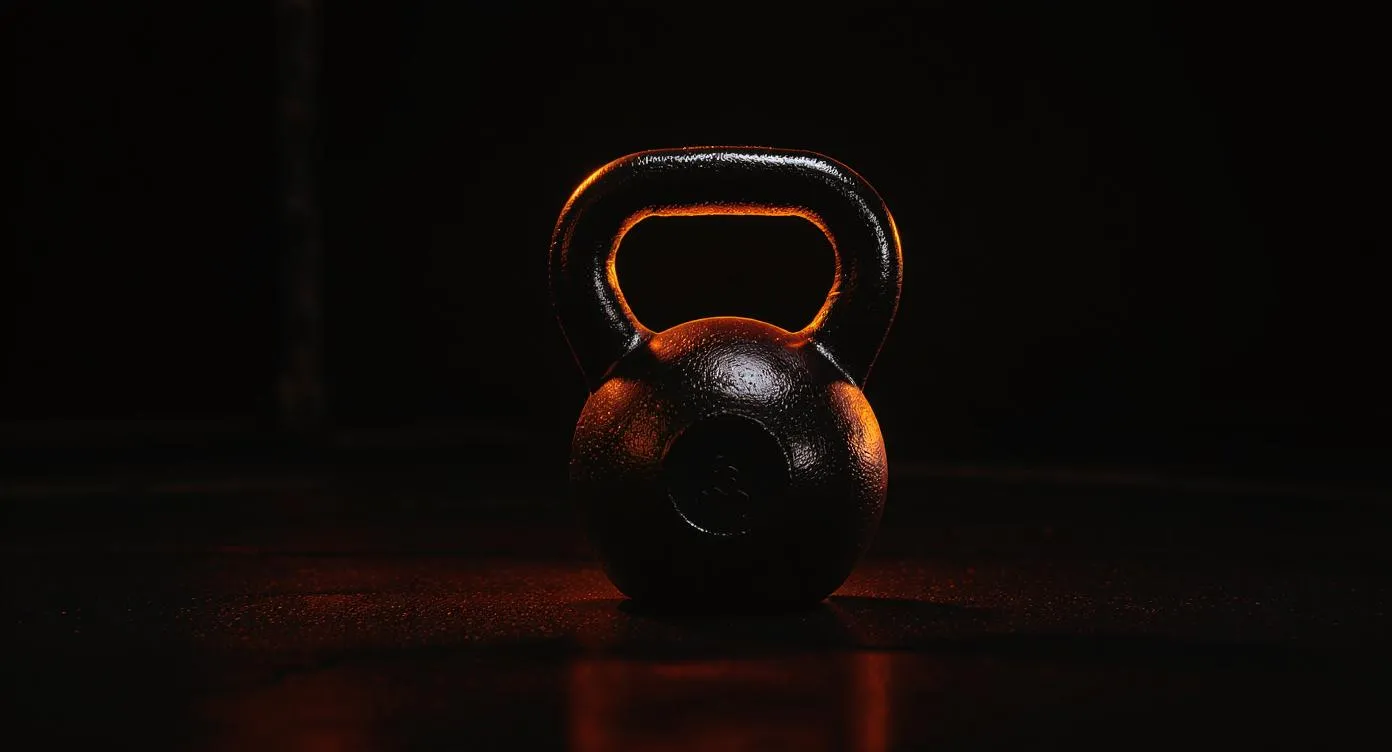
How to Choose a Kettlebell: Complete Buyer's Guide (2026)
Everything you need to know before buying kettlebells. Cast iron vs competition, weight ranges, handle style, and our top picks.
Start with a single cast iron kettlebell — 35 lbs (16 kg) for most men, 18 lbs (8 kg) for most women. Powder-coated handles from Rogue or Kettlebell Kings grip best; avoid vinyl-coated bells.
A single kettlebell occupies less than one square foot of floor space, yet it unlocks swings, Turkish get-ups, goblet squats, cleans, snatches, windmills, farmer's walks, and dozens of other movements that build strength, power, and cardiovascular endurance simultaneously. No other piece of home gym equipment delivers that kind of return on investment for its size and price.
But walk into Amazon or Rogue and you will find cast iron bells, competition bells, adjustable bells, vinyl-coated bells, powder-coated bells, and everything in between. The price range spans from $0.80 per pound to over $4.00 per pound. Handles vary in diameter, width, texture, and finish. Weight jumps differ between manufacturers. Without a clear framework, most people either buy the wrong type or overspend on features they will never use.
This guide gives you that framework. By the end, you will know exactly which kettlebell type, weight, and brand to buy for your training goals, your experience level, and your budget.
Why Kettlebells Deserve a Spot in Every Home Gym
Before we get into buying specs, let's establish why kettlebells are worth your money in the first place. If you are already convinced, skip ahead to the types section.
Ballistic training in a small footprint. The offset center of mass forces your posterior chain, core, and grip to work harder than equivalent dumbbell exercises. A 35 lb kettlebell swing generates more hip extension force than a 35 lb dumbbell swing because the mass hangs below the handle, creating a longer moment arm.
Cardiovascular conditioning without a cardio machine. A 2023 study published in the Journal of Strength and Conditioning Research found that a 12-minute kettlebell swing protocol elevated heart rate to 87% of max, comparable to a 30-minute moderate-intensity treadmill session. That means you can skip the cardio machine entirely if your primary goal is general fitness.
Durability that outlasts every other tool. A cast iron kettlebell has no moving parts, no cables, no bearings, and no electronics. Drop it on a rubber mat ten thousand times and it will look exactly the same. A $50 kettlebell purchased today will still be usable in 2050.
Minimal space requirement. A full set of four kettlebells fits inside a 2x2-foot corner. Compare that to the footprint of a power rack or a weight bench. For apartment and garage gym owners working with limited square footage, kettlebells are unbeatable. Check out our small spaces guide for more layout strategies.
Types of Kettlebells: Cast Iron vs Competition vs Adjustable
Cast Iron Kettlebells (Best for Most Home Gyms)
Cast iron kettlebells are the original design and still the best choice for 90% of home gym owners. They are a single solid piece of cast iron, usually coated with enamel paint, powder coat, or vinyl for surface protection.
The defining characteristic of cast iron bells is that the physical size scales with the weight. A 16 kg bell is noticeably smaller than a 32 kg bell. This matters because heavier bells sit deeper in the rack position against your forearm, and the visual size difference gives immediate feedback about which weight you are grabbing.
Handle texture and diameter vary by manufacturer. Budget brands like Yes4All and CAP use a smooth or lightly textured finish with a handle diameter around 32-35 mm. Premium brands like Rogue and Kettlebell Kings offer powder-coated handles with a slightly rougher texture that improves grip without tearing up your hands during high-rep sets.
Price range: $1.00-$2.50 per pound depending on brand and coating quality.
- Lowest cost per pound of any kettlebell type ($1-2/lb)
- Extremely durable with zero moving parts
- Physical size scales with weight for easy visual identification
- Available everywhere: Amazon, Dick's, Rogue, REP
- Wide variety of brands and price points to fit any budget
- Flat base for renegade rows, push-ups, and upright storage
- Paint or enamel finish can chip after years of heavy use on concrete
- Handle texture and diameter vary between brands and even between production runs
- Size variation between weights makes double kettlebell work slightly inconsistent
- Cheap models may have rough seam lines that need filing down
Best for: General home gym training, beginners, budget-conscious buyers, anyone who does a mix of swings, get-ups, squats, and presses.
Competition Kettlebells (For Kettlebell Sport Athletes)
Competition kettlebells are made from steel and engineered to a single universal size regardless of weight. A 12 kg competition bell is the exact same external dimensions as a 32 kg competition bell. The difference is the internal cavity, which is hollow in lighter weights and progressively more filled with steel in heavier weights.
This uniform sizing exists because kettlebell sport (girevoy sport) demands identical technique at every weight class. If the bell changes size as weight increases, your clean and rack position change too, which breaks technique consistency.
All competition kettlebells follow the same color-coding standard:
- 8 kg: pink
- 12 kg: blue
- 16 kg: yellow
- 20 kg: purple
- 24 kg: green
- 28 kg: orange
- 32 kg: red
Handle diameter is standardized at 33 mm with a uniform window width. The finish is typically smooth bare steel or lightly textured, optimized for high-rep snatches where aggressive texture would destroy your palms.
Price range: $2.50-$5.00 per pound depending on brand (Kettlebell Kings, Paradigm Pro, Vulcan).
- Uniform size at every weight ensures identical technique and rack position
- Standardized 33 mm handle diameter across all weights
- Color-coded for instant weight identification
- Premium smooth steel finish is ideal for high-rep snatches and long cycle
- Consistent handle window width for reliable two-hand work
- Built to international girevoy sport competition specifications
- 2-4x more expensive than equivalent cast iron bells
- Uniform size means no visual feedback about which weight you are grabbing (rely on color)
- Hollow lighter bells can feel odd compared to solid cast iron
- Limited availability on Amazon; most require ordering from specialty retailers
- Overkill for general fitness training and casual kettlebell use
Best for: Kettlebell sport competitors, personal trainers who need consistent sizing across a full rack, and serious kettlebell enthusiasts who prioritize technique uniformity over cost.
Adjustable Kettlebells (For Space-Constrained Setups)
Adjustable kettlebells use a single bell housing with removable weight plates or inserts that change the total load. Popular models include the Bowflex SelectTech 840, the Kettlebell Kings adjustable, and the Titan Fitness adjustable.
Mechanism types vary. Some use a dial selector (like the Bowflex), others use plate inserts that lock into place, and some use a pin-and-plate system similar to selectorized dumbbells. The trade-off is always the same: convenience and space savings versus feel, durability, and weight distribution.
Price range: $100-$300 for a single adjustable bell that replaces 4-6 fixed bells.
- One unit replaces 4-6 individual kettlebells
- Smallest possible footprint for a multi-weight setup
- Good for apartment gyms, travel, and temporary training spaces
- Cost-effective if you would otherwise buy 4+ individual bells
- Quick weight changes between exercises in a circuit
- Internal mechanism creates slightly uneven weight distribution
- Moving parts can break or wear out over time
- Weight change mechanism is slower than grabbing a different bell
- Maximum weight usually caps at 40-50 lbs (too light for advanced users)
- Not suitable for dropping or heavy ballistic work
- Bulkier handle than fixed kettlebells of equivalent weight
Best for: Apartment dwellers with very limited space, travelers, and people who want to try multiple weights before committing to a permanent collection.
Vinyl-Coated and Rubber-Coated Kettlebells (Avoid for Serious Training)
You will see vinyl-dipped and rubber-coated kettlebells at big box retailers. These have a cast iron core wrapped in a soft material meant to protect floors and reduce noise.
Skip these. The vinyl coating makes the handle slippery when your hands sweat, the coating peels after heavy use, and the extra material around the bell body interferes with proper rack position. They exist for group fitness classes at commercial gyms, not for serious home gym training. Buy a proper cast iron bell and put a rubber stall mat under it instead.
What Weight Kettlebell Should You Buy?
This is the most common question and the one most people get wrong. The biggest mistake is starting too light. Kettlebells are designed for ballistic hip-hinge movements that use your largest muscle groups. A weight that feels "heavy" in your hands will feel moderate during a swing because your glutes and hamstrings are doing the work, not your arms.
Starting Weight Recommendations by Experience Level
Men:
| Experience Level | Two-Hand Swing | Single-Arm Swing | Press / Get-Up |
|---|---|---|---|
| Beginner (no lifting background) | 35 lb (16 kg) | 26 lb (12 kg) | 18-26 lb (8-12 kg) |
| Intermediate (1+ years lifting) | 53 lb (24 kg) | 35 lb (16 kg) | 26-35 lb (12-16 kg) |
| Advanced (3+ years, strong) | 70 lb (32 kg) | 53 lb (24 kg) | 35-53 lb (16-24 kg) |
Women:
| Experience Level | Two-Hand Swing | Single-Arm Swing | Press / Get-Up |
|---|---|---|---|
| Beginner (no lifting background) | 18 lb (8 kg) | 12 lb (6 kg) | 8-12 lb (4-6 kg) |
| Intermediate (1+ years lifting) | 26 lb (12 kg) | 18 lb (8 kg) | 12-18 lb (6-8 kg) |
| Advanced (3+ years, strong) | 35 lb (16 kg) | 26 lb (12 kg) | 18-26 lb (8-12 kg) |
Important nuance: These are starting weights. Kettlebell strength progresses fast. Most men who start at 35 lbs will be swinging 53 lbs within 8-12 weeks. Plan your purchases accordingly rather than buying the lightest option available.
Building Your Kettlebell Collection Over Time
Phase 1 - Single bell (start here): One bell in your two-hand swing weight. This covers two-hand swings, goblet squats, Turkish get-ups (if the weight is manageable), deadlifts, and rows. Budget: $30-60.
Phase 2 - Two bells: Add a heavier bell for swings and a lighter bell for pressing. For a man: 35 lb + 53 lb. For a woman: 18 lb + 26 lb. Budget: $60-100 total.
Phase 3 - Three to four bells: Now you have a light bell for warm-ups and pressing, a medium bell for single-arm work, and a heavy bell for two-hand swings. Men: 25, 35, 53, 70 lbs. Women: 12, 18, 26, 35 lbs. Budget: $120-200 total.
Phase 4 - Complete set (5+ bells): Every 8-10 lb increment across your usable range. This is where a set like the Yes4All Cast Iron Kettlebell Set shines because you get multiple weights at a bulk discount.
The 5 Specifications That Actually Matter
Ignore marketing buzzwords about "ergonomic designs" and "competition-grade construction." These five measurable specs determine whether a kettlebell works for you.
1. Handle Diameter
The diameter of the handle (measured in millimeters) directly affects grip fatigue, which determines how many reps you can complete before your hands give out.
- 25-30 mm (thin): Easier to grip, reduces forearm fatigue on high-rep snatches and long sets. Common on lighter competition bells.
- 32-35 mm (standard): The universal sweet spot. Works for swings, cleans, presses, and everything else. This is what most cast iron bells use.
- 36 mm+ (thick): Significantly harder to grip. Builds forearm and grip strength but limits rep counts. Only worth buying as a specialty training tool.
Recommendation: Buy 32-35 mm for your primary training bells. Only consider thinner handles if you are doing kettlebell sport or sets exceeding 100 reps.
2. Handle Window Width
The inside width of the handle opening determines how comfortably you can fit one or two hands.
- Narrow (1.8-2.0 inches): Comfortable one-hand grip, but two-hand swings feel cramped.
- Standard (2.0-2.2 inches): Works for both one-hand and two-hand work. This is what you want.
- Wide (2.3+ inches): Two-hand work is easy, but single-arm exercises feel loose and the bell can rotate unpredictably.
Test this before buying if possible. Your hand size matters. People with larger hands need a wider window for comfortable two-hand swings.
3. Handle Finish and Texture
The surface treatment of the handle affects grip, durability, and hand care.
- Smooth enamel paint: The most common finish on budget bells. Adequate grip when dry, slippery when sweaty. Use chalk.
- Powder coat: A textured matte finish that provides better dry grip than enamel. The gold standard for cast iron training bells. Rogue, REP, and Kettlebell Kings all use powder coat.
- E-coat (electrostatic coating): A thin, even coating that resists chipping better than paint. Common on mid-range bells.
- Bare steel: Smooth, slightly tacky feel. Used on competition bells. Requires occasional light oiling to prevent surface rust.
- Knurled: Aggressive crosshatch texture like a barbell. Uncommon on kettlebells and generally undesirable because it tears up hands during high-rep ballistic work.
Recommendation: Powder coat is the best all-around finish. If buying budget cast iron, pair it with lifting chalk or liquid chalk for better grip.
4. Base Flatness
The bottom of the kettlebell must be perfectly flat. This is non-negotiable for three reasons:
- Renegade rows require the bell to sit stable on the floor while you support your body weight on the handle.
- Kettlebell push-ups with hands on the handles require zero wobble.
- Storage is easier and safer when the bell sits flat without rocking.
All reputable brands (Yes4All, CAP, Rogue, REP, Kettlebell Kings) machine their bases flat. The bells to watch out for are no-name imports from random Amazon sellers. If reviews mention wobbling, skip that brand.
5. Weight Accuracy
Cheap kettlebells can be off by 3-5% from their stated weight. A "35 lb" bell might actually weigh 33.8 or 36.2 lbs. For general home gym training, this is irrelevant. Your body cannot tell the difference between 35.0 and 35.8 lbs during a swing.
Where it matters: Kettlebell sport competitions have strict weight tolerances. If you compete, buy from brands that guarantee less than 1% variance (Kettlebell Kings, Paradigm Pro, Vulcan).
Our Top Kettlebell Recommendation
Best Overall Value: Yes4All Cast Iron Kettlebell Set

Yes4All Cast Iron Kettlebell 5-80 Lb for Full Body Workout
Capacity
5-80 lbs options
Steel
Solid Cast Iron
Footprint
Varies by weight
Price
$79.97
- 4.7+ star rating on Amazon with 12,000+ reviews
- Solid cast iron construction
- Durable painted finish
- Standard grip width for most users
- Available individually or in sets
- Best budget kettlebell option
- Cheaper competition-grade bells exist
- Paint can chip with heavy use
- Not ideal for kettlebell sport (uniform size)
- Handle texture varies between batches
Price and availability may change
The Yes4All Cast Iron Kettlebell Set has earned over 12,000 reviews with a 4.7+ star average on Amazon, making it the best-selling kettlebell line on the platform. The construction is solid single-piece cast iron with an enamel paint finish and a flat machined base. Handle diameter is approximately 33 mm with a smooth-to-lightly-textured finish.
Why we recommend it:
- The 5-bell set (10, 15, 20, 25, 30 lbs) at approximately $149 gives you a complete progression path
- Individual bells start at $20-30 for lighter weights
- Consistent quality across production runs based on aggregate review data
- Wide handle window accommodates two-hand swings comfortably
- Flat base works for renegade rows and floor exercises
Read our full Yes4All Kettlebell review for detailed testing results, or browse our complete best kettlebells roundup for more options including competition and powder-coated bells.
What to pair with it: A set of rubber stall mats for floor protection, lifting chalk for grip, and a quality pull-up bar to round out a minimalist home gym.
Essential Kettlebell Exercises: The 7 Movements to Master
Once you have your kettlebell, these seven movements should be your entire program for the first 8-12 weeks. Master them in order before moving to advanced variations.
1. Two-Hand Kettlebell Swing
The foundational kettlebell movement and the one you will perform more than any other. The swing is a hip-hinge pattern that targets your glutes, hamstrings, core, and grip while driving your heart rate into cardio territory.
Key technique points: The swing is a hip hinge, not a squat. Your knees bend slightly, but the power comes from snapping your hips forward. The arms do not lift the bell. They are ropes attached to your hips. At the top of the swing, your glutes are squeezed, your core is braced, and the bell floats momentarily at chest height.
Common errors: Squatting the swing (too much knee bend), pulling with the arms, hyperextending the lower back at the top, and letting the bell drop below the knees on the backswing.
2. Turkish Get-Up
The most technically demanding kettlebell exercise and the best single-exercise assessment of full-body stability, mobility, and strength. You start lying on the floor with a kettlebell pressed overhead and stand up through a specific sequence of positions while keeping the bell locked out above you.
Start light. Learn the pattern with a shoe balanced on your fist before adding weight. Then use your lightest bell. A 35 lb Turkish get-up is an advanced exercise for most men.
3. Goblet Squat
The best squat variation for beginners and a staple even for advanced lifters. Holding the kettlebell at chest height with both hands counterbalances your body, allowing a deeper and more upright squat position than most people can achieve with a barbell.
4. Kettlebell Clean
The clean brings the bell from the floor to the rack position at your shoulder. It is a prerequisite for the press and the foundation of most kettlebell complexes. The bell should roll around your wrist smoothly, not bang against your forearm.
5. Kettlebell Press
A strict overhead press from the rack position. Kettlebell presses challenge shoulder stability more than dumbbell presses because the offset center of mass forces your rotator cuff to work harder throughout the range of motion.
6. Single-Arm Swing
The progression from two-hand swings. Single-arm swings add an anti-rotation component because the offset load tries to twist your torso. Your obliques and quadratus lumborum must fire hard to keep your shoulders square.
7. Farmer's Walk
Hold a kettlebell in each hand (or one bell for a suitcase carry) and walk for distance or time. This builds grip endurance, core stability, trap and upper back strength, and cardiovascular capacity. It is the simplest loaded carry and one of the most effective exercises for overall functional strength.
Kettlebell Care and Maintenance
Kettlebells require almost zero maintenance, but a few habits will keep them performing well for decades.
Prevent rust. Store your kettlebells indoors or in a climate-controlled space. If you train in a garage, keep them off bare concrete and away from moisture. Wipe them down after sweaty sessions. If surface rust appears, scrub with steel wool or a wire brush and apply a thin coat of 3-in-1 oil.
Protect your floors. Always train on rubber flooring. A single dropped 53 lb kettlebell will crack concrete, dent hardwood, and destroy tile. Rubber horse stall mats from Tractor Supply ($45 for a 4x6-foot mat) are the standard solution.
Manage chalk buildup. If you use lifting chalk, wipe the handle with a damp rag after each session. Chalk buildup in the handle texture reduces grip over time rather than improving it.
Inspect handles periodically. Run your hand along the handle feeling for rough spots, casting seams, or chips in the coating. A rough spot on a budget bell can be smoothed with fine-grit sandpaper (220 grit) in thirty seconds.
Safety Considerations for Kettlebell Training
Kettlebells are safer than most barbell exercises because there is no risk of being pinned under a load. However, the ballistic nature of swings and snatches creates unique injury risks.
Clear your training space. A kettlebell that slips from a sweaty grip at the top of a swing will travel 8-10 feet. Ensure no people, pets, glass, or electronics are within a 10-foot radius of your swing path.
Learn the bail-out. If a swing or snatch goes wrong, guide the bell forward and down. Never try to fight a kettlebell that is moving away from you. Let it go and step back.
Protect your wrists during cleans. The most common beginner injury is forearm bruising from sloppy cleans where the bell bangs against the wrist. Learn the "corkscrew" technique where the bell wraps smoothly around the forearm rather than flipping over the hand.
Warm up your hips and shoulders. Five minutes of hip circles, arm circles, and bodyweight squats before touching a kettlebell reduces injury risk significantly. Cold-start ballistic movements with a heavy bell is a recipe for a pulled hamstring or tweaked lower back.
Kettlebell Shopping Checklist
Equipment Checklist
7 itemsCommon Questions
What weight kettlebell should a beginner start with?
Cast iron vs competition kettlebells: which should I buy?
How many kettlebells do I need for a complete home gym?
Are adjustable kettlebells worth the money?
What is the difference between a kettlebell and a dumbbell?
Can kettlebell training replace barbell training?
How long does it take to learn proper kettlebell swing form?
Are kettlebells good for fat loss?
Will kettlebell swings hurt my lower back?
Additional Resources
- CPSC Fitness Equipment Safety Guide
- ASTM Fitness Equipment Safety Standards
- ACE Equipment Selection Guide
Related Content
- Best Kettlebells for Home Gyms
- Yes4All Kettlebell Set Review
- Apartment Home Gym Under $300
- CrossFit Home Gym Setup
- Home Gym for MMA
- Home Gym Programming Guide
- How to Choose Gym Flooring
- How to Choose a Pull-Up Bar
The Bottom Line
For most home gym owners, cast iron kettlebells are the clear winner. They are cheap, indestructible, and available everywhere. Start with a single bell at your recommended swing weight, learn the fundamental seven movements, and build your collection as your strength increases. A complete 4-5 bell cast iron set costs under $200 and will provide a lifetime of training without ever needing replacement, repair, or a gym membership.
The Yes4All Cast Iron Kettlebell Set remains our top recommendation for value. Pair it with a rubber floor mat, some lifting chalk, and the discipline to practice your swings three times per week, and you have everything you need for a world-class conditioning program in under four square feet of space.
Derek Walsh
Strongman competitor and former commercial gym equipment salesman. Knows what survives heavy daily use.
Read full bioMore in Guides
Strength vs Hypertrophy: How to Program for Your Goals (2026)
The definitive guide to programming for strength vs size in your home gym. Rep ranges, volume, intensity, and complete programs for both goals.
The Complete Home Gym Warm-Up Guide (2026)
Stop skipping your warm-up. Complete warm-up protocols for every training style, plus the equipment that makes preparation effortless at home.
Home Gym Deload Guide: When and How to Back Off (2026)
Learn when and how to deload in your home gym. Science-backed protocols, recovery strategies, and signs you need a rest week.