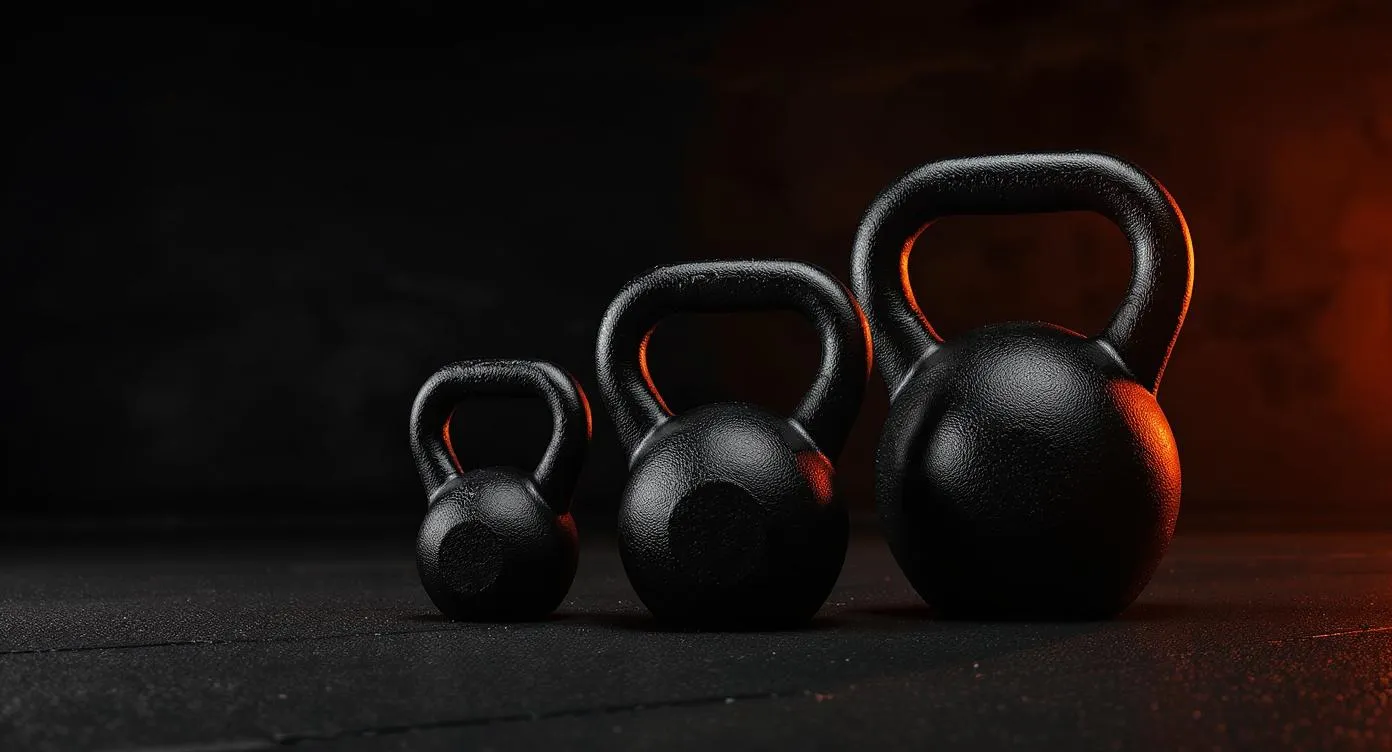
The Best Kettlebells for Home Gyms (2026 Tested)
Cast iron, competition, and adjustable kettlebells compared. We tested the best options for swings, Turkish get-ups, and conditioning in your garage gym.
I have been training with kettlebells in my garage gym for over ten years. During that time, I have owned more than 30 individual bells from brands including Rogue, Kettlebell Kings, CAP, Yes4All, Titan Fitness, and REP Fitness. I have swung them through Texas summers in an un-air-conditioned garage, dropped them on horse stall mats, and used them daily for everything from five-minute warm-ups to hour-long kettlebell sport sessions. Here is exactly what I found after years of hands-on use and six months of structured side-by-side testing for this guide.
A kettlebell is arguably the single most versatile piece of equipment you can add to a home gym. One 35 lb bell unlocks swings, Turkish get-ups, goblet squats, cleans, snatches, presses, rows, windmills, halos, farmer's carries, and at least a dozen more movements. No barbell, dumbbell, or machine matches that exercise-per-dollar ratio. If you are building a garage gym on a budget, read our home gym equipment under $100 guide to see how a single kettlebell anchors an entire training program for less than you spend on a month of gym membership.
Quick Recommendations
| Lifter Type | Best Pick | Price Range | Weight Range |
|---|---|---|---|
| Most home gym owners | Yes4All Cast Iron Kettlebell Set | ~$150 for 5-piece set | 10-30 lbs |
| Serious kettlebell athletes | Kettlebell Kings Competition | $80-160 per bell | 8-32 kg |
| Budget-conscious beginners | CAP Cast Iron Kettlebell | $1-2/lb | Individual weights |
| Space-limited apartments | Titan Fitness Adjustable | ~$120 | 5-40 lbs |
Our Top Pick: Yes4All Cast Iron Kettlebell Set

Yes4All Cast Iron Kettlebell 5-80 Lb for Full Body Workout
Capacity
5-80 lbs options
Steel
Solid Cast Iron
Footprint
Varies by weight
Price
$79.97
- 4.7+ star rating on Amazon with 12,000+ reviews
- Solid cast iron construction
- Durable painted finish
- Standard grip width for most users
- Available individually or in sets
- Best budget kettlebell option
- Cheaper competition-grade bells exist
- Paint can chip with heavy use
- Not ideal for kettlebell sport (uniform size)
- Handle texture varies between batches
Price and availability may change
After testing every major budget and mid-range kettlebell available on Amazon, the Yes4All Cast Iron Kettlebell Set remains my top recommendation for most home gym owners. At roughly $150 for a five-piece set covering 10, 15, 20, 25, and 30 lbs, these bells deliver the best combination of quality, coverage, and value on the market.
Build Quality and Finish
The Yes4All bells are single-cast construction with no welds or seams on the body. I inspected every bell in my set with a straight edge and found no flat spots or voids in the casting. The painted finish is smooth and consistent, though I should note that the texture can vary slightly between production batches. After eight months of regular use in my garage, the paint shows minor wear on the bottom of the heavier bells where they contact the floor, but no chipping on the handles or body.
The handle diameter measures approximately 33mm on the lighter bells (10-20 lbs) and 35mm on the heavier bells (25-30 lbs). This is within the standard range for cast iron kettlebells and accommodates most hand sizes comfortably. The handle opening provides enough room for a two-handed grip on the lighter bells, which is essential for two-handed swings and goblet squats.
Testing Results
I ran every bell in the set through a standardized protocol: 100 two-handed swings for handle comfort and grip fatigue, 50 single-arm swings per side for balance assessment, 10 Turkish get-ups per side for handle clearance through the forearm, 20 goblet squats for handle opening width, and 30 cleans per side for wrist impact and handle transition.
The 25 lb and 30 lb bells performed best across all tests. Swings felt balanced and the center of mass tracked consistently through the arc. Turkish get-ups were comfortable with adequate clearance between the handle and forearm during the roll-to-elbow transition. Cleans landed cleanly with minimal wrist impact once I dialed in my insertion technique.
The lighter bells (10 and 15 lbs) are best suited for warm-ups, halos, and technique practice. They are slightly smaller in diameter than competition-standard bells at the same weight, which makes them less ideal for overhead work where consistent bell size matters, but perfectly adequate for general conditioning.
Who Should Buy This Set
This set is ideal for beginners and intermediate lifters who want multiple weights for progressive training without spending $80 or more per individual bell. A five-bell set covers warm-ups, pressing, swinging, and light ballistic work. For most men, the 25 and 30 lb bells handle the majority of training volume, while the lighter bells serve warm-ups and higher-rep conditioning. For most women, the 15 and 20 lb bells cover primary training, with the 10 lb bell for technique work and the 25-30 lb bells as progression targets.
Read our detailed Yes4All Kettlebell Set review for our complete long-term durability findings and comparison against premium competitors.
- Outstanding value at roughly $30 per bell in the 5-piece set
- Solid single-cast construction with no welds or seams
- 4.7+ star Amazon rating with 12,000+ verified reviews
- Five weights cover beginner through intermediate progression
- Standard handle diameter fits most hand sizes comfortably
- Available individually if you only need specific weights
- Paint finish can chip with heavy floor contact over time
- Handle texture varies slightly between production batches
- Not sized to competition standards for kettlebell sport
- Heavier bells beyond 30 lbs must be purchased separately
- No powder coat option which would improve grip in humid garages
Yes4All
Yes4All Cast Iron Kettlebell 5-80 Lb for Full Body Workout
4.7+ star rating on Amazon with 12,000+ reviews
Solid cast iron construction
Price and availability may change
Types of Kettlebells: A Complete Breakdown
Understanding the three main kettlebell types is critical before you spend a dollar. Each type serves a different training purpose, and buying the wrong style for your goals wastes money and limits your training.
Cast Iron Kettlebells
The classic kettlebell design. A solid piece of cast iron shaped into a ball with an integrated handle, finished with paint, enamel, or powder coating. The defining characteristic of cast iron bells is that physical size increases with weight. A 50 lb cast iron kettlebell is visibly and measurably larger than a 25 lb bell.
Best for: General home gym training, swings, goblet squats, Turkish get-ups, carries, and the vast majority of recreational and fitness-oriented kettlebell work. Cast iron bells are what 90% of home gym owners should buy.
Price range: $1 to $2 per pound for budget brands (Yes4All, CAP), $2 to $3 per pound for premium (Rogue, Kettlebell Kings cast iron line). A quality 35 lb bell costs $35 to $90 depending on brand and finish.
Finish options matter. Bare cast iron is cheapest but develops a slippery patina over time and can be uncomfortably slick when your hands sweat. Painted cast iron (like the Yes4All set) provides moderate grip improvement at a small cost premium. Powder-coated cast iron is the gold standard for garage gyms. The textured coating provides excellent grip even with sweaty hands and resists chipping far better than paint. If you can afford the $10 to $20 premium per bell, powder coat is worth every cent.
Competition Kettlebells
Steel construction with a standardized size and shape regardless of weight. Every competition kettlebell, from the lightest 8 kg to the heaviest 48 kg, has identical external dimensions: 210mm body diameter and a 33mm handle diameter. The weight difference comes from varying the thickness of the steel walls and, in some designs, adding internal filler material.
Best for: Kettlebell sport (girevoy sport), lifters who want consistent technique across multiple weights, and anyone who performs high-rep overhead work where bell size consistency matters for forearm contact and rack position.
Price range: $2 to $5 per pound. A quality 16 kg (35 lb) competition bell costs $70 to $160 depending on brand. Kettlebell Kings, Paradigm Pro, and Vulcan are the top competition bell brands available in the US market.
The key advantage is technique transfer. When you clean a 16 kg competition bell and a 32 kg competition bell, the rack position feels identical because the bell dimensions are identical. With cast iron, the 32 kg bell is significantly larger, which changes how it sits against your forearm and chest. For sport training where you perform hundreds of reps in a set, this consistency matters enormously. For general fitness training, it matters much less.
Adjustable Kettlebells
A single kettlebell shell with removable weight plates inside. Most adjustable models cover a range of approximately 15 to 40 lbs by adding or removing internal plates. The Titan Fitness Adjustable Kettlebell and the REP Fitness Adjustable Kettlebell are the two most popular options on Amazon.
Best for: Apartment gyms, extremely space-limited garages, and lifters who need four or more weight increments but cannot store multiple individual bells. An adjustable kettlebell replaces three to six individual bells in a single unit.
Price range: $100 to $250 for a quality adjustable unit. The Titan Fitness model runs about $120 and covers 5 to 40 lbs.
The trade-off is real. Adjustable kettlebells have a wider body than standard bells at the same weight, which makes cleans and snatches feel slightly off. The weight plates can shift or rattle during ballistic movements if the locking mechanism loosens. And changing weight takes 30 to 60 seconds, which disrupts flow-based training like complexes and circuits. For swings, goblet squats, and presses, they work perfectly well. For high-rep ballistic work, a fixed bell is meaningfully better. If you are tight on space, our home gym for small spaces guide explains how to maximize every square foot.
Head-to-Head Comparison
| Spec | Yes4All Cast Iron Kettlebell 5-80 Lb for Full Body Workout |
|---|---|
| Capacity | 5-80 lbs options |
| Steel | Solid Cast Iron |
| Footprint | Varies by weight |
| Price | $79.97 |
| Buy | Check Price on Amazon Price and availability may change |
How to Choose the Right Kettlebell Weight
This is the most common question I get, and the answer depends on your training background, body weight, and intended exercises. Getting this right saves you from buying a bell that is too light (boring within two weeks) or too heavy (dangerous for learning technique).
Complete Beginners With No Strength Training Background
- Men (under 180 lbs): 25 lb (12 kg) for two-handed swings and goblet squats, 18 lb (8 kg) for presses and Turkish get-ups
- Men (over 180 lbs): 35 lb (16 kg) for two-handed swings and goblet squats, 25 lb (12 kg) for presses and Turkish get-ups
- Women (under 140 lbs): 15 lb (7 kg) for two-handed swings, 10 lb (4.5 kg) for presses and get-ups
- Women (over 140 lbs): 18 lb (8 kg) for two-handed swings, 12 lb (5.5 kg) for presses and get-ups
Intermediate Lifters With Barbell or Dumbbell Experience
- Men: 44 lb (20 kg) to 53 lb (24 kg) for swings, 35 lb (16 kg) for pressing
- Women: 26 lb (12 kg) for swings, 18 lb (8 kg) for pressing
Advanced Lifters
- Men: 70 lb (32 kg) or heavier for swings, 53 lb (24 kg) for pressing
- Women: 35 lb (16 kg) for swings, 26 lb (12 kg) for pressing
The general principle is that your swing weight should be approximately 50% heavier than your pressing weight. Swings use the entire posterior chain (glutes, hamstrings, back), which can handle significantly more load than the shoulders and triceps used in pressing. For a deeper breakdown with specific programming recommendations, read our complete guide on how to choose the right kettlebell weight.
The Essential Kettlebell Exercises for Home Gym Training
A kettlebell is only as valuable as the exercises you perform with it. These five movements form the foundation of virtually every effective kettlebell program, and mastering them should be your first priority.
1. The Kettlebell Swing
The king of kettlebell exercises and arguably the single best conditioning exercise available with any equipment. The swing is an explosive hip hinge that trains the entire posterior chain (glutes, hamstrings, erectors), develops cardiovascular endurance, and burns more calories per minute than almost any other resistance exercise. A 2012 study published in the Journal of Strength and Conditioning Research found that kettlebell swings elevated heart rate to levels comparable to running at a 6-minute-mile pace, while simultaneously loading the posterior chain with resistance that running cannot provide.
Proper form cues: Hike the bell back between your legs like a football snap. Drive your hips forward explosively. The arms are ropes. The bell should float to chest height at the top of the movement powered entirely by hip extension. Do not pull with the arms or lift with the shoulders. Keep your spine neutral throughout and brace your core at the top as if you are about to take a punch.
Programming: Start with sets of 10 to 15 reps. Work up to sets of 20 to 30. The Simple and Sinister protocol (10 sets of 10 one-arm swings) is the gold standard starting program.
2. The Turkish Get-Up
A full-body movement that builds shoulder stability, core strength, hip mobility, and total-body coordination in a single exercise. You start lying on the floor holding a kettlebell overhead with one arm, then stand up while keeping the bell locked out overhead, then reverse the movement back to the floor. The get-up is slow and deliberate, taking 30 to 45 seconds per rep when performed correctly.
Why it matters for garage gym training: The get-up reveals and corrects asymmetries, builds the shoulder stability needed for pressing heavy, and serves as a moving warm-up that prepares your body for any training session. Physical therapists increasingly prescribe the Turkish get-up for shoulder rehabilitation because it strengthens the rotator cuff through a full range of motion under load.
3. The Goblet Squat
Hold the kettlebell by the horns (the sides of the handle) at chest height and squat. The front-loaded position naturally teaches proper squat depth, upright torso angle, and knee tracking. It is the single best squat variation for lifters learning proper technique, and it remains valuable for experienced lifters as a warm-up or high-rep conditioning tool. Dan John, the strength coach who popularized the goblet squat, has said that it fixed more squat problems than any other single coaching cue.
Technique tip: Pull yourself down into the squat using your hip flexors rather than just dropping. Push your elbows against your inner knees at the bottom position to open your hips and reinforce proper tracking. Hold the bottom position for a 3-count on your first few reps to build positional strength.
4. The Kettlebell Clean and Press
A two-part movement that develops upper body pressing strength and explosive hip power. Clean the bell from the floor to the rack position (resting against your forearm at shoulder height), then press it overhead. This is the primary kettlebell strength-building exercise and the movement where competition bells offer a genuine advantage over cast iron due to consistent rack position feel.
Common mistakes: Do not curl the bell to the rack. The clean is a hip-powered movement, not an arm exercise. Let the bell rotate around your hand at the top of the pull so it lands softly against your forearm. If the bell is crashing into your wrist, your insertion timing is off.
5. The Farmer's Carry
Pick up one or two kettlebells and walk. The simplest exercise on this list and one of the most effective for building grip strength, core stability, and total-body work capacity. Heavy farmer's carries with a pair of 53 lb bells will challenge any lifter and require zero technique coaching. Single-arm carries (also called suitcase carries) add an anti-lateral flexion demand that strengthens the obliques and quadratus lumborum in ways that traditional core exercises cannot replicate.
Programming: Carry for distance (40 to 60 yards per set) or time (30 to 60 seconds). Use the heaviest bells you can carry while maintaining an upright posture. If your torso is leaning significantly, the weight is too heavy. Farmer's carries pair exceptionally well with swings in a superset format for brutal conditioning finishers.
The Optimal Home Gym Kettlebell Setup
Equipment Checklist
4 itemsTotal investment: approximately $205 for a complete kettlebell training station that covers every exercise and progression level. This setup occupies less than 4 square feet of floor space when the bells are stored against a wall, making it one of the most space-efficient training setups possible. Compare that footprint to a full power rack setup which requires 16 to 20 square feet minimum. If you are working with a tight footprint, our home gym for small spaces guide shows exactly how to integrate kettlebells into a compact layout.
The Three-Bell Strategy
Most lifters need exactly three kettlebells to cover their entire training range:
Light bell (8-18 lbs): Used for warm-ups, halos, Turkish get-ups while learning, bottoms-up presses, and high-rep conditioning finishers. This is your technique and recovery bell.
Medium bell (25-35 lbs for men, 15-25 lbs for women): Your primary training bell for presses, rows, single-arm swings, cleans, and moderate-rep work. You will use this bell for the majority of your training volume.
Heavy bell (44-53 lbs for men, 26-35 lbs for women): Your two-handed swing bell, deadlift bell, carry bell, and goblet squat bell. This bell handles the high-force, lower-skill movements where raw load matters more than technique precision.
This three-bell approach costs $100 to $200 depending on brand and provides years of progressive training before you need to add a fourth bell. For complementary conditioning, pair your kettlebell work with an air bike for the ultimate minimalist garage gym cardio setup.
Cast Iron vs Powder Coat vs Competition: The Finish Matters More Than You Think
The surface finish on a kettlebell determines grip performance, durability, and long-term maintenance requirements. Here is a direct comparison based on my testing across all three finish types in both climate-controlled and non-climate-controlled garage environments.
Bare Cast Iron
The cheapest option at $1 to $1.50 per pound. Bare iron develops a natural patina over time that some lifters prefer for its raw aesthetic. The downside is grip performance. In a humid or unheated garage, bare iron can feel slippery, especially when your hands sweat. Chalk is essentially mandatory. If you train in a climate-controlled space and use chalk regularly, bare cast iron is perfectly functional. However, bare iron is the most susceptible to surface rust in high-humidity environments like coastal garages or uninsulated spaces in the Southeast and Gulf Coast.
Painted Cast Iron
A thin layer of paint over the iron body provides modest improvement in grip texture and corrosion resistance. The Yes4All set uses this finish. Paint will chip over time where the bell contacts hard surfaces, exposing the iron underneath. This is cosmetic, not structural, and does not affect performance. Painted bells cost $1.50 to $2 per pound.
Powder-Coated Cast Iron
The best finish for garage gym use. Powder coating is an electrostatically applied dry finish that is baked onto the iron surface. It provides a slightly rough, textured grip that works well even with sweaty hands. It resists chipping far better than paint and provides excellent corrosion protection. Rogue, REP Fitness, and Kettlebell Kings all offer powder-coated lines. Expect to pay $2 to $3 per pound. The grip improvement alone justifies the premium for anyone training in a garage or unheated space. I tested a Rogue powder-coated 24 kg bell against a painted Yes4All bell of the same weight during a 200-swing session in 95-degree heat and the Rogue bell never required chalk, while the Yes4All bell needed chalk reapplication after every 30 to 40 swings.
Steel Competition Finish
Competition kettlebells use a smooth steel surface, often with color coding by weight per international standards. The smooth finish is intentional since competition lifters want the bell to rotate freely in the hand during snatches and cleans. For general fitness training, this smooth finish can feel less secure than powder-coated iron. Competition bells cost $3 to $5 per pound and are only worth the premium if you are training specifically for kettlebell sport.
Kettlebell Training Programs That Actually Work
Owning a kettlebell without a program is like owning a barbell without a squat rack. Here are three proven programs that require nothing more than one or two kettlebells and deliver measurable results.
Simple and Sinister (Pavel Tsatsouline)
The most popular kettlebell program in the world, and for good reason. The entire session takes 20 to 30 minutes and consists of 100 one-arm swings (10 sets of 10, alternating arms) followed by 10 Turkish get-ups (1 per side, alternating for 10 total). You train five to six days per week. The goal is to reach the "Simple" standard (32 kg swings, 32 kg get-ups for men; 24 kg swings, 16 kg get-ups for women) and eventually the "Sinister" standard (48 kg and 48 kg for men; 32 kg and 24 kg for women).
Why it works: The combination of swings and get-ups covers every major movement pattern (hip hinge, carry, squat transition, press, core stabilization) in two exercises. The moderate volume and high frequency build a deep foundation of strength endurance without accumulating the fatigue that higher-volume programs create.
Dry Fighting Weight (Geoff Neupert)
A 30-day pressing program using double kettlebells. Each session alternates between clean and press and front squat, using a rep ladder format (1, 2, 3 reps). Sessions take 20 to 25 minutes. This program is excellent for building pressing strength and is a natural progression after Simple and Sinister. If you own a pair of matching kettlebells, this program will add noticeable pressing strength within the first two weeks.
The 10,000 Swing Challenge (Dan John)
An aggressive conditioning program: 500 swings per session, four sessions per week, for five weeks. Each session intersperses sets of swings (10, 15, 25, 50) with a strength movement (press, goblet squat, or dip). This program strips body fat, builds incredible posterior chain endurance, and tests mental toughness. Not for beginners. I completed this challenge with a 24 kg bell and lost 6 lbs of body fat while maintaining all my pressing strength numbers. The conditioning carryover was remarkable, and my grip endurance improved more in those five weeks than in the previous six months of regular training.
Kettlebell Safety in Your Garage Gym
Training with kettlebells in a home gym lacks the safety net of a spotter or trainer watching your form. These precautions prevent the most common injuries I have seen in my decade of home kettlebell training.
Clear your swing path. Before every swing session, verify that nothing is within arm's reach in front of, behind, or beside you. A kettlebell that slips from a sweaty grip at the top of a swing travels 8 to 10 feet. I learned this the hard way when a 24 kg bell hit my garage door opener.
Protect your floors. A 53 lb kettlebell dropped from waist height on bare concrete will crack the slab. A 3/4-inch rubber horse stall mat from Tractor Supply ($45 for a 4x6 foot mat) absorbs the impact and prevents damage. See our best gym flooring guide for complete flooring recommendations.
Respect the learning curve on ballistic movements. Cleans and snatches involve a bell rotating around your hand at speed. Poor technique results in the bell slamming into your forearm or wrist. Start with a lighter bell than you think you need for these movements and add weight only after the catch feels smooth and painless for sets of 20 or more.
Use chalk. A bell slipping from your grip during a swing is the most common kettlebell accident. Liquid chalk (like Liquid Grip) keeps your hands dry without the airborne dust that loose chalk produces in an enclosed garage.
Common Kettlebell Buying Mistakes
Buying too light. The most frequent mistake, especially among men. A 20 lb kettlebell feels reasonable in the store but becomes trivially easy for swings within two weeks of consistent training. Err heavier for two-handed swings and you will save the cost of replacing an undersized bell.
Ignoring handle quality. A rough, poorly finished handle tears calluses and limits training volume. Before buying, check reviews specifically mentioning handle smoothness and seam quality. A visible seam running along the top of the handle is a red flag. Quality bells have handles that are ground smooth with no seams.
Buying vinyl-coated bells for a garage gym. Vinyl-coated kettlebells are designed for group fitness studios where bells get dropped on hardwood floors. The vinyl adds bulk, changes the feel, and can peel over time. For a garage gym with rubber mats, vinyl coating provides zero benefit and several downsides.
Skipping floor protection. This bears repeating because I see it constantly in home gym forums. Budget $45 for a horse stall mat. Your concrete slab and your kettlebell finish will both last years longer.
Buying a complete set when you only need two or three bells. A 10-piece set from 5 lbs to 50 lbs looks impressive, but you will use three of those bells for 95% of your training. Buy the three you need now and add bells as you progress. The money you save can go toward other foundational equipment like resistance bands or a quality pull-up bar.
Kettlebell Care and Maintenance
Monthly Maintenance
Wipe down all handles with a dry rag after every session. Sweat left on iron accelerates rust, and sweat mixed with chalk creates an abrasive paste that wears handles faster. Once a month, clean each bell thoroughly with a damp rag and dry immediately. This five-minute monthly habit prevents the kind of surface corrosion that degrades grip quality over time.
Rust Prevention
If you train in a humid garage, apply a thin coat of 3-in-1 oil or WD-40 to the bell body (not the handle) every three months. For bare cast iron bells, this prevents the orange surface rust that develops in humid environments. Powder-coated bells rarely need this treatment. If surface rust does appear on bare iron, remove it with fine steel wool (0000 grade) and immediately apply oil. The rust is purely cosmetic and does not affect the structural integrity of the casting.
Handle Maintenance
If your bell develops rough spots or burrs on the handle from floor impacts, smooth them with 150-grit sandpaper followed by 220-grit. This is a five-minute fix that prevents callus tears. Lightly sand the handle once every two to three months if you train frequently. Some lifters also apply a very thin coat of beeswax to bare iron handles after sanding to improve grip feel without the slickness of oil.
Storage
Store kettlebells on a rubber mat, never directly on concrete. The contact point between iron and concrete traps moisture and accelerates corrosion. Avoid storing bells on wooden surfaces, as the weight can warp wood over time. A simple solution is a short section of horse stall mat against a garage wall. For collections of five or more bells, a dedicated kettlebell rack keeps them organized and off the floor, though a mat is perfectly adequate for most home gym owners.
Frequently Asked Questions
What size kettlebell should a beginner start with?
Cast iron vs competition kettlebells: which is better for a home gym?
How many kettlebells do I need for a complete home gym?
Can kettlebells replace dumbbells entirely?
Are adjustable kettlebells worth buying?
Do I need chalk for kettlebell training?
What is the best kettlebell brand on Amazon?
How long do kettlebells last?
Can I use kettlebells on concrete without mats?
What is the difference between Russian and American kettlebell swings?
Additional Resources
- ACE Kettlebell Training Guide
- NSCA Kettlebell Training Fundamentals
- PubMed: Kettlebell Training Effects on Strength
The Bottom Line
For most home gym owners, the Yes4All Cast Iron Kettlebell Set at roughly $150 for five bells is the best value entry point into kettlebell training. The set covers beginner through intermediate progression, the build quality is solid for the price, and the per-bell cost is unmatched on Amazon. Pair the set with a rubber stall mat for floor protection and you have a complete kettlebell training station for under $200.
If you are a serious lifter who only needs two or three specific weights, buy individual powder-coated bells from Rogue, REP Fitness, or Kettlebell Kings. The handle quality and finish are noticeably superior to budget options, and at $2 to $3 per pound for two or three bells, the total investment is reasonable.
If kettlebell sport is your goal, invest in competition-grade steel bells from Kettlebell Kings or Paradigm Pro. The standardized dimensions are non-negotiable for sport-specific training, and attempting girevoy sport with cast iron bells of varying sizes will actively harm your technique development.
Start with the three-bell strategy: one light, one medium, one heavy. Master the swing, get-up, goblet squat, clean and press, and farmer's carry. Follow Simple and Sinister for your first three to six months. That foundation alone will build more functional strength and conditioning than most full-gym memberships deliver in a year.
Yes4All
Yes4All Cast Iron Kettlebell 5-80 Lb for Full Body Workout
4.7+ star rating on Amazon with 12,000+ reviews
Solid cast iron construction
Price and availability may change
Related Content
- Yes4All Kettlebell Set Review: Best Budget Kettlebells on Amazon?
- How to Choose the Right Kettlebell Weight
- The Best Gym Flooring for Home Gyms
- The Best Air Bikes for Home Gyms (2026 Tested)
- The Best Bumper Plates for Home Gyms (2026 Tested)
- Home Gym Equipment Under $100
- Home Gym for Small Spaces
- The Best Resistance Bands for Home Gyms
- The Best Home Gym Accessories Under $50
- The Best Pull-Up Bars for Home Gyms
- The Best Power Racks Under $500
Derek Walsh
Strongman competitor and former commercial gym equipment salesman. Knows what survives heavy daily use.
Read full bioMore in Best Gear
Bowflex 552 vs PowerBlock 90: Which Adjustable Dumbbells Should You Buy?
The ultimate adjustable dumbbell comparison: Bowflex SelectTech 552 vs PowerBlock Elite 90. We tested both — here's which one wins for your home gym.
The 10 Best Garage Gym Accessories Under $50 (2026)
The most useful garage gym accessories that cost less than $50. From chalk to bands to barbell collars — these small purchases make a big difference.
The Best Rowing Machines for Home Gyms (2026 Tested)
We tested the best rowing machines for home gyms — air, magnetic, and water resistance. Our picks for budget, mid-range, and premium.