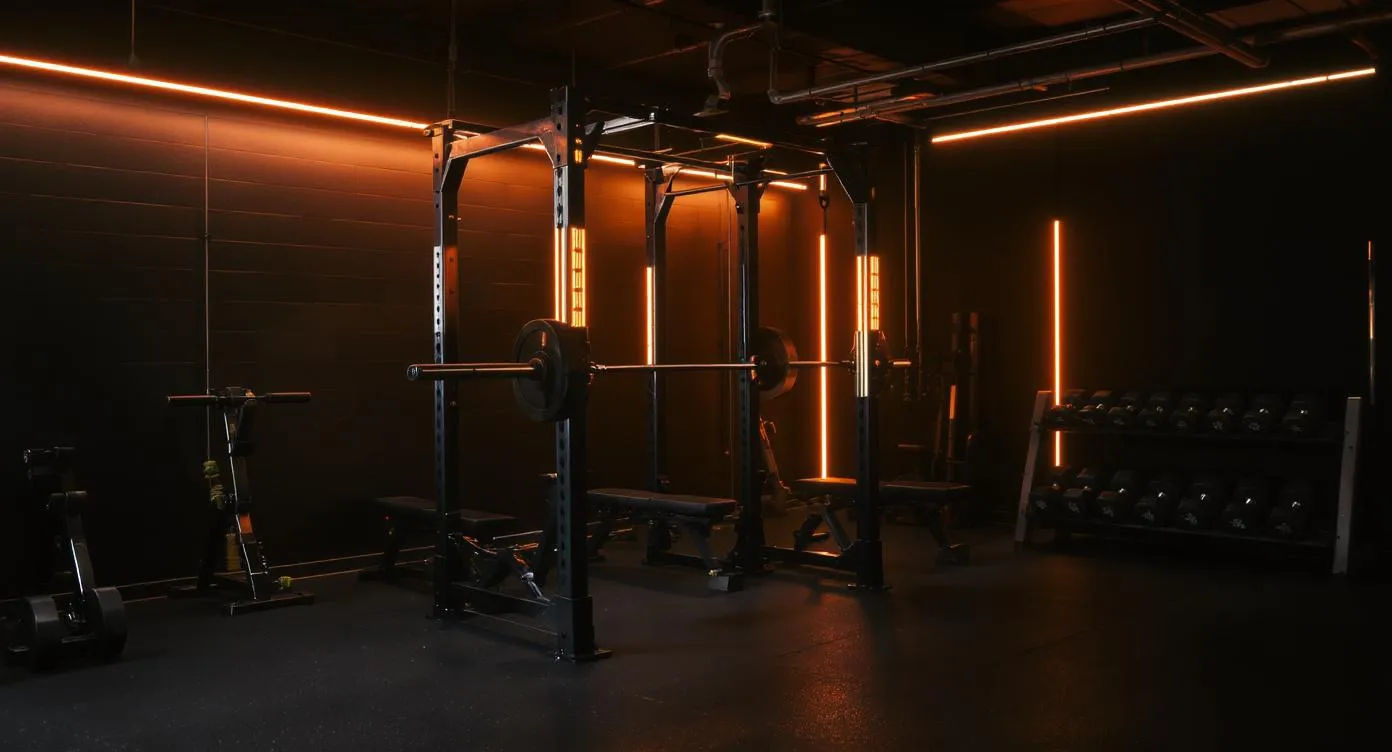
Home Gym for Seniors: Equipment & Training Guide (2026)
How to build a safe, effective home gym for seniors (55+). Joint-friendly equipment, fall prevention, and training for longevity.
Strength training is the single most powerful intervention for healthy aging. Published research in the British Journal of Sports Medicine and JAMA Internal Medicine consistently shows that adults over 55 who resistance-train at least twice per week reduce all-cause mortality by 15-23%, cut hip fracture risk in half, and maintain the functional independence needed to live on their own terms well into their 80s and 90s.
A home gym removes every barrier that keeps seniors from training consistently: no commute in bad weather, no navigating a crowded weight room, no feeling rushed by younger members waiting for equipment, and no exposure to cold and flu viruses circulating through commercial facilities. This guide covers everything you need to know about building a safe, effective, and affordable home gym specifically designed for seniors (55+), from equipment selection and space setup to programming, recovery, and long-term maintenance.
Why a Home Gym Is the Best Investment for Seniors
Commercial gyms create friction. You need to drive there, park, navigate equipment you may not know how to use, and work around other people's schedules. For seniors, those small barriers become big enough to kill consistency, and consistency is the single most important variable in a training program at any age.
A home gym solves all of that:
- Zero commute — your gym is 20 steps away, which means you actually use it. Research shows proximity is the strongest predictor of exercise adherence in adults over 60.
- Complete privacy — no self-consciousness, no waiting, no pressure to lift heavier than you should.
- Climate-controlled comfort — train in heating or air conditioning regardless of season. Check our winter garage gym training guide for cold-weather tips.
- Infection control — crowded gyms are breeding grounds for respiratory illness. Training at home eliminates that risk entirely.
- Fall-safe environment — you control the lighting, flooring, and layout. No tripping over unfamiliar equipment or slipping on someone else's sweat.
- Train on your schedule — early morning, mid-afternoon, or late evening. No class times, no peak hours, no rushing.
The upfront cost of a senior-appropriate home gym ($700-2,500) pays for itself within 6-14 months compared to a commercial gym membership plus fuel costs. And the equipment holds 50-70% of its resale value if your needs change.
Safety-First Gym Setup: The Non-Negotiables
Before you buy a single piece of equipment, your training space must be safe. Seniors face higher consequences from falls, and a poorly configured home gym creates unnecessary risk. Address these fundamentals first.
Flooring
Non-slip rubber flooring is not optional. Bare concrete is slippery when wet (and you will sweat), and carpet does not provide the stability you need under load. Horse stall mats from Tractor Supply Co. at 3/4-inch thickness cost roughly $2/sq ft and provide excellent grip, shock absorption, and durability. Read our complete gym flooring guide for detailed comparisons. For a senior-focused setup, cover a minimum of 8x8 feet (two stall mats) to create a safe lifting and stretching zone.
Lighting
Aging eyes need significantly more light to see clearly. The American Optometric Association notes that a 60-year-old needs roughly three times the light a 20-year-old requires for the same task. Install 5,000K LED shop lights producing at least 5,000 lumens per fixture, and use two to four fixtures depending on your space. Poor lighting leads to misjudging equipment positions, tripping over plates, and straining to read weight markings.
Clear Pathways and Organization
Keep the floor completely clear of loose plates, bands, cables, and accessories when not in use. Use a dumbbell rack or wall-mounted hooks for bands. Every item should have a designated home. Clutter on the floor is the number-one fall hazard in a home gym.
Emergency Access
Always train with a phone within arm's reach. Not for scrolling, but for emergencies. If you train in a garage, make sure the door to the house remains unlocked during sessions. Consider a medical alert device if you live alone.
Essential Equipment for a Senior Home Gym
Senior-appropriate equipment emphasizes joint-friendly loading, fine-grained weight adjustments, inherent stability, and built-in safety features. Here is what to prioritize and what to avoid.
Adjustable Dumbbells: The Cornerstone
Dumbbells are the most versatile, joint-friendly training tool for seniors. Unilateral (one-arm) dumbbell work allows natural movement paths that reduce shoulder, elbow, and wrist strain compared to fixed-path barbells. The key feature for seniors is small weight increments. When strength gains come more slowly, jumping from 15 to 20 lbs can be the difference between smooth progression and a stalled program or an injury.

BowFlex Results Series SelectTech Dumbbells
Capacity
5-52.5 lbs each
Steel
Steel Plates / Nylon Dial Mechanism
Footprint
16.9" L x 8.3" W x 9" H each
Price
$429.00
- 4.7+ star rating on Amazon with 15,000+ reviews
- Replaces 15 sets of dumbbells (5-52.5 lbs)
- Fastest weight change system on the market (2 seconds)
- 2.5 lb increments up to 25 lbs
- Compact cradle storage footprint
- Sold as a pair
- Cannot be dropped — internal mechanism is fragile
- Length at 52.5 lbs feels awkward on some exercises
- Price has increased from original $349 MSRP
- 5 lb increments above 25 lbs
Price and availability may change
The Bowflex SelectTech 552 offers 2.5 lb increments from 5 to 25 lbs, then 5 lb increments up to 52.5 lbs. That fine granularity in the lower range is exactly what seniors need. The dial mechanism is easy on arthritic hands, and the compact cradle fits in any corner.
- 2.5 lb increments in the 5-25 lb range enable gradual, safe progression
- Dial mechanism requires minimal grip strength to change weights
- Replaces 15 pairs of dumbbells in a 17-inch footprint per dumbbell
- Sturdy cradle keeps dumbbells organized and off the floor
- 15,000+ Amazon reviews with a 4.7+ star average
- Bulkier than traditional dumbbells at heavier settings
- Dial mechanism should not be dropped — requires controlled placement
- Maximum 52.5 lbs may limit advanced lifters (not an issue for most seniors)
- Higher price than basic hex dumbbells
Adjustable Bench: Multiple Angles, Less Joint Stress
A quality adjustable bench lets you vary pressing and rowing angles, which distributes stress across different parts of the shoulder joint rather than hammering the same position every session. Look for a bench with at least five backrest angles and a 500+ lb weight capacity for long-term stability.

FLYBIRD WB2 Weight Bench, Utility Adjustable Weight Bench
Capacity
800 lbs (ASTM Certified)
Steel
Commercial-Grade Steel Frame
Footprint
48.4" L x 16.5" W x 17" H (folded)
Price
$109.99
- 4.6+ star rating on Amazon with 25,000+ reviews
- Unbeatable value under $120
- ASTM-certified 800 lb weight capacity
- 8 backrest angles (90° to -30° FID)
- Folds flat for easy storage in small spaces
- Quick 10-minute assembly
- Gap between seat and backrest at steep inclines
- No decline position on some variants
- Pad is narrower (10.2") than premium benches (12")
- Feet can slide on smooth concrete without rubber mats
Price and availability may change
The FLYBIRD adjustable bench folds flat for storage, adjusts quickly without pulling pins, and supports up to 620 lbs. The pad height works well for seniors of average height, and the foldable design is ideal if your gym space doubles as a garage or living area.
Power Rack with Safety Bars: Train Alone with Confidence
A power rack with adjustable safety bars is the single most important safety feature in any home gym where you lift weights alone. If you fail a squat or bench press, the safety bars catch the barbell. Without them, a failed rep can mean a serious injury. For seniors training without a spotter, this is non-negotiable.

ULTRA FUEGO Power Cage, Multi-Functional Power Rack
Capacity
800 lbs
Steel
2x2" 14-Gauge Steel
Footprint
50.5" L x 46.5" W x 83.5" H
Price
$389.98
- 4.5+ star rating on Amazon with 5,000+ reviews
- Excellent value under $350
- 800 lb weight capacity
- Includes multi-grip pull-up bar
- Standard 2x2 hole spacing for attachments
- Optional lat pulldown attachment available
- 14-gauge steel is thinner than premium racks
- Plastic J-cup liners can wear over time
- Not ideal for lifters squatting 600+ lbs
Price and availability may change
The ULTRA FUEGO Power Cage offers 800 lb capacity, adjustable safety bars, and a multi-grip pull-up bar, all for $389.99. It uses standard 2x2-inch hole spacing compatible with most aftermarket attachments. For seniors who want a built-in cable system for lat pulldowns and seated rows (both excellent low-impact exercises), the Mikolo F4 at $474.99 includes that functionality.

Mikolo F4 2.0 Power Cage with Dual-Track Smooth Pulley System
Capacity
1,200 lbs
Steel
2x2" 12-Gauge Steel
Footprint
49" L x 49" W x 86" H
Price
$399.99
- 4.6+ star rating on Amazon with 3,000+ reviews
- 1,200 lb weight capacity — rare at this price
- Includes LAT pulldown and low row cable system
- 27 height adjustments with 2" hole spacing
- Dual-track pulley system
- Comes with multiple attachments included
- Assembly takes 3-4 hours
- Heavier than budget racks — needs two people to move
- Plate storage pegs sold separately
Price and availability may change
Resistance Bands: Smooth Tension, Zero Impact
Resistance bands provide accommodating resistance (lighter at the bottom of the movement, heavier at the top), which matches your natural strength curve and reduces joint stress at vulnerable positions. They are also the safest piece of equipment to use without supervision.

Bodylastics PRO Series Resistance Band Set (6 Bands, 280 lbs)
Capacity
6 bands stackable to 280 lbs
Steel
Anti-Snap Natural Latex Tubing
Footprint
Handles, ankle straps, door anchor + carry bag
Price
$61.97
- 4.6 star rating on Amazon with 2,600+ reviews
- Patented anti-snap inner cord for safety
- 6 bands stackable up to 280 lbs total resistance
- Includes handles, ankle straps, and door anchor
- Lifetime replacement on bands
- Travel-friendly storage bag
- Resistance feels different than free weights
- Door anchor requires an inward-opening door
- Handles wear faster than the bands
Price and availability may change
The Bodylastics anti-snap band set includes multiple resistance levels from 3 to 30+ lbs, a door anchor, ankle straps, and handles. The anti-snap inner cord design prevents the sudden recoil that can cause injury with cheaper bands. Use them for face pulls, pull-aparts, bicep curls, rows, and dozens of physical therapy-style exercises.
Trap Bar: The Senior-Optimized Deadlift
The conventional straight-bar deadlift places significant shear force on the lumbar spine. A hex trap bar shifts the load center to align with your body's center of mass, allowing a more upright torso position that reduces lower back stress by 15-20% according to research published in the Journal of Strength and Conditioning Research. For seniors, the trap bar deadlift is the safer, more accessible version of the most important functional movement pattern: picking heavy things up off the ground.

Bells of Steel Trap Bar, Open Ended Hex Bar with Rotating Sleeves & Built-in Jack
Capacity
700 lbs
Steel
Heavy-Duty Steel / Rotating Sleeves
Footprint
Open-ended design, Olympic sleeves
Price
$299.99
- Open-ended design allows easier plate loading
- Rotating Olympic sleeves for smoother lifts
- Built-in barbell jack saves your back
- Dual handle heights for high or low pulls
- 700 lb weight capacity
- Great for deadlifts, shrugs, and farmer walks
- Pricier than basic hex bars
- Open ends require more space awareness
- Heavy unit at ~55 lbs unloaded
Price and availability may change
Recovery Tools: Foam Roller and Stretching Mat
Recovery takes longer after 55. A foam roller helps maintain tissue quality, reduces post-workout soreness, and improves the range of motion needed for safe lifting. Spend 5-10 minutes rolling before and after every session.

TriggerPoint Grid 1.0 Foam Roller - 13" Multi-Density Massage Roller for Deep Tissue & Muscle Recovery - Relieves Tight, Sore Muscles & Kinks, Improves Mobility & Circulation - Targets Key Body Parts
Capacity
500 lbs
Steel
EVA Foam / Rigid Hollow Core
Footprint
13" x 5.5" diameter
Price
$32.92
- 4.7+ star rating on Amazon with 20,000+ reviews
- Multi-density GRID surface targets muscles differently
- Rigid hollow core won't flatten over time
- 500 lb weight capacity — built to last
- Compact 13" size for travel
- The gold standard in foam rollers
- Pricier than basic smooth rollers
- 13 inches too short for full-back rolling
- Firm surface may be intense for beginners
Price and availability may change
A medium-density foam roller works best for seniors. Avoid the extremely firm or textured rollers marketed to younger athletes \u2014 they can bruise aging skin and cause unnecessary discomfort. Pair the roller with a thick yoga mat (6mm minimum) for stretching and floor exercises.
Senior Home Gym Builds by Budget
Minimum Viable Senior Gym: $700-900
Starter Senior Gym
6 itemsThis setup covers every major movement pattern: squats and lunges using the rack for balance support, dumbbell presses and rows at multiple angles, band work for shoulders and physical therapy movements, and floor-based core and mobility work. Total investment: approximately $950, which replaces a gym membership in 5-6 months.
Complete Senior Gym: $1,500-1,800
Add to the starter build:
Complete Senior Gym Additions
6 itemsThe adjustable bench unlocks incline presses, supported rows, and seated exercises. The trap bar adds the most functional lower body and posterior chain exercise available. Kettlebells introduce goblet squats, farmer's walks, and Turkish get-ups. Total investment: approximately $1,600-1,800.
Premium Senior Gym: $2,500-3,000
For seniors who want a comprehensive training facility, add a cable-equipped power rack (Mikolo F4 or Sportsroyals Power Cage), a quality rower like the Sunny SF-RW522016 for low-impact cardiovascular work, and fractional plates for micro-loading. See our home gym under $3,000 build guide for the complete equipment list and layout recommendations.
Training Principles for Seniors: What the Research Says
Start Lighter Than You Think You Should
The most common mistake seniors make is attempting to lift what they handled 10 or 20 years ago. Muscle memory is real, but connective tissue (tendons, ligaments, cartilage) has degraded and needs time to adapt. Start every exercise with the lightest available weight and add load only when you can complete all prescribed reps with perfect form and no joint discomfort. For compound lifts like the squat, begin with bodyweight or a 10-15 lb goblet squat. For dumbbell presses, start with 5-10 lbs.
Progress in the smallest available increments. This is why 2.5 lb adjustable dumbbells matter. A 5 lb jump on a dumbbell curl represents a 33% increase when you are working with 15 lbs. That is too much.
Warm-Up Protocol: 15-20 Minutes Minimum
Older joints, muscles, and connective tissues need more time to reach working temperature. A proper senior warm-up includes:
- 5 minutes of light cardio — walking in place, easy stationary cycling, or slow rowing. Elevate your heart rate and core temperature gradually.
- 5 minutes of dynamic mobility — arm circles, leg swings, hip circles, thoracic rotations, ankle circles. Move every major joint through a comfortable range of motion.
- 5-10 minutes of movement-specific preparation — before squats, do bodyweight squats and goblet squats with a very light weight. Before pressing, do band pull-aparts and light dumbbell presses. Prepare the exact tissues you are about to load.
Never skip the warm-up. Cold muscles tear more easily, cold joints ache under load, and abrupt exertion spikes blood pressure more dramatically than a gradual ramp.
Prioritize Functional Movement Patterns
Train movements that directly translate to daily life independence. Every exercise in a senior program should answer the question: "What real-world activity does this help me do better or more safely?"
| Exercise | Functional Benefit |
|---|---|
| Goblet Squat | Getting in and out of chairs, cars, toilets |
| Trap Bar Deadlift | Picking up grandchildren, groceries, luggage |
| Dumbbell Row | Pulling open heavy doors, carrying bags |
| Overhead Press (light) | Placing items on shelves, reaching overhead |
| Farmer's Walk | Carrying heavy objects with stability and grip |
| Turkish Get-Up | Getting off the floor safely after a fall |
| Step-Ups | Climbing stairs without knee pain |
| Dead Hang | Shoulder health, grip strength, spinal decompression |
Volume Over Intensity: The Senior Training Sweet Spot
Seniors recover more slowly due to reduced anabolic hormone levels, slower protein synthesis, and decreased blood flow to connective tissues. The evidence-based approach is moderate weight and higher repetitions:
- Rep range: 8-15 reps per set (occasionally up to 20 for isolation work)
- Intensity: 60-75% of estimated one-rep max (RPE 6-7 out of 10)
- Sets: 2-3 per exercise
- Rest periods: 90-180 seconds between sets (longer than younger trainees need)
- Weekly frequency: 2-4 sessions maximum with at least one full rest day between lifting sessions
Avoid entirely: one-rep max attempts, training to muscular failure, drop sets, forced reps, and any technique that requires a spotter to complete safely. These methods offer minimal benefit to seniors and dramatically increase injury risk.
Balance and Stability Training
Falls are the leading cause of injury-related death in adults over 65. Incorporate balance work into every session:
- Single-leg Romanian deadlifts (hold a dumbbell in one hand, stand on the opposite leg)
- Tandem stance holds (heel-to-toe standing for 30-60 seconds)
- Step-ups with a slow eccentric (step up, then lower yourself down over 3-4 seconds)
- Farmer's walks (carrying heavy dumbbells or kettlebells for 20-30 steps strengthens grip, core, and stabilizer muscles simultaneously)
These exercises build the proprioception and reactive stability that prevent falls in real-world situations.
Sample Senior Training Program: 3 Days Per Week
This full-body program hits every major movement pattern three times per week with sufficient recovery between sessions. Perform each workout on non-consecutive days (e.g., Monday, Wednesday, Friday).
Day A: Squat Focus
| Exercise | Sets x Reps | Notes |
|---|---|---|
| Goblet Squat | 3 x 10-12 | Hold dumbbell at chest, squat to comfortable depth |
| Dumbbell Bench Press | 3 x 10 | Flat or slight incline, controlled tempo |
| Dumbbell Row (supported) | 3 x 10 each arm | One hand on bench for stability |
| Band Face Pull | 2 x 15 | Shoulder health, rear delt activation |
| Plank | 2 x 20-30 sec | From knees if needed, perfect form over duration |
| Farmer's Walk | 2 x 30 steps | Moderate weight, tall posture |
Day B: Hinge Focus
| Exercise | Sets x Reps | Notes |
|---|---|---|
| Trap Bar Deadlift | 3 x 8-10 | Use high handles, start very light |
| Incline Dumbbell Press | 3 x 10 | 30-45 degree angle reduces shoulder strain |
| LAT Pulldown or Band Pulldown | 3 x 10-12 | Full stretch at top, squeeze at bottom |
| Step-Up | 2 x 8 each leg | 8-12 inch box, slow and controlled |
| Dead Bug | 2 x 8 each side | Core stability without spinal flexion |
Day C: Press Focus
| Exercise | Sets x Reps | Notes |
|---|---|---|
| Dumbbell Shoulder Press (seated) | 3 x 10 | Seated for stability, light weight |
| Goblet Squat (lighter) | 3 x 12-15 | Higher reps, focus on mobility |
| Dumbbell Curl | 2 x 12 | Bicep and grip strength for daily tasks |
| Single-Leg Romanian Deadlift | 2 x 8 each leg | Hold dumbbell, balance training |
| Band Pull-Apart | 2 x 15 | Posture correction, upper back health |
| Side Plank | 2 x 15-20 sec each | Lateral core stability |
Off Days: Active Recovery
On non-lifting days, walk 20-30 minutes, do 10-15 minutes of foam rolling and stretching, and perform gentle mobility work. Active recovery days improve blood flow to recovering tissues without adding training stress.
Recovery and Nutrition for Senior Trainees
Sleep: The Master Recovery Tool
Growth hormone, the primary driver of tissue repair, is released predominantly during deep sleep. Seniors often experience reduced sleep quality, making sleep hygiene critical:
- Maintain a consistent sleep schedule (same bedtime and wake time daily)
- Keep the bedroom cool (65-68 degrees Fahrenheit)
- Avoid screens for one hour before bed
- Target 7-9 hours of total sleep
Poor sleep directly impairs muscle recovery, joint healing, and cognitive function. No supplement or recovery tool compensates for inadequate sleep.
Protein Requirements: Higher Than You Think
Muscle protein synthesis becomes less efficient with age, a phenomenon researchers call "anabolic resistance." Seniors need more protein per meal to trigger the same muscle-building response as younger adults. Current evidence supports:
- Daily target: 0.7-1.0 grams of protein per pound of bodyweight
- Per-meal target: 30-40 grams of protein per meal (higher than the 20-25g threshold for younger adults)
- Leucine threshold: each meal should contain 2.5-3g of leucine (found in whey protein, eggs, chicken, and beef)
For a 160 lb senior, that is 112-160 grams of protein daily. Spread it across 3-4 meals: eggs and Greek yogurt at breakfast, chicken or fish at lunch, meat or legumes at dinner, and a whey protein shake if needed to hit the target.
Hydration
Thirst sensation diminishes with age, which means many seniors are chronically under-hydrated without realizing it. Dehydration impairs joint lubrication, muscle function, and cognitive clarity. Drink at minimum half your bodyweight in ounces of water daily (a 160 lb person needs at least 80 oz), and add an extra 16-20 oz on training days. Read more about training nutrition in our home gym nutrition basics guide.
Deload Weeks
Every 3-4 weeks, reduce training volume and intensity by 40-50% for one full week. During a deload, perform the same exercises but with lighter weights and fewer sets. This allows connective tissue, which adapts more slowly than muscle, to fully recover and rebuild. Skipping deloads is how chronic tendinitis and joint pain develop.
Equipment Maintenance for Longevity
Your home gym equipment will last 10-20 years with basic maintenance:
- Wipe down dumbbells and benches after every session with a damp cloth. Sweat corrodes metal and degrades upholstery.
- Check rack bolts monthly. Vibration from lifting can loosen hardware over time. A loose J-cup or safety bar is dangerous.
- Inspect resistance bands before each use for nicks, tears, or discoloration. Replace bands every 12-18 months regardless of visible wear. Latex degrades with UV exposure and age.
- Lubricate adjustable dumbbell mechanisms every 3-6 months with a dry silicone spray. Do not use WD-40 or oil-based lubricants.
- Keep flooring clean. Sweep or vacuum rubber mats weekly. Grit under your feet reduces traction.
For comprehensive maintenance protocols, see our barbell maintenance guide.
Equipment Seniors Should Avoid
Not all gym equipment is appropriate for older trainees. Avoid these:
- Plyo boxes and jump training equipment — impact forces stress knees, hips, and ankles far beyond what most seniors need
- Bosu balls and unstable surface trainers — the fall risk outweighs any supposed "functional" benefit. Train balance with single-leg work on solid ground.
- Heavy barbell overhead pressing — the shoulder mobility and thoracic extension required for safe overhead barbell work has often degraded by 55+. Use dumbbells instead, which allow a natural arc.
- Lat pulldown behind the neck — places extreme stress on the rotator cuff. Always pull to the front of the chest.
- Seated leg extension machine — isolates the quadriceps in a way that creates high shear force on the knee joint. Goblet squats and step-ups build the same muscles more safely.
Common Questions
Is it safe for seniors to lift weights at home alone?
What is the single best exercise for seniors?
How often should seniors strength train per week?
Should seniors use a trap bar or straight bar for deadlifts?
What equipment should seniors avoid in a home gym?
How much protein do seniors need daily for muscle building?
Can someone in their 70s or 80s start lifting weights for the first time?
What is the minimum budget for a senior home gym?
Additional Resources
Related Content
- Home Gym for Beginners Over 40
- Home Gym Under $1,000
- Home Gym Safety: Training Alone
- Best Adjustable Dumbbells
- Home Gym Nutrition Basics
- Home Gym Programming Guide
- Barbell Maintenance Guide
- How to Choose Gym Flooring
The Bottom Line
Strength training is the closest thing to a fountain of youth that science has identified, and seniors benefit more from it than any other age group. A home gym eliminates every barrier that prevents consistent training: commute time, bad weather, crowded facilities, germ exposure, and social intimidation. For $700-1,800, you can build a complete training facility that protects your joints, prevents falls, preserves your independence, and adds both years to your life and quality to every one of those years. Start with adjustable dumbbells, a power rack with safety bars, resistance bands, and proper flooring. Train three days per week, eat enough protein, sleep well, and progress patiently. The compound returns on that investment will reshape your next decade.
Lena Park
Former NCAA Division I rower and USA Weightlifting coach. Specializes in conditioning equipment and women's training.
Read full bioMore in Guides
Strength vs Hypertrophy: How to Program for Your Goals (2026)
The definitive guide to programming for strength vs size in your home gym. Rep ranges, volume, intensity, and complete programs for both goals.
The Complete Home Gym Warm-Up Guide (2026)
Stop skipping your warm-up. Complete warm-up protocols for every training style, plus the equipment that makes preparation effortless at home.
Home Gym Deload Guide: When and How to Back Off (2026)
Learn when and how to deload in your home gym. Science-backed protocols, recovery strategies, and signs you need a rest week.