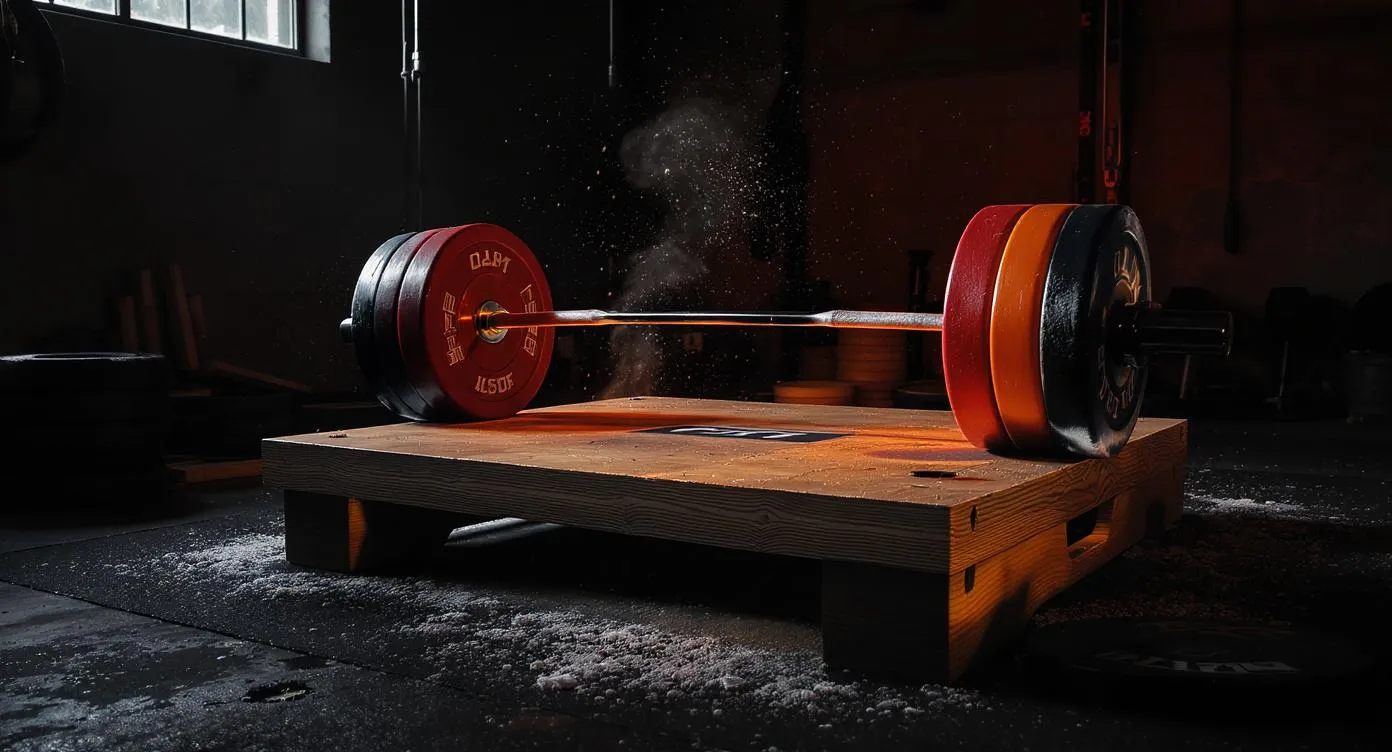
Olympic Weightlifting Home Gym Build (2026)
Build a home gym for Olympic weightlifting. Platform specs, bar selection, bumper plates, and everything you need to snatch and clean at home.
Olympic weightlifting is the most technically demanding barbell discipline on the planet. The snatch and the clean and jerk require explosive power, precise timing, deep overhead mobility, and equipment that can handle repeated overhead drops from full extension. A globo gym with rubber hex plates and a stiff power bar is not just suboptimal for Olympic lifting — it is actively dangerous. The plates bounce unpredictably, the bar has no whip or spin, and management will ask you to leave the first time you drop a missed snatch from overhead.
Building a dedicated Olympic weightlifting space at home solves every one of those problems. You control the platform, the bar, the plates, the ceiling height, and the noise. You train on your schedule, drill technique at 3 AM if you want, and never wait for equipment. This guide covers the complete build — from platform construction to barbell selection to a four-day training program — for approximately $1,500. Every product recommendation was verified on Amazon as of April 2026. Whether you are a masters lifter chasing qualifying totals or a beginner learning the positions, this build gives you everything you need to snatch and clean at home.
Why Olympic Lifting Demands a Purpose-Built Space
Most home gym builds are forgiving. A powerlifter needs a rack, a bar, and some plates on a flat surface. A bodybuilder needs dumbbells and a bench. Olympic weightlifting has three non-negotiable physical requirements that most garage spaces do not meet out of the box.
Ceiling Height and Bar Path Clearance
The snatch puts a loaded barbell at full arm extension overhead. For a lifter who is 5'10'' (178 cm), the bar sits approximately 7 feet 6 inches above the floor at lockout. Add a 3-inch margin for the upward drive phase before you settle into the catch, and you need a minimum of 7 feet 9 inches of clear ceiling height. Ideally, you want 9 feet or more. Standard residential garages with 8-foot ceilings work for most lifters under 6'2'', but measure before you buy. If your ceiling is under 8 feet, the jerk becomes the limiting factor — the split position adds height compared to the squat catch of the snatch.
Check for overhead obstructions: garage door tracks, light fixtures, ceiling fans, exposed beams, and ductwork all reduce your effective ceiling height. Relocate or remove anything in the lifting zone. A single collision with a garage door track during a max snatch is a catastrophic failure you do not want to experience.
Platform Requirements
Olympic lifts are dropped. Not occasionally — every single rep of every working set above 70% ends with the bar falling from overhead (snatch) or shoulder height (clean). That impact must be absorbed by a proper lifting platform. Bare concrete cracks. Rubber mats alone compress and shift. You need a layered platform that distributes force across plywood and absorbs impact through dense rubber. Our how to build a lifting platform guide covers the full construction process, and this article includes a condensed version below.
Noise and Vibration
A 100 kg snatch dropped from overhead generates roughly 10,000 newtons of impact force. Your neighbors will hear it. Your foundation will feel it. Even with a proper platform, Olympic lifting is the loudest training modality in strength sports. If you share walls, live in a townhouse, or have neighbors within 50 feet, noise management is not optional — it is the difference between keeping your gym and losing it. Our soundproofing guide covers the full spectrum of noise reduction strategies for garage gyms.
The Complete Olympic Weightlifting Build (~$1,480)
This build prioritizes the three things that matter most for Olympic lifting: a proper bar with needle bearings and whip, bumper plates rated for repeated drops, and a platform that protects your floor and your joints. Everything else is secondary.
Build Cost Summary
That total leaves $20-90 of headroom in the $1,500 budget for fractional plates, wrist wraps, or lifting shoes — all worthy additions once the core build is complete.
Building Your Lifting Platform
The platform is the foundation of every Olympic weightlifting space. Without it, you cannot train. An 8x8 foot platform is the minimum for Olympic lifting — it gives you room for the full jerk recovery and prevents plates from rolling off the edges on angled drops.
Materials List
- 3 sheets of 4x8 ft plywood (3/4 inch) — two sheets for the base layer, one sheet for the center lifting surface
- 2 horse stall mats (4x6 ft, 3/4 inch thick) — cut to fit the drop zones on each side of the center plywood
- Wood screws (2 inch) — to laminate the plywood layers together
- Construction adhesive — optional but recommended between layers
- Wood stain or polyurethane — for the center lifting surface (grip and aesthetics)
Assembly Steps
- Lay two sheets of plywood side by side on clean, level concrete. This is your base layer (8x8 ft).
- Cut the third sheet of plywood to 4x8 ft (it already is) and center it on the base layer. This is your lifting surface where you stand.
- Cut the two horse stall mats to fill the remaining space on each side of the center plywood. Each rubber section should be approximately 2x8 ft.
- Screw the center plywood sheet into the base layer using 2-inch wood screws every 12 inches in a grid pattern. Countersink the screw heads flush.
- The rubber mats sit on the base layer without fasteners — their weight (100+ lbs each) holds them in place.
- Apply polyurethane to the center plywood for grip and moisture protection. Two coats minimum.
The total platform cost runs approximately $150-200 depending on local lumber prices. The result is a surface that absorbs repeated drops of 150+ kg without damaging your concrete floor or transmitting excessive vibration. For a more detailed walkthrough with diagrams and advanced options like inlaid center sections, see our complete lifting platform build guide.

BalanceFrom Puzzle Exercise Mat 1/2' Thick, EVA Interlocking Foam Floor Tiles for Home Gym, Mat for Home Workout Equipment, Floor Padding for Kids, Black, 24 in x 24 in x 1/2 in, 24 Sq Ft - 6 Tiles
Capacity
N/A — flooring
Steel
High-Density EVA Foam (1/2" thick)
Footprint
24 sq ft (6 tiles)
Price
$25.99
- 4.5+ star rating on Amazon with 40,000+ reviews
- 24 sq ft covers a full lifting platform area
- 1/2 inch thick EVA foam absorbs impact and noise
- Interlocking design — no adhesive needed
- Easy to cut for custom fit around racks
- Best budget gym flooring on Amazon
- Puzzle seams can separate under heavy racks
- Not as durable as horse stall mats for deadlifts
- Slight chemical smell for first few days
Price and availability may change
Use BalanceFrom puzzle mats around the platform perimeter to protect surrounding floor area and create a defined training zone. These interlock cleanly and handle light foot traffic and accessory work outside the main platform.
Barbell Selection: The Most Important Decision
The barbell is the single most critical piece of equipment in an Olympic weightlifting gym. A stiff power bar with bronze bushings will fight you on every clean and snatch. You need three specific characteristics: spin, whip, and knurl profile.
Spin (Bearings vs. Bushings)
When you catch a clean in the front rack position, the bar must rotate freely on the sleeves while your hands transition from the pulling grip to the rack grip. If the sleeves do not spin, the rotational force transfers into your wrists and elbows — leading to missed lifts and eventual injury. Needle bearings provide the smoothest, most consistent spin. Bushing bars work for powerlifting and general training but are inadequate for serious Olympic lifting above 80% intensity.
Whip (Shaft Flex Under Load)
Olympic barbells are designed to flex under heavy loads. This whip stores elastic energy during the pull and returns it during the transition phase, making the bar feel lighter at the catch. A bar with good whip allows you to "ride" the oscillation during heavy cleans and jerks. Stiff power bars have zero whip by design — the opposite of what you want. The Synergee Games bar provides moderate whip that suits both intermediate and advanced lifters.
Knurl Profile
Olympic lifting knurl is less aggressive than powerlifting knurl. You are pulling the bar with hook grip and catching it on your shoulders or overhead — aggressive knurl tears up your thumbs and collarbones. The knurl should be present enough to maintain grip during the pull but not so sharp that it causes bleeding during high-volume sessions. Olympic lifting marks (the inner ring marks on the shaft) should be present for consistent grip width on the snatch.
For a detailed comparison of barbell types, bearing systems, and price tiers, read our complete barbell selection guide.

Synergee Games 15kg and 20kg Colored Ceramic Coated Barbells
Capacity
1,500 lbs rated capacity
Steel
Ceramic Coated Steel / Needle Bearings
Footprint
28.5mm Shaft, 7ft Olympic Bar
Price
$149.95
- 4.7+ star rating on Amazon
- 1,000 lb capacity at mid-range price
- Needle bearings provide smooth spin for Olympic lifts
- 190K PSI tensile strength
- Dual knurling marks for powerlifting and Olympic lifts
- Best Amazon-available upgrade from budget bars
- Black phosphate finish requires regular oiling
- Not made in the USA
- Knurling is slightly less aggressive than premium bars
Price and availability may change
The Synergee Games 20kg barbell hits the sweet spot for a home Olympic lifting setup. Needle bearings deliver smooth, consistent spin. The 28.5mm shaft provides moderate whip under loads above 80 kg. Dual knurling marks (Olympic and powerlifting) give you reference points for both the snatch and the clean grip. The 190,000 PSI tensile strength handles any load a home gym lifter will realistically put on the bar, and the chrome finish resists rust in humid garage environments.
- Needle bearings provide smooth spin essential for cleans and snatches
- 28.5mm shaft diameter matches IWF competition spec
- Moderate whip suits Olympic lifting technique at all levels
- Dual knurl marks for both Olympic and powerlifting grip widths
- 1,000 lb static rating — more than sufficient for home gym use
- Chrome finish resists garage humidity and sweat corrosion
- Whip is moderate, not elite — advanced lifters (140+ kg C&J) may want a dedicated Oly bar
- Knurl is a compromise between Oly and power — slightly more aggressive than pure Oly bars
- No IWF certification — not legal for sanctioned competition, though perfect for training
Bumper Plates: Non-Negotiable for Olympic Lifting
Cast iron plates are not an option for Olympic weightlifting. Every rep above warm-up weight gets dropped — from overhead on snatches, from the shoulders on cleans, from lockout on jerks. Cast iron plates crack concrete, damage barbells, bounce unpredictably, and shatter on impact. You need bumper plates: solid rubber discs with steel inserts, designed to be dropped repeatedly from overhead height.

FringeSport Savage Bumper Plates Set and Pairs - Olympic Weight Plate - Rubber Weight Plates with Steel Insert Strength Training Plate (10lb - 460lb)
Capacity
10lb - 460lb options
Steel
Virgin Rubber / Steel Insert
Footprint
17.72" diameter (standard Olympic)
Price
$736.00
- 4.7+ star rating with 2,000+ reviews
- Color-coded for quick weight ID
- Dead bounce — safe to drop from overhead
- Standard Olympic 2" insert fits all bars
- Virgin rubber — no toxic recycled smell
- Best value color bumper set under $300
- Thicker than competition bumpers
- Not IWF certified for competition
- Colors may scuff over time on rough floors
Price and availability may change
Fringe Sport bumper plates are purpose-built for Olympic lifting. The virgin rubber compound absorbs impact without excessive bounce — critical for training in a garage where a bouncing bar can hit walls, cars, or your shins. The steel inserts are recessed and reinforced to prevent the common failure point where budget bumpers crack around the hub after months of drops. The dead blow characteristic (minimal bounce) is specifically what you want for overhead drops in a confined space.
A starting set of 250 lbs covers the working weights for most intermediate lifters: a pair each of 45s, 35s, 25s, and 10s. That gives you loading from 65 lbs (bar + 10s) to 295 lbs (bar + all plates). For most home Olympic lifters, this range covers 95% of training needs. Add a pair of 55 lb plates later if your clean and jerk exceeds 130 kg.
For a deeper breakdown of plate types, durometer ratings, and when to choose competition bumpers over training bumpers, read our weight plate selection guide.
- Virgin rubber compound rated for repeated overhead drops
- Low-bounce (dead blow) design ideal for garage environments
- Reinforced steel inserts resist hub cracking
- Consistent diameter across all weights per IWF standard
- Color-coded by weight for quick identification during training
- Thicker than cast iron — limits total loadable weight on the sleeve
- More expensive per pound than cast iron ($1.50-2.00/lb vs $0.80-1.00/lb)
- Heavier plates (45+) can develop slight warping after years of drops in extreme heat
The Squat Rack: Your Strength Foundation
Olympic weightlifting is not just snatches and clean and jerks. Squatting is the primary strength builder — front squats, back squats, and overhead squats form the backbone of every serious weightlifting program. You need a rack with adjustable J-cups and safety bars for solo squat training.

ULTRA FUEGO Power Cage, Multi-Functional Power Rack
Capacity
800 lbs
Steel
2x2" 14-Gauge Steel
Footprint
50.5" L x 46.5" W x 83.5" H
Price
$389.98
- 4.5+ star rating on Amazon with 5,000+ reviews
- Excellent value under $350
- 800 lb weight capacity
- Includes multi-grip pull-up bar
- Standard 2x2 hole spacing for attachments
- Optional lat pulldown attachment available
- 14-gauge steel is thinner than premium racks
- Plastic J-cup liners can wear over time
- Not ideal for lifters squatting 600+ lbs
Price and availability may change
The ULTRA FUEGO Power Cage handles this role well. The 800 lb capacity exceeds any squat weight a home gym Olympic lifter will reach. The adjustable safety bars let you bail front squats safely — essential since front squats to failure are a regular occurrence in weightlifting programs. The pull-up bar is a bonus for accessory work (pull-ups, hanging leg raises) that supports Olympic lifting performance.
Position the rack behind the platform so you can unrack, walk forward onto the platform, squat, and rerack without moving equipment. This layout keeps your training flow efficient and your platform clear for the classic lifts.
Chalk: Grip Without Compromise

Liquid Grip Liquid Chalk 8-Ounce Bottle
Capacity
N/A — grip enhancer
Steel
Water-Based Chalk Formula
Footprint
8 oz bottle
Price
$24.59
- 4.5+ star rating on Amazon with 5,000+ reviews
- No mess — dries instantly on hands
- Water-based, non-toxic formula
- One application lasts an entire workout
- Gym-friendly — no chalk dust on equipment
- Best liquid chalk for home and commercial gyms
- More expensive per use than block chalk
- Can dry out hands with daily use
- Bottle can leak if cap isn't sealed
Price and availability may change
Hook grip on a heavy snatch pull is brutal on the thumbs. Chalk is the difference between a secure grip and a missed lift. Liquid Grip chalk applies cleanly, does not create the dust cloud that loose chalk does (important in enclosed garages with vehicles nearby), and lasts through multiple sets. One bottle covers 2-3 months of regular training. Keep a block of standard chalk as backup for max-effort days when you want maximum grip.
Ceiling Height Quick Reference
| Lifter Height | Overhead Bar Height (snatch) | Minimum Ceiling | Recommended Ceiling |
|---|---|---|---|
| 5'4'' (163 cm) | ~6'9'' | 7'0'' | 8'0''+ |
| 5'8'' (173 cm) | ~7'2'' | 7'5'' | 8'6''+ |
| 5'10'' (178 cm) | ~7'6'' | 7'9'' | 9'0''+ |
| 6'0'' (183 cm) | ~7'10'' | 8'1'' | 9'4''+ |
| 6'2'' (188 cm) | ~8'2'' | 8'5'' | 9'8''+ |
Measure from your platform surface (which adds 1.5 inches above the concrete) to the lowest ceiling obstruction. If you are borderline, test with a broomstick at full overhead extension before investing in equipment.
Four-Day Olympic Weightlifting Program
This program balances the classic lifts (snatch, clean and jerk) with the strength work (squats, pulls) that drives long-term progress. It follows the structure used by most USAW-certified coaches: two classic lift days and two strength-focused days per week.
Day 1 — Snatch Focus
| Exercise | Sets x Reps | Intensity |
|---|---|---|
| Muscle Snatch (warm-up) | 3 x 3 | Bar to 40% |
| Snatch from Floor | 5 x 2 | 75-85% |
| Snatch Pull | 3 x 3 | 90-100% of snatch |
| Overhead Squat | 4 x 3 | 70-80% of snatch |
| Snatch Grip RDL | 3 x 6 | Moderate |
| Hanging Leg Raise | 3 x 12 | Bodyweight |
Day 2 — Strength
| Exercise | Sets x Reps | Intensity |
|---|---|---|
| Back Squat | 5 x 3 | 80-88% |
| Snatch Grip Deadlift | 4 x 4 | 80-85% |
| Strict Press | 4 x 5 | RPE 7-8 |
| Barbell Row | 3 x 8 | Moderate |
| Pull-ups | 3 x max | Bodyweight |
Day 3 — Clean and Jerk Focus
| Exercise | Sets x Reps | Intensity |
|---|---|---|
| Muscle Clean (warm-up) | 3 x 3 | Bar to 40% |
| Clean and Jerk from Floor | 5 x 1+1 | 75-85% |
| Clean Pull | 3 x 3 | 90-105% of clean |
| Front Squat | 4 x 2 | 80-88% |
| Push Press | 3 x 5 | 70-80% of jerk |
| Plank Hold | 3 x 45s | Bodyweight |
Day 4 — Strength and Accessories
| Exercise | Sets x Reps | Intensity |
|---|---|---|
| Front Squat | 5 x 2 | 82-90% |
| Clean Deadlift | 4 x 3 | 90-100% of clean |
| Push Jerk / Power Jerk | 4 x 2 | 75-85% of jerk |
| Good Morning | 3 x 8 | Light-moderate |
| Barbell Curl (elbow health) | 3 x 10 | Light |
| Back Extension | 3 x 12 | Bodyweight |
Rest 2-3 minutes between classic lift sets, 90 seconds between accessory sets. Deload every fourth week by reducing volume by 40% and intensity by 10%. This structure follows the progressive overload principles outlined by the NSCA for intermediate weightlifters. Percentages are based on current 1RM — recalculate every 8 weeks or after a competition.
Noise Management for Olympic Lifting
Olympic lifting is inherently loud. You cannot silently lower a 120 kg snatch. But you can reduce the impact enough to train without complaints.
Platform Construction (Primary Defense)
The layered plywood-and-rubber platform described above is your first line of defense. The rubber absorbs the initial impact, and the plywood distributes the force across a wide area rather than concentrating it on a single point of concrete. This alone reduces perceived noise by 40-50% compared to dropping on bare rubber mats.
Crash Pads / Drop Pads
For lifters in noise-sensitive environments (attached garages, shared walls, residential neighborhoods), crash pads are the single most effective noise reduction tool. Place a pair of 24x30 inch foam crash pads on the platform drop zones. They absorb the bar-to-floor impact and cut noise levels by an additional 30-40%. The trade-off is that crash pads raise the bar height by 4-6 inches, which changes the starting position for pulls from the floor. Use them for heavy singles and doubles; remove them for technique work at lighter weights.
Training Schedule
The simplest noise management strategy is also the most effective: train during hours when noise is acceptable. In most residential areas, that means 8 AM to 8 PM on weekdays and 9 AM to 6 PM on weekends. If you must train early or late, shift to hang variations (hang snatch, hang clean) which produce 50-60% less impact noise than lifts from the floor since the drop height is lower.
Vibration Isolation
Place the entire platform on a layer of dense rubber or anti-vibration pads. This decouples the platform from the concrete slab and reduces vibration transmission through the foundation to adjacent rooms and neighboring structures. Two horse stall mats under the platform base layer create an effective vibration break. For a comprehensive approach, our soundproofing guide covers everything from acoustic panels to structural isolation.
IWF Rules and Competition Standards
If you plan to compete, your home training should mirror competition conditions as closely as possible. The International Weightlifting Federation (IWF) governs the sport worldwide and sets equipment specifications:
- Barbell: Men's bar is 20 kg, 2200 mm long, 28 mm shaft diameter. Women's bar is 15 kg, 2010 mm long, 25 mm shaft diameter.
- Platform: 4 x 4 meters (approximately 13 x 13 ft). Your 8x8 ft home platform is smaller but adequate for training.
- Plates: Calibrated to +/- 10 grams for competition. Training bumpers do not need this precision, but should be within 1% of stated weight.
- Collars: 2.5 kg competition collars. Home training with standard spring or lockjaw collars is fine.
Training on proper bumper plates and a bearing bar — even budget versions — translates directly to competition performance. The bar feel, the spin, the drop characteristics, and the platform surface all match closely enough that competition day feels familiar rather than foreign.
Common Mistakes to Avoid
- Buying a power bar instead of an Olympic bar — A stiff 29mm power bar with no spin will wreck your wrists on cleans and teach incorrect turnover mechanics. The bar must have bearings and whip.
- Skipping the platform — Dropping bumper plates on bare concrete or thin rubber mats will crack your floor within weeks. The platform is not optional.
- Insufficient ceiling height — Measure before you buy. A missed jerk into a ceiling beam can break the bar, damage your home, and cause serious injury.
- Using cast iron plates for Olympic lifts — Cast iron is for controlled lowering only. Olympic lifts are dropped from height. Use bumper plates.
- Neglecting front squat strength — New lifters buy equipment and immediately start snatching. Your clean will never exceed your front squat. Build leg strength first.
- Training without a mirror or camera — Olympic lifting is a technique sport. You need visual feedback. Mount a mirror on the wall facing your platform or set up a phone tripod for video review.
Upgrade Path: Where to Go From Here
Once your base build is complete and you have been training consistently for 6-12 months, prioritize upgrades in this order:
- Competition bumper plates — thinner profile allows more weight on the bar, calibrated to tighter tolerances
- Dedicated women's bar (15 kg, 25 mm shaft) — if a female lifter shares the space
- Jerk blocks — train the jerk from different heights without cleaning the weight first
- Pulling blocks / riser platforms — work specific positions in the pull (knee, below knee, hip)
- Fractional plates (0.5 kg, 1 kg) — micro-loading for the snatch where 2.5 kg jumps are too large
The CrossFit home gym build shares significant equipment overlap with this build if you want to expand into metabolic conditioning and gymnastics work alongside your Olympic lifting.
Frequently Asked Questions
What is the minimum ceiling height for Olympic weightlifting at home?
Can I do Olympic lifts without a platform?
Do I need bumper plates or can I use cast iron?
How much space do I need for Olympic lifting at home?
Is the Synergee barbell good enough for serious Olympic lifting?
How do I reduce noise from dropping weights?
Can I combine Olympic lifting with powerlifting in the same home gym?
What shoes do I need for Olympic weightlifting?
Related Content
- How to Build a Lifting Platform — step-by-step construction guide for Olympic lifting platforms
- How to Choose a Barbell — bearing types, shaft diameter, whip, and knurl compared
- How to Choose Weight Plates — bumper vs. iron, durometer ratings, and budget tiers
- Soundproofing Your Garage Gym — noise reduction for heavy dropping
- CrossFit Home Gym Build — overlapping equipment for combined Oly and metcon training
- Powerlifter Home Gym Build — companion build for squat, bench, and deadlift focus
Derek Walsh
Strongman competitor and former commercial gym equipment salesman. Knows what survives heavy daily use.
Read full bioMore in Budget Builds
Women's Home Gym Build: Complete Equipment Guide (2026)
Build the perfect home gym for women. Glute-focused equipment, strength training essentials, and space-efficient picks for every budget.
The Best Home Gym Build for Seniors (2026)
Build a safe, effective home gym for seniors. Joint-friendly equipment picks, fall-prevention features, and age-appropriate training programs.
The Complete Beginner Home Gym Build (2026)
Your first home gym, done right. A tested beginner build with exactly what you need, nothing you don't, and a plan to grow.