Maintenance
Keep your gym running for decades with proper cleaning and upkeep.
Home Gym Maintenance: Make Your Gear Last 30 Years
A neglected barbell rusts. An over-loaded dial dumbbell breaks. An un-tightened rack bolt loosens until the whole thing wobbles. None of this is dramatic — it's slow, boring, and entirely preventable with 10 minutes of monthly attention.
Done right, a $1,500 home gym lasts 30+ years. Done wrong, it lasts 3.

Liquid Grip Liquid Chalk 8-Ounce Bottle
Capacity
N/A — grip enhancer
Steel
Water-Based Chalk Formula
Footprint
8 oz bottle
Price
$24.59
- 4.5+ star rating on Amazon with 5,000+ reviews
- No mess — dries instantly on hands
- Water-based, non-toxic formula
- One application lasts an entire workout
- Gym-friendly — no chalk dust on equipment
- Best liquid chalk for home and commercial gyms
- More expensive per use than block chalk
- Can dry out hands with daily use
- Bottle can leak if cap isn't sealed
Price and availability may change
The Monthly Maintenance Checklist
10 minutes per month, every month:
- Wipe down the barbell with a clean rag and 3-in-1 oil (or specialty barbell oil). Pay attention to the knurling and sleeves.
- Brush the knurling with a stiff nylon brush to remove chalk buildup. Skip if you don't chalk.
- Tighten every visible bolt on the rack. Hand-snug. Don't strip the threads.
- Inspect J-cups and safety bars for cracks, deformation, or worn plastic liners.
- Wipe down adjustable dumbbell handles and rails with a dry cloth. Never use water on the dial mechanism.
- Check bench upholstery for tears or compression damage. Replace pads showing visible wear.
- Sweep and mop the gym floor. Iron filings from the bar and dust accumulate fast.
- Inspect cable system pulleys if your rack has them. Look for fraying or wobble.
- Test rack stability by pushing each upright with moderate force. Anything that wobbles needs to be tightened or anchored.
- Lubricate any cardio equipment per manufacturer specs (treadmill belt, rower chain).
Read our how to clean & maintain home gym equipment walkthrough for the full procedure.
Barbell Care Specifically
The barbell is the highest-maintenance item in a home gym. It also lasts the longest if cared for. Five rules:
- Never store loaded. A loaded bar can take a permanent bend over months.
- Wipe after every chalk-heavy session. Chalk holds moisture against the knurling.
- Oil monthly minimum, weekly if humid. A few drops of 3-in-1 oil on a rag, wipe the whole shaft and sleeves.
- Store horizontally. Vertical storage stresses the bushings/bearings unevenly.
- Replace the spring collars. Cheap collars wear out in a year. Spend $15 on real lock-jaw collars.
The complete barbell maintenance procedure is in our barbell maintenance guide.
Seasonal Maintenance: What Changes by Climate
Your maintenance routine should shift with the seasons, especially if your gym is in an unconditioned space like a garage or shed:
Spring/Summer (warm, humid):
- Oil the barbell weekly instead of monthly — humidity accelerates oxidation
- Run a dehumidifier if your space exceeds 60% relative humidity
- Check rubber flooring for expansion — stall mats can buckle in extreme heat
- Inspect vinyl bench pads for heat-related cracking or softening
- Clean chalk residue more frequently — sweat + chalk creates a corrosive paste
Fall/Winter (cold, dry):
- Allow steel equipment to reach room temperature before heavy loading if your gym drops below 40°F — cold steel is more brittle
- Check for condensation on metal surfaces during temperature swings (cold nights to warm days)
- Lubricate cardio equipment more frequently — cold temperatures thicken lubricants
- Inspect rubber components (band attachments, cable pulley housings) for cold-weather cracking
- Tighten bolts more frequently — metal contracts in cold, and fasteners loosen
Year-round in coastal/humid climates:
- Consider stainless steel or cerakote-coated barbells — they resist corrosion significantly better than bare steel, zinc, or chrome
- Store resistance bands and rubber accessories in a sealed container with silica gel packets
- Apply a thin coat of paste wax (Renaissance Wax or automotive paste wax) to exposed steel surfaces quarterly for long-term corrosion protection
Equipment Lifespan: What to Expect
Well-maintained home gym equipment lasts far longer than commercial gym equipment because it sees a fraction of the use. Here's what to expect:
| Equipment | Expected Lifespan (Maintained) | Expected Lifespan (Neglected) |
|---|---|---|
| Power rack (steel frame) | 30+ years | 15-20 years |
| Olympic barbell | 20-30 years | 5-10 years |
| Cast iron plates | Lifetime | Lifetime (rust is cosmetic) |
| Adjustable bench | 10-15 years | 3-5 years |
| Adjustable dumbbells | 5-10 years | 2-3 years |
| Foam roller | 2-3 years | 1 year |
| Resistance bands | 1-3 years | 6-12 months |
| Horse stall mats | 15-20 years | 10-15 years |
| Treadmill belt | 3-7 years | 1-2 years |
The equipment with the shortest lifespan (resistance bands, foam rollers) is also the cheapest to replace. The expensive items (rack, barbell, plates) are virtually permanent investments with proper care.
Common Failures and Their Causes
What breaks first in a home gym, and why:
- Adjustable dumbbells crack → the user dropped them. The mechanism is fragile.
- Bench pad wear → no rotation of contact points + poor quality vinyl.
- Bar develops bend → stored loaded, or used past its rated capacity.
- Rack wobble → bolts loosened over time, never re-tightened.
- Treadmill belt slips → never lubricated, motor brush wear.
- Cable pulleys squeak/grind → dust and dirt buildup, no inspection.
Every single one of these is preventable with the monthly checklist above.
Common Questions
How often should I oil my barbell?
Can I clean a rusty barbell?
How do I tell if my rack needs anchoring?
What's the worst maintenance mistake?
Should I cover my equipment when not in use?
Guides & How-Tos(3)
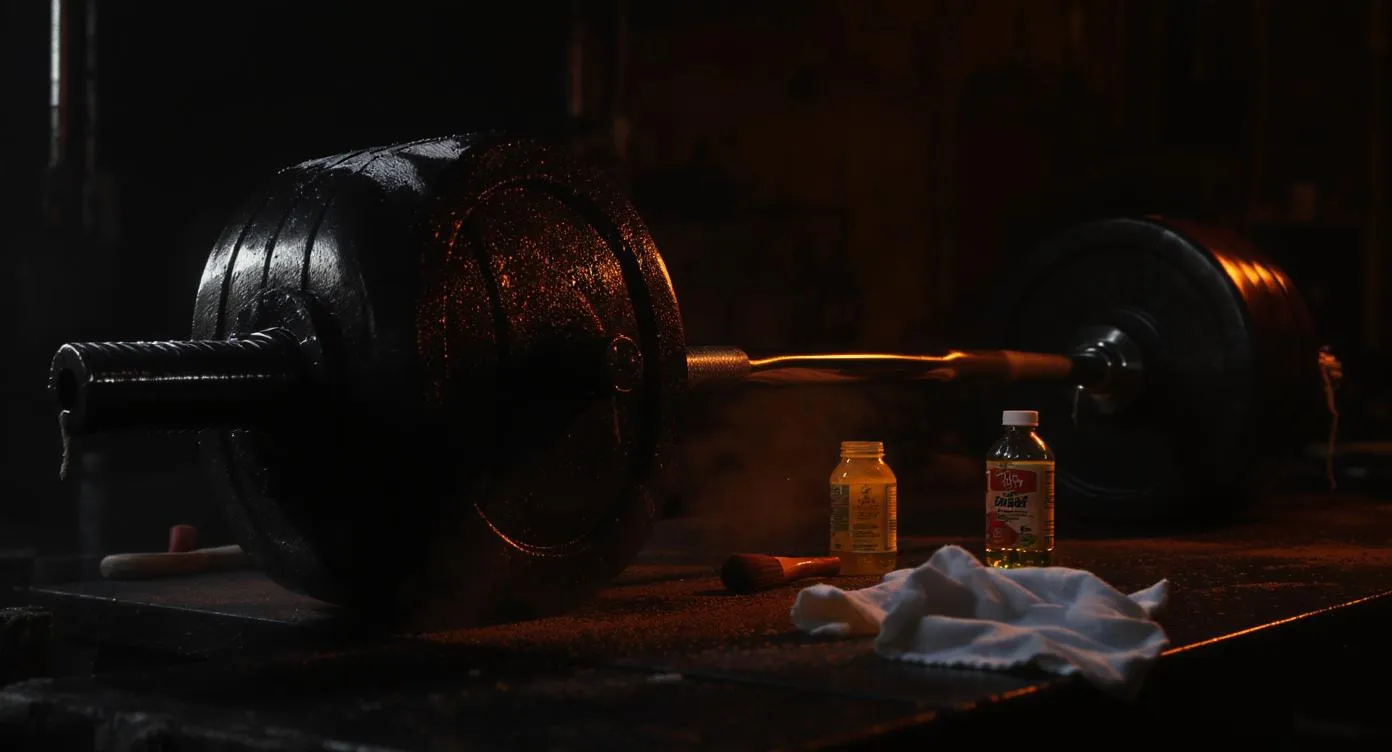
How to Clean & Maintain Home Gym Equipment (2026 Guide)
Step-by-step cleaning and maintenance guide for barbells, plates, racks, benches, and cardio equipment. Make your gear last decades.
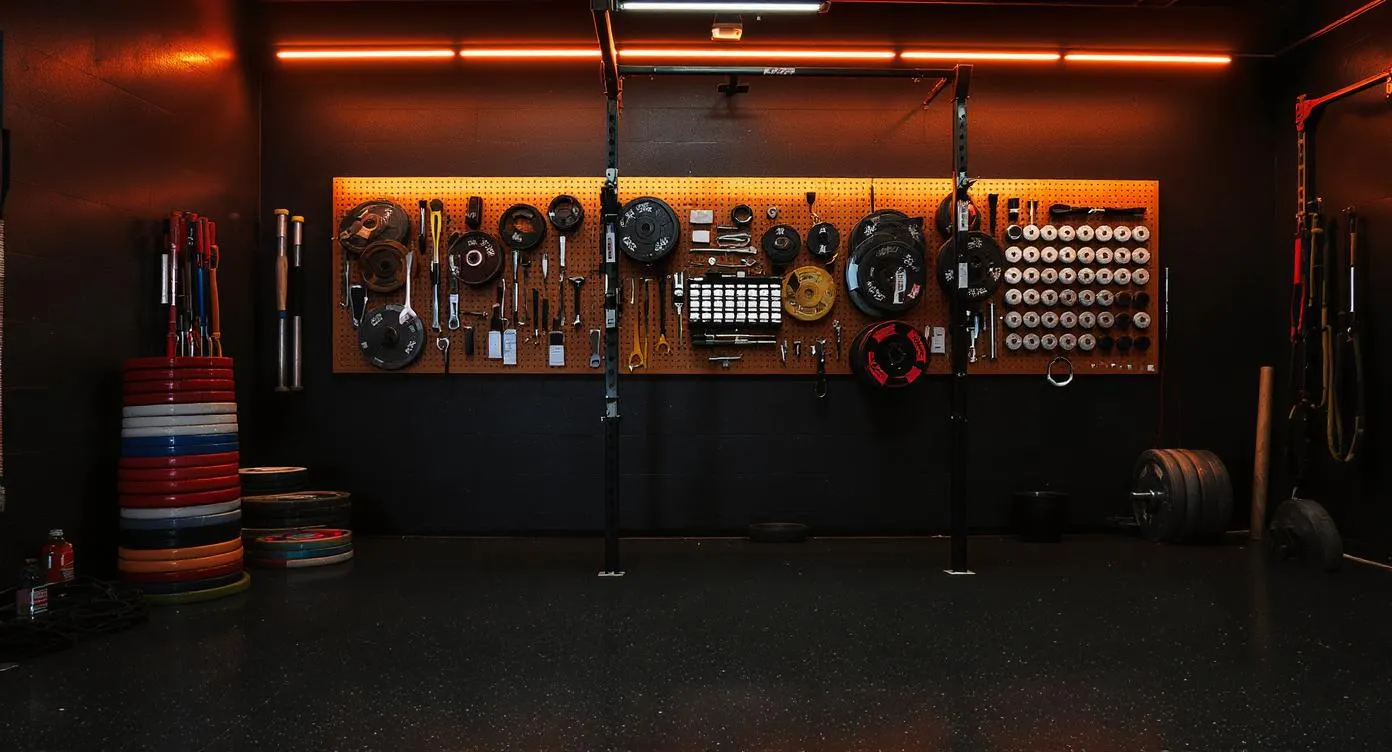
How to Organize Your Garage Gym (Layout & Storage Guide)
How to lay out, organize, and store equipment in your garage gym. Space planning, wall storage, plate organization, and keeping your gym clean.
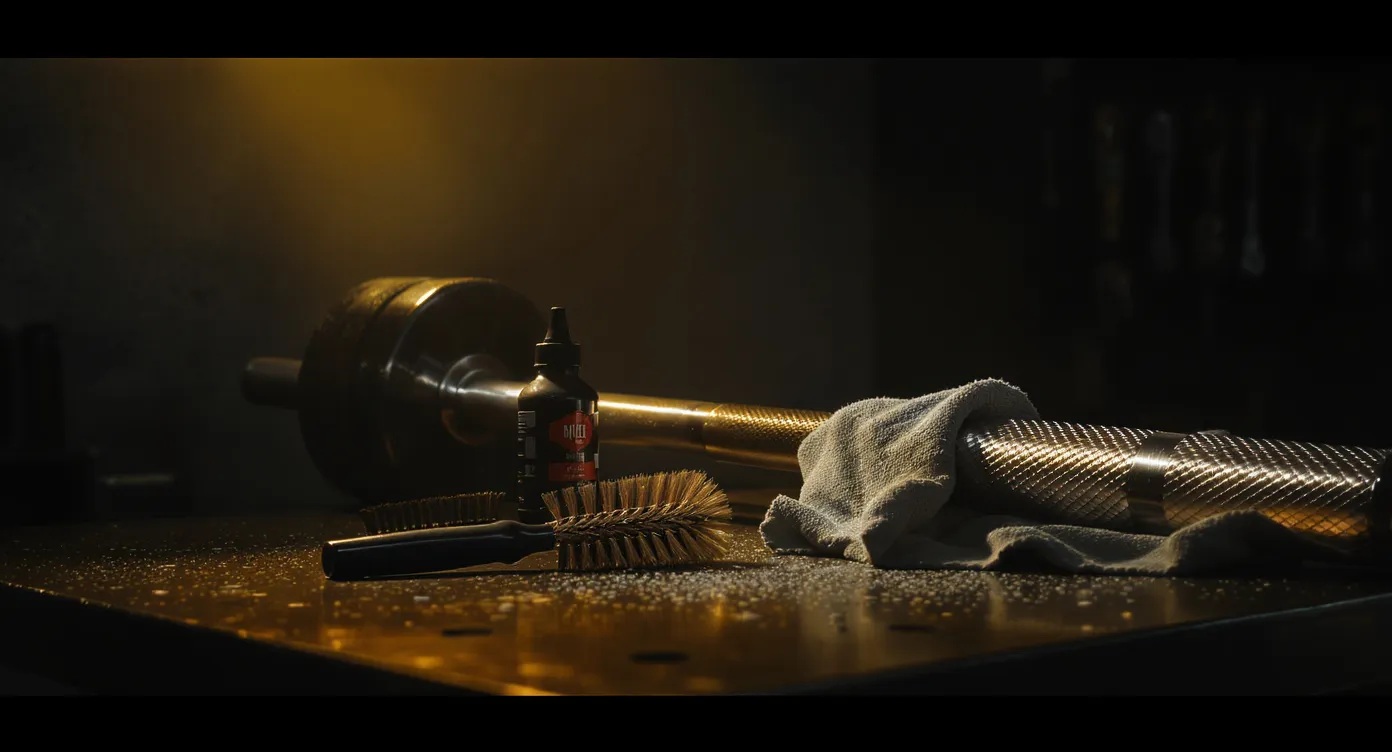
How to Maintain Your Barbell: Cleaning & Care Guide
Keep your barbell in peak condition. How to clean, oil, and prevent rust on your Olympic barbell — plus when to replace it.