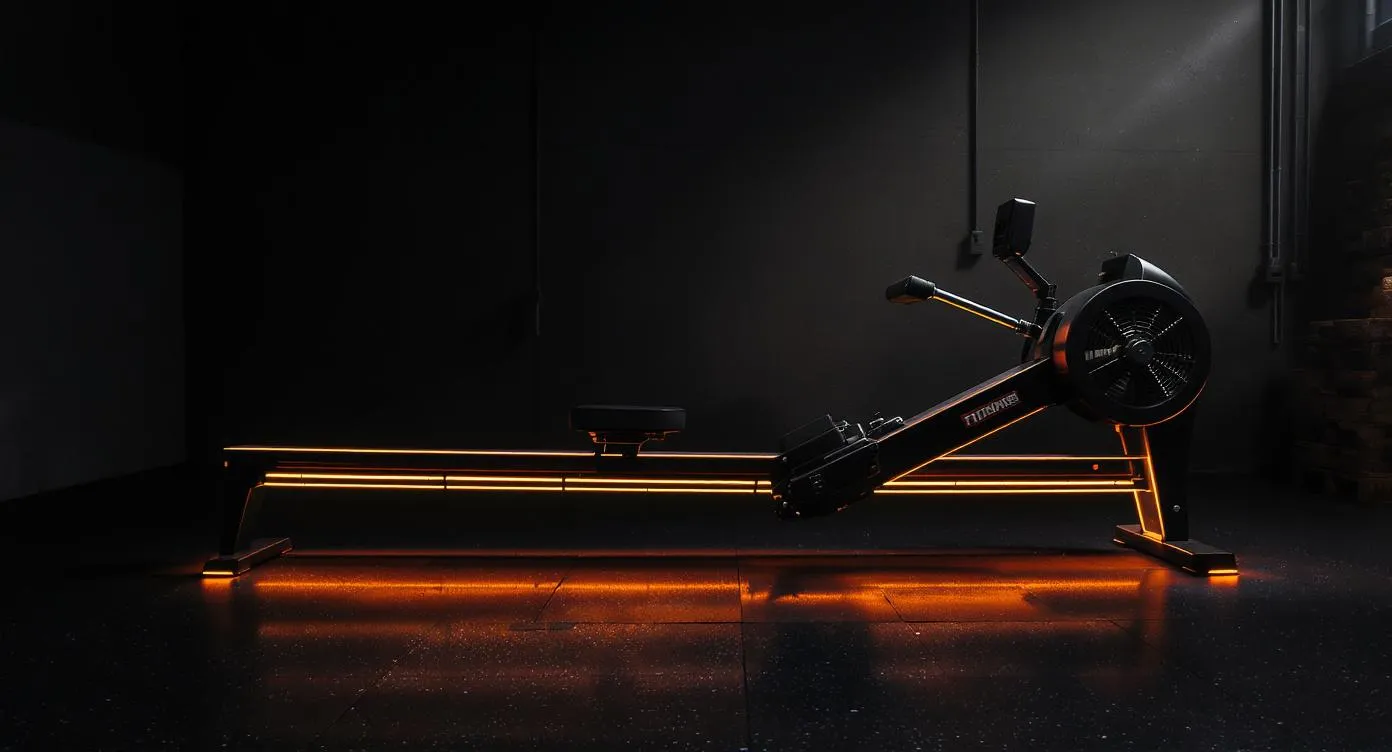
Sunny Health SF-RW522016 Rower Review: The Best Rower Under $300
Hands-on review of the Sunny Health & Fitness SF-RW522016 magnetic rower. 25,000+ Amazon reviews and the best budget rower for home gyms.
The Concept2 RowErg is the gold standard of indoor rowing machines, and most serious coaches will tell you to buy nothing else. They are not wrong. But the RowErg costs $990, ships directly from Vermont, and dominates eight feet of floor space indefinitely. For the majority of home gym owners training for general fitness — not competitive ergometer racing — that calculus does not always work out. The Sunny Health & Fitness SF-RW522016 is the most popular budget rower on Amazon by a wide margin: over 25,000 reviews, a 4.5-star average, and a street price under $250. This review breaks down exactly what you get for that money, where the machine falls short, and how it compares to the machines it will most often be weighed against.

Sunny Health & Fitness Magnetic Rowing Machine SF-RW522016 with Bluetooth & SunnyFit App
Capacity
250 lbs user weight
Steel
Steel Frame / Magnetic Resistance
Footprint
Extended slide rail
Price
$249.99
- 4.5+ star rating on Amazon with 25,000+ reviews
- 8 levels of magnetic resistance
- Whisper-quiet vs. air rowers
- Folds vertically for storage
- LCD monitor tracks time, distance, calories, strokes
- Best budget rower on Amazon under $300
- Magnetic resistance maxes out for advanced rowers
- Seat padding is thin on long sessions
- Not as smooth as Concept2 air resistance
Price and availability may change
Understanding the Magnetic Resistance System
The SF-RW522016 uses a permanent magnet braking system to generate resistance, which is the dominant technology in budget-to-midrange rowing machines. Understanding how it works is essential for setting realistic expectations.
A fixed permanent magnet is positioned adjacent to a spinning aluminum flywheel. When you pull the handle and drive your legs, the fan wheel rotates through a magnetic field. The magnetic flux induces eddy currents in the spinning metal, and those eddy currents create drag — resistance — proportional to how close the magnet sits to the flywheel. Adjusting the resistance level physically repositions the magnet relative to the wheel: closer means more drag, farther means less.
The practical implications of this system are significant:
Resistance is preset, not variable by effort. On a Concept2 or water rower, pulling harder automatically generates more resistance because the physics of air or water resistance scale with speed. On a magnetic rower, resistance is whatever the dial says it is. If you set level 4 and pull hard, you will accelerate through the stroke rather than feel the resistance scale up to meet you. This creates a fundamentally different training sensation — useful for steady-state work but less natural for athletes accustomed to air or water rowers.
The magnetic system is what makes this machine quiet. There is no airflow through a flywheel cage, no water sloshing, no chain slapping against a metal sprocket under real load. The only mechanical noise is the nylon cord or strap running over a small pulley and the seat gliding on the aluminum rail. In practice, the machine operates at approximately 45-55 decibels during active rowing — quieter than a normal conversation. For anyone training at 5 AM in a house with sleeping family members, this is a genuine advantage that the Concept2 cannot match.
The system requires zero maintenance. There is no chain to lubricate, no water tank to treat with purification tablets, no flywheel vent slats to clean quarterly. Magnetic resistance is sealed and maintenance-free for the life of the machine.
The 8 Resistance Levels: What They Actually Feel Like
The SF-RW522016 offers eight resistance levels via a tension dial mounted on the frame, reachable while seated and rowing without interrupting a session. Here is an honest assessment of each range:
Levels 1-2: Very light resistance. Appropriate for warm-ups, active recovery, or rehabilitation use. Advanced athletes will find these levels trivially easy regardless of stroke rate. These are useful starting points for beginners learning technique.
Levels 3-4: Light to moderate resistance. The sweet spot for beginners building rowing fitness and for all users doing long steady-state cardio at lower stroke rates. At level 4, a 170-pound athlete rowing at 24 strokes per minute will sustain a meaningful aerobic stimulus.
Levels 5-6: Moderate to moderately hard. Intermediate-level athletes will find genuine challenge here, particularly for sustained sessions exceeding 20 minutes. This is the primary training range for most recreational users.
Levels 7-8: Maximum resistance. For beginner-to-intermediate athletes, level 8 is legitimately hard — short HIIT intervals at high stroke rate will drive heart rate into upper zone 4 or zone 5. However, if you have a strong conditioning background or have been rowing consistently for six or more months, you will likely find level 8 insufficient for short sprint efforts. This is the ceiling of the machine, and it is a real ceiling.
For context against the Concept2 RowErg: the RowErg's resistance scales infinitely with effort — there is no maximum. Level 8 on the SF-RW522016 is roughly analogous in feel to damper 3-4 on the Concept2 for an average-fitness adult. Competitive athletes or very strong individuals will outgrow the magnetic resistance ceiling relatively quickly.
That said, for the target buyer — someone focused on general cardiovascular fitness, weight management, or low-impact conditioning — eight levels covers years of progressive training before resistance becomes a limiting factor.
The Specs
Quick Specs · Sunny Health & Fitness Magnetic Rowing Machine SF-RW522016 with Bluetooth & SunnyFit App
What We Love
- 4.5+ star rating on Amazon with 25,000+ reviews
- Whisper-quiet magnetic resistance — train at 5 AM without waking anyone
- 8 levels of resistance covers beginner to intermediate fitness needs
- Folds vertically for storage — saves 6+ feet of floor space
- LCD monitor tracks time, distance, calories, and stroke count
- Best price-to-quality rower under $300 by a wide margin
What Could Be Better
- Magnetic resistance maxes out for advanced rowers (~equivalent to Concept2 level 6)
- Seat padding is thin — long sessions get uncomfortable after 20-25 minutes
- Resistance does not scale with effort the way air or water rowers do
- No connectivity — no app, no Bluetooth, no heart rate strap support
- Footplates feel small for big feet (size 13+ may struggle)
- LCD monitor shows calories and distance as rough approximations, not calibrated data
- Seat rail length limits full leg extension for users over 6'2"
Build Quality and Assembly
The SF-RW522016 ships in a single box weighing approximately 57 pounds — manageable for one person to bring inside and position. Assembly requires 30-45 minutes using only the included hex wrench and a standard Phillips head screwdriver. The instruction manual is clear, the hardware bags are organized by step, and the frame connections are straightforward bolted joints with no special alignment required.
The frame is steel with a powder-coat finish. At this price point, the finish is adequate but not refined — expect small cosmetic imperfections and some flex in the frame under very hard efforts. The main rail is aluminum, and the seat runs on four nylon wheels that glide acceptably but are noticeably less smooth than the stainless steel seat rollers on premium rowers. Under moderate effort the seat travel is smooth. Under maximum effort at high stroke rate, there is a subtle roughness at the ends of the rail travel.
The footplates are adjustable to accommodate different shoe sizes via a pivoting heel cup and hook-and-loop straps. The straps hold adequately for normal training but feel less secure than the molded footplates and velcro systems on higher-end machines. Users with shoe sizes above US 13 may find the footplates uncomfortably small, particularly in wide shoes.
The pull cord is nylon over a small pulley system rather than a roller chain. This contributes to the quiet operation but does mean a subtly different feel on the drive — the engagement is slightly softer and less immediate than the chain pull of a Concept2. For recreational rowers, this distinction is minor. For athletes with extensive air-rower experience, the cord feel will register as noticeably different.
Seat Rail Length and Tall User Limitations
This is one of the most underreported specifications in rowing machine reviews and it matters considerably. The SF-RW522016's monorail is 36 inches long. For users up to approximately 6'2\u0022 (188 cm), full leg extension at the finish position is achievable with standard technique. For users between 6'2\u0022 and 6'4\u0022, the finish position will require either accepting a slightly bent knee at the end of the drive or adjusting technique to compensate. Users above 6'4\u0022 will find the rail measurably too short for proper technique regardless of adjustments.
This is not a flaw unique to the SF-RW522016 — it is common across rowers in this price bracket. But it is worth stating clearly: if you are 6'3\u0022 or taller, test this machine's rail length against your inseam before purchasing. The inability to reach a proper layback finish not only reduces training effectiveness but shifts stress inappropriately to the lower back.
Compare this to the Concept2 RowErg, which has a longer monorail and comfortably accommodates athletes up to approximately 6'6\u0022 with full leg extension. Water rowers such as the WaterRower Natural are similarly accommodating for taller athletes.
For users in the 5'4\u0022 to 6'2\u0022 range — the majority of the population — rail length on the SF-RW522016 is not a limiting factor.
The LCD Monitor: What It Shows and What It Does Not
The included LCD monitor displays the core metrics you need for a basic cardio session: elapsed time, estimated distance, estimated calories burned, and stroke count. The display is clear and readable in lit gym environments. There is a scan mode that cycles through all metrics automatically if you prefer a single rotating readout.
The critical qualifier on every metric is the word "estimated." Unlike the Concept2's PM5 Performance Monitor, which uses a calibrated algorithm tied to actual flywheel physics to produce standardized split data, the SF-RW522016 monitor calculates calories and distance using a generic formula that is not tied to actual power output. Two users rowing at entirely different intensities on level 4 will see the same calorie count if they row for the same time, because the monitor has no way to measure actual watts generated.
In practice, this means:
- Calorie data is approximately 20-30% less accurate than heart-rate-based estimates and is not comparable session to session if effort varies
- Distance displayed is not meters in any standardized sense — it does not correspond to what the same effort would produce on a Concept2
- There is no split (pace per 500m) metric — arguably the most useful real-time feedback for rowing training
- There is no connectivity — no Bluetooth, no ANT+, no app compatibility, no way to log data automatically
For users who simply want to know how long they've been working and roughly how many calories they've burned, the monitor is fully adequate. For anyone who wants to track genuine progress over time, pace themselves against benchmarks, or follow structured programming that calls for specific split targets, the monitor is a real limitation.
The workaround: pair the SF-RW522016 with a separate heart rate monitor (a chest strap or optical watch) and use heart rate zones for session structure rather than machine-displayed metrics. A chest strap heart rate monitor adds $30-60 to the cost but effectively solves the performance-tracking problem for recreational training purposes.
Noise Profile: The Real Story
If you train in a shared home, an apartment, or a space where sound management matters, this section is worth reading carefully.
The SF-RW522016 at full effort generates approximately 45-55 decibels of mechanical noise — primarily the nylon cord over the pulley and the seat wheels on the aluminum rail. This is quieter than a normal conversation, quieter than a television at moderate volume, and dramatically quieter than an air rower like the Concept2 RowErg.
For comparison, the Concept2 RowErg at moderate effort produces approximately 65-70 decibels from the chain and flywheel — the difference between a quiet library and a normal office. At high effort (fast stroke rate, high damper), the RowErg climbs toward 75-80 decibels. A water rower produces a distinctive sloshing sound that some find meditative and others find surprising in its volume — typically 60-65 decibels at moderate effort.
The SF-RW522016's magnetic system simply does not generate meaningful airflow or mechanical impact. The loudest component is often the user's breathing.
One practical note: the seat wheels can develop a slight squeak over time, particularly in low-humidity environments. A small application of silicone spray or white lithium grease on the rail resolves this immediately. This is normal wear behavior and not a defect.
Setup and Storage: The Vertical Fold Advantage
The SF-RW522016 measures 82 inches long by 19 inches wide when deployed for use. In a typical two-car garage gym, this is a manageable footprint — about the same as a cable machine or half the length of a standard power rack setup. But the machine's genuine space advantage is the vertical fold.
With the pull of a locking pin, the monorail rotates upward and locks in a near-vertical position. Folded, the machine stands approximately 52 inches tall and occupies a floor footprint of roughly 25 by 19 inches. That is less floor space than a standard office chair. For garage gyms shared with vehicles, or for apartment dwellers with limited dedicated floor space, this feature alone justifies serious consideration.
The folding mechanism is simple, reliable, and requires no tools. The machine rolls on two rear wheels, so repositioning between folded storage and active use takes under 30 seconds. Compare this to the Concept2 RowErg, which does separate into two pieces for storage but does not fold in any meaningful sense — each half is still over four feet long and requires wall space or leaning against a structure.
Water rowers typically do not fold at all. The WaterRower's vertical storage option requires a separate purchased storage stand and stands the machine at an angle rather than vertically, occupying considerably more floor area than the folded Sunny.
Magnetic vs. Air vs. Water Resistance: Full Comparison
Understanding where the SF-RW522016 fits in the broader rowing machine landscape requires a direct look at how the three dominant resistance types compare across the factors that matter in actual training.
Magnetic Resistance (SF-RW522016)
Advantages: Silent operation, fixed resistance settings for consistent training loads, zero maintenance, compact storage, lowest price point.
Disadvantages: Resistance ceiling exists and will be reached by fit athletes, resistance does not auto-scale with effort, training data is not standardized or benchmarkable, the drive feel is softer and less dynamic than air or water.
Best for: General fitness, weight management, low-impact cardio, early morning or shared-space training, beginners, athletes under six feet two inches.
Air Resistance (Concept2 RowErg)
Advantages: Infinite resistance scaling, calibrated and standardized data output, PM5 monitor with full connectivity, global benchmark comparability, competitive rowing standard, 40+ year lifespan.
Disadvantages: Significant noise output (65-80 dB), no fixed resistance settings, $990 price, 96-inch footprint with no fold option, chain requires periodic lubrication.
Best for: Serious athletes, data-driven training, anyone who wants to track real progress over years, athletes who follow structured programming with split targets.
Water Resistance (WaterRower and others)
Advantages: Dynamic resistance that scales with effort like air, smooth and quiet operation (relative to air), aesthetic appeal, meditative sound profile.
Disadvantages: Price ($800-1,200 for quality units), no standardized data output, monitor quality varies and typically lacks PM5 depth, water tank requires periodic purification tablet treatment, no fold option for storage.
Best for: Athletes who want a premium feel without Concept2 aesthetics, home gym owners who value appearance, users who find the water sound motivating.
For a comprehensive side-by-side look at how these options compare in a complete home gym context, see the best rowing machines guide.
SF-RW522016 vs. Concept2 RowErg: The Direct Comparison
This is the comparison most buyers are actually making, even if they would not phrase it that way. The Concept2 costs four times as much. Is it four times better?
No — and yes, depending entirely on what you are trying to accomplish.
The SF-RW522016 and the Concept2 both provide rowing motion. Both engage the legs, back, arms, and core in the sequenced drive pattern. Both are low-impact. Both will elevate your heart rate and build aerobic capacity. At that fundamental level, the Sunny delivers the core benefit of rowing at a quarter of the price.
Where the Concept2 separates itself is in precision and longevity. The RowErg's PM5 monitor measures actual watts generated and calculates a standardized split that is directly comparable to every other Concept2 on Earth. If you row a 2:05/500m split on one RowErg, that is the same thing as rowing a 2:05/500m split on any other RowErg — in your garage, in a CrossFit box, in a university rowing program. The Sunny's "distance" and "calories" outputs have no such calibration. You cannot meaningfully compare your performance on the Sunny to any external benchmark.
For a deeper breakdown of where each machine makes more sense as an investment, the Sunny vs. Concept2 comparison covers the full cost-benefit analysis.
The durability gap is also real. Concept2 machines from the 1980s and 1990s still function and hold resale value at 70-80% of new. The SF-RW522016 carries a one-year warranty and uses plastic components that will eventually fatigue under heavy use. A realistic lifespan under regular training — three to five sessions per week — is probably five to eight years with proper care. The Concept2, maintained properly, will outlast you.
None of this makes the Sunny the wrong choice. It makes it the right choice for a specific buyer: someone for whom $990 is genuinely prohibitive, who is not interested in competitive benchmarking, and who wants a quiet, compact, low-maintenance rower for general fitness. For that buyer, the Concept2's advantages are largely irrelevant to their goals.
SF-RW522016 vs. Water Rowers
Water rowers at the $800-1,200 price point offer a genuinely different training experience that is worth acknowledging. The water resistance mechanism provides a self-regulating feel similar to air — pull harder, encounter more resistance — which many athletes find significantly more natural and engaging than magnetic preset levels. The sound of water is quieter than air resistance and many users find it motivating rather than distracting.
However, water rowers in this price range share a limitation with the SF-RW522016: the monitors are not calibrated to the PM5 standard. WaterRower's S4 monitor provides useful data but does not produce split data that is globally benchmarkable in the way the PM5's output is. For athletes who are primarily after training feel rather than data precision, a water rower represents a genuine mid-tier option between the Sunny and the Concept2.
The SF-RW522016 wins on price and storage. A folded Sunny takes up less space than most wall art. A WaterRower stores vertically only with a separate stand accessory, and the water tank itself weighs approximately 50 pounds even before adding the machine frame weight. For small-space home gyms, this difference is material.
Workout Programming for the SF-RW522016
Because the machine lacks a split metric, programming on the SF-RW522016 should be organized around time and perceived effort or heart rate rather than pace targets.
Beginner Foundation (First 4-6 Weeks)
Row for time, not intensity. Starting at level 3 or 4, aim for continuous 10-15 minute sessions at a conversational pace — you should be able to say five-to-six-word sentences without gasping. Focus on technique: drive with the legs first, then lean back slightly, then pull the handle to the lower ribs. Recover in reverse — arms away first, then hinge forward, then slide the seat toward the flywheel. Rushing the recovery is the most common beginner error and leads to inefficient rowing and lower back fatigue.
Progress to 20-minute continuous sessions before increasing intensity or resistance level.
Conditioning Work (Intermediate)
Interval Protocol: 10 rounds of 1 minute hard effort (level 6-7, high stroke rate) followed by 1 minute easy rowing (level 3, low stroke rate). Total time: 20 minutes. Use a separate timer or a phone stopwatch. Heart rate should reach 85-90% of maximum during work intervals and drop below 70% during recovery.
Finisher Protocol: 5 rounds of 500 strokes at level 7-8, maximum sustainable pace, with 90 seconds rest between rounds. This is excellent metabolic conditioning when paired with strength training.
Steady-State Aerobic Base
30-45 minutes at level 4-5, maintaining a stroke rate of 20-24 strokes per minute. Heart rate should stay in zone 2 (approximately 60-70% of max). This is the most underrated protocol on any rowing machine — consistent moderate-duration aerobic work produces measurable improvements in cardiovascular efficiency within eight to twelve weeks.
Who Should Buy the SF-RW522016
Buy it if:
- You want a quiet rower for early morning training in a shared home
- Your gym space is limited and the vertical fold capability is genuinely important
- You need cardio equipment for general fitness and weight management rather than competition
- Your budget does not accommodate $990 for the Concept2 and you have explored used options
- You are new to rowing and want to establish the habit before committing to premium equipment
Look elsewhere if:
- You are 6'3\u0022 or taller — test the rail length against your inseam before purchasing
- You train at an advanced fitness level and will reach the level 8 resistance ceiling within months
- You want to follow structured programming with split-based targets or compete in online ergometer rankings
- You anticipate rowing four or more times per week for years — the Concept2's durability argument becomes significantly stronger at higher training volumes
For a broader look at where this machine fits among the best options across all price points, the best cardio machines under $500 guide covers the complete landscape.
Frequently Asked Questions
Is the Sunny SF-RW522016 good for beginners?
How does magnetic resistance compare to air resistance for training?
Can tall users row the SF-RW522016 comfortably?
How quiet is the SF-RW522016 during actual use?
How accurate is the calorie and distance data on the LCD monitor?
Does the SF-RW522016 fold for storage?
How does the SF-RW522016 compare to the Concept2 RowErg?
Additional Resources
- ACSM Physical Activity Guidelines
- American Heart Association Fitness Guidelines
- ACE Cardio Machine Comparison
Final Verdict
Rating: 4.5/5 — The Sunny Health SF-RW522016 is the best budget rower you can buy in 2026. It is not as smooth as a Concept2, the monitor data is approximate rather than calibrated, and advanced athletes will reach the resistance ceiling sooner than they would like. But for general fitness, quiet operation in a shared home, compact storage in a small gym, and an accessible entry point into rowing-based conditioning, it delivers 80-85% of the rowing machine experience at 25% of the Concept2 price.
The vertical fold alone makes this machine viable for apartments and small garages where a Concept2 simply cannot live. The whisper-quiet magnetic system makes it usable at hours when an air rower would wake the house. For the overwhelming majority of home gym owners — those training for health and conditioning rather than competition — the SF-RW522016 is a strong, smart, financially rational choice.
The magnetic resistance system is genuinely whisper-quiet — usable at 5 AM without waking anyone, which air and water rowers cannot claim. Vertical fold storage fits it into a closet or corner, solving the footprint problem that kills most cardio equipment purchases. The trade-off: 8 resistance levels feel linear rather than progressive, and the top setting will not challenge strong rowers after 6 months of consistent training. No performance monitor, no connectivity. For steady-state cardio and warm-ups, it delivers. For serious rowing training, save for the Concept2.
Price and availability may change
Related Content
Lena Park
Former NCAA Division I rower and USA Weightlifting coach. Specializes in conditioning equipment and women's training.
Read full bioMore in Reviews
Yes4All Kettlebell Set Review: Best Budget Kettlebells on Amazon?
Our review of the Yes4All Cast Iron Kettlebell Set. Are these the best budget kettlebells for home gym training on Amazon?
TRX Bandit Resistance Band Handles Review: Worth the Money?
Hands-on review of the TRX Bandit Resistance Band Handles. Is $49.95 worth it for your home gym?
POWER GUIDANCE Battle Rope Review: CrossFit Standard for $40
Hands-on review of the POWER GUIDANCE 30 ft Battle Rope. Best budget battle rope on Amazon for HIIT, CrossFit, and brutal conditioning.
You Might Also Like
The Best Rowing Machines for Home Gyms (2026 Tested)
We tested the best rowing machines for home gyms — air, magnetic, and water resistance. Our picks for budget, mid-range, and premium.
Sunny SF-RW522016 vs Concept2 RowErg: Which Rower Should You Buy?
The ultimate budget vs premium rowing machine comparison. Sunny Health magnetic vs Concept2 air resistance — which one wins for home gyms?
The Best Air Bikes for Home Gyms (2026 Tested)
We tested every major air bike on Amazon. Here are the best fan bikes for conditioning, HIIT, and cardio in your garage gym.