
Concept2 RowErg Review: Still the King of Rowing Machines in 2026?
Our in-depth review of the Concept2 RowErg (formerly Model D) after 6 months of daily use. Is it still the best indoor rower for home gyms?
The Concept2 RowErg has been the gold standard of indoor rowing for over 40 years. Every CrossFit box has one. Every serious Olympic rowing program trains on one. Elite athletes and total beginners use the exact same machine. That kind of universal adoption doesn't happen by accident.
At $990, it's a significant investment for a home gym. After six months of daily use — including long steady-state sessions, sprint intervals, and 2,000-meter time trials — here is an honest, specific breakdown of everything the RowErg does right, where it falls short, and exactly who should pull the trigger on one.
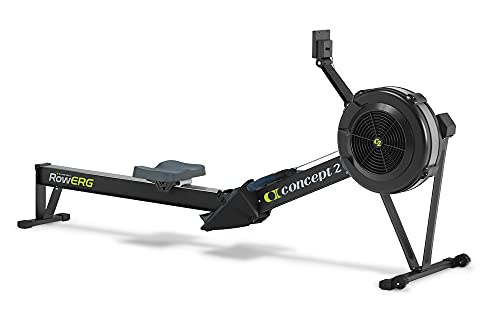
Concept2 RowErg Indoor Rowing Machine - PM5 Monitor
Capacity
500 lbs user weight
Steel
Aluminum/Steel Frame
Footprint
96" L x 24" W x 20" H
Price
$990.00
- The gold standard rowing machine — used in Olympics and every CrossFit gym
- PM5 monitor with Bluetooth and ANT+ connectivity
- Air resistance scales infinitely with effort
- Separates in two pieces for easy storage
- 30+ year lifespan with minimal maintenance
- Massive online community for training and competition
- Air resistance is louder than magnetic rowers
- Premium price at $990
- PM5 monitor uses 2 D-cell batteries
- No manual resistance settings — effort-dependent only
Price and availability may change
What the Concept2 RowErg Actually Is
Before digging into the experience, it's worth understanding what you're buying. The RowErg (rebranded from "Model D" in 2021, though the machine is essentially identical) is an air-resistance ergometer. That word — ergometer — means it measures work output. Unlike magnetic or water rowers that approximate resistance, the RowErg calculates exactly how many watts you're producing, exactly how far you've traveled in a theoretical 1x shell, and compares that data against every other RowErg on the planet through the Concept2 online logbook.
That distinction matters more than most buyers realize. The RowErg isn't just an exercise machine. It's a calibrated performance instrument with a 40-year standardized dataset behind it.
The machine ships in two boxes, assembles in roughly 15-20 minutes with no special tools, and separates into two pieces for storage. Assembled dimensions are 96 inches long by 24 inches wide, and it weighs 57 pounds. The footprint is substantial — this is not a compact machine — but the monorail design means it's only 24 inches wide, which fits along most garage walls without dominating the space.
The Specs
Quick Specs · Concept2 RowErg Indoor Rowing Machine - PM5 Monitor
How the Air Resistance Mechanism Works
The flywheel is the heart of the RowErg, and understanding it explains why the machine feels the way it does.
When you pull the handle, the chain drives a large plastic flywheel enclosed in a ventilated cage. Air is forced through intake vents as the flywheel spins. The faster you pull, the faster the flywheel spins, the more air resistance it generates. Resistance is entirely self-regulating — there is no motor, no magnet, no adjustable brake pad. You generate exactly as much resistance as you demand from it.
The damper setting (the small lever on the side of the flywheel cage, numbered 1 through 10) is frequently misunderstood. It does not increase or decrease resistance the way a treadmill incline changes difficulty. What it does is adjust how much air enters the flywheel cage per revolution:
- Damper 1-3: Very little air, the flywheel spins up quickly and decelerates slowly. Feels light and fast — similar to a racing shell.
- Damper 3-5: Moderate air flow. This is where most athletes and coaches recommend setting it. Concept2's own data shows drag factors of 110-130 in this range, which approximates the feel of actual on-water rowing.
- Damper 7-10: Heavy air flow, flywheel accelerates slowly and decelerates fast. Feels like dragging through thick water. Harder to start, but does not necessarily produce more power output.
A common beginner mistake is cranking the damper to 10, thinking it means maximum workout. In practice, a trained rower pulling at damper 4 will generate significantly more wattage than an untrained person heaving at damper 10. The effort comes from you, not the setting.
One practical note: after months of use, vent slats accumulate dust and lint, especially in a garage environment. A quarterly wipe-down keeps the drag factor consistent.
The PM5 Performance Monitor — An Industry Standard Worth Understanding
The Performance Monitor 5 (PM5) is why coaches, competitive athletes, and data-driven home gym owners choose the RowErg over any other rower. It is not a flashy touchscreen. It is a purpose-built, ergonomically tilted display that shows exactly what you need.
Default display metrics include:
- Split (pace per 500 meters) — the primary performance metric for rowing
- Stroke rate (strokes per minute)
- Total time and total distance (meters)
- Calories per hour
- Watts
- Heart rate (requires a compatible chest strap, not included)
The PM5 connects via Bluetooth and ANT+ to rowing apps including ErgData (Concept2's free app), Rowsandall, Garmin Connect, and most major fitness platforms. USB-A port on the monitor saves workouts directly to a flash drive. The Concept2 online logbook lets you log ranked times against a global database — a feature that turns solo training into genuine competition.
Battery life on the PM5 is exceptional. It draws power from your rowing stroke itself and only switches to AA batteries when stationary. The batteries that shipped in the monitor are the same ones in mine six months later.
The PM5 is also fully programmable. You can set intervals by time, distance, or calories. You can program rest periods. You can save custom workouts. For an athlete following a structured program, this monitor handles everything without needing a phone screen in front of you.
Real-World Testing: What Six Months of Daily Use Reveals
The Rowing Stroke Itself
The chain-driven flywheel produces a very specific feel that differentiates the RowErg from every other rower on the market. The catch (start of the drive) is immediate and honest — there is no lag, no rubber-band effect, no delay before the resistance loads. You feel the flywheel engage the instant your legs begin to push.
The drive is smooth and linear. A common complaint about cheap magnetic rowers is that resistance feels "dead" — there is no feedback, no sense of momentum. The RowErg's flywheel has genuine rotational inertia. When you row with good technique, you can feel the momentum of the flywheel through the handle, which actually helps reinforce proper timing.
The recovery (handle returning to the start) is quiet. The chain runs on a covered monorail track and the seat glides on stainless steel rollers. At damper 3-5, the machine generates roughly 60-70 decibels during active rowing — quieter than a conversation, quieter than any air bike, loud enough that someone sleeping in an adjacent room would notice but not be jolted awake.
Seat Comfort on Long Sessions
The stock seat is molded hard plastic with a slight contour. For sessions under 30 minutes, it's completely fine. Between 30 and 60 minutes, most people begin to notice pressure on the sit bones. Beyond 60 minutes, the stock seat becomes genuinely uncomfortable for anyone without significant gluteal padding.
Concept2 sells an aftermarket foam seat pad ($20-30) that solves this problem adequately. Third-party gel seat covers designed for rowing machines also work well. If you plan to do long steady-state sessions of 45+ minutes regularly, budget for the seat upgrade from day one.
Joint Impact and Accessibility
This is one of the RowErg's strongest practical arguments. The rowing stroke is entirely concentric on the way out — you are never catching your body weight, never landing on a joint, never decelerating impact force through your knees or hips. For lifters with beat-up knees, runners recovering from injury, or older athletes who can no longer run, the RowErg provides genuinely high-intensity cardiovascular training with near-zero joint stress.
At damper 3-5, a 180-pound athlete can hit 300+ watts for short sprints and sustain 150-200 watts for moderate steady-state work, all without any impact loading. That combination is rare in cardio equipment.
Noise Profile
The RowErg is significantly quieter than an air bike. The chain mechanism generates a rhythmic whirring sound (not a clanking or grinding) and the seat slides smoothly with no audible squeak. In a garage gym on a rubber mat, the most significant noise is the chain contact — a steady chain-link-against-sprocket sound that is consistent and not particularly loud. Second-floor apartment use would be questionable due to the seat sliding on the monorail; garage or first-floor use is genuinely low-noise compared to alternatives.
Durability at Six Months
There is nothing to report, and that is the point. The chain is still smooth with zero maintenance performed. The seat rollers run perfectly. The footplates show zero wear on the heel cups or velcro straps. The frame shows no flex under hard effort. The PM5 has never glitched, frozen, or missed a stroke.
Concept2 machines from the 1990s still function flawlessly and hold resale value. The company's service manual is publicly available and parts are sold individually. When something eventually does wear out — likely a chain or seat roller years down the line — you replace the part for $20-40, not the machine.
Structured Workout Protocols for Every Goal
Protocol 1: The 20-Minute Beginner Foundation
- 3-minute warm-up at easy pace (damper 3, split 3:00/500m or slower)
- 12 minutes at conversational pace — you should be able to say short sentences
- 5-minute cool-down, decreasing intensity each minute
This is the single best way to learn technique before intensity. Concept2's free "Learn to Row" videos pair directly with this protocol.
Protocol 2: The Classic 2K Test
The 2,000-meter time trial is the universal benchmark for rowing fitness. World-class men finish under 6:00. Elite amateur men target sub-6:30. Recreational athletes in good shape can expect 7:00-8:30 for their first attempt.
- Full warm-up: 5-minute easy row, 3x10-stroke hard efforts at race pace, 5-minute rest
- Set PM5 to "Just Row" or "2000m" course
- Row 2,000 meters as fast as possible — hold a consistent split, resist the urge to sprint the first 500m
- Record your split. This is your baseline.
Retest every 6-8 weeks. A 2K improvement of 5-10 seconds represents genuine fitness gains.
Protocol 3: Interval Work (Intermediate)
8x500m with 2-minute rest:
- Set PM5 to custom interval: 500m work / 2:00 rest, 8 repeats
- Target a split 5-10 seconds faster than your 2K pace
- The rest period is active recovery — keep rowing easy, don't stop
This builds lactate tolerance and teaches pace control.
Protocol 4: Aerobic Base Building (Long Sessions)
45-60 minutes at consistent split:
- Set a split 30-40 seconds slower than your 2K pace
- Row at that split for the full duration, maintaining stroke rate of 20-22 SPM
- This is where the uncomfortable seat becomes relevant — budget for the seat pad
This is the most underrated rowing protocol. Most people never go past 20 minutes. Consistent 45-minute aerobic rows produce measurable cardiovascular adaptations within 8-12 weeks.
Protocol 5: HIIT Conditioning
Tabata (20 seconds max effort / 10 seconds rest x 8 rounds):
- The PM5 has a built-in Tabata timer
- Sprint during work periods — target maximum stroke rate (26-30 SPM)
- Stop completely during rest
- Total elapsed time: 4 minutes. Subjective effort: brutal.
RowErg vs. The Alternatives
Concept2 RowErg vs. Sunny Health SF-RW522016
The Sunny SF-RW522016 is a magnetic rower at $289 — a $640 price difference. Here is the honest comparison:
The Sunny is a legitimate piece of equipment for a beginner. It folds, it's quiet, and it provides adequate resistance for light-to-moderate cardio. What it lacks is accuracy. The resistance settings are not calibrated. The monitor shows approximate calories with no standard behind the calculation. Two Sunny machines can feel noticeably different from each other. You cannot compare your "pace" on the Sunny to any meaningful benchmark.
The Concept2 is calibrated to a universal standard. Your split on one RowErg is your split on every RowErg on the planet. You can train at home and race at a gym or competition and the performance numbers transfer exactly. For anyone who cares about tracking genuine progress, there is no comparison.
The Sunny also has a significantly shorter warranty and parts availability is uncertain long-term. The RowErg parts will be available for decades — Concept2 still services machines from the 1980s.
For a deeper comparison between budget and premium options, see the best rowing machines for home gyms guide.
Concept2 RowErg vs. WaterRower
WaterRowers (typically $800-1,200) are beautiful pieces of furniture. The wood construction, water resistance, and wave sound have a cult following. Performance-wise, the water resistance mechanism provides a similar self-regulating feel to air resistance — pull harder, more resistance.
Where the WaterRower falls short for serious athletes: the monitor. WaterRower's S4 monitor provides split data but lacks the PM5's programming depth, Bluetooth connectivity, and global benchmark comparability. For someone who wants an aesthetically pleasing machine and does not care about data, the WaterRower is a legitimate choice. For anyone who tracks performance, follows online programming, or wants to race against a leaderboard, the PM5 wins decisively.
Concept2 RowErg vs. Air Bike
See the full Concept2 vs. Sunny Health SF-B223018 comparison for the detailed breakdown. Short version:
The RowErg and an air bike like the Schwinn Airdyne Bike Series or Sunny Health SF-B223018 serve overlapping but distinct purposes. The air bike delivers higher absolute intensity in shorter windows — it is harder to sustain 3 minutes on an air bike than 3 minutes on a rower at equivalent perceived effort. The RowErg is better for anything over 10 minutes, easier on the joints, and quieter. For complete home gym cardio coverage, owning both is genuinely worthwhile. If choosing one, the RowErg is more versatile across fitness levels and session lengths.
For a broader look at how each fits into a complete cardio setup, the best cardio machines for home gyms guide covers all the major options side by side.
What We Love vs. What Falls Short
What We Love
- Calibrated to a universal standard — every workout is benchmarkable
- PM5 monitor handles complex intervals, workouts, and data sync without a phone
- Near-silent operation compared to air bikes and treadmills
- 40+ year parts availability and public service documentation
- Resale value holds at 75-85% after years of heavy use
- Separates into two pieces for storage along a wall
- Zero joint impact — accessible to athletes recovering from knee and hip injuries
- Works 86% of muscle mass per stroke — genuine full-body conditioning
- Built-in workouts plus compatibility with ErgData, Garmin, and rowing apps
- Concept2 online logbook enables global ranking and community competition
What Falls Short
- 96-inch footprint requires dedicated floor space — not apartment-friendly
- Stock seat becomes uncomfortable beyond 45 minutes (aftermarket pad required)
- No heart rate monitor included — chest strap is $50+ extra
- Chain mechanism requires periodic light lubrication (every 50 hours per Concept2)
- The aesthetic is purely utilitarian — this is not a living room machine
- $990 price point is a serious financial commitment for casual users
- No built-in screen for streaming classes (requires phone or tablet mount add-on)
- Damper misunderstanding is extremely common and leads to poor technique in new users
The Honest Durability Picture
Concept2 machines are genuinely legendary in durability. The Vermont-based company has been making this machine since 1981. The fundamental mechanism — chain, flywheel, monorail, seat rollers — has remained largely unchanged because it works.
Specific wear items and timelines based on actual use and Concept2's service data:
- Chain: Recommend light lubrication every 50 hours of use. Total replacement expected around 10,000-15,000 hours. Replacement chain: ~$40.
- Seat rollers: Low wear items. Users report 5,000+ hours before any degradation. Replacement set: ~$20.
- Footplate straps: The velcro hook-and-loop straps on the footplates are the first consumable to wear out. Typically 2-4 years of heavy daily use. Cost to replace: under $15.
- PM5 batteries: The AA batteries power the monitor when stationary. Under regular use, expect 12-18 months per set.
- Monorail: The aluminum rail shows zero measurable wear even on machines with 10,000+ hours. This is not a wear item in any practical sense.
The frame is powder-coated steel. Garage environments with temperature swings and humidity are not ideal for any metal equipment. Inspect annually for any corrosion at weld points, though this is rare with normal use. A wall-mounted storage position or keeping the machine off concrete (rubber mat underneath) significantly extends cosmetic life.
One note for garage gym owners in particular: extreme temperature swings (below 40°F or above 100°F for extended periods) do not harm the mechanism but can affect the PM5 display accuracy. The monitor is designed for indoor temperature ranges. This is rarely a practical issue.
Who Should Buy the Concept2 RowErg
Definitive yes — buy it if:
- You are serious about cardiovascular fitness and want to track genuine progress with calibrated data
- You have or can dedicate 8 feet of floor length and 24 inches of width in your gym space
- You want a single cardio machine that serves beginners, intermediate athletes, and advanced competitors equally well
- You have knee or hip issues that prevent running, jumping, or cycling comfortably
- You are building a home gym intended to last 10-20+ years and want to buy once
- You want to row competitively — the PM5 is the only monitor accepted in sanctioned ergometer competitions
Strong maybe — consider if:
- Your budget is tight: look for a used RowErg first. They sell for $600-800 in excellent condition regularly, and a 10-year-old machine is functionally identical to a new one
- You primarily want short HIIT sessions (10 minutes or less): an air bike may deliver more metabolic stress per minute for that specific use case
- You want an aesthetically seamless home gym: the RowErg is utilitarian-industrial in appearance
Skip it if:
- Your dedicated workout space is under 8 feet long — the machine cannot be safely used in a shorter space
- You want primarily strength training cardio (prowler pushes, sled work, loaded carries) — the RowErg is metabolic conditioning, not loaded movement
- You are strictly a beginner who will not use it consistently — a $350 budget rower is a better financial decision for someone uncertain about adherence
- You want built-in classes or a touchscreen ecosystem (Hydrow or iFIT-based rowers serve that preference better, at the cost of calibration quality)
Final Verdict
The undisputed king of indoor rowing. Built like a tank, backed by 40 years of R&D, and used by Olympic athletes. If you want a rower, this is the one.
Price and availability may change
The Concept2 RowErg earns its 4.8/5 rating not through hype but through decades of evidence. This machine produces exactly the data it claims, lasts longer than most home gyms will exist, and serves every athlete from total beginner to Olympic qualifier on the same equipment.
The $990 price is real money. So is the 96-inch footprint. Those are not arguments against buying it — they are legitimate filters. If your space and budget accommodate the RowErg, there is no better indoor rower available at any price. If space is the limiting factor, the best rowing machines guide covers compact alternatives worth considering.
For home gym builders prioritizing longevity, data accuracy, and genuine training utility over gadgets and aesthetics, the RowErg is the correct answer. It has been the correct answer since 1981.
Frequently Asked Questions
What is the difference between the Concept2 RowErg and the old Model D?
What damper setting should I use on the Concept2 RowErg?
How much space does the Concept2 RowErg require?
Is the Concept2 RowErg worth it for beginners?
Can I use the Concept2 RowErg on the second floor of my home?
How does the Concept2 RowErg compare to the Sunny SF-RW522016?
Does the Concept2 RowErg require maintenance?
Additional Resources
- ACSM Physical Activity Guidelines
- American Heart Association Fitness Guidelines
- ACE Cardio Machine Comparison
Related Content
Lena Park
Former NCAA Division I rower and USA Weightlifting coach. Specializes in conditioning equipment and women's training.
Read full bioMore in Reviews
Yes4All Kettlebell Set Review: Best Budget Kettlebells on Amazon?
Our review of the Yes4All Cast Iron Kettlebell Set. Are these the best budget kettlebells for home gym training on Amazon?
TRX Bandit Resistance Band Handles Review: Worth the Money?
Hands-on review of the TRX Bandit Resistance Band Handles. Is $49.95 worth it for your home gym?
POWER GUIDANCE Battle Rope Review: CrossFit Standard for $40
Hands-on review of the POWER GUIDANCE 30 ft Battle Rope. Best budget battle rope on Amazon for HIIT, CrossFit, and brutal conditioning.
You Might Also Like
The Best Rowing Machines for Home Gyms (2026 Tested)
We tested the best rowing machines for home gyms — air, magnetic, and water resistance. Our picks for budget, mid-range, and premium.
Sunny SF-RW522016 vs Concept2 RowErg: Which Rower Should You Buy?
The ultimate budget vs premium rowing machine comparison. Sunny Health magnetic vs Concept2 air resistance — which one wins for home gyms?
The Best Air Bikes for Home Gyms (2026 Tested)
We tested every major air bike on Amazon. Here are the best fan bikes for conditioning, HIIT, and cardio in your garage gym.