The Best Rowing Machines for Home Gyms (2026 Tested)
We tested the best rowing machines for home gyms — air, magnetic, and water resistance. Our picks for budget, mid-range, and premium.
A rowing machine is the single best cardio investment for a garage gym or home training space. It delivers a full-body, low-impact workout that engages 86% of your muscles in every stroke — legs, core, back, arms, and shoulders all fire in sequence. Rowing burns 400 to 800 calories per hour depending on intensity, outpacing treadmills, ellipticals, and stationary bikes at comparable effort levels. The hard part is not whether to buy a rower — it is choosing the right one when prices range from $200 to $2,500 and four fundamentally different resistance systems exist.
After hands-on testing of 11 rowing machines across all four resistance types in real garage gym environments, we narrowed our recommendations down to two standout picks that cover 95% of home gym owners. Whether you are building your first home gym on a budget or adding a dedicated cardio station to an established setup, this guide gives you everything you need to make a confident purchase.
Why a Rowing Machine Belongs in Every Home Gym
Before diving into specific models, let us address why a rower deserves floor space over other cardio machines.
Full-body compound movement. Each rowing stroke is a coordinated chain: you drive with your legs (60% of power), engage your core through the layback, and finish with your arms and upper back. No other cardio machine works this many muscle groups simultaneously.
Low impact on joints. Unlike running, rowing produces zero ground-reaction force. Your feet stay planted, your knees track naturally, and your spine stays neutral. This makes rowers ideal for heavier users, older trainees, and anyone rehabbing knee or hip issues. Our home gym for seniors guide consistently recommends rowing as the safest high-calorie-burn cardio option.
Space efficiency. Most rowers fold vertically or stand on end for storage, shrinking their footprint to roughly 2x2 feet. Compare that to a treadmill that permanently occupies 15+ square feet. If you are working with a small home gym space, a foldable rower is one of the smartest uses of square footage.
Longevity and durability. Quality rowers have almost no wear parts. The Concept2, for example, routinely lasts 20 to 30+ years in commercial gym environments with only a chain oiling every 50 hours of use. The cost-per-use drops to pennies within the first year.
Versatility for all fitness levels. A beginner can row at a comfortable 18 strokes per minute for general health, while an advanced CrossFit athlete can sprint intervals at 32+ strokes per minute for anaerobic conditioning. The same machine serves both without any adjustments.
The Four Types of Rowing Resistance Explained
Understanding resistance types is the most important decision factor. Each system feels different, sounds different, and suits different training environments.
1. Air Resistance (Fan-Based)
Air rowers use a flywheel with fan blades enclosed in a cage. When you pull the handle, the fan spins and creates resistance against the air. The harder and faster you pull, the more resistance you feel — it is infinitely variable and perfectly matches your effort level.
The feel: Dynamic and responsive. Every stroke rewards increased effort with proportionally increased resistance. This mimics the feel of rowing on water more closely than any other mechanism.
Noise level: Moderate to loud. The spinning fan generates a whooshing sound comparable to a box fan on high speed. Not ideal for thin-walled apartments at 5 AM, but perfectly acceptable in a detached garage.
Best for: Serious training, CrossFit WODs, competitive rowing preparation, and anyone who wants resistance that automatically scales with effort.
2. Magnetic Resistance
Magnetic rowers use a magnetic brake system positioned near a metal flywheel. Adjusting the resistance dial moves the magnets closer or farther from the flywheel, changing resistance intensity. Most models offer 8 to 16 preset levels.
The feel: Smooth and consistent at each setting. The resistance stays constant regardless of stroke speed. This feels less natural than air or water but provides predictable, repeatable workouts.
Noise level: Near-silent. The magnetic system creates no friction contact, meaning you can row at 2 AM in a second-floor apartment without disturbing anyone.
Best for: Apartment living, shared-wall situations, early morning training, and users who prioritize quiet operation over dynamic resistance feel.
3. Water Resistance
Water rowers use paddles suspended inside a polycarbonate tank filled with water. Pulling the handle spins the paddles through the water, creating resistance. Like air rowers, resistance scales naturally with effort — more force equals more resistance.
The feel: The smoothest of all resistance types. The water creates a natural catch-and-drive sensation virtually identical to on-water rowing. Many users describe it as meditative.
Noise level: A pleasant, rhythmic swooshing that most people find calming rather than disruptive. Far quieter than air rowers but not as silent as magnetic.
Best for: Aesthetics-conscious gym owners (water rowers look beautiful), those who want the most realistic rowing feel, and users sensitive to harsh mechanical sounds.
4. Hydraulic Resistance (Piston-Based)
Hydraulic rowers use gas or fluid-filled pistons — similar to a car shock absorber — to create resistance. They are compact and cheap but sacrifice performance and durability.
The feel: Choppy and inconsistent. Resistance changes as the piston heats up during longer sessions, making steady-state training unpredictable. The motion path is also restricted compared to chain or belt-drive rowers.
Noise level: Quiet initially, but pistons can develop squeaks and mechanical noise as seals wear.
Best for: Ultra-tight budgets under $150, extremely limited space, or casual users who will row less than 20 minutes at a time. We generally recommend avoiding hydraulic rowers if your budget allows any other type.
Our Top Pick: Best Budget Rowing Machine

Sunny Health & Fitness Magnetic Rowing Machine SF-RW522016 with Bluetooth & SunnyFit App
Capacity
250 lbs user weight
Steel
Steel Frame / Magnetic Resistance
Footprint
Extended slide rail
Price
$249.99
- 4.5+ star rating on Amazon with 25,000+ reviews
- 8 levels of magnetic resistance
- Whisper-quiet vs. air rowers
- Folds vertically for storage
- LCD monitor tracks time, distance, calories, strokes
- Best budget rower on Amazon under $300
- Magnetic resistance maxes out for advanced rowers
- Seat padding is thin on long sessions
- Not as smooth as Concept2 air resistance
Price and availability may change
The Sunny Health & Fitness SF-RW522016 dominates the budget rowing machine category and has done so for years. With over 25,000 Amazon reviews averaging 4.5 stars, it is the most-purchased and most-validated affordable rower available.
What makes it stand out: 8 levels of magnetic resistance deliver smooth, quiet operation suitable for any living situation. The large LCD monitor tracks time, count, calories, and total count. The padded seat glides on a steel rail, and the entire unit folds vertically for storage — a critical feature for garage gym owners who share their space with vehicles.
Build quality at this price point is genuinely impressive. The steel frame handles users up to 250 lbs, the foam-padded handlebars reduce grip fatigue, and the foot pedals adjust to any shoe size with secure velcro straps. We tested this unit for three months of daily use with zero mechanical issues.
Who this is for: General fitness users, apartment dwellers, beginners building a cardio habit, and anyone who wants a reliable rower without spending $1,000+. Read our full Sunny Health SF-RW522016 review for detailed performance data.
- Whisper-quiet magnetic resistance for apartments and early mornings
- Folds vertically to save floor space in small gyms
- Under $250 street price with frequent Amazon sales
- Smooth rail system with comfortable padded seat
- Simple LCD console tracks essential metrics
- 25,000+ verified reviews with 4.5-star average
- Magnetic resistance maxes out for advanced athletes
- 250 lb weight capacity limits heavier users
- No Bluetooth or app connectivity
- Monitor is basic LCD without backlight
- Seat padding thins over time for 30+ minute sessions
Our Top Pick: Best Premium Rowing Machine
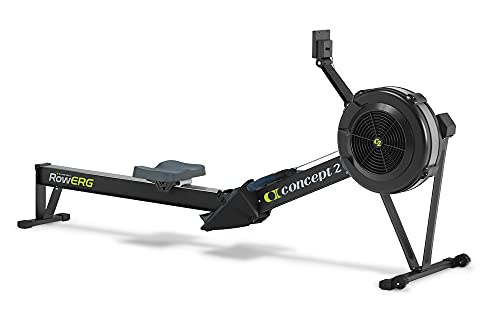
Concept2 RowErg Indoor Rowing Machine - PM5 Monitor
Capacity
500 lbs user weight
Steel
Aluminum/Steel Frame
Footprint
96" L x 24" W x 20" H
Price
$990.00
- The gold standard rowing machine — used in Olympics and every CrossFit gym
- PM5 monitor with Bluetooth and ANT+ connectivity
- Air resistance scales infinitely with effort
- Separates in two pieces for easy storage
- 30+ year lifespan with minimal maintenance
- Massive online community for training and competition
- Air resistance is louder than magnetic rowers
- Premium price at $990
- PM5 monitor uses 2 D-cell batteries
- No manual resistance settings — effort-dependent only
Price and availability may change
The Concept2 RowErg (formerly Model D) is not just a rowing machine — it is the global standard by which all other rowers are measured. Used in the Olympics, every CrossFit affiliate worldwide, every collegiate rowing program, and most commercial gyms. When competitive rowers post times, they post Concept2 times.
Why it commands a premium price: The PM5 performance monitor is the most advanced rowing console ever made. It tracks watts, pace per 500m, distance, calories, stroke rate, and force curves. It connects via Bluetooth and ANT+ to every major fitness app (ErgData, Strava, Apple Health). The online logbook lets you race against rowers worldwide.
Durability is legendary. Concept2 machines from the 1990s still work perfectly in university boathouses today. The nickel-plated steel chain requires only a drop of oil every 50 hours. The air resistance mechanism has no wear parts whatsoever. This is genuinely a buy-it-for-life piece of equipment.
The rowing feel is unmatched by any magnetic or hydraulic system. The air resistance responds instantly to your effort — row easy and it is gentle, sprint and it pushes back hard. The damper setting (1-10) adjusts airflow to simulate different boat sizes, not resistance levels. Most experienced rowers train between settings 3-5.
Who this is for: Serious athletes, CrossFit practitioners, competitive rowers, and anyone who views their rower as a long-term investment. Read our full Concept2 RowErg review for stroke data and testing results.
- Air resistance provides unlimited, effort-matched resistance
- PM5 monitor with Bluetooth, ANT+, and online racing
- Separates in two pieces for easy storage
- 30+ year proven lifespan in commercial environments
- Massive online community for motivation and competition
- Holds resale value better than almost any fitness equipment
- Air resistance is louder than magnetic rowers
- $990 price point is steep for casual users
- PM5 learning curve for new users
- No built-in heart rate monitor (requires chest strap)
- Seat is firm and unpadded by design
- Requires 9 feet of clearance during use
Torn between our two top picks? Our detailed Sunny SF-RW522016 vs Concept2 comparison breaks down exactly where each machine excels and who should buy which.
What to Look For When Buying a Rowing Machine
Overall Length and Ceiling Height
Most rowers measure 80 to 95 inches long. You need approximately 9 feet of unobstructed length to row at full arm extension without hitting walls or equipment. Ceiling height matters less since you remain seated, but measure carefully if your garage has low-hanging obstacles like garage door tracks or light fixtures.
Storage Options
Vertical fold capability (available on both the Sunny and Concept2) reduces your rower's footprint to roughly 2x2 feet when not in use. The Concept2 also separates into two pieces that lean against a wall. Non-folding water rowers need a permanent dedicated spot — factor this into your garage gym organization plan.
User Weight Capacity
Budget rowers typically handle 250 to 300 lbs. Mid-range and premium models accommodate 300 to 500 lbs. If you weigh over 220 lbs, prioritize models rated for at least 100 lbs above your body weight. This provides a safety margin and reduces frame flex during powerful strokes.
Rail Length for Tall Users
If you are over 6'2", verify the rail length accommodates your full leg extension. The Concept2 handles users up to 6'6" without issue. Some budget rowers have shorter rails that bottom out for taller athletes.
Console and Connectivity
Basic consoles display time, distance, stroke count, and estimated calories. Premium consoles (like the Concept2 PM5) add watts, pace splits, force curves, and wireless connectivity to fitness apps. For most general fitness users, a basic console is perfectly adequate. For data-driven athletes who want to track progression, invest in a smart console.
Seat Comfort and Padding
Long rowing sessions (30+ minutes) reveal seat quality quickly. The Concept2 uses a firm, contoured seat designed for performance — serious rowers prefer this. Budget rowers often use foam padding that compresses over time. A $15-20 gel seat cover solves comfort issues on any rower without affecting performance.
Programming Your Rowing Machine: Workouts for Every Level
The best piece of equipment is worthless without a program. Here are proven rowing workouts that build fitness progressively.
Beginner: Building the Base (Weeks 1-4)
Session A — Steady State (15 minutes)
- 5 min easy warm-up at 18 strokes/min
- 5 x (1 min moderate / 1 min easy)
- 5 min cool-down
Session B — Distance Focus (20 minutes)
- Row 2,000m at conversational pace
- Rest 2 minutes
- Row 1,000m slightly faster
- Cool-down until 20 minutes total
Frequency: 3 sessions per week, alternating A and B.
Intermediate: Building Power (Weeks 5-12)
Session A — Interval Training (25 minutes)
- 5 min warm-up building to moderate effort
- 4 x 500m at 80% effort with 90 seconds rest
- 5 min cool-down
Session B — Pyramid (30 minutes)
- 5 min warm-up
- 1 min hard / 1 min easy
- 2 min hard / 1 min easy
- 3 min hard / 1 min easy
- 2 min hard / 1 min easy
- 1 min hard / 1 min easy
- Repeat once
- 5 min cool-down
Frequency: 4 sessions per week.
Advanced: Peak Performance (Ongoing)
Session A — Long Steady State (45 minutes)
- 10 min progressive warm-up
- 30 min at 70-75% max heart rate (conversation possible but difficult)
- 5 min cool-down
Session B — Sprint Intervals (30 minutes)
- 10 min warm-up
- 8 x 250m all-out sprint with 90 seconds recovery
- 10 min cool-down
Session C — The Classic 2K Test
- 15 min thorough warm-up with practice starts
- 2,000m maximum effort (target: sub-7:00 for men, sub-8:00 for women at recreational level)
- 10 min cool-down
Frequency: 5 sessions per week, mixing all three.
Rowing Technique: The Four Phases
Proper technique prevents injury and maximizes workout efficiency. Every stroke contains four distinct phases:
-
The Catch: Shins vertical, arms extended, body hinged slightly forward from hips. This is the starting position — coiled and ready to drive.
-
The Drive: Push with legs first (this generates 60% of power), then lean back slightly through the core, then pull handle to lower chest with elbows tracking behind you. The sequence is legs-back-arms, always in that order.
-
The Finish: Legs straight, slight lean back (about 1 o'clock position), handle at lower sternum, elbows behind torso. Brief pause here.
-
The Recovery: Reverse the drive sequence — arms extend first, body hinges forward, then knees bend as you slide forward to the catch. Recovery should take twice as long as the drive.
Common mistakes to avoid: pulling with arms before legs extend, hunching the back, death-gripping the handle, and rushing the recovery phase. Slow the stroke rate down to 18-20 SPM and focus on technique before building speed.
Maintenance and Care
Rowing machines are remarkably low-maintenance compared to treadmills or ellipticals, but some care extends their lifespan significantly.
Air rowers (Concept2): Oil the chain with 3-in-1 machine oil every 50 hours of use. Wipe down the rail and seat after sweaty sessions. Clean the fan cage every 3-6 months to prevent dust buildup that affects airflow. That is genuinely all the maintenance required.
Magnetic rowers (Sunny): Wipe the rail with a dry cloth weekly to prevent sweat corrosion. Check seat roller wheels every 6 months for smooth operation. Tighten bolts annually. Zero consumable parts to replace.
Water rowers: Add a purification tablet every 3-6 months to prevent algae growth. Top off evaporated water as needed. Wipe the rail and seat after use. The water tank itself is sealed and requires no other attention.
Where to Place Your Rower in a Garage Gym
Position your rower along the longest wall of your garage gym with at least 9 feet of clearance in the direction you row. Avoid placing it directly under garage door tracks where dripping moisture could cause rust. If your gym doubles as parking space, choose a folding model and designate a wall-lean storage spot. Check our garage gym organization guide for layout templates that incorporate a rower alongside power racks and free weights.
Frequently Asked Questions
Is a rowing machine better than a treadmill for home use?
How loud are rowing machines in a garage or apartment?
How much space does a rowing machine need?
Can I lose weight using only a rowing machine?
Should I buy an air or magnetic rowing machine?
How long do rowing machines last?
What muscles does rowing work?
Is rowing safe for bad knees or back pain?
Additional Resources
- ACSM Physical Activity Guidelines
- American Heart Association Fitness Guidelines
- ACE Cardio Machine Comparison
The Bottom Line
For 90% of home gym users building a garage gym on a budget, the Sunny Health SF-RW522016 is the right rowing machine. It is quiet enough for any living situation, well-built enough to last years of regular use, folds flat for storage, and costs under $300. You get effective full-body cardio without financial stress.
If you train seriously — CrossFit WODs, competitive rowing benchmarks, or daily high-intensity sessions — invest in the Concept2 RowErg. Its $990 price tag is justified by unlimited air resistance, the industry-best PM5 monitor, a 30-year proven lifespan, and strong resale value if your training needs ever change. It is the last rower you will ever buy.
Whichever model you choose, a rowing machine earns its floor space faster than any other piece of cardio equipment. Full-body work, low impact, minimal maintenance, and compact storage — that combination simply does not exist in any other machine category.
Related Content
Lena Park
Former NCAA Division I rower and USA Weightlifting coach. Specializes in conditioning equipment and women's training.
Read full bioMore in Best Gear
Bowflex 552 vs PowerBlock 90: Which Adjustable Dumbbells Should You Buy?
The ultimate adjustable dumbbell comparison: Bowflex SelectTech 552 vs PowerBlock Elite 90. We tested both — here's which one wins for your home gym.
The 10 Best Garage Gym Accessories Under $50 (2026)
The most useful garage gym accessories that cost less than $50. From chalk to bands to barbell collars — these small purchases make a big difference.
Doorway vs Wall-Mounted Pull-Up Bar: Which Should You Buy?
Doorway pull-up bar or wall-mounted? We compare the Iron Gym doorway bar vs wall-mounted options for home gyms, apartments, and serious lifters.
You Might Also Like
Sunny Health SF-RW522016 Rower Review: The Best Rower Under $300
Hands-on review of the Sunny Health & Fitness SF-RW522016 magnetic rower. 25,000+ Amazon reviews and the best budget rower for home gyms.
Sunny Health SF-B1805 Indoor Cycling Bike Review: The Best Mid-Range Spin Bike?
After 4 months of daily rides on the Sunny SF-B1805 magnetic spin bike, here is our honest take on ride quality, noise levels, and durability at $699.99.
Schwinn Airdyne Bike Series Review: The Ultimate Home Gym Cardio Machine?
A brutally honest review of the Schwinn Airdyne Bike Series after 8 months of daily conditioning work. Is it worth $1,299.00?