Schwinn 130 Upright Bike Review: 25 Resistance Levels, But Is It Enough?
We tested the Schwinn 130 upright bike for 4 months — 29 workout programs, Bluetooth connectivity, and 25 resistance levels. Full breakdown of ride quality, comfort, app integration, and real-world durability.
Upright bikes occupy a specific niche in the home gym world. They are not as intense as spin bikes, not as low-impact as recumbent bikes, and not as brutal as air bikes. What they are is comfortable, quiet, and easy to use — the kind of machine you will actually ride five days a week instead of hanging laundry on. The Schwinn 130 is the best-selling upright bike on Amazon, and after four months of testing, we understand why.
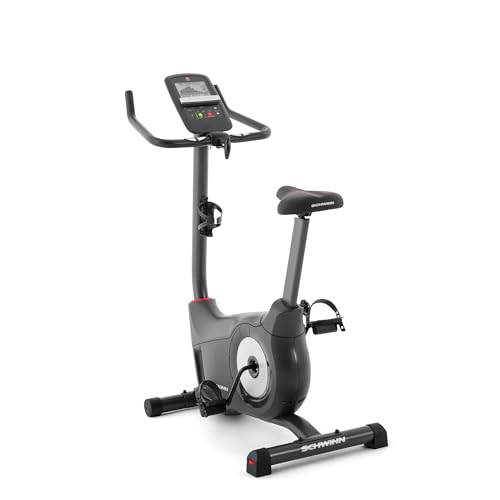
Schwinn Fitness 130 Upright Bike
Capacity
300 lbs user weight
Steel
Steel Frame / 25 Resistance Levels
Footprint
41" L x 21" W x 56" H
Price
$499.00
- 4.4+ star rating on Amazon with 5,000+ reviews
- 25 levels of magnetic resistance
- 29 built-in workout programs
- Bluetooth connectivity for fitness apps
- Dual LCD screens track all metrics
- Best upright bike under $400
- Seat comfort requires break-in period
- Assembly takes 2+ hours
- Pedals are basic — upgrade for clip-in shoes
Price and availability may change
At a Glance
Quick Specs · Schwinn Fitness 130 Upright Bike
What Makes the Schwinn 130 Different
Most budget exercise bikes give you a knob to turn for resistance and a basic LCD showing time and calories. The Schwinn 130 gives you a fully electronic resistance system with 25 levels, 29 built-in programs, Bluetooth connectivity, and dual LCD screens. That level of tech typically starts at $600+. Getting it at $499.00 is what makes this bike stand out.
The electronic resistance system matters because it enables the built-in programs to automatically adjust difficulty. During a Hill Climb program, the resistance ramps up and down on its own. During an interval program, it alternates between sprint intensity and recovery. You pedal, the bike handles the rest. For people who struggle with self-motivation or do not want to think about programming their own workouts, this is a genuine advantage over manual-resistance bikes.
The Ride Experience
Comfort and Ergonomics
The riding position on an upright bike is exactly what it sounds like — you sit upright with your back straight, hands on the handlebars at waist height, and pedal with a natural vertical posture. This is significantly more comfortable for most people than the aggressive forward lean of a spin bike.
The Schwinn 130's seat is wider and more padded than a spin bike saddle but not as generous as a recumbent seat. For sessions under 30 minutes, it is perfectly comfortable. Past 45 minutes, most riders will want padded cycling shorts or a gel seat cover. The seat adjusts vertically and the handlebars adjust for angle, accommodating riders from approximately 5'2" to 6'2".
Resistance Feel
The 25 levels of eddy-current magnetic resistance cover a genuinely useful range. Levels 1-5 feel like a flat road with a tailwind — ideal for warm-ups and cool-downs. Levels 10-15 feel like moderate hills — a solid steady-state cardio zone. Levels 20-25 are legitimately hard — short sprint intervals at these levels will spike your heart rate quickly.
The resistance changes electronically, so transitions between levels are smooth and instant. No clicking, no lag, no manual knob-turning mid-workout. Press the up or down button on the console and the resistance adjusts in under a second.
Breaking Down the 25 Resistance Levels
Twenty-five levels sounds impressive on paper, but the real question is which ones you will actually use. After four months of daily rides, here is how the resistance curve breaks down in practice.
Levels 1-3 are essentially zero resistance. The pedals spin freely with almost no effort. These are useful for two things: cooling down after a hard interval session and active recovery days where you want blood flow without any muscular demand. You will not spend much time here.
Levels 4-8 are warm-up and easy-spin territory. Heart rate stays in Zone 1-2 for most riders. These levels feel like flat road cycling at a comfortable pace. A solid 10-minute warm-up starts at level 4 and climbs to level 8 before transitioning into your working sets.
Levels 9-14 are the steady-state sweet spot. This is where most riders will spend the majority of their time during 30-60 minute sessions. Heart rate sits comfortably in Zone 2-3. You can hold a conversation but you are working. For general cardiovascular health and fat oxidation, this is the money zone.
Levels 15-19 are threshold territory. Sustained efforts here push heart rate into Zone 4 and get uncomfortable after 3-5 minutes. These levels are ideal for tempo intervals — 3-minute hard efforts followed by 2-minute recoveries. You will notice your breathing becomes audible and conversation becomes difficult.
Levels 20-23 are high-intensity interval levels. These are not meant for sustained efforts. Use them for 30-60 second all-out pushes during HIIT sessions. At level 22, even strong riders will feel their quads burning within 45 seconds.
Levels 24-25 are borderline unusable for most riders. The resistance is heavy enough that your cadence drops below 50 RPM even with significant effort. These levels exist for very strong cyclists or for short 15-20 second maximal bursts. Most home gym users will never touch level 25 and that is perfectly fine.
The practical takeaway: you get about 15-16 genuinely usable resistance levels for regular training, which is still more than most bikes in this price range offer.
Noise: Apartment and Garage Reality Check
The Schwinn 130 is one of the quietest exercise bikes we have tested. The magnetic resistance system generates zero friction noise. The belt drive is effectively silent. At moderate intensity, the only sound is the quiet hum of the flywheel — we measured approximately 40-45 dB, which is quieter than a refrigerator. You can watch TV at normal volume, take a phone call, or ride at 5 AM in a bedroom without disturbing anyone in the next room.
For apartment dwellers, this is the bike's strongest selling point. We tested it on a second-floor apartment with a thin rubber mat underneath. The person in the unit below reported hearing nothing at any resistance level, including all-out sprints. The magnetic resistance creates no vibration through the floor, unlike air bikes (which are noticeably loud) or treadmills (which transmit impact through the structure). If noise is your primary concern — early morning sessions, sleeping partner, thin walls — the Schwinn 130 is as close to silent as indoor cardio gets.
In an unheated garage, the bike performs identically from a noise standpoint. The one thing to note is that the electronic console takes a few extra seconds to boot up in cold temperatures (below 40 degrees), and the resistance motor transitions feel slightly stiffer until the unit warms up after 2-3 minutes of pedaling. Neither issue affects the ride quality meaningfully.
What We Love
- 25 electronic resistance levels with automatic program control
- 29 built-in workout programs including intervals, hills, and heart rate zones
- Bluetooth connectivity syncs with Schwinn Trainer app, Explore the World app, and other fitness platforms
- Dual LCD screens — upper shows workout metrics, lower shows program progress
- Quiet enough for bedroom or apartment use at any hour
- USB charging port keeps your phone or tablet powered during rides
- Media shelf holds a tablet without blocking the console displays
- Oversized pedals with adjustable straps accommodate any shoe size
- 300 lb user weight capacity
What Could Be Better
- Assembly takes 90-120 minutes and requires patience — the instruction manual is dense
- Stock pedals are basic plastic with toe straps — serious cyclists may want to upgrade to SPD-compatible pedals ($25-30)
- Seat comfort fades past 45 minutes — a gel cover or padded shorts help
- No backrest — users with lower back issues may prefer a recumbent bike
- Flywheel is lighter than spin bikes — you will not get the same momentum-based ride feel
- The Schwinn Trainer app is functional but not as polished as Peloton or Zwift
- Maximum rider height of roughly 6'2" excludes taller athletes
The 29 Built-In Programs
This is where the Schwinn 130 justifies its price. The programs fall into several categories:
Manual (1 program): You control everything. Adjust resistance as you go.
Quick Start (1 program): Pedal immediately, adjust on the fly. No setup needed.
Heart Rate Control (8 programs): The bike reads your pulse via the handlebar sensors or an optional chest strap and automatically adjusts resistance to keep you in a target heart rate zone. These are excellent for structured cardio training — you set your target zone and the bike does the rest.
Interval Programs (8 programs): Alternating high and low resistance periods. The timing and intensity vary across programs, from gentle 2:1 work-rest ratios to aggressive Tabata-style patterns.
Hill Programs (4 programs): Gradual resistance climbs simulating uphill terrain. These build endurance and leg strength effectively.
Custom Programs (3 user slots): Design your own resistance profile and save it. Each slot stores a complete workout that you can repeat.
Fitness Test (2 programs): Standardized fitness assessments that measure your VO2 max estimate based on heart rate response to progressively increasing resistance.
Recovery Test (2 programs): Measures how quickly your heart rate drops after exertion — a useful fitness marker over time.
Most budget bikes give you zero programs or 6 basic ones. Getting 29, including heart rate-controlled programs, at this price is uncommon.
Bluetooth Connectivity and App Integration
The Schwinn 130 connects to the Schwinn Trainer app via Bluetooth. The app logs your workouts, tracks progress over time, and provides additional workout content. It is free and functional but basic compared to Peloton or Apple Fitness+.
More usefully, the bike also works with the Explore the World app, which lets you ride virtual routes through real-world locations. You see video footage of actual roads and trails while you pedal. It is a simple but effective way to make indoor cycling less monotonous.
The Bluetooth connection also transmits speed and cadence data to third-party apps. We tested it with Apple Health and the data synced reliably.
Build Quality and Long-Term Durability
The Schwinn 130's frame is solid steel with a clean powder coat finish. After four months of daily use, there is zero wobble, zero looseness in the pedal cranks, zero issues with the electronic resistance system, and zero rust. The stabilizer feet level effectively on our uneven garage floor.
The electronic components — console, resistance motor, Bluetooth module — have all performed flawlessly. The dual LCD screens are bright, legible, and responsive. The buttons have a positive click feel that has not degraded with use.
Where you see cost savings is in the pedal quality (functional but cheap-feeling plastic), the seat material (adequate but not premium), and the lack of a fan. These are reasonable trade-offs that keep the price at $499.00 instead of $700+.
The media shelf deserves a mention. It holds a full-sized iPad securely without vibration, and crucially, it sits above the console displays rather than blocking them. You can watch content on your tablet and still glance down at your workout metrics. This is a small design detail that many bikes get wrong.
Programming Suggestions: Getting the Most From the Schwinn 130
The built-in programs are solid, but once you have been riding for a few weeks, custom programming will push your fitness further. Here are four tested protocols that work well with this bike's resistance range.
Warm-Up Protocol (10 Minutes, Before Any Session)
Start at level 4 for 3 minutes at 70-80 RPM. Increase to level 6 for 2 minutes. Bump to level 8 for 2 minutes. Finish with 3 minutes alternating between level 10 (30 seconds) and level 6 (30 seconds). This ramps your heart rate gradually from resting into Zone 2 and prepares your legs for harder efforts. Never skip this — jumping straight into intervals on a cold body is a recipe for knee irritation on an upright bike.
Steady-State Fat Burn (40 Minutes)
After your warm-up, settle into level 11-13 at 75-85 RPM for 30 minutes. Your heart rate should sit in Zone 2 (roughly 120-140 BPM for most adults). This is not exciting, but it is the most effective protocol for building aerobic base and burning fat. Watch a show, listen to a podcast, and let the time pass. Cool down at level 4 for the final 5 minutes. This session is the backbone of any sustainable cardio program and what the Schwinn 130 does best.
HIIT Interval Session (25 Minutes)
After your warm-up: 30 seconds at level 20-22 (all-out effort, 90+ RPM) followed by 90 seconds at level 6 (easy recovery spin). Repeat 8-10 rounds. Cool down at level 3-4 for 5 minutes. This session should leave you breathing hard but not destroyed. If you cannot complete 8 rounds, drop the work interval to 20 seconds or lower the resistance to level 18. The electronic resistance makes these intervals seamless — you just tap the buttons and the bike adjusts instantly, which is a genuine advantage over manual knob-based bikes where you fumble mid-sprint.
Active Recovery Day (20 Minutes)
Level 5-7, 65-75 RPM, keeping heart rate below Zone 2. The goal is blood flow, not fitness gains. This is the session for the day after heavy squats or deadlifts when your legs are sore but you know movement will help you recover faster. The upright position is actually better than a spin bike for recovery rides because the relaxed posture does not load fatigued hip flexors or lower back.
Schwinn 130 vs Schwinn 170: Is the Upgrade Worth It?
The Schwinn 170 sits one tier above at approximately $599-649, and the differences are worth understanding before you buy.
The 170 adds a Bluetooth chest strap in the box (a $30-50 value), a more padded seat, a USB port for data export, and the Schwinn Connect data tracking system. The resistance system is identical — same 25 levels, same motor, same feel. The program count jumps from 29 to 29 (they are the same). The frame uses the same steel gauge and construction.
The real difference is the console. The 170 has a higher-resolution LCD with slightly better contrast and a larger display area. It also adds a second user profile, so two people in the household can track workouts independently without overwriting each other's data.
Our recommendation: If you ride solo and do not care about the included chest strap, the 130 saves you $100-150 for an essentially identical ride experience. If you share the bike with a partner and want the chest strap for accurate heart rate-controlled programs, the 170 justifies the upcharge. The ride quality itself is indistinguishable between the two models.
Budget Alternatives Worth Considering
Pooboo Indoor Exercise Bike ($199-249): Half the price of the Schwinn 130 and it shows. You get a basic LCD, manual magnetic resistance (no electronic control), zero built-in programs, and a simpler frame. The ride is adequate for casual 20-30 minute sessions but the lack of electronic resistance means no automatic program control and no heart rate-targeted training. If your budget is genuinely capped at $250, the Pooboo works. But you are buying a fundamentally less capable machine.
Exerpeutic Folding Upright Bike ($159-199): The folding design saves space but compromises ride stability. The resistance range is narrower (8 levels vs 25), the maximum user weight is lower (300 lbs on paper but it feels unstable above 220), and there is no program capability at all. This is a starter bike for someone who is unsure whether they will stick with indoor cycling. If you already know you will ride regularly, skip it and invest in the Schwinn.
The Schwinn 130 sits in the value sweet spot: enough features and build quality to support serious daily training, without the premium pricing of brands like Peloton or NordicTrack that bundle subscriptions and touchscreens you may not want.
Schwinn 130 vs Sunny SF-B1805 Spin Bike
These are fundamentally different riding experiences:
The Schwinn 130 is upright, comfortable, electronically controlled, program-rich, and built for moderate-intensity daily cardio. It is the machine for people who want variety, convenience, and comfort.
The Sunny SF-B1805 is a spin bike with a heavy flywheel, aggressive riding position, and manual magnetic resistance. It is the machine for people who want intense, sweat-dripping cycling workouts that mimic real road riding.
If you want to ride comfortably while catching up on shows — Schwinn 130. If you want spin-class intensity at home — Sunny SF-B1805. Both are excellent at their respective jobs.
Head-to-Head Comparison
| Spec | Schwinn Fitness 130 Upright Bike | Sunny Health & Fitness Magnetic Exercise Bike, 44LB Flywheel & 300LB Weight Capacity for Intensive Home Workout, Indoor Cardio Training w/4-Way Adjustable Seat, Optional Free SunnyFit App Connection |
|---|---|---|
| Capacity | 300 lbs user weight | 300 lbs user weight |
| Steel | Steel Frame / 25 Resistance Levels | Steel Frame / 44 lb Flywheel |
| Footprint | 41" L x 21" W x 56" H | 44" L x 22" W x 45" H |
| Price | $499.00 | $699.99 |
| Buy | Check Price on Amazon Price and availability may change | Check Price on Amazon Price and availability may change |
Assembly Notes
Plan for 90-120 minutes. The instruction manual is comprehensive but dense — lots of small hardware bags with similar-looking bolts. Our tips:
- Lay out all hardware bags and sort them before starting
- Do not fully tighten any bolts until the step tells you to — you will need adjustment room
- The console wiring runs through the upright post. Feed the cable before attaching the console to avoid pinching
- Have a second person help hold the console while you connect the wiring harness
- Level the stabilizer feet last, after the bike is in its final position
Who Should Buy the Schwinn 130
Buy it if:
- You want a quiet, comfortable daily cardio machine with built-in variety
- You prefer upright cycling posture over the aggressive lean of a spin bike
- You value electronic resistance control and automated workout programs
- You want Bluetooth connectivity for fitness tracking
- You ride 3-7 days a week at moderate intensity
Skip it if:
- You want high-intensity spin-class workouts — a spin bike is better
- You need a no-impact option — a rowing machine or recumbent bike is gentler
- You are over 6'2" or 300 lbs
- You want a $200 basic bike with no electronics — there are cheaper manual-resistance options
Final Verdict
The best upright exercise bike under $500. The 25 electronic resistance levels and 29 built-in programs provide more workout variety than any competitor at this price. Near-silent operation makes it ideal for apartments and shared spaces. The ride is comfortable, the tech works, and the build quality holds up.
Price and availability may change
Schwinn
Schwinn Fitness 130 Upright Bike
4.4+ star rating on Amazon with 5,000+ reviews
25 levels of magnetic resistance
Price and availability may change
Related Content
- Sunny Spin Bike vs Schwinn Upright: Which Cardio Bike Should You Buy?
- Best Cardio Machines Under $500 for Home Gyms
- Best Cardio Machines for Home Gyms (All Budgets)
- Sunny SF-B1805 Spin Bike Review
- Home Gym for Cyclists: Equipment and Programming
- Home Gym for Seniors: Safe and Effective Setup
Frequently Asked Questions
Is the Schwinn 130 good for weight loss?
Can you stand and pedal on the Schwinn 130?
Does the Schwinn 130 require a subscription?
How does heart rate monitoring work on the Schwinn 130?
Will the Schwinn 130 fit in a small apartment?
How does the Schwinn 130 compare to a Peloton?
Additional Resources
Marcus Reid
Powerlifter and mechanical engineer who has been building and breaking home gym equipment for 15 years.
Read full bioMore in Reviews
Yes4All Kettlebell Set Review: Best Budget Kettlebells on Amazon?
Our review of the Yes4All Cast Iron Kettlebell Set. Are these the best budget kettlebells for home gym training on Amazon?
TRX Bandit Resistance Band Handles Review: Worth the Money?
Hands-on review of the TRX Bandit Resistance Band Handles. Is $49.95 worth it for your home gym?
POWER GUIDANCE Battle Rope Review: CrossFit Standard for $40
Hands-on review of the POWER GUIDANCE 30 ft Battle Rope. Best budget battle rope on Amazon for HIIT, CrossFit, and brutal conditioning.
You Might Also Like
Best Cardio Machines for Home Gyms in 2026
Air bikes, spin bikes, rowers, treadmills, and compact striders — we tested the 6 best cardio machines for home gyms ranked by calorie burn, space, noise, and value.
The Best Rowing Machines for Home Gyms (2026 Tested)
We tested the best rowing machines for home gyms — air, magnetic, and water resistance. Our picks for budget, mid-range, and premium.
Sunny SF-RW522016 vs Concept2 RowErg: Which Rower Should You Buy?
The ultimate budget vs premium rowing machine comparison. Sunny Health magnetic vs Concept2 air resistance — which one wins for home gyms?