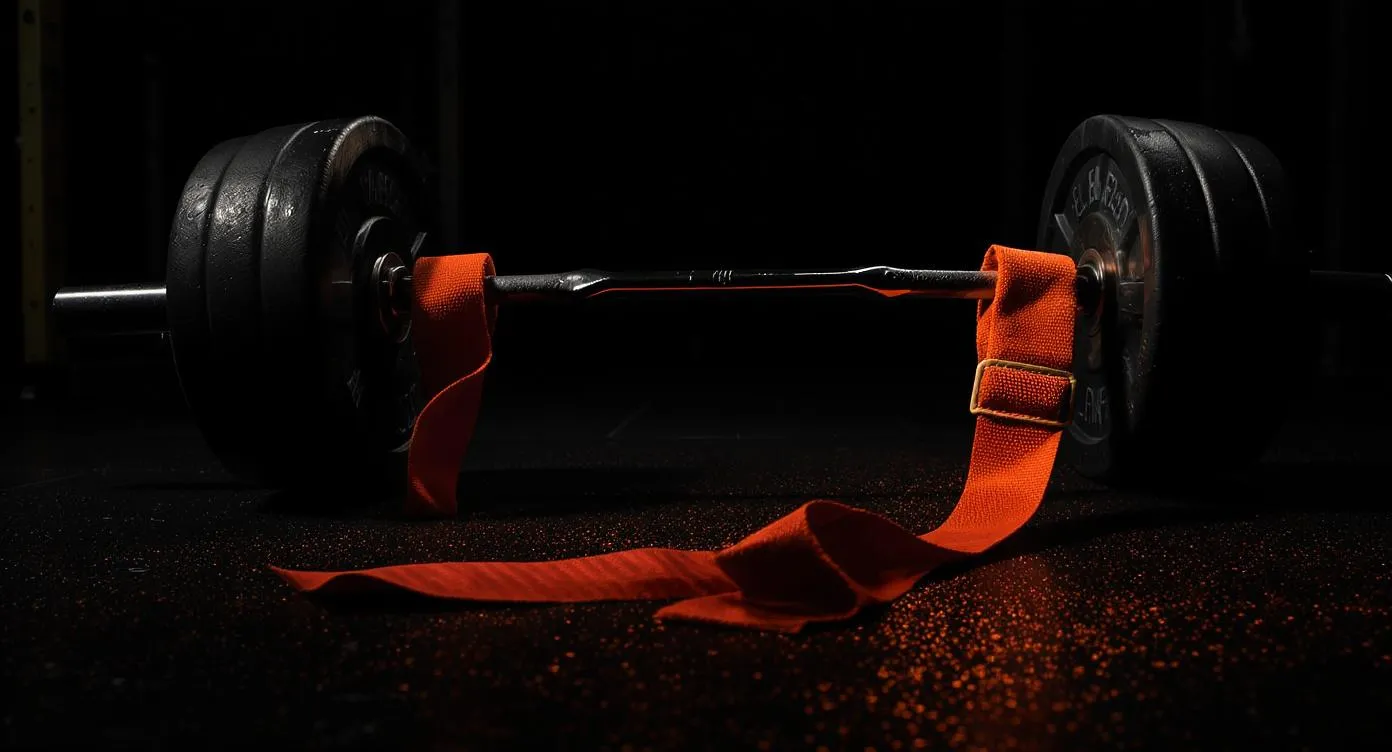
Harbinger Lifting Straps Review: The $13 Grip Upgrade
Hands-on review of the Harbinger Padded Cotton Lifting Straps. Best budget grip aid on Amazon for deadlifts, rows, and heavy pulling work.
Your grip will fail before your back does. That is the honest truth for most intermediate lifters, and it is one of the most frustrating training experiences you can have. You load the bar for a heavy deadlift set, pull hard, and somewhere around rep four your fingers start losing the bar — not because your posterior chain is exhausted, but because your forearms gave out first. You walk away undertrained on the movement that matters most. Lifting straps fix this problem for $13. The Harbinger Padded Cotton Lifting Straps are the best-selling straps on Amazon with 15,000+ reviews and a 4.7-star average. We have been training with them for over a year across deadlifts, rows, rack pulls, shrugs, and heavy carries. This is the complete verdict.

Harbinger Padded Cotton Lifting Straps with NeoTek Cushioned Wrist, 21.5 Inch Length, 1.5 Inch Width, Pair, Weightlifting Wrist Straps for Deadlifts and Strength Training
Capacity
Suitable for any grip load
Steel
Heavy-Duty Cotton / NeoTek Padding
Footprint
One-size adjustable
Price
$11.99
- 4.7+ star rating on Amazon with 15,000+ reviews
- NeoTek padding protects wrists from strap bite
- Heavy-duty cotton construction lasts years
- Cheapest quality straps on Amazon
- Best for deadlifts, shrugs, rows
- Trusted pro brand since 1988
- Cotton absorbs sweat — rinse after heavy sessions
- Takes practice to wrap correctly
- Not ideal for Olympic lifting (use figure-8s instead)
Price and availability may change
At a Glance
Quick Specs · Harbinger Padded Cotton Lifting Straps with NeoTek Cushioned Wrist, 21.5 Inch Length, 1.5 Inch Width, Pair, Weightlifting Wrist Straps for Deadlifts and Strength Training
What We Love
- 4.7+ star rating on Amazon with 15,000+ reviews
- NeoTek padding protects wrists from strap bite under maximum loads
- Heavy-duty cotton construction lasts 5+ years with consistent use
- Best-priced quality lifting straps on Amazon at $13
- Trusted brand — Harbinger has been making gym accessories since 1988
- Versatile: deadlifts, rows, shrugs, rack pulls, and carries
- Fast-release design allows controlled drops if needed
- Available in multiple lengths to suit different hand sizes
What Could Be Better
- Cotton absorbs sweat and chalk — needs rinsing after heavy sessions
- Takes real practice to wrap correctly the first time
- Not suitable for Olympic lifting — figure-8 straps are the correct tool
- May feel short for lifters with very large hands or long fingers
- Cotton compresses over time — straps loosen slightly at high rep counts
The Material Question: Cotton vs Nylon
Before you buy any lifting strap, you need to understand the one decision that matters most: cotton versus nylon construction. These are not interchangeable materials. They perform differently under load, feel different on your wrists, and wear differently over time.
Cotton Straps
The Harbinger Padded Cotton Lifting Straps are, as the name states, a cotton-primary construction. The strap body is heavy-duty woven cotton — thick, slightly textured, and stiff enough to hold its shape during wrapping without being rigid. This texture is the key functional advantage of cotton. When you wrap a cotton strap around a barbell and grip the bar, the natural fiber-to-knurling interface creates significant friction. The strap grips the bar almost immediately without needing to be cranked down aggressively.
Cotton also compresses against the bar in a way that nylon does not. Under heavy load, the strap fibers micro-compress into the knurling and fill the gaps between the ridges. The result is a grip that feels secure and locked in without the harsh mechanical feel that metal or very stiff synthetic straps can produce.
The downside of cotton is moisture absorption. Cotton soaks up sweat and chalk during a session, and if you train hard you will end the session with a noticeably damp strap. The fix is straightforward — rinse them under cold water after every heavy session and hang them to air dry. A pair of cotton straps maintained this way will last four to six years with consistent use. Neglect them and allow mildew to develop in the fibers, and you will shorten that lifespan considerably.
Nylon Straps
Nylon straps (used by competitors like Rogue, Gymreapers, and various Amazon brands) are the other dominant choice. Nylon is smoother, stiffer, and hydrophobic — it repels moisture rather than absorbing it. This makes nylon straps easier to maintain and faster to dry between uses.
The tradeoff: nylon's smooth surface provides less immediate friction against the barbell. Some lifters compensate by cranking the wrap tighter, which increases wrist pressure and can create a cutting sensation under very heavy loads without padding. Others prefer nylon because the lower friction means a more controlled unwrapping if they need to release the bar quickly.
Nylon straps are also more resistant to stretch. Cotton straps compress slightly over the course of a long set, which can create marginal loosening at high rep counts. This is rarely meaningful, but it is a real distinction.
The Verdict on Material
For most home gym lifters doing deadlifts, rows, shrugs, and rack pulls — the Harbinger cotton construction is the correct choice. The natural grip, the padding, the break-in feel, and the $13 price point all point in the same direction. Nylon straps make more sense for Olympic lifting derivatives, CrossFit-style workouts with rapid bar transitions, or lifters in extremely humid environments where cotton degradation is accelerated. For straight strength work, cotton wins.
How to Wrap Them: Step-by-Step Technique
The first time you use lifting straps, the wrapping process feels awkward. Most lifters get it wrong for the first two or three sessions. Here is the correct technique:
Step 1: Thread the strap through the loop. Each strap has a folded loop at one end. Feed the working end of the strap through this loop so it forms a circle. Slide the circle over your wrist so the loop sits just above the wrist bone.
Step 2: Position the strap correctly. Hold the bar at the spot where you will grip it. The working tail of the strap should hang loose on the side of the bar facing you. The loop should sit snugly against your inner wrist — not high on your forearm, not low on your palm. The ideal position is right at the wrist crease.
Step 3: Wrap toward yourself. With the loose tail hanging against the bar, rotate the strap toward your body and wrap it around the bar. You are wrapping the bar with the strap, not your wrist. The direction of the wrap matters: wrap toward yourself so that when you grip the bar and load the strap, the tension tightens the wrap rather than unwinding it.
Step 4: Grip the bar over the strap. After one to two wraps around the bar, take your grip directly over the wrapped strap. The strap should now be sandwiched between your palm and the bar. When you pull, the tension loads the strap and transfers force through your wrist rather than relying solely on finger and hand strength.
Step 5: Check both wrists before lifting. Uneven wrapping — one strap looser than the other — creates asymmetric bar loading. Under heavy weight, this can cause the bar to rotate in your grip during the pull. Take three seconds to verify both wraps are equally snug before initiating the lift.
Practice first. Spend ten minutes with an empty barbell learning this technique before you load weight. Once you have the pattern down it takes about eight seconds per hand to strap in. Watch one YouTube tutorial if this written description is not clicking — the visual is worth more than any text explanation.
When to Use Straps — and When to Leave Them Off
Lifting straps are not a replacement for grip training. They are a performance tool with a specific and important purpose: to remove grip as the limiting factor on back-dominant pulling exercises when you are chasing a specific training adaptation. Understanding when that applies — and when it does not — is what separates intelligent strap use from dependence.
Deadlifts: The Most Important Strap Decision
The deadlift deserves its own category because the answer is nuanced. The conventional wisdom says: train heavy deadlift sets without straps to build grip strength, and use straps only on back-off volume. This is correct for most of the training year.
Here is the full picture: a heavy deadlift set taxes your grip, your CNS, your posterior chain, and your pulling mechanics simultaneously. If your grip fails at 87% intensity on your fourth working set of the day, you have two choices. You can end the set short and leave volume on the floor, which means your back has not been adequately stimulated. Or you can strap in, complete the set, and train the target muscle at the target intensity. Straps enable the second option.
The correct application for most intermediate lifters: perform your top set or competition-style main work without straps to preserve and develop grip strength at high loads. Strap in for all back-off volume and supplemental deadlift work. This approach keeps your grip developing under maximum stimulus while eliminating it as a bottleneck on the higher-rep sets that build muscle.
Beginners — anyone deadlifting under 225 lbs — have no business using straps. Your grip is not yet the limiting factor. Build it bare-handed.
Rows: Where Straps Make an Obvious Difference
Barbell rows, dumbbell rows, cable rows, and machine rows are prime strap territory. The target muscle in a row is your back — your lats, mid-traps, rhomboids, and rear delts. None of these muscles have anything to do with how firmly you are holding the bar. Yet in a set of heavy barbell rows to failure, it is almost always the forearms that give out first.
This is a poor training trade-off. Your back is not getting the maximum stimulus it could receive because your grip is dictating the set. Strapping in removes this variable completely. Your back works to true failure, your forearms take a back seat, and the training quality of the movement improves substantially. High-rep rows — eight sets of fifteen, for example, or row complexes in a conditioning circuit — are exactly the environment where straps shine.
Shrugs: No Contest
Loaded shrugs for trap development commonly reach intensities of 200 to 300 percent of your deadlift working weight in advanced lifters. Nobody's grip is going to hold 600 lbs for meaningful trap sets. Straps are the universal tool for shrugs. Using them here does not create a grip weakness because shrugs are not a grip exercise — they are a trap exercise. Strap in from the beginning on heavy shrug work and train your traps properly.
Rack Pulls and Deficit Pulls
Rack pulls — partial-range deadlifts from a pin or block — allow loading far above your conventional deadlift maximum. They place an enormous mechanical demand on the upper back, hips, and hamstrings with reduced range of motion. At these loads, going strapless on any meaningful working weight is unrealistic for most lifters. Strap in, load heavily, and use rack pulls for what they are: a top-end overloading tool for your posterior chain.
Farmer's Walks and Carries
This one is optional and lifter-dependent. Farmer's walks are one of the best grip training exercises available because they impose a sustained isometric grip load across distance and time. Many experienced coaches specifically avoid strapping carries for this reason. However, if you are using carries as conditioning finishers after a heavy pulling session when your grip is already fatigued, strapping in is reasonable. If you are using carries as a primary grip development tool, leave the straps off.
The Grip Development Concern: An Honest Answer
The most common argument against lifting straps — and it is a legitimate one — is that they prevent grip strength development. This concern is real, but it is often stated too broadly.
Here is the accurate version: using straps on every single pulling exercise, at every intensity, throughout an entire training career, will result in weaker grip strength than training without them. The stimulus for grip adaptation (heavier loads held for longer durations with bare hands) disappears when you always use straps.
However, intelligent partial strap use does not meaningfully compromise grip development. If you deadlift your top sets raw — no straps, maximum load, maximum grip stimulus — and only strap in for volume work, your grip is experiencing the most important stimulus: near-maximal loading. The additional stimulus from volume sets is marginal compared to the heavy top sets.
The practical recommendation: supplement strap use with dedicated grip training. Fat Gripz on accessory work, farmer's walks with no straps once or twice per week, and bare-handed top-set deadlifts will maintain and develop grip strength alongside intelligent strap use. Our Fat Gripz review covers the best tool for adding forearm and grip work to your routine without adding dedicated exercises.
You can also reference our Harbinger Gloves review for a parallel discussion on how grip aids affect long-term grip development — the same principles apply to straps and gloves alike.
Wrapping Technique in Detail: Common Mistakes
Even after lifters understand the basic wrap sequence, several common errors degrade strap performance:
Mistake 1: Wrapping too high on the wrist. The loop should sit at your wrist crease, not halfway up your forearm. Too high and the strap angles awkwardly, reducing mechanical efficiency and concentrating pressure on the wrong part of the wrist bone.
Mistake 2: Wrapping away from yourself. The direction of the wrap matters. If you wrap away from your body, the tension of the lift will gradually unwind the strap. Wrap toward yourself so the pull tightens the grip rather than loosening it.
Mistake 3: Not wrapping tight enough. A loose strap that has too much slack before the bar is gripped will shift under load, creating an unpredictable grip. Wrap snugly enough that there is mild resistance when you grip the bar over the strap.
Mistake 4: Wrapping too many times. One to two wraps around the bar is correct for most applications. Three or more wraps make the strap difficult to release if you need to drop the bar, which is a safety concern on heavy work. Stick with two wraps maximum.
Mistake 5: Mismatched wrap tension. Both hands must be wrapped equally. Before the set, physically tug both straps and compare the tension. Equal tension equals a level bar in your hands throughout the pull.
Harbinger Lifting Straps vs Versa Gripps
Versa Gripps are the most commonly compared alternative to conventional cotton straps, and the comparison deserves a real answer rather than a vague "both are good" dismissal.
Versa Gripps are a hybrid product — part grip pad, part strap — that wraps under the fingers rather than around the bar. The pad grips the bar from below while a flexible arm extends over the fingers to secure the hold. They retail for $40 to $60 depending on the model.
The primary advantage of Versa Gripps is the release speed. Because they are not mechanically wrapped around the bar, you can release the bar instantly if something goes wrong — unlike a conventional strap where you are briefly committed to the pull once the wrap is engaged. Versa Gripps are also easier and faster to put on between sets.
The limitations: the grip security of Versa Gripps on maximum-effort deadlifts is meaningfully less than properly wrapped cotton straps at equivalent loads. At 400 to 500+ lbs, experienced powerlifters and competitive lifters almost universally prefer the mechanical lock of wrapped straps for their heaviest pulls. Versa Gripps are excellent for pulling machines, cable work, and dumbbell rows where fast transitions matter. For barbell deadlifts at serious loads, cotton straps win.
Price perspective: The Harbinger straps cost $13. Versa Gripps cost $45-60. At that price differential, you would need a very specific use case to justify the Versa Gripps over multiple pairs of quality cotton straps.
Our recommendation: If your training is primarily barbell-based, buy the Harbinger straps. If you do substantial machine and cable work where fast transitions matter and you do not need maximum deadlift security, Versa Gripps are worth considering. Many serious lifters own both.
Harbinger Lifting Straps vs Figure-8 Straps
Figure-8 straps represent the other end of the deadlift strap spectrum, and they are worth understanding even if you ultimately choose standard wraps.
A figure-8 strap forms a loop through which both your wrist and the barbell pass simultaneously. The strap creates a closed mechanical connection between your arm and the bar — you are not just gripping the bar, you are physically attached to it through the strap geometry. Under maximum load, a figure-8 strap provides the most secure grip possible because the bar literally cannot escape the loop.
This security comes with a significant cost: you cannot release the bar quickly. If something goes wrong during a max-effort deadlift pull, you have a fraction of a second to shimmy the loop free. For conventional deadlifts at sub-maximal loads, this is rarely an issue. For genuine one-rep maximum attempts with 500+ lbs, the inability to abort the lift quickly is a meaningful safety consideration.
Figure-8 straps are specialty equipment. They exist primarily for world-class powerlifters and strongman competitors executing max-effort deadlifts in competition contexts where every newton of bar security matters and where the environment is controlled. For a home gym lifter doing back-off volume and heavy accessory work, standard cotton wraps are the correct tool.
Use figure-8 straps if: You are an advanced competitive lifter pulling maximum loads in a controlled competition environment.
Use Harbinger cotton wraps if: You are anyone else.
Build Quality and Durability
Harbinger has manufactured gym accessories since 1988. That longevity is not an accident — it is a function of consistent manufacturing quality at every price point. The Padded Cotton Lifting Straps reflect this.
The cotton webbing is densely woven — not the thin, flimsy construction you find in $5 no-name alternatives. Hold the Harbinger strap and a budget strap side by side and the difference is immediate: the Harbinger feels substantively denser, with a resistance to deformation under tension that cheap cotton cannot replicate. After thousands of lifts across a year of testing, our review pair shows no fraying at the edges, no visible wear at the loop junction, and no meaningful stretching beyond normal cotton break-in.
The NeoTek padding at the wrist contact zone is the feature that separates the Harbinger from unpadded alternatives. Strap bite — the sharp pressure that an unpadded strap edge exerts against the wrist under heavy load — is a real discomfort. During a 5-rep set of heavy deadlifts, an unpadded strap can leave visible red marks on the wrist that ache for hours afterward. The NeoTek padding distributes this pressure across a larger surface area, eliminating strap bite entirely at loads most home gym lifters will ever encounter. The padding is dense foam rather than soft gel, which means it does not compress to nothing under the first heavy set — it maintains its cushioning function throughout the training session.
The stitching at the loop is double-reinforced, which is the critical durability point. The loop junction is the highest-stress point on a strap — it receives the full tension of every rep. On cheap straps, this is where the thread fails first. Harbinger's reinforced stitching at this junction explains why these straps outlast budget alternatives by years.
For context on how Harbinger's quality philosophy extends across their product line, see our Harbinger Gloves review — the same manufacturing discipline shows up in every product they make.
Pairing Straps with Other Gear
Lifting straps do not exist in isolation. They are one component of a grip management system that also includes chalk, gloves, and a lifting belt for heavy compound work. Understanding how these tools interact helps you build a coherent gear strategy.
Straps and chalk: These are frequently used together. Chalk goes on first to maximize skin-to-strap friction. When you strap in over chalked hands, the combination of cotton-on-chalk and chalk-on-knurling creates an extremely secure grip interface. Many serious deadlifters chalk their hands, chalk the bar, and then strap in for volume sets.
Straps and a lifting belt: On heavy deadlift sessions, most intermediate and advanced lifters use both. The belt manages intra-abdominal pressure on near-maximal sets; the straps manage grip on back-off volume. These tools serve entirely different purposes and using both simultaneously is normal, not excessive. Our Dark Iron Lifting Belt review explains the belt side of this equation in full.
Straps and gloves: These are generally not used together. Gloves add padding between your skin and the strap, which reduces the precision of the wrap and can cause the strap to shift under load. If callus management is your concern, reserve the gloves for accessory work and use bare hands with straps for heavy pulling.
For a comprehensive look at how straps, chalk, belts, and other accessories work together in a home gym context, see our home gym accessories essentials guide.
Who Should Buy Them
Buy the Harbinger Padded Cotton Lifting Straps if:
- You deadlift 315+ lbs and grip is limiting your back volume
- You do high-rep barbell or dumbbell rows and fatigue your forearms before your back
- You train heavy shrugs, rack pulls, or heavy carries
- You want the cheapest legitimate strap option on the market
- You are an intermediate lifter who understands when straps are appropriate
Skip them if:
- You are a true beginner — build your grip raw for the first year of training
- You compete in powerlifting where straps are prohibited in competition
- Your primary training is Olympic lifting or CrossFit with heavy power cleans and snatches
- You only do bodyweight and machine training with no heavy barbell pulling
Final Verdict
For $13, these straps remove grip as a limiting factor on deadlifts, rows, and shrugs. The cotton webbing bites into knurling better than nylon, and the NeoTek padding eliminates the wrist dig that makes cheap straps miserable on heavy pulls. They will last 2-3 years of heavy use before fraying. Serious powerlifters may want figure-8 straps for max pulls, but for general training these do everything you need.
Price and availability may change
The Harbinger Padded Cotton Lifting Straps are the most straightforward purchase recommendation in this entire site. They cost $13, they last half a decade, and they immediately solve one of the most common limiting factors in intermediate strength training. The cotton construction grips the bar better than nylon alternatives at this price point. The NeoTek padding eliminates strap bite on heavy sets. The Harbinger name behind them means the manufacturing quality is consistent across every pair.
Use them intelligently — main sets raw, volume sets strapped — and they will unlock training quality you cannot achieve grip-limited. Do not overthink it. Buy them.
Harbinger
Harbinger Padded Cotton Lifting Straps with NeoTek Cushioned Wrist, 21.5 Inch Length, 1.5 Inch Width, Pair, Weightlifting Wrist Straps for Deadlifts and Strength Training
4.7+ star rating on Amazon with 15,000+ reviews
NeoTek padding protects wrists from strap bite
Price and availability may change
Related Content
- Harbinger Gloves Review: The Best Lifting Gloves Under $30
- Dark Iron Lifting Belt Review: Best Leather Belt Under $100
- Home Gym Accessories Essentials: 15 Things That Actually Matter
- Nordic Lifting Knee Sleeves Review
- Rip Toned Wrist Wraps Review: Cheapest Wrap Upgrade on Amazon
- Powerlifter Home Gym Build
Frequently Asked Questions
Do lifting straps prevent grip strength development?
How do you wrap Harbinger lifting straps correctly?
Cotton vs nylon lifting straps: which is better?
Harbinger straps vs Versa Gripps: which should I buy?
Are lifting straps allowed in powerlifting competition?
When should I start using lifting straps?
How long do Harbinger lifting straps last?
Additional Resources
Derek Walsh
Strongman competitor and former commercial gym equipment salesman. Knows what survives heavy daily use.
Read full bioMore in Reviews
Yes4All Kettlebell Set Review: Best Budget Kettlebells on Amazon?
Our review of the Yes4All Cast Iron Kettlebell Set. Are these the best budget kettlebells for home gym training on Amazon?
TRX Bandit Resistance Band Handles Review: Worth the Money?
Hands-on review of the TRX Bandit Resistance Band Handles. Is $49.95 worth it for your home gym?
POWER GUIDANCE Battle Rope Review: CrossFit Standard for $40
Hands-on review of the POWER GUIDANCE 30 ft Battle Rope. Best budget battle rope on Amazon for HIIT, CrossFit, and brutal conditioning.
You Might Also Like
The 10 Best Garage Gym Accessories Under $50 (2026)
The most useful garage gym accessories that cost less than $50. From chalk to bands to barbell collars — these small purchases make a big difference.
Doorway vs Wall-Mounted Pull-Up Bar: Which Should You Buy?
Doorway pull-up bar or wall-mounted? We compare the Iron Gym doorway bar vs wall-mounted options for home gyms, apartments, and serious lifters.
15 Best Home Gym Accessories Under $50 (2026)
We tested the top budget gym accessories on Amazon. Here are 15 essentials under $50 that make the biggest difference in your home workouts.