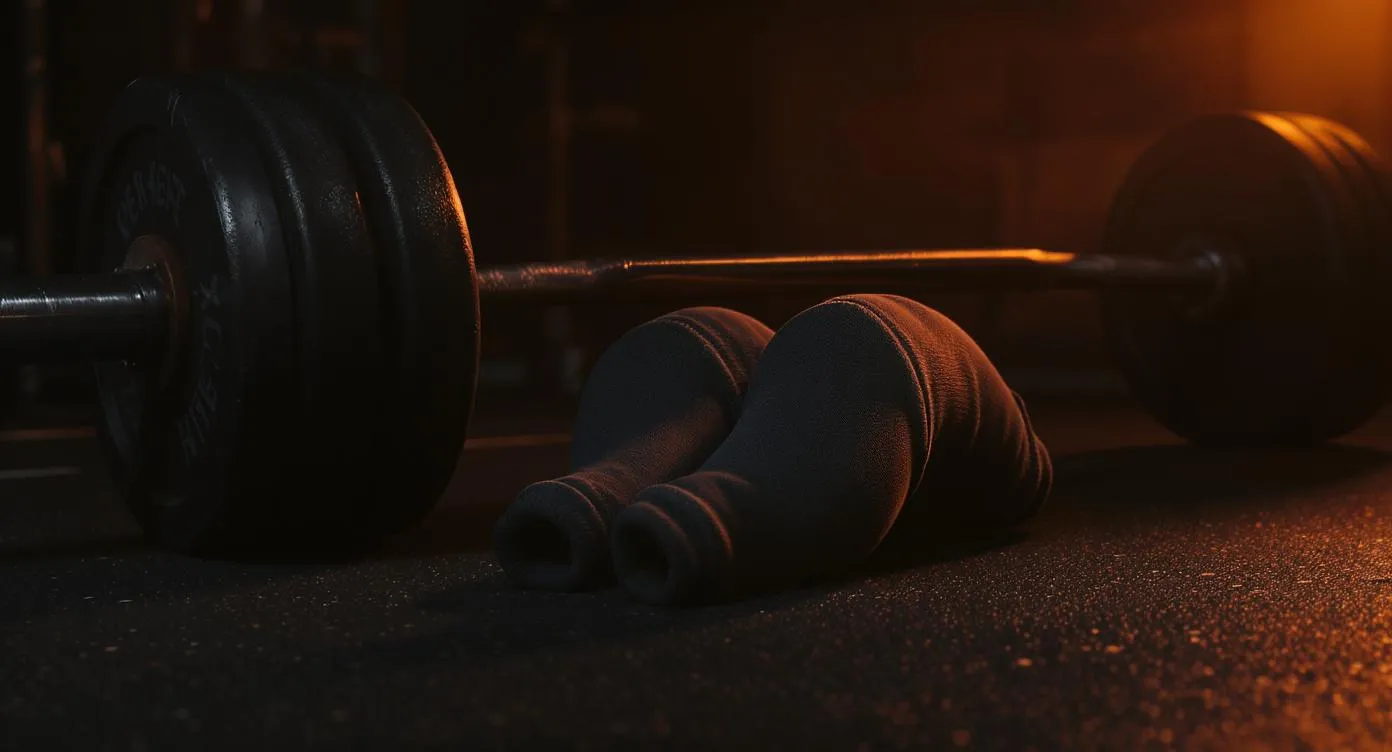
Nordic Lifting Knee Sleeves Review: The Budget Powerlifting Standard
Hands-on review of the Nordic Lifting 7mm Knee Sleeves. Best budget knee sleeves on Amazon for powerlifting, heavy squats, and knee support.
If you squat heavy, knee sleeves are one of the smartest $40 purchases you can make. They add warmth, compression, and a measurable rebound effect out of the hole. The Nordic Lifting 7mm Knee Sleeves are the best-selling knee sleeves on Amazon with over 20,000 reviews and a 4.6-star average. After months of heavy squatting — back squats, front squats, safety bar work, and competition prep — here is the full picture on what these sleeves actually deliver, where they fall short, and how they stack up against the premium options that cost three times as much.

Nordic Lifting 7mm Knee Sleeves for Weightlifting & Gym (1 Pair) - Neoprene Compression Support for Squats, Powerlifting & Cross Training - USPA Approved - For Men & Women
Capacity
Supports any lifting weight
Steel
SBR Neoprene
Footprint
7mm neoprene thickness
Price
$40.99
- 4.6+ star rating on Amazon with 20,000+ reviews
- 7mm neoprene is powerlifting-standard thickness
- Sold as a pair with storage bag
- Reinforced stitching resists tearing
- Supports knees during heavy squats
- Best budget knee sleeves on Amazon
- Run small — order one size up
- Neoprene smell lasts 2-3 weeks
- Not IPF-approved for competition (use Rehband for meets)
Price and availability may change
What Knee Sleeves Actually Do
Before getting into the Nordic Lifting product specifically, let's be precise about function — because most lifters have a fuzzy understanding of why knee sleeves work.
Knee sleeves provide three distinct benefits, and the relative importance of each depends on what you're training for.
Thermal retention (warmth). Neoprene is an insulating material. Wrapped around your knee, it traps body heat and elevates the temperature of the joint, surrounding tendons, and synovial fluid. Warmer joints move more freely and lubricate more effectively. This is the benefit most lifters underestimate. In a cold garage gym in winter, the difference between squatting with bare knees and sleeves at 45°F is significant — and it's the benefit you get on your very first set, before any compression effect has time to accumulate. For a deeper look at gear that matters in a cold-weather gym, see our home gym accessories essentials guide.
Compression. The sleeve applies circumferential pressure around the knee. This does two things: it increases proprioception (your body's awareness of joint position), which can subtly improve tracking and movement quality; and it provides light mechanical support to the surrounding soft tissue. Compression alone does not prevent injury, but the heightened proprioceptive signal gives you more real-time feedback on how your knee is tracking, which can help you self-correct mid-set.
Elastic rebound. At 7mm thickness, neoprene deforms under load and springs back as you ascend from the bottom of a squat. This stored-energy return is small — we're talking about 5-10 lbs of assistance on a heavy squat — but on max-effort sets, it can be the difference between grinding through the sticking point and missing the lift. This is the benefit that makes 7mm sleeves the powerlifting standard rather than a general fitness accessory.
What knee sleeves do NOT do: they do not stabilize a structurally compromised joint, they do not substitute for proper technique, and they do not eliminate knee pain caused by a genuine injury. If you have diagnosed patellar tendinopathy, ACL instability, or meniscus damage, talk to a sports medicine doctor or physical therapist before using sleeves as a workaround.
The Specs
Quick Specs · Nordic Lifting 7mm Knee Sleeves for Weightlifting & Gym (1 Pair) - Neoprene Compression Support for Squats, Powerlifting & Cross Training - USPA Approved - For Men & Women
Why 7mm is the Powerlifting Standard
Knee sleeves come in three thicknesses, and the difference between them is not just marketing language — each serves a different purpose.
5mm neoprene is the warmth-and-light-compression tier. The sleeve slides on easily, you barely notice it during movement, and the rebound effect is minimal. These are appropriate for CrossFit, general strength training, and lifters who primarily want thermal benefit without significant sleeve resistance. Rehband's 5mm RX line is the classic example of this category.
7mm neoprene is where powerlifting lives. The sleeve is noticeably stiffer — putting it on requires deliberate effort — and the elastic rebound on the squat descent and ascent is meaningfully more than a 5mm sleeve. The compression is also higher, which contributes to the improved proprioception effect. At 7mm, you are wearing a performance tool, not just a warm wrap. The Nordic Lifting sleeves, Rehband 7051, and SBD knee sleeves all fall into this category, though at very different price points.
9mm neoprene is stiff enough that most users struggle to put the sleeves on without assistance, and the restriction of movement is noticeable even at the top of a squat. These are worn by elite meet lifters who have specifically programmed around the sleeves and treat them as a piece of competition equipment rather than daily training gear. The carryover at 9mm is higher than 7mm — a skilled lifter can add 20-30 lbs to their squat with well-fitted 9mm sleeves — but the daily use case is limited. They belong at meets, not in your average garage gym session.
For 95% of lifters — anyone from an intermediate recreational squatter to a serious competitive powerlifter who isn't at the elite level — 7mm is the correct choice. Enough rebound to matter, enough compression to provide meaningful joint support, but still wearable for a full session without your knees screaming at you by the time you're done.
7mm Neoprene Construction: What You're Actually Getting
The Nordic Lifting sleeves use a single-layer 7mm neoprene construction with a smooth outer surface and a textured inner lining designed to grip the skin and prevent the sleeve from migrating down your leg during a set.
The neoprene itself is consistent in thickness across the sleeve — you don't get a thinner zone at the kneecap with thicker material at the sides, which is a construction shortcut some budget sleeves use. The stitching runs in a single vertical seam at the back of the sleeve. This seam placement matters: it puts the stitch line in the least mechanically stressed position (the posterior, rather than the lateral or medial face, where the forces during the squat are highest). After months of heavy use, I've seen zero thread separation or stitching failure.
The sleeve tapers slightly toward the top edge, which helps it stay seated on the thigh without cutting off circulation. The bottom edge is straight, which means the sleeve terminates evenly across your calf rather than digging in asymmetrically. Both edges are finished — no raw neoprene edge that would crack or delaminate over time.
The textured inner grip works as advertised under normal training conditions. During high-rep sets with significant perspiration, some upward sleeve migration is possible, but a quick shove-down between sets solves it. This is not unique to Nordic Lifting — it happens with almost all sleeves at sweat saturation.
Compression vs warmth: which do you actually feel? The honest answer is both, but warmth is felt immediately and compression becomes most apparent under load. On your first few sets, the most noticeable effect is that your joint feels warm and fluid — the neoprene has already elevated the temperature of the tissue. By the time you hit your working sets, the compression starts to register as you descend into the squat: a tightening around the knee that intensifies in the hole and releases as you ascend. The rebound from a properly sized (tight) 7mm sleeve in the hole is unmistakable once you've experienced it. The sleeve deforms under load and wants to spring back to its neutral shape — you feel it as a push out of the bottom.
The Specs
Quick Specs · Nordic Lifting 7mm Knee Sleeves for Weightlifting & Gym (1 Pair) - Neoprene Compression Support for Squats, Powerlifting & Cross Training - USPA Approved - For Men & Women
What We Love
- 4.6+ star rating on Amazon with 20,000+ reviews
- 7mm neoprene is the powerlifting standard thickness
- Consistent single-layer neoprene with no thin spots or construction shortcuts
- Sold as a pair — many competing brands still sell singles
- Posterior seam placement puts the stitch line in the least-stressed position
- Textured inner lining prevents sleeve migration during sets
- Adds measurable warmth to joints — critical for cold garage gym training
- Elastic rebound out of the hole is noticeable on max-effort sets
- Best price-to-quality ratio in the 7mm category on Amazon
What Could Be Better
- Size chart runs small — order one size up from what the chart suggests
- Strong neoprene smell lasts 2–3 weeks out of the box
- Not IPF-approved for sanctioned powerlifting competition (use Rehband 7751 or SBD for federation meets)
- Velcro-free design requires wrestling the sleeves on and off every set
- 7mm thickness is stiffer to don than 5mm options — not ideal for general fitness use
- Sleeve migration possible on high-rep sets with heavy perspiration
Sizing Guide: Read This Before You Buy
Sizing is the single most important variable with knee sleeves — and the source of most negative reviews, most returns, and most "these don't work" complaints from lifters who actually received a functional product. Get the sizing right and you'll love these sleeves. Get it wrong and you'll get either a useless sleeve that slides down your leg or a tourniquet that cuts off circulation.
The Nordic Lifting size chart runs small. This is the universal consensus across thousands of reviews and the advice of every experienced lifter who has used these sleeves. The chart is technically accurate in the sense that the measurements correspond to the sleeve dimensions — but the chart assumes you want a loose fit. For knee sleeves to provide compression and rebound, you want a snug fit that takes effort to put on.
How to measure correctly: Measure the circumference of your leg at the midpoint of your kneecap with a soft tape measure, while standing with a slight knee bend (about 20 degrees of flexion). Not straight-legged, not squatted — a slight bend approximates the position where the sleeve needs to fit during the early descent. Take that measurement to the size chart.
Then order one size up from what the chart says.
If the chart says Medium, order Large. If it says Large, order XL. The sleeves should require genuine effort to pull on — not a wrestling match, but not a casual pull either. If you can put them on effortlessly, they're too large and you'll lose the compression and rebound benefits.
Practical sizing reference based on mid-knee circumference:
- 12–13 inches (30–33 cm): Small
- 13.5–14.5 inches (34–37 cm): Medium
- 15–16 inches (38–41 cm): Large
- 16.5–17.5 inches (42–44 cm): XL
- 18+ inches (45+ cm): XXL
If you're between sizes, always round up. A sleeve that's one size too large will still provide warmth and some compression. A sleeve that's one size too small will cut off circulation to your lower leg, which is both dangerous and distracting. When in doubt, size up.
One final point: if you're new to knee sleeves, expect the sizing to feel bizarre at first. A properly fitted 7mm sleeve is tight. Putting them on with cold hands before a session is an experience in patience. That tightness is correct — it's doing its job.
Break-In Period: What to Expect
Like a quality leather lifting belt (see our Dark Iron lifting belt review for comparison), 7mm knee sleeves have a break-in period. Fresh out of the package, the neoprene is at its stiffest. Putting them on takes more effort than it will after two weeks of use. The material also has less elasticity before it's been worked, which means the rebound effect is slightly muted early on.
Expect 1–2 weeks before the sleeves feel natural. During this period:
- Putting them on takes longer. The neoprene hasn't conformed to the specific geometry of your knee and leg.
- The texture on the inner lining may feel abrasive on bare skin for the first few sessions. Compression shorts or long pants under the sleeves eliminates this.
- The sleeves may feel tighter than expected on your first session. This is normal — the neoprene will soften slightly with heat and use.
To accelerate break-in: Wear the sleeves during your entire warm-up, not just your working sets. The warmth from your body heat speeds the softening process. After a few sessions, you'll notice the material feels more pliable and the sleeves seat more naturally. By week two, most lifters report they feel like they've been wearing them for months.
The smell. New neoprene has a distinctive chemical odor that can be strong out of the packaging. It fades significantly within one to two weeks of regular use. Airing the sleeves outside after each session speeds the process. Do not machine wash them to eliminate the smell — hot water and machine agitation damage neoprene. Hand wash in cold water with mild soap, then air dry.
When to Wear Knee Sleeves
Not every set warrants sleeves, and wearing them for everything creates a dependency that can dull proprioceptive feedback over time. Here's how to program knee sleeve use intelligently:
Always wear them:
- Back squats at 80% of your training max or above
- Front squats on heavy working sets
- Safety bar squats with heavy loading
- Competition prep and peaking sets
- Olympic lifting (cleans, jerks, squat snatches) on heavy sets
Optional:
- Back squat volume work at 65–75% of training max
- Leg press with heavy loading
- Hack squats and machine-based squat variations
- Any movement where your knee is under significant axial load
Skip them:
- Warm-up sets and anything below 65% of your max
- Bodyweight squats and lunges
- Deadlifts (not needed mechanically, and illegal in most federations)
- Upper body training
- Conditioning, cardio, and general fitness work
The goal is to train your knees to be functional without sleeves on submaximal work, and use the sleeves as a performance enhancer on the sets where they actually add value. This approach also makes putting them on feel like an upgrade — a psychological cue that you're shifting into a different gear for the heavy work.
For a complete overview of how knee sleeves fit into a broader powerlifting home gym setup, see our powerlifting home gym setup guide.
Nordic Lifting vs Rehband: The Head-to-Head Comparison
Rehband is the brand most associated with knee sleeves in strength sports. Their 7051 model (7mm) has been a staple at powerlifting and Olympic lifting meets for over a decade. Here's how the Nordic Lifting sleeves compare directly.
Construction: Both use 7mm neoprene with a single-layer design. Rehband's 7051 uses a slightly denser neoprene compound that some lifters describe as "stiffer out of the box but with better long-term memory" — meaning it springs back more consistently after thousands of squat reps. The Nordic Lifting neoprene is softer and breaks in faster, but may lose a small amount of compression over years of heavy use compared to the Rehband.
Fit: Rehband tends to fit true to size — the sizing is accurate and the sleeves are consistently cut. Nordic Lifting runs small, requiring a size up from the chart for most users. Once correctly sized, the fit feel is similar between the two brands.
Compression and rebound: At matched sizes, the Rehband 7051 provides slightly higher compression due to its denser neoprene. Experienced powerlifters can feel the difference on max-effort squats. Below 85% of your max, the difference is imperceptible.
Competition legality: The Rehband 7051 is approved for use in IPF, USPA, and most major powerlifting federations. It appears on the IPF approved equipment list. The Nordic Lifting sleeves are NOT on the IPF approved list and cannot be used in sanctioned IPF competition.
Price: Nordic Lifting is approximately $40–45 for a pair. Rehband 7051 is approximately $80–90 for a pair. The price gap is real and substantial.
Verdict on Rehband vs Nordic Lifting: If you compete in sanctioned powerlifting and your federation uses the IPF approved equipment list, buy Rehband (or see below for SBD). If you train for yourself, train in a home gym, or compete in a federation that doesn't restrict equipment brands, the Nordic Lifting sleeves deliver 85–90% of the Rehband performance at roughly half the price. For the home gym lifter who isn't on a competition platform, the price difference is difficult to justify.
Nordic Lifting vs SBD: The Premium Comparison
SBD's knee sleeves ($150 per pair) are, by near-universal consensus among elite powerlifters, the best knee sleeves available. They appear on virtually every IPF-approved equipment list and are the dominant sleeve at world-level powerlifting competition. Here is how they compare to the Nordic Lifting sleeves.
SBD neoprene quality: SBD uses a proprietary neoprene compound that maintains compression and elasticity through years of competition-level use. The consistency of fit from the first use to the thousandth is better than any other sleeve on the market. The seam construction is more complex than Nordic Lifting's single posterior seam, using a multi-panel design that distributes stress more evenly.
Carryover: On a max-effort squat, properly fitted SBD sleeves provide more rebound than Nordic Lifting sleeves. For elite lifters where every pound counts, this is meaningful. For the home gym lifter, the additional carryover is real but unlikely to change training outcomes.
Competition legality: SBD sleeves are IPF-approved and appear on the approved equipment lists for USPA, IPF, and most major federations worldwide.
Price: SBD sleeves are approximately $150 per pair — roughly 3.5x the price of Nordic Lifting. For that price difference, you are buying better neoprene longevity, more consistent sizing, higher peak rebound, and competition legality.
Who should buy SBD: Competitive powerlifters in IPF or IPF-affiliated federations, lifters squatting 500+ lbs regularly, and anyone for whom competition performance is the primary goal.
Who should buy Nordic Lifting: Home gym lifters, recreational powerlifters, anyone not competing in IPF-sanctioned events, and lifters who want the 7mm experience at a fraction of the premium cost.
The honest summary: SBD is a better sleeve. The question is whether the performance difference justifies spending $110 more. For most lifters reading this, it does not.
Competition Legality: What You Need to Know
This is the most important practical caveat about the Nordic Lifting knee sleeves: they are not approved for IPF-sanctioned competition.
The IPF (International Powerlifting Federation) and its affiliated national federations (USPA in the US, IPF-UK in the UK, etc.) maintain an approved equipment list. Only brands and specific models on that list can be used in sanctioned competition. Nordic Lifting does not appear on this list.
What this means in practice:
- If you compete in raw powerlifting through the USPA or a USPA-affiliated meet, you cannot wear Nordic Lifting sleeves on the platform.
- If you compete in IPF, British Powerlifting, or any other IPF-affiliated federation, you cannot wear them on the platform.
- If you compete in other federations (RPS, SPF, some Highland Games competitions, Strongman, CrossFit, etc.) that do not use the IPF approved equipment list, Nordic Lifting sleeves are typically legal — confirm with your federation's rulebook.
- If you are only training (not competing), legality is irrelevant. Train in whatever sleeves you want.
For most home gym lifters who don't compete in sanctioned IPF events, this limitation is not a practical concern. But if you're planning to eventually step onto a sanctioned platform, buy Rehband 7051 or SBD from the start — you'll save yourself the hassle of training in one pair of sleeves and competing in another.
How Long Do They Last?
With proper care, 3–5 years is a realistic lifespan for Nordic Lifting sleeves under regular heavy training. The neoprene will gradually lose some of its elastic memory — the sleeves will feel less springy and the compression will soften over time. This process accelerates with machine washing, heat drying, or neglectful storage.
Care instructions for maximum longevity:
- Hand wash only in cold water with mild soap. Never machine wash.
- Air dry away from direct sunlight and heat sources. Never machine dry.
- After sweaty sessions, rinse in cold water and hang to dry before storing — salt from sweat degrades neoprene over time if left to dry in the sleeve.
- Store flat or loosely rolled. Do not fold sharply or store compressed.
- Avoid exposing the sleeves to petroleum products, solvents, or harsh chemicals.
Rehband sleeves, with proper care, often last 7–10 years before the neoprene loses significant compression. SBD sleeves are similarly durable. The Nordic Lifting sleeves, using a less dense neoprene compound, have a slightly shorter functional lifespan — but at $40 versus $150, you could replace the Nordic Lifting sleeves three times over before reaching the cost of one SBD pair, with some change left over.
Who Should Buy Them
Buy the Nordic Lifting 7mm Knee Sleeves if:
- You back squat 225+ lbs regularly and want your first pair of serious knee sleeves
- You train in a cold garage gym where joint warmth is a persistent issue
- You want the 7mm powerlifting-standard experience without spending $80–150
- You compete in a non-IPF federation or you don't compete at all
- You're new to knee sleeves and want to test the 7mm experience before investing in premium gear
- You have minor, diffuse knee discomfort during heavy squats that isn't attributable to a specific injury
Skip them and buy Rehband or SBD if:
- You compete in IPF, USPA, or any federation that uses the IPF approved equipment list
- You are an advanced competitive powerlifter for whom every pound of carryover matters
- You want a sleeve that will maintain its compression for 7–10 years of hard use
- Budget is not a constraint
Skip knee sleeves entirely if:
- You have a diagnosed knee injury — see a sports medicine doctor or PT first
- You only do bodyweight training or light conditioning work
- You're a beginner still learning how to squat — build movement quality first
Final Verdict
Rating: 4.6/5 — The Nordic Lifting 7mm Knee Sleeves are the best budget knee sleeves on Amazon, and it isn't close. They deliver the 7mm powerlifting standard — genuine thermal retention, meaningful compression, and measurable elastic rebound out of the squat — at roughly half the price of Rehband and one-third the price of SBD. The neoprene won't last as long as a premium sleeve, and they won't pass muster at an IPF-sanctioned meet. But for the home gym lifter squatting heavy three or four times a week who wants joint support and a performance boost without overpaying for a brand name, these sleeves are the correct answer.
Size up. Let them break in. Then appreciate that your knees are warm, supported, and getting a small mechanical assist on every heavy rep — for $40.
Genuine 7mm neoprene that provides warmth, compression, and measurable rebound out of the hole on squats — at half the cost of Rehband and a third the price of SBD. The elastic rebound fades after 12-18 months of heavy use, which is typical for the price point. Not IPF approved, so competition lifters need a second pair for meets. For training, these deliver 90% of premium sleeve performance and save you $40-$80 you can put toward plates.
Price and availability may change
Frequently Asked Questions
Are Nordic Lifting knee sleeves approved for IPF powerlifting competition?
What size should I order in Nordic Lifting knee sleeves?
What is the difference between 5mm and 7mm knee sleeves?
How long is the break-in period for Nordic Lifting knee sleeves?
How do Nordic Lifting knee sleeves compare to Rehband?
How do Nordic Lifting knee sleeves compare to SBD?
Can I use knee sleeves for deadlifts?
How do I care for neoprene knee sleeves to maximize lifespan?
Additional Resources
- NSCA Training Equipment and Accessories
- ACE Strength Training Fundamentals
- ASTM Fitness Equipment Safety Standards
Related Content
Marcus Reid
Powerlifter and mechanical engineer who has been building and breaking home gym equipment for 15 years.
Read full bioMore in Reviews
Yes4All Kettlebell Set Review: Best Budget Kettlebells on Amazon?
Our review of the Yes4All Cast Iron Kettlebell Set. Are these the best budget kettlebells for home gym training on Amazon?
TRX Bandit Resistance Band Handles Review: Worth the Money?
Hands-on review of the TRX Bandit Resistance Band Handles. Is $49.95 worth it for your home gym?
POWER GUIDANCE Battle Rope Review: CrossFit Standard for $40
Hands-on review of the POWER GUIDANCE 30 ft Battle Rope. Best budget battle rope on Amazon for HIIT, CrossFit, and brutal conditioning.
You Might Also Like
The 10 Best Garage Gym Accessories Under $50 (2026)
The most useful garage gym accessories that cost less than $50. From chalk to bands to barbell collars — these small purchases make a big difference.
Doorway vs Wall-Mounted Pull-Up Bar: Which Should You Buy?
Doorway pull-up bar or wall-mounted? We compare the Iron Gym doorway bar vs wall-mounted options for home gyms, apartments, and serious lifters.
15 Best Home Gym Accessories Under $50 (2026)
We tested the top budget gym accessories on Amazon. Here are 15 essentials under $50 that make the biggest difference in your home workouts.