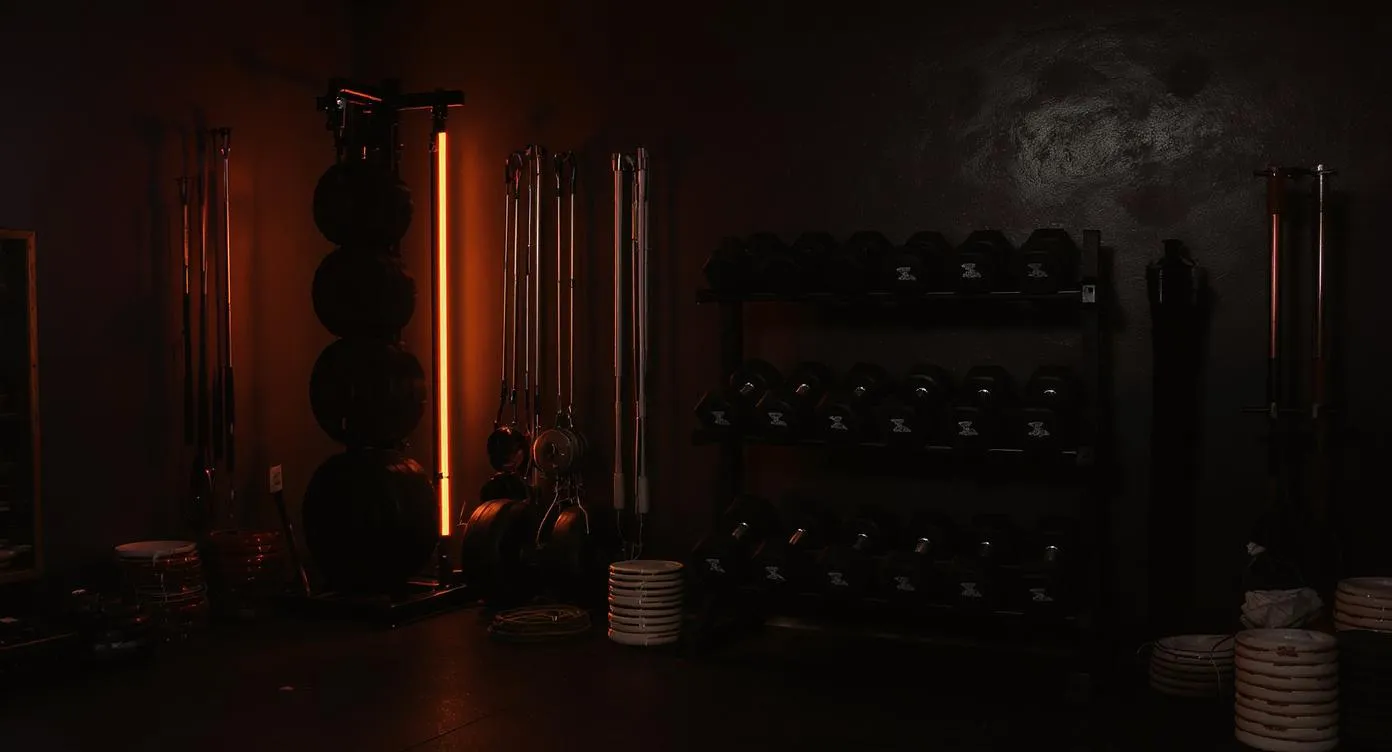
Fab Glass and Mirror Gym Wall Mirror Review: Worth the Money?
Hands-on review of the Fab Glass and Mirror Gym Wall Mirror. Is $89.99 worth it for your home gym?
I have been training in garage gyms for over 12 years. For at least 10 of those years, I trained without a single mirror on the wall. I told myself I did not need one, that I could feel proper form. Then I finally mounted a set of mirrors and realized within one session that my squat had been drifting forward for months. My hip shift on deadlifts was worse than I thought. The mirror did not lie.
The Fab Glass and Mirror Gym Wall Mirror is one of the most popular gym mirrors on Amazon, and at $89.99 per panel, it sits in a price range that makes outfitting an entire wall realistic for most home gym owners. I bought three of these panels, mounted them side by side in my garage gym, and have been training in front of them for over 60 days. Here is everything you need to know before buying.
At a Glance
Quick Specs · Fab Glass and Mirror Large Gym Mirror for Home Gym 48x32 - Full Length HD Tempered Glass Wall Panel - Professional Workout Display with Safety Backing - 1/4 Inch Commercial Grade
What We Love
- 6mm tempered glass gives a true, distortion-free reflection — critical for accurate form checks
- Polished edges make handling during installation much safer than raw-cut glass
- 48x24-inch panels are the ideal size to tile side by side for full wall coverage
- 4.4+ star rating backed by thousands of verified Amazon reviews
- At $89.99 per panel, three mirrors cost less than a single commercial gym mirror
- Reflection quality is noticeably sharper than acrylic alternatives at the same price
What Could Be Better
- Zero mounting hardware included — you need J-clips, anchors, and a level separately
- Each panel weighs roughly 20 lbs, so solo installation is risky and not recommended
- Tempered glass is safer than standard glass but not truly shatterproof like acrylic
- No anti-fog coating, which matters if your garage gets humid in summer
- Packaging could be better — one of my three panels arrived with a chipped corner
Why Mirrors Matter More Than You Think
If you train alone — and most of us in the garage gym world do — a mirror is the cheapest coaching tool you will ever buy. A phone propped against a wall for video review works, but there is a 5 to 10 second delay between your rep and your review. A mirror gives you instantaneous feedback, rep by rep, set by set.
Here are the specific things I use my gym mirrors for every single training session:
Squat depth and knee tracking. I position myself at roughly a 45-degree angle to the mirror so I can see my side profile. This lets me confirm I am hitting parallel and catch any knee cave before it becomes a habit. When I was running Smolov Jr. last winter at 315 lbs for sets of 6, this real-time feedback was the only reason I caught a slight forward lean that was loading my lower back.
Deadlift back position. Rounding on heavy pulls is invisible to the lifter. You feel strong, the bar moves, and you have no idea your lumbar is flexed until your back tells you the next morning. I stand sideways to the mirror and can see exactly when my back starts to round. For conventional pulls over 405, this has been invaluable.
Overhead press bar path. The strict press should travel in a nearly straight vertical line. Without a mirror, most lifters push the bar too far forward off the shoulders. Watching the bar path in real time corrected a 2-inch forward drift I did not know I had.
Bench press setup. I use the mirror above and behind the bench to verify my arch, shoulder blade retraction, and grip width before unracking. This matters more than people realize — a setup that is even half an inch off can cost you 10 to 15 lbs on your max.
If you are putting together a full home gym setup, mirrors belong on your essentials list alongside flooring, lighting, and ventilation.
Build Quality and Glass Thickness
The single most important spec on any gym mirror is glass thickness. Thin mirrors — the $10 door mirrors from hardware stores — are typically 2 to 3mm thick. They flex, they warp, and they give you a fun-house reflection that makes form checks unreliable. Worse, standard thin glass shatters into large, razor-sharp shards. In a training environment where barbells, dumbbells, and plates are moving around, that is a genuine safety hazard.
The Fab Glass and Mirror panel uses 6mm tempered glass. That is roughly 2.5 times thicker than a cheap door mirror and significantly more rigid. Tempered glass goes through a thermal treatment process that makes it about 4 times stronger than standard annealed glass of the same thickness. When tempered glass does break — and it takes a serious direct impact — it crumbles into small, relatively blunt granules rather than jagged shards. This is the same type of glass used in car side windows and commercial gym installations.
The polished edges are a detail worth mentioning. Cheaper mirrors often have raw-cut edges that can slice your hands during installation. The Fab Glass panels have smooth, finished edges that you can handle safely with bare hands, though I still recommend wearing work gloves during mounting just as a precaution.
As for the reflection quality itself, it is excellent. The image is flat, clear, and undistorted across the entire 48x24-inch surface. I placed a straight edge against each of my three panels and confirmed zero warping. This matters — if your mirror bows even slightly, it will make your bar path look crooked when it is straight, or straight when it is crooked. Either way, it defeats the purpose of having a mirror.
Installation: A Complete Walkthrough
This is where the Fab Glass mirror loses a point in my rating. The mirror ships with absolutely no mounting hardware. You get the glass panel in a box, and that is it. For $90, including even a basic set of clips would have been a nice touch. Here is exactly what you need and how to install these properly.
Hardware You Need
- J-channel mirror clips (bottom) or Z-clips — about $8 to $12 for a set of 4 on Amazon
- Toggle bolts for drywall (3/16-inch or 1/4-inch) or concrete sleeve anchors for block walls
- A 4-foot level — do not eyeball this
- A stud finder if mounting to drywall
- Mirror mastic adhesive (optional but recommended as a secondary hold)
- A helper — these panels are 20 lbs each and awkward to hold flush while fastening
Step-by-Step Process
1. Plan your layout. Decide how many panels you need. Two panels give you 48 inches (4 feet) of width, which is enough to see your full body during most lifts. Three panels give you 72 inches (6 feet), which is ideal for a full lifting station. I went with three.
2. Determine mounting height. The bottom edge of the mirror should be 12 to 16 inches off the floor. This lets you see your feet during squats and deadlifts while keeping the top of the mirror at roughly 64 inches — enough to see your overhead press at the top of the movement. If you are over 6 feet tall, raise the bottom edge to 14 to 18 inches.
3. Mark your reference line. Use a 4-foot level to draw a perfectly horizontal line on the wall where the bottom edge of the mirrors will sit. This is the most important step. If this line is off by even a quarter inch, the seam between panels will be visibly crooked and it will drive you insane.
4. Install bottom J-clips. Space them 16 inches apart along your reference line. Into drywall, toggle bolts are the only reliable option — standard drywall anchors will eventually pull out under 20 lbs of sustained load. If you can hit a stud, use a #10 wood screw instead. Into concrete, use 1/4-inch sleeve anchors.
5. Set the mirror. With your helper holding the panel, lower it into the bottom J-clips. Apply 4 to 6 dime-sized dabs of mirror mastic to the back of the panel before placing it — this provides a secondary bond in case clips ever loosen. Use only mirror-safe mastic (regular construction adhesive can damage the mirror backing).
6. Secure top clips. Install the top J-clips or Z-clips to lock the mirror in place. Do not overtighten — you want firm contact, not pressure that could stress the glass.
7. Repeat for additional panels. Leave a 1/16-inch gap between panels to allow for thermal expansion. Do not butt them edge to edge or they could chip in temperature swings — something that matters in an unconditioned garage.
Total installation time for my three panels was about 2 hours, including measuring, leveling, and mounting. Budget an extra $15 to $25 in hardware depending on your wall type.
60-Day Training Report
After two full months of daily training in front of these mirrors, here are my specific observations:
Reflection clarity has not degraded. No hazing, no moisture damage behind the glass, no delamination of the reflective coating. The image is as sharp as day one.
Temperature swings have not been an issue. My garage ranges from about 35 degrees Fahrenheit in January to 95 degrees in July. The mirrors have handled this range without cracking or popping off the wall. The 1/16-inch expansion gap between panels has done its job.
No fogging problems in moderate humidity. However, when I run a space heater in winter and the garage door is cold, I do get condensation on the glass for 10 to 15 minutes. This clears on its own. If your garage has serious humidity issues, consider the ventilation guide for airflow solutions.
The size is perfect for a lifting station. My three panels cover the wall behind my squat rack. I can see my full body from any angle within my 8x8-foot lifting platform. Two panels would have been sufficient for a single rack setup.
One cosmetic issue. As mentioned, one of my three panels arrived with a small chip on the lower right corner, roughly 3mm. It does not affect the reflection and is hidden behind the bottom J-clip, but it was clearly shipping damage. I would recommend inspecting each panel immediately on arrival and contacting the seller if there is any damage — Amazon's return window is generous for this.
Fab Glass vs the Competition
Fab Glass vs Glacier Bay Door Mirrors ($10 to $15)
The hardware store door mirror is the most common "gym mirror" hack on Reddit and YouTube. I understand the appeal — you can mirror an entire wall for under $60. But I used door mirrors for a year before switching and the difference is not subtle. Door mirrors are 2 to 3mm thick, and every single one I tested had visible warping. The reflection ripples when you move, making it nearly useless for bar path tracking. They also shatter into large, dangerous shards. In a gym where you are moving heavy weight, this is a genuine safety concern. The Fab Glass tempered panels cost more but are worth every dollar for accuracy and safety.
Fab Glass vs Acrylic Gym Mirrors ($60 to $100)
Acrylic (plexiglass) mirrors are the safest option. They will not shatter under any circumstances, and they weigh about 50% less than glass. The trade-off is optical quality. Every acrylic mirror I have tested shows a slight waviness in the reflection, particularly at the edges. For casual training, this is fine. For serious technique work where you need to see a 1-inch difference in bar path, glass is noticeably sharper. If you have kids training in the space or you throw medicine balls near the wall, go acrylic. For a standard barbell training setup, the Fab Glass gives you better image quality. Check our full best gym mirrors roundup for a side-by-side comparison.
Fab Glass vs Commercial Gym Mirrors ($300 to $500+)
Commercial gym mirrors are typically 1/4-inch (6mm) glass with copper-free backing for humidity resistance, and they come with professional mounting systems. The glass quality on the Fab Glass is genuinely comparable — both use 6mm tempered glass with polished edges. The main difference is the backing material and the included mounting hardware. For a home gym where you control the environment, the Fab Glass delivers 90% of the commercial mirror experience at 20% of the price.
Optimal Mirror Placement for Different Training Styles
Where you mount your mirrors depends on what you train.
Powerlifting (squat, bench, deadlift). Mount the mirrors on the wall to the side of your rack, not directly in front. You want to see your side profile for squat depth and deadlift back position. Looking directly into a mirror during heavy squats can actually throw off your balance by shifting your gaze forward instead of slightly down. Side placement solves this.
Olympic lifting (snatch, clean and jerk). Mirrors should be to the side only. Looking in a front-facing mirror during a snatch pull is disorienting at speed and can cause you to lose the bar forward. Use the mirror between sets for position checks, not during the lift.
Bodybuilding and hypertrophy. Front-facing mirrors are ideal. You want to see the target muscle contracting during curls, lateral raises, and pressing movements. The mind-muscle connection is a real phenomenon, and visual feedback amplifies it. Mount mirrors both in front and to the side if your budget allows.
General fitness and home workouts. A single panel in front of your main training area is sufficient. Position it so you can see your full body during standing exercises.
Maintenance and Long-Term Care
Gym mirrors get dirty fast — chalk dust, sweat spray, and general garage debris will coat them within a week. Here is what works:
- Clean weekly with a microfiber cloth and a 50/50 vinegar-water solution. Commercial glass cleaners work too, but avoid anything with ammonia if your mirrors have plastic edge protectors.
- Never use paper towels. They leave lint and micro-scratches on glass over time.
- Check mounting hardware quarterly. Toggle bolts in drywall can loosen over months, especially in a garage where heavy drops create vibration. Tighten or replace as needed.
- If a panel chips or cracks, replace it immediately. Tempered glass is strong, but once the surface is compromised, the entire panel can spontaneously shatter. This is rare but not impossible.
For more on keeping your equipment in top shape, see our guide to cleaning and maintaining gym equipment.
Who Should Buy This
Buy the Fab Glass and Mirror Gym Wall Mirror if:
- You train barbell movements at home and need accurate form feedback
- You want the best optical clarity available under $100 per panel
- You are outfitting a wall and need 2 to 4 matching panels without spending $500+
- Your gym is in a controlled environment (garage, basement, spare room) without significant impact risk
Skip it if:
- You have young children who train in the space — go acrylic for shatter resistance
- You throw medicine balls, slam balls, or other implements near the mirror wall
- You need a single small mirror for a compact setup — a $40 acrylic panel is more practical
- Your garage has extreme humidity without ventilation, which can degrade glass mirror backing over time
Final Verdict
At $89.99 per panel, the Fab Glass and Mirror delivers genuine tempered glass quality at a price that makes full-wall coverage affordable. The missing mounting hardware is annoying but not a dealbreaker — budget an extra $15 for clips and anchors. For anyone running a barbell-focused home gym, this is the sweet spot of optical clarity, safety, and value. Three panels will cost you under $300 and give you the same quality reflection you get at a commercial gym. Recommended for serious lifters who train alone and need reliable visual feedback.
Price and availability may change

Fab Glass and Mirror
Fab Glass and Mirror Large Gym Mirror for Home Gym 48x32 - Full Length HD Tempered Glass Wall Panel - Professional Workout Display with Safety Backing - 1/4 Inch Commercial Grade
4.4+ star rating on Amazon
6mm tempered glass — shatter-resistant
Price and availability may change
Related Content
- Best Gym Mirrors for Home and Garage Gyms
- 15 Home Gym Accessories That Actually Matter
- How to Build a Home Gym on Any Budget
- Garage Gym Ventilation Guide
Frequently Asked Questions
How many Fab Glass mirrors do you need for a full gym wall?
Can you mount these mirrors on concrete or cinder block walls?
Is 6mm tempered glass safe for a home gym?
Do cheap hardware store mirrors work for a home gym?
What mounting hardware do you need for the Fab Glass mirror?
How do you prevent gym mirrors from fogging up?
How far from the floor should you mount a gym mirror?
Will temperature changes in a garage crack these mirrors?
Additional Resources
Marcus Reid
Powerlifter and mechanical engineer who has been building and breaking home gym equipment for 15 years.
Read full bioMore in Reviews
Yes4All Kettlebell Set Review: Best Budget Kettlebells on Amazon?
Our review of the Yes4All Cast Iron Kettlebell Set. Are these the best budget kettlebells for home gym training on Amazon?
TRX Bandit Resistance Band Handles Review: Worth the Money?
Hands-on review of the TRX Bandit Resistance Band Handles. Is $49.95 worth it for your home gym?
POWER GUIDANCE Battle Rope Review: CrossFit Standard for $40
Hands-on review of the POWER GUIDANCE 30 ft Battle Rope. Best budget battle rope on Amazon for HIIT, CrossFit, and brutal conditioning.