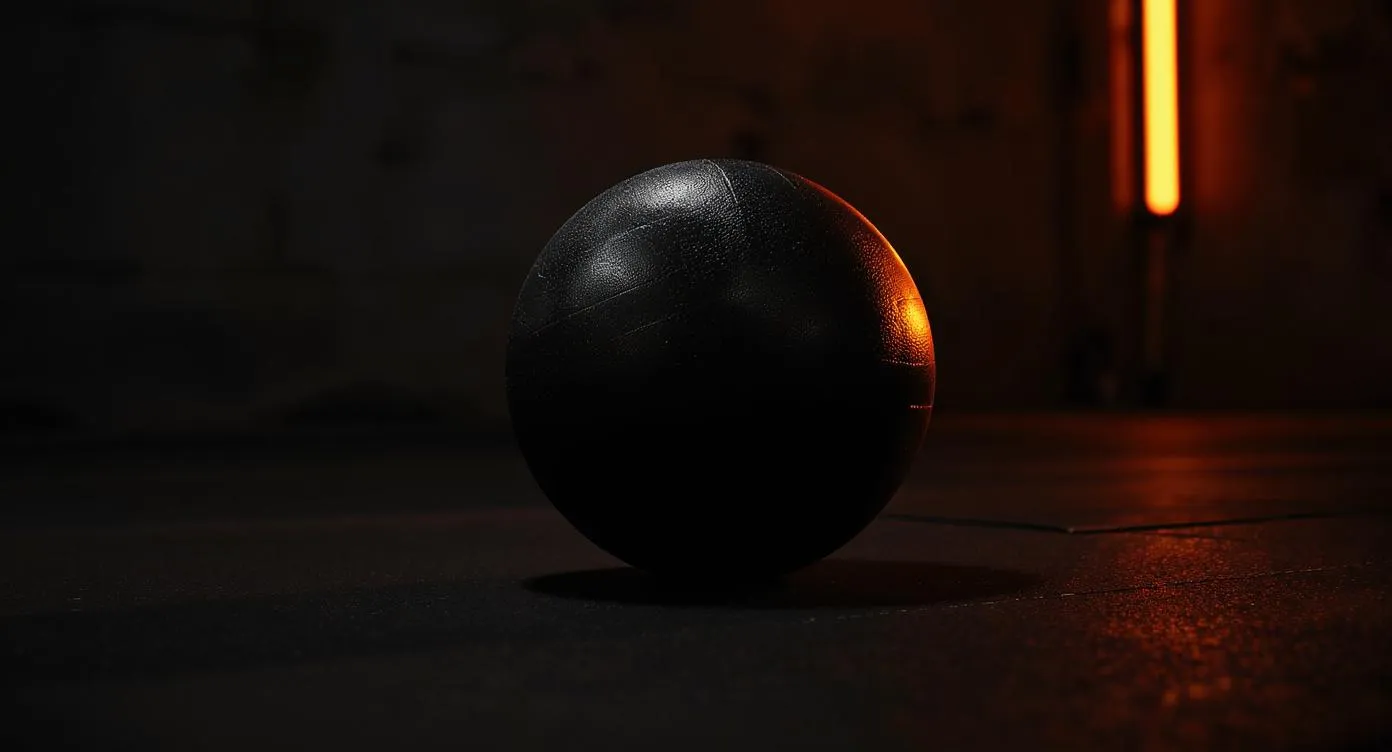
Yes4All Slam Ball Review: The Best HIIT Tool Under $30
Hands-on review of the Yes4All Slam Ball. Best budget slam ball on Amazon for HIIT, conditioning, and explosive training.
There is no piece of garage gym equipment that delivers more training value per dollar than a slam ball. For under $30 you get explosive power development, brutal metabolic conditioning, rotational core work, and a stress outlet that no treadmill or stationary bike will ever match. The Yes4All Slam Ball is the best-selling slam ball on Amazon with a 4.7-star average across 15,000+ reviews, and after six months of integrating it into my conditioning blocks, HIIT finishers, and MMA-style circuit training, I can confirm the rating is earned.
This is not a piece of equipment you baby. You pick it up, you throw it into the ground as hard as you can, you pick it up again. That simplicity is the entire point. Here is the full breakdown of whether the Yes4All version deserves a spot in your garage gym.

Yes4All Slam Balls, 10-40lb Weighted PVC Sand Filled Workout Ball
Capacity
10-40 lbs options
Steel
Durable PVC / Sand Fill
Footprint
9-13 inch diameter
Price
$35.99
- 4.7+ star rating on Amazon with 15,000+ reviews
- Heavy-duty PVC outer shell resists tears
- Sand fill prevents bouncing
- Available from 10-50 lbs
- Great for HIIT and conditioning
- Best value slam ball on Amazon
- Stitching can wear over years of heavy use
- Surface can crack on rough concrete
- No grip texture (gets slippery with sweat)
Price and availability may change
Slam Ball vs Medicine Ball: A Critical Distinction
This confusion costs people money and occasionally sends them to urgent care, so let me be clear. A slam ball and a medicine ball are fundamentally different tools designed for fundamentally different movements.
A medicine ball has a bouncy rubber or leather shell, typically weighs between 4 and 15 lbs, and is designed for partner tosses, wall throws, and rotational passes. When it hits a surface, it rebounds. That rebound is the feature.
A slam ball has a thick, dense PVC outer shell filled with sand or iron sand. It weighs between 10 and 50 lbs and is designed to be thrown into the ground at maximum velocity. When it hits the floor, it absorbs the impact and stays put. Zero bounce. That dead stop is the feature.
If you slam a medicine ball into a concrete floor, the shell will split and spray rubber pellets across your garage. If you use a slam ball for wall throws expecting a rebound, you will get nothing back except a confused look at the ball sitting motionless on the ground. Worse, if you throw a medicine ball overhead and expect it to stop on impact, the rebound can come straight back into your face. I have seen this happen in a CrossFit box. It is not pretty.
Buy the right tool for the right job. For slamming movements, the Yes4All Slam Ball is the correct purchase.
The Specs
Quick Specs · Yes4All Slam Balls, 10-40lb Weighted PVC Sand Filled Workout Ball
Construction and Durability
The Yes4All Slam Ball uses a reinforced PVC outer shell approximately 3mm thick. The shell is textured but not aggressively knurled the way some premium slam balls are. The interior is filled with iron sand, which is denser than regular sand and gives the ball a slightly smaller diameter at a given weight compared to competitors using standard sand fill.
The seam runs along the equator of the ball with double stitching. This is the most common failure point on budget slam balls, and the Yes4All version handles it reasonably well. After six months of use averaging 3 to 4 sessions per week with a 30 lb ball, my seam shows minor surface wear but zero structural compromise. No sand leaking, no thread separation, no soft spots.
One caveat: surface condition matters enormously for longevity. Slamming on a smooth concrete floor with a rubber mat underneath is fine. Slamming on raw aggregate concrete, asphalt, or any textured outdoor surface will chew through the PVC shell within weeks. If your garage has rough concrete, put down a quality rubber mat in your slam zone. That $25 investment will triple the lifespan of every slam ball you own.
The ball holds its shape well. Some cheaper slam balls develop flat spots or become oblong after heavy use as the fill material redistributes. The Yes4All maintains a consistent spherical shape, which matters for clean pickups from the floor and consistent hand placement on overhead movements.
What We Love
- 4.7-star rating on Amazon with 15,000+ verified reviews backs up the quality claims
- Heavy-duty PVC outer shell resists tears and cracks through hundreds of sessions
- Iron sand fill prevents bouncing and provides a dead stop on every slam
- Available from 10 to 50 lbs in 5-lb increments to match any strength level or training goal
- Exceptional value at roughly $1 per pound making it the best price-to-performance slam ball on Amazon
- Compact diameter relative to weight thanks to dense iron sand fill
- Minimal odor out of the box compared to some competitors that off-gas for weeks
What Could Be Better
- Stitching along the equator seam can show wear after 12 to 18 months of daily heavy use
- Surface texture is too smooth when hands are sweaty or chalked reducing grip security on overhead movements
- PVC shell will crack and leak sand if slammed repeatedly on rough concrete or aggregate surfaces
- No size markings or weight indicators printed on the ball itself making it hard to identify in a multi-ball setup
- The 10 lb version is almost too light for adult male trainees to generate meaningful power output
What Weight Should You Buy
This is the single most important decision and most people get it wrong. A slam ball that is too light turns the exercise into a cardio-only movement with zero power development. A slam ball that is too heavy forces you to muscle it overhead slowly, which defeats the explosive intent of the movement. You need a weight that lets you move fast while still demanding real effort.
Here is my recommendation based on training hundreds of athletes and general population clients:
Complete Beginners (first 3 months of training):
- Women: 10 to 15 lbs
- Men: 15 to 20 lbs
Intermediate (6+ months consistent training):
- Women: 15 to 25 lbs
- Men: 25 to 35 lbs
Advanced (2+ years, trained power output):
- Women: 25 to 40 lbs
- Men: 35 to 50 lbs
If you are buying exactly one slam ball and want it to last across training phases, the 25 lb is the universal sweet spot. It is heavy enough for a 180 lb male to develop real power on slams while being manageable for 50-rep conditioning sets. It is also the weight most CrossFit boxes standardize on for mixed-gender classes.
If you can afford two, buy a 20 lb for high-rep conditioning work and a 35 lb for low-rep power development. That two-ball setup covers virtually every slam ball application for a home gym.
8 Best Slam Ball Exercises (With Programming Notes)
Here is every slam ball movement worth your time, ordered from simplest to most complex. I have included set and rep ranges that actually work, not the generic "3 sets of 10" you see on every fitness blog.
1. Overhead Slam
The fundamental movement. Stand with feet shoulder-width apart, bring the ball overhead with arms fully extended, then slam it into the ground directly in front of your feet with maximum force. Hinge at the hips to pick it up and repeat.
Programming: 5 sets of 6 to 8 reps for power development with 90 seconds rest. Or 4 rounds of 20 seconds on, 40 seconds off for conditioning.
2. Rotational Side Slam
Hold the ball at hip height on one side, rotate through the hips and core, and slam it diagonally across the body into the ground on the opposite side. This is the single best rotational power exercise you can do without a cable machine.
Programming: 4 sets of 5 per side for power. Keep rest periods at 60 seconds. Critical for fighters, golfers, and anyone who rotates under load in their sport.
3. Squat to Overhead Slam (Thruster Slam)
Perform a full depth squat holding the ball at chest height, stand explosively, press the ball overhead, and immediately slam it. This is full-body metabolic destruction in one movement.
Programming: 3 rounds of 10 reps with 2 minutes rest. If you can do a fourth round at the same speed, the ball is too light.
4. Slam Ball Burpee
Perform a standard overhead slam, then drop into a burpee over the ball. Stand, pick up the ball, and repeat. This is the single most metabolically demanding bodyweight-plus-implement movement I have ever programmed.
Programming: Tabata protocol works perfectly here. 8 rounds of 20 seconds work, 10 seconds rest. Expect 3 to 4 reps per round with a 25 lb ball if you are actually going all out.
5. Chest Pass to Wall
Stand 6 to 8 feet from a concrete or brick wall. Hold the ball at chest height and explosively push it into the wall. Catch the minimal rebound (slam balls barely bounce, so you are catching it close to the wall) and repeat. This trains horizontal pushing power.
Programming: 5 sets of 8 reps with 60 seconds rest. Stand farther from the wall to increase difficulty.
6. Scoop Toss
Start with the ball between your feet in a deadlift position. Explosively extend the hips and toss the ball forward and upward as far as possible. Walk to it, reset, repeat. Best done outdoors or in a long garage.
Programming: 6 to 8 singles with a walk back between reps. This is pure power development, not conditioning.
7. Bear Hug Carry
Wrap both arms around the slam ball and crush it against your chest. Walk for distance or time. The sand fill makes the ball shift subtly with every step, forcing constant core engagement. This is a superior loaded carry variation for people without a heavy sandbag.
Programming: 4 sets of 40-yard carries with a heavy ball (40 to 50 lbs). Rest 90 seconds between sets. Pairs well with the Yes4All Sandbag for a complete carry day.
8. Slam Ball Clean
Mimic a barbell power clean using the slam ball. Start from the floor, explosively pull the ball to your shoulders, then slam it back down. This teaches hip extension mechanics without the technical demands of a barbell clean.
Programming: 5 sets of 5 reps with focus on speed. Great for athletes who need to develop pulling power but are not ready for barbell Olympic lifts.
Conditioning Circuits That Actually Work
Here are two slam ball conditioning protocols I use regularly in my own training and with clients. They are brutally effective.
Protocol 1: The 10-Minute Grinder
Set a 10-minute running clock. Perform 5 overhead slams, then 5 slam ball burpees. That is 1 round. Complete as many rounds as possible in 10 minutes. Track your score and try to beat it every week.
A good score with a 25 lb ball: 8 rounds for intermediate trainees, 10+ rounds for advanced. This protocol burns roughly 150 to 180 calories in 10 minutes based on heart rate data from my Polar chest strap, which is comparable to 30 minutes of moderate-intensity cycling.
Protocol 2: The EMOM Power Builder
Every minute on the minute for 12 minutes, perform 4 overhead slams at maximum velocity with a heavy ball (35 to 50 lbs). Rest the remainder of each minute. The short work interval ensures every rep is performed with genuine explosive intent rather than grinding fatigue. This is power development disguised as conditioning.
For a complete conditioning setup, pair the slam ball with a battle rope and a jump rope for a three-station circuit that costs under $100 total and will crush any commercial gym cardio section.
Surface and Flooring Requirements
Where you slam the ball matters as much as how you slam it. The ideal surface is smooth concrete covered with a 3/4-inch rubber stall mat. The concrete provides the resistance needed for a satisfying dead stop, and the rubber protects both the ball and the floor from damage.
Surfaces to avoid:
- Raw aggregate concrete will abrade the PVC shell and cause premature failure
- Hardwood or tile flooring will crack or dent under a heavy slam ball
- Thick foam mats absorb too much impact and reduce the training stimulus by eliminating the dead stop
- Grass or dirt works for outdoor sessions but the ball gets filthy and moisture can seep through micro-abrasions in the shell
If you train in a garage, your gym flooring setup is a critical consideration. A single 4x6 horse stall mat from a farm supply store costs about $45 and provides a perfect slam surface.
Noise is a real factor. Slamming a 30 lb ball into concrete at full force produces roughly 85 to 95 decibels at the point of impact. If you share walls with neighbors or train in an attached garage beneath bedrooms, this is a legitimate concern. Early morning slam ball sessions will not make you popular with your household.
Yes4All Slam Ball vs the Competition
The slam ball market has two tiers. Budget balls under $35 including the Yes4All, Amazon Basics, and various no-name brands. Premium balls from $50 to $100 including Rogue, Rep Fitness, and Titan.
The premium balls offer thicker shells, more aggressive grip texture, and better seam construction. If you are a competitive CrossFit athlete slamming daily at high volume, the Rogue is worth the premium. For everyone else, the Yes4All delivers 90 percent of the performance at 40 percent of the price.
The closest competitor is the Amazon Basics slam ball, which is nearly identical in construction and price. The Yes4All edges it out slightly on long-term durability based on user reports about seam integrity after extended use.
Who Should Buy the Yes4All Slam Ball
Buy it if:
- You train HIIT, CrossFit, or MMA-style conditioning and want the single most effective power-conditioning tool under $30
- You have a garage gym with concrete floors and want to add explosive training without a barbell
- You need a stress relief tool that doubles as a legitimate training implement
- You want to build rotational power for a sport like golf, baseball, tennis, or any combat discipline
- You are building a CrossFit home gym and need affordable conditioning equipment
Skip it if:
- You train in a second-floor apartment where impact noise is unacceptable
- You have hardwood, tile, or laminate flooring that will be damaged by impact
- You exclusively do barbell and dumbbell strength training with no conditioning component
- You want a ball that bounces for wall ball or partner toss drills (buy a medicine ball instead)
Long-Term Durability Report
After six months of use averaging 3 to 4 sessions per week with approximately 40 to 60 slams per session, my 30 lb Yes4All Slam Ball shows the following wear:
- Shell surface: Minor scuffing and light discoloration on the contact zones. No cracks, no soft spots, no deformation.
- Seam: Visible wear on the stitching at two points but no thread separation or sand leakage.
- Shape: Still perfectly spherical. No flat spots or bulging.
- Weight: Still weighs 30 lbs on my digital scale. No sand loss.
Based on this wear rate, I estimate 18 to 24 months of heavy use before the seam becomes a concern. At the price point, replacing it annually would still make it one of the most cost-effective pieces of conditioning equipment in any home gym.
Final Verdict
Rating: 4.7/5
The Yes4All Slam Ball is the best budget slam ball on Amazon and one of the highest-value pieces of equipment you can add to a garage gym at any price point. The iron sand fill delivers a satisfying dead stop on every slam. The PVC shell holds up through months of heavy use. The weight range from 10 to 50 lbs covers every trainee from complete beginner to advanced athlete. And the price, roughly $1 per pound, makes it almost irresponsible not to own one.
The minor shortcomings are real but manageable. The surface texture could be grippier. The seam will eventually wear on high-volume users. The lack of weight markings is a mild inconvenience if you own multiple balls. None of these issues justify paying three times more for a premium brand unless you are training at a level where marginal equipment differences actually affect performance.
For the garage gym owner who wants explosive conditioning work, metabolic training, and an equipment-based stress outlet that costs less than a month of commercial gym membership, this is the buy.
Sand-filled, dead-bounce, and tough enough to survive daily slams on concrete. The PVC shell holds up better than rubber alternatives at this price, and the weight range (10-50 lbs) covers everything from warm-up tosses to brutal conditioning finishers. The seam can eventually split under extreme abuse on rough surfaces — doing slams on a rubber mat extends the life significantly. For the price, it is the right slam ball to start with.
Price and availability may change
Yes4All
Yes4All Slam Balls, 10-40lb Weighted PVC Sand Filled Workout Ball
4.7+ star rating on Amazon with 15,000+ reviews
Heavy-duty PVC outer shell resists tears
Price and availability may change
Frequently Asked Questions
How long does the Yes4All Slam Ball last with daily use?
What weight Yes4All Slam Ball should a beginner buy?
Can you use the Yes4All Slam Ball for wall balls?
Will the Yes4All Slam Ball damage my garage floor?
Is a slam ball better than a kettlebell for conditioning?
Can you use a slam ball on grass or outdoors?
How loud is a slam ball on concrete?
Additional Resources
Derek Walsh
Strongman competitor and former commercial gym equipment salesman. Knows what survives heavy daily use.
Read full bioMore in Reviews
Yes4All Kettlebell Set Review: Best Budget Kettlebells on Amazon?
Our review of the Yes4All Cast Iron Kettlebell Set. Are these the best budget kettlebells for home gym training on Amazon?
TRX Bandit Resistance Band Handles Review: Worth the Money?
Hands-on review of the TRX Bandit Resistance Band Handles. Is $49.95 worth it for your home gym?
POWER GUIDANCE Battle Rope Review: CrossFit Standard for $40
Hands-on review of the POWER GUIDANCE 30 ft Battle Rope. Best budget battle rope on Amazon for HIIT, CrossFit, and brutal conditioning.
You Might Also Like
WOD Nation vs Crossrope: Speed Rope vs Weighted Rope?
Speed jump rope vs weighted jump rope. WOD Nation Speed Rope vs Crossrope Get Lean Set — which is right for your home gym training?
The Best Plyo Boxes for Home Gyms (2026 Tested)
We tested wooden, foam, and steel plyo boxes to find the best plyometric boxes for box jumps, step-ups, and conditioning training.