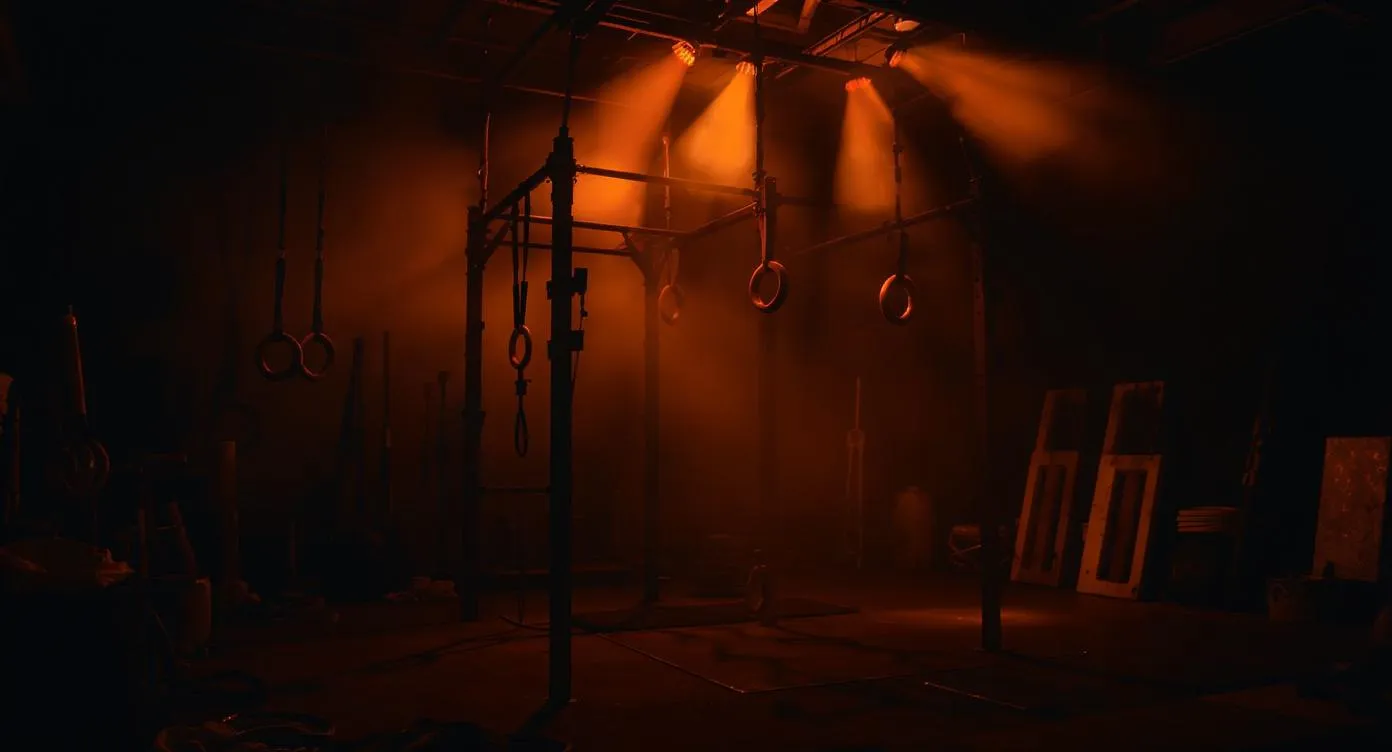
Complete Calisthenics Home Gym Build Under $500
Build a complete bodyweight training station for under $500. Power tower, gymnastic rings, parallettes, resistance bands, and everything you need for calisthenics at home.
Barbells, plates, and power racks dominate the home gym conversation, but calisthenics athletes have been building impressive physiques with nothing more than gravity and a few well-chosen tools since the ancient Greeks trained for the Olympics. The modern calisthenics movement, driven by athletes like Chris Heria, FitnessFAQs, and Sven Kohl, has proven that bodyweight training produces real strength, genuine muscle mass, and movement skills that barbell-only lifters simply cannot replicate.
The best part? A complete calisthenics home gym costs under $500, fits in roughly 6 x 8 feet of floor space, and requires zero monthly fees. No gym commute. No waiting for equipment. No excuses.
This build guide walks through every piece of equipment you need, the exact order to buy it, a progressive training program from beginner to advanced, space requirements, maintenance considerations, and upgrade paths for when you outgrow the basics. Whether you are training in a garage, a spare bedroom, or even a large balcony, this setup covers every fundamental calisthenics movement pattern.
Who This Build Is For
This calisthenics gym build is ideal for:
- Beginners who want to build a foundation of relative strength before investing in barbells
- Intermediate athletes working toward skills like muscle-ups, front levers, and planche progressions
- Minimalists who value simplicity and low equipment footprint
- Budget-conscious trainers who want a complete gym under $500
- Apartment and small-space dwellers without room for a power rack and plate collection
If you are comparing this to a barbell-based setup, check our home gym under $500 build to see how the equipment lists and training outcomes differ. For a hybrid approach that combines calisthenics with free weights, our CrossFit home gym build covers that middle ground.
Space Requirements and Setup
Before buying a single piece of equipment, measure your training space. Here is what you need at minimum:
- Floor footprint: 6 x 8 feet (48 square feet) for the power tower plus working area
- Ceiling height: 7.5 feet minimum for pull-ups (8+ feet preferred for overhead movements)
- Flooring: Hard, flat surface. A single exercise mat handles floor work. If you are training on concrete, consider interlocking foam tiles underneath the power tower for stability and floor protection
- Wall clearance: 12 inches behind the power tower for rocking during pull-ups
- Ring hanging point: 8+ foot ceiling height if hanging rings indoors, or access to an outdoor pull-up bar or sturdy tree branch
Garage spaces work exceptionally well because ceiling joists provide natural anchor points for gymnastic rings. If you are setting up in a spare bedroom, verify that your floor can support the power tower plus your bodyweight during dynamic movements like muscle-up kipping. Standard residential floors handle this without issue.
The Complete Calisthenics Equipment Build ($489)
The equipment below is listed in priority order. If your budget is tight, buy items 1 through 4 first (total: $290). Those four pieces cover every fundamental movement pattern. Items 5 through 8 add progressive overload capacity and recovery tools that become essential as you advance.
1. Sportsroyals Power Tower Dip Station — $150

Sportsroyals Power Tower Pull Up Bar Station, 450LBS Stable Pull Up Dip Station for Home Gym Strength Training Equipment | FED Fitness
Capacity
450 lbs
Steel
Heavy-Duty Steel / Foam Pads
Footprint
40" L x 35" W x 87" H
Price
$169.99
- 4.5+ star rating on Amazon with 5,000+ reviews
- 450 lb weight capacity
- Pull-ups, dips, leg raises, push-ups in one station
- Adjustable height for different users
- Padded arm and back rests for comfort
- Best budget power tower on Amazon
- Large footprint requires dedicated space
- Can wobble during kipping pull-ups
- Assembly takes 1-2 hours
Price and availability may change
The power tower is the centerpiece of any calisthenics gym. It consolidates four essential stations into a single freestanding unit: a pull-up bar for vertical pulling, dip handles for vertical pressing, a vertical knee raise station for core work, and push-up handles at the base for horizontal pressing.
The Sportsroyals Power Tower stands out in the sub-$200 category for several reasons. Its 450 lb weight capacity means you can safely progress to weighted calisthenics with a dip belt or weight vest without worrying about structural failure. The frame uses 14-gauge steel tubing, which is thicker than most competing models like the Stamina Power Tower (which tops out at 250 lbs). The backrest pad on the VKR station has 6-position height adjustment, accommodating users from 5'2\u0022 to 6'4\u0022.
Key specs:
- Weight capacity: 450 lbs
- Footprint: 27\u0022 x 41\u0022 x 90\u0022 (W x D x H)
- Frame: 14-gauge steel with powder coat finish
- Pull-up bar: Multi-grip with wide, narrow, and neutral positions
- Assembly time: 45-60 minutes (two people recommended)
The multi-grip pull-up bar is particularly valuable for calisthenics. Wide grip targets lats, narrow grip shifts emphasis to biceps and mid-back, and neutral grip reduces shoulder stress for high-volume training. Read our Sportsroyals Power Tower review for the full breakdown.
Sportsroyals
Sportsroyals Power Tower Pull Up Bar Station, 450LBS Stable Pull Up Dip Station for Home Gym Strength Training Equipment | FED Fitness
4.5+ star rating on Amazon with 5,000+ reviews
450 lb weight capacity
Price and availability may change
- 450 lb capacity supports weighted calisthenics progressions
- Multi-grip pull-up bar covers wide, narrow, and neutral grip positions
- Compact 27 x 41 inch footprint fits small spaces
- Push-up handles at the base add a dedicated horizontal pressing station
- 6-position adjustable backrest fits a wide range of body heights
- Not suitable for kipping muscle-ups due to freestanding design
- Assembly requires two people and takes 45-60 minutes
- Height maxes out at 90 inches, which may limit tall users in low-ceiling rooms
2. Double Circle Wood Gymnastics Rings — $49.97

Double Circle Wood Gymnastics Rings with Quick Adjust Numbered Straps
Capacity
880 lbs
Steel
Wood / Nylon Webbing
Footprint
Multi-size wood rings with numbered straps
Price
$49.97
- 4.7+ star rating on Amazon with 8,000+ reviews
- 880 lb weight capacity handles any user
- Solid birch wood (not plastic)
- 15 ft adjustable nylon straps with metal buckles
- Easy on the hands compared to plastic rings
- Best budget gymnastic rings on Amazon
- No carry bag included
- Wood needs occasional sanding to prevent splinters
- Buckles can slip slightly under heavy load (re-adjust)
Price and availability may change
If the power tower is the foundation, gymnastic rings are the game-changer. Rings introduce instability to every movement, forcing your stabilizer muscles to work harder than they would on any fixed bar or handle. A ring dip recruits significantly more shoulder stabilizer and chest activation than a parallel bar dip because your hands must actively control lateral movement throughout the range of motion.
The Double Circle wood gymnastics rings ship with 15-foot adjustable nylon straps and heavy-duty cam buckles for quick height changes. Wood rings provide superior grip compared to plastic, especially as your hands sweat during longer sets. The 880 lb load rating is overkill for bodyweight training, but it means the hardware will never be a limiting factor.
Movements unlocked:
- Ring dips (significantly harder than bar dips)
- Ring push-ups (deeper range of motion than floor push-ups)
- Ring rows (adjustable difficulty by changing body angle)
- Ring muscle-ups (the gold standard calisthenics skill)
- Ring L-sits and support holds
- Front lever and back lever progressions
- Ring archer pull-ups and ring archer push-ups
- Skin the cat (excellent shoulder mobility drill)
Hanging options: Ceiling joists, exposed beams, outdoor pull-up bars, sturdy tree branches, or the pull-up bar on your power tower. When hanging from the power tower bar, keep in mind that the freestanding design limits kipping movements. For static ring work and controlled ring muscle-ups, the power tower bar works fine.
Double Circle
Double Circle Wood Gymnastics Rings with Quick Adjust Numbered Straps
4.7+ star rating on Amazon with 8,000+ reviews
880 lb weight capacity handles any user
Price and availability may change
3. Teclor Parallettes — $29.98

Teclor Push Up Bar, Parallettes Bars For L-sit & Dip, Heavy-Duty No Wobbling Parallel Bars Stand For Handstands, Full Planche, Calisthenics, 9.5in High Workout Stands for Home Fitness Training
Capacity
660 lbs (pair)
Steel
Heavy-Duty Steel / Foam Grip
Footprint
15.7" L x 7.5" W x 9.5" H each
Price
$35.99
- 4.6+ star rating on Amazon with 5,000+ reviews
- 660 lb weight capacity (pair)
- Heavy-duty steel construction
- Foam grips reduce hand fatigue
- Unlocks L-sits, planche progressions, handstand push-ups
- Best budget parallettes on Amazon
- Feet can slide on smooth concrete
- Low profile limits some variations
- Foam grips compress after 1-2 years
Price and availability may change
Parallettes are the most underpriced piece of calisthenics equipment on the market. For about $30, you unlock deeper push-up range of motion, proper L-sit training with wrist-friendly positioning, planche progression work, handstand push-up practice, and a dedicated surface for V-sits and tuck planches.
The wrist angle advantage alone justifies the purchase. Floor push-ups and L-sits force your wrists into full extension (90 degrees), which causes strain over high training volume. Parallettes keep your wrists in a neutral position, allowing you to train more frequently without wrist pain.
The Teclor parallettes use steel tubing with foam grip handles and rubber feet for floor protection. They sit about 6 inches off the ground, providing enough clearance for full-range L-sits and deep push-up variations.
Key progressions on parallettes:
- Tuck L-sit (beginner) to full L-sit (intermediate) to V-sit (advanced)
- Tuck planche (intermediate) to straddle planche (advanced) to full planche (elite)
- Deep push-ups to pseudo-planche push-ups to planche push-ups
- Frog stand to tuck handstand to handstand push-ups
Teclor
Teclor Push Up Bar, Parallettes Bars For L-sit & Dip, Heavy-Duty No Wobbling Parallel Bars Stand For Handstands, Full Planche, Calisthenics, 9.5in High Workout Stands for Home Fitness Training
4.6+ star rating on Amazon with 5,000+ reviews
660 lb weight capacity (pair)
Price and availability may change
4. Bodylastics Resistance Band Set — $60

Bodylastics PRO Series Resistance Band Set (6 Bands, 280 lbs)
Capacity
6 bands stackable to 280 lbs
Steel
Anti-Snap Natural Latex Tubing
Footprint
Handles, ankle straps, door anchor + carry bag
Price
$61.97
- 4.6 star rating on Amazon with 2,600+ reviews
- Patented anti-snap inner cord for safety
- 6 bands stackable up to 280 lbs total resistance
- Includes handles, ankle straps, and door anchor
- Lifetime replacement on bands
- Travel-friendly storage bag
- Resistance feels different than free weights
- Door anchor requires an inward-opening door
- Handles wear faster than the bands
Price and availability may change
Resistance bands serve a dual purpose in calisthenics that no other piece of equipment replicates. On the assistance side, they make pull-ups, dips, and muscle-ups accessible to beginners who cannot yet perform them unassisted. Loop a band over the pull-up bar, step into it, and the elastic support shaves 20-60 lbs off your bodyweight depending on band thickness.
On the resistance side, bands add progressive load to push-ups, squats, plank variations, and core rotational movements. The Bodylastics stackable set includes five bands ranging from 3 lbs to 30 lbs of resistance, plus handles, ankle straps, and a door anchor for additional exercise variety.
Assistance applications:
- Band-assisted pull-ups for beginners building toward their first unassisted rep
- Band-assisted dips for controlled negative training
- Band-assisted muscle-up transitions to learn the movement pattern
- Band-assisted front lever holds for progressive overload at specific joint angles
Resistance applications:
- Banded push-ups for added chest and triceps load
- Banded squats and lunges for lower body training
- Pallof press and banded rotations for anti-rotation core strength
- Face pulls and band pull-aparts for shoulder health and posture correction
Bodylastics
Bodylastics PRO Series Resistance Band Set (6 Bands, 280 lbs)
4.6 star rating on Amazon with 2,600+ reviews
Patented anti-snap inner cord for safety
Price and availability may change
5. DMoose Dip Belt — $50

DMoose Fitness Dip Belt with 36-Inch Steel Chain
Capacity
350 lbs added load
Steel
Neoprene Padding / Stainless Steel Chain / Coated D-Ring
Footprint
36-inch stainless steel chain
Price
$39.99
- 4.7 star rating on Amazon with 7,000+ reviews
- Heavy-duty 350 lb added load capacity
- Thick neoprene padding distributes weight comfortably
- 36-inch heavy-duty stainless steel chain
- Works for weighted dips, pull-ups, belt squats
- Coated D-ring resists scratching your plates
- Chain length can be awkward for very short users
- Neoprene can absorb sweat — needs occasional cleaning
- No quick-release buckle — chain threads through the D-rings
Price and availability may change
Once you can perform 15+ bodyweight pull-ups and 20+ bodyweight dips with clean form, you have outgrown bodyweight-only training for those movements. Progressive overload is the foundational principle of strength and muscle gain, and a dip belt is the most efficient way to apply it to pull-ups and dips.
The DMoose dip belt uses a heavy-duty polypropylene strap with a 36-inch steel chain and carabiner system. Thread the chain through any standard weight plate (Olympic or standard), clip it, and you have weighted pull-ups and weighted dips with precise load control. The belt itself is rated for 270+ lbs of added weight, far beyond what most athletes will ever need.
Weighted calisthenics is how athletes like Daniel Vadnal (FitnessFAQs) build the raw pulling and pressing strength required for advanced skills. A weighted pull-up with 90 lbs added makes your bodyweight feel featherlight for muscle-ups and one-arm pull-up progressions.
DMoose
DMoose Fitness Dip Belt with 36-Inch Steel Chain
4.7 star rating on Amazon with 7,000+ reviews
Heavy-duty 350 lb added load capacity
Price and availability may change
6. RUNFast Adjustable Weighted Vest — $55.99

RUNFast 40lbs Pro Weighted Vest
Capacity
40 lbs
Steel
Heavy-Duty Nylon / Iron Plates
Footprint
One-size adjustable, fits most adults
Price
$51.04
- 4.5+ star rating on Amazon with 9,000+ reviews
- Adjustable from 12 to 40 lbs in 2 lb increments
- Heavy-duty nylon construction lasts years
- Comfortable shoulder padding
- Adjustable straps fit most body sizes
- Doubles as conditioning and ruck training tool
- Iron weight plates are loud against each other
- 40 lb max isn't enough for advanced athletes
- Sizing can run small for very large users
- Sweat absorbs into nylon over time
Price and availability may change
A weighted vest fills the gap where a dip belt cannot go. Push-ups, squats, lunges, step-ups, box jumps, muscle-ups, and handstand push-ups all benefit from external load, but a dangling chain between your legs makes most of those movements impractical or dangerous.
The RUNFast vest adjusts from 12 lbs to 40 lbs using individual 2 lb sand pouches that slide into internal pockets. The weight distributes evenly across your torso, keeping your center of gravity natural. This matters for skill work, where balance is as important as strength.
Vest vs. dip belt decision matrix:
- Pull-ups and dips: Use the dip belt (heavier loading, precise increments with plates)
- Push-ups, squats, muscle-ups: Use the vest (natural weight distribution, no interference)
- Outdoor training and running: Use the vest
- Anything over 50 lbs of added load: Use the dip belt
RUNFast
RUNFast 40lbs Pro Weighted Vest
4.5+ star rating on Amazon with 9,000+ reviews
Adjustable from 12 to 40 lbs in 2 lb increments
Price and availability may change
7. Gaiam Essentials Thick Yoga Mat — $22
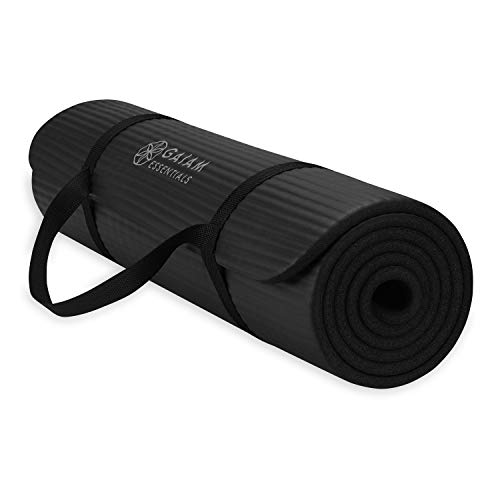
Gaiam Yoga Mat, Pilates & Exercise Mat, Thick 2/5" (10mm) Workout Mat with Easy-Cinch Carrying Strap for Home & Gym Workouts
Capacity
N/A — exercise mat
Steel
NBR Foam / Non-Slip Surface
Footprint
72" x 24" x 10mm thick
Price
$23.07
- 4.5+ star rating on Amazon with 50,000+ reviews
- Extra thick 10mm cushioning for joint protection
- Non-slip textured surface
- Includes carry strap for portability
- Great for stretching, ab work, and yoga
- Best budget exercise mat on Amazon
- Not firm enough for standing balance poses
- Absorbs sweat — needs regular cleaning
- 10mm thickness makes balance poses harder
Price and availability may change
Floor work is non-negotiable in calisthenics. L-sits, hollow body holds, stretching, handstand practice, planche lean drills, and mobility routines all happen on the ground. The Gaiam Essentials mat at 10mm thickness provides enough cushion for joint protection on hard surfaces without being so soft that it destabilizes balance work.
The 72\u0022 x 24\u0022 footprint covers standard floor exercise space. The textured non-slip surface grips well even with sweaty hands and feet. At $22, it is the cheapest item on this list and arguably the one you will use every single training session without exception.
Gaiam
Gaiam Yoga Mat, Pilates & Exercise Mat, Thick 2/5" (10mm) Workout Mat with Easy-Cinch Carrying Strap for Home & Gym Workouts
4.5+ star rating on Amazon with 50,000+ reviews
Extra thick 10mm cushioning for joint protection
Price and availability may change
8. TriggerPoint GRID Foam Roller — $37

TriggerPoint Grid 1.0 Foam Roller - 13" Multi-Density Massage Roller for Deep Tissue & Muscle Recovery - Relieves Tight, Sore Muscles & Kinks, Improves Mobility & Circulation - Targets Key Body Parts
Capacity
500 lbs
Steel
EVA Foam / Rigid Hollow Core
Footprint
13" x 5.5" diameter
Price
$32.92
- 4.7+ star rating on Amazon with 20,000+ reviews
- Multi-density GRID surface targets muscles differently
- Rigid hollow core won't flatten over time
- 500 lb weight capacity — built to last
- Compact 13" size for travel
- The gold standard in foam rollers
- Pricier than basic smooth rollers
- 13 inches too short for full-back rolling
- Firm surface may be intense for beginners
Price and availability may change
Calisthenics places enormous demands on shoulder mobility, thoracic spine extension, hip flexor flexibility, and wrist range of motion. Foam rolling before training improves tissue quality and range of motion, while rolling after training accelerates recovery by increasing blood flow to worked muscles.
The TriggerPoint GRID uses a multi-density EVA foam surface with three distinct zone patterns that mimic finger, palm, and fingertip pressure. The hollow core construction supports up to 500 lbs without deforming, unlike solid foam rollers that compress and lose effectiveness within months.
Priority rolling areas for calisthenics athletes:
- Thoracic spine (improves overhead mobility for pull-ups and handstands)
- Lats (reduces tightness that limits front lever and overhead range of motion)
- Hip flexors and quads (critical for L-sit and planche positions)
- IT band and calves (supports pistol squat depth and single-leg stability)
Check our TriggerPoint GRID review for a detailed breakdown of rolling protocols.
TriggerPoint
TriggerPoint Grid 1.0 Foam Roller - 13" Multi-Density Massage Roller for Deep Tissue & Muscle Recovery - Relieves Tight, Sore Muscles & Kinks, Improves Mobility & Circulation - Targets Key Body Parts
4.7+ star rating on Amazon with 20,000+ reviews
Multi-density GRID surface targets muscles differently
Price and availability may change
Total Cost Breakdown
| Equipment | Price | Priority |
|---|---|---|
| Sportsroyals Power Tower | $150 | Essential |
| Double Circle Gymnastics Rings | $49.97 | Essential |
| Teclor Parallettes | $29.98 | Essential |
| Bodylastics Resistance Bands | $60 | Essential |
| DMoose Dip Belt | $50 | Intermediate+ |
| RUNFast Weight Vest | $55.99 | Intermediate+ |
| Gaiam Yoga Mat | $22 | Essential |
| TriggerPoint GRID Roller | $37 | Recommended |
| Total | $489 |
If you are on a tighter budget, the first four essential items plus the yoga mat total $312 and cover every major movement pattern. Add the dip belt and vest later when bodyweight-only training stops producing strength gains (typically 6-12 months in for consistent trainers).
Progressive Calisthenics Training Program
The following program is structured as a 4-day rotation. Train Day 1 through Day 3 consecutively, take Day 4 as active recovery, then repeat. This gives each movement pattern at least 48 hours of recovery between sessions while maintaining high training frequency.
Day 1 — Push (Chest, Shoulders, Triceps)
| Exercise | Sets x Reps | Equipment | Progression |
|---|---|---|---|
| Ring dips | 4 x 8-12 | Rings | Add vest weight at 12 clean reps |
| Pseudo-planche push-ups | 3 x 8-12 | Parallettes | Lean further forward as strength builds |
| Wall handstand push-ups | 3 x 5-8 | Wall + mat | Progress to freestanding |
| Ring push-ups (feet elevated) | 3 x 10-15 | Rings + box/chair | Narrow rings for tricep focus |
| Planche lean hold | 3 x 15-30 sec | Parallettes | Increase forward lean angle over time |
Day 2 — Pull (Back, Biceps, Rear Delts)
| Exercise | Sets x Reps | Equipment | Progression |
|---|---|---|---|
| Weighted pull-ups | 5 x 5-8 | Power tower + dip belt | Add 5 lbs when you hit 5x8 |
| Ring rows (feet elevated) | 4 x 12-15 | Rings | Lower ring height for difficulty |
| Muscle-up negatives | 3 x 3-5 | Power tower or rings | Progress to full muscle-ups |
| Band-assisted front lever holds | 3 x 10-15 sec | Power tower + band | Reduce band thickness over months |
| Ring face pulls | 3 x 15-20 | Rings | Slow eccentrics for shoulder health |
Day 3 — Legs, Core, and Skills
| Exercise | Sets x Reps | Equipment | Progression |
|---|---|---|---|
| Pistol squat progressions | 4 x 5-8 each leg | Mat (band assist if needed) | Remove band, then add vest |
| Weighted vest squats | 3 x 20 | Vest | Increase vest weight |
| L-sit holds | 4 x 15-30 sec | Parallettes | Extend legs further, progress to V-sit |
| Hanging leg raises | 4 x 10-15 | Power tower | Straight legs, then toes to bar |
| Hollow body holds | 3 x 30-45 sec | Mat | Arms overhead, legs lower |
| Skin the cat | 3 x 5 | Rings | Full range, slow and controlled |
Day 4 — Active Recovery and Mobility
- 10 minutes foam rolling (full body, focus on thoracic spine and lats)
- 15 minutes stretching (shoulder dislocates with band, pancake stretch, hip flexor stretch, wrist circles)
- Light ring support holds (30 sec x 3) for shoulder stability
- Dead hangs (30-60 sec x 3) for grip and spinal decompression
Repeat the 4-day cycle continuously. Deload every 4th week by reducing volume by 40% while maintaining intensity.
Beginner Modifications
If you cannot yet perform a pull-up or dip, here is your starting progression:
- Weeks 1-4: Band-assisted pull-ups (thick band), band-assisted dips, incline push-ups on parallettes, dead hangs for grip strength
- Weeks 5-8: Reduce to medium band assistance, begin negative (eccentric-only) pull-ups and dips, flat push-ups on parallettes
- Weeks 9-12: Thin band or no assistance, first unassisted pull-ups and dips, begin ring rows and ring support holds
- Weeks 13+: Follow the main program, using band assistance only for advanced movements like front levers and muscle-ups
This progression timeline assumes training 4-5 days per week with adequate nutrition and sleep. If you are heavier (200+ lbs), expect the timeline to extend by 2-4 weeks. If you are lighter (under 150 lbs), you may progress faster.
Equipment Maintenance
Calisthenics equipment is low-maintenance compared to barbells and cable machines, but it still requires periodic attention:
- Power tower: Check all bolts monthly with a wrench. Vibration from pull-ups and dips loosens hardware over time. Apply WD-40 to any squeaking joints quarterly. Wipe down pads with a damp cloth and mild soap weekly.
- Gymnastic rings: Inspect nylon straps for fraying every 2-3 months, especially near the cam buckle contact points. Sand wood rings lightly with 220-grit sandpaper if they become rough. Never leave wood rings outdoors in rain.
- Parallettes: Check rubber feet monthly for compression or wear. Replace if the parallettes start sliding during use.
- Resistance bands: Inspect for nicks, tears, or discoloration before every use. Latex degrades with UV exposure — store bands indoors and out of direct sunlight. Replace immediately if you see any surface damage.
- Foam roller: Wipe with a damp cloth after each session. The TriggerPoint GRID's EVA foam does not absorb sweat, but surface bacteria can accumulate.
Upgrade Path: Growing Beyond $500
Once you have trained consistently for 12-18 months and mastered the basics, consider these upgrades in priority order:
- Wall-mounted pull-up bar ($60-120): Eliminates the stability limitations of a freestanding power tower. Anchored to wall studs, it supports kipping muscle-ups and heavy weighted pull-ups without rocking. Check our guide to choosing a pull-up bar for installation details.
- Additional weight plates ($50-100): For dip belt loading beyond what a single pair of plates provides. Standard 10 lb and 25 lb plates cover most athletes.
- Plyo box ($40-60): Adds box jump conditioning, elevated push-up variations, step-ups with the weighted vest, and a platform for Bulgarian split squats.
- Suspension trainer ($30-50): A TRX-style trainer adds inverted rows, single-leg squats, hamstring curls, and dozens of bodyweight exercises that complement ring training.
- Ab wheel ($15-25): The ab wheel rollout is one of the most effective anti-extension core exercises. It transfers directly to front lever and planche core stability.
For those who eventually want to combine calisthenics with barbell training, our home gym under $1,000 build adds a rack, barbell, and plates while maintaining the calisthenics foundation.
Calisthenics vs. Weight Training: Why Not Both?
Calisthenics builds relative strength — how strong you are relative to your bodyweight. This produces:
- Superior body control and proprioception: Ring work and handstand training develop spatial awareness that machine training cannot replicate
- Joint-friendly progression: Bodyweight movements naturally scale to your strength level, reducing injury risk compared to loading a barbell beyond your connective tissue capacity
- Impressive movement skills: Muscle-ups, front levers, planches, and handstands are visually striking and functionally demanding
- Lower injury rates: Research consistently shows bodyweight training produces fewer acute injuries than heavy barbell work, largely because failed reps do not involve external loads crashing down
- Transferable athletic performance: Relative strength improves performance in climbing, martial arts, swimming, gymnastics, parkour, and nearly every sport that rewards power-to-weight ratio
The limitation of pure calisthenics is lower body training. Pistol squats and weighted vest squats build legitimate leg strength, but they cannot match the loading capacity of barbell squats and deadlifts for maximum lower body hypertrophy. Many experienced calisthenics athletes eventually add a barbell and plates specifically for squat and deadlift variations while keeping their upper body training entirely bodyweight-based.
Common Mistakes to Avoid
Skipping ring training. Many beginners buy a pull-up bar and parallettes but skip gymnastic rings because they seem intimidating. Rings are the single most versatile piece of calisthenics equipment. Buy them from day one, even if you start with nothing more than ring support holds and ring rows.
Neglecting legs. Calisthenics culture tends to emphasize upper body skills (muscle-ups, planche, front lever), but ignoring lower body training creates imbalances and limits overall athletic performance. Pistol squats, shrimp squats, and weighted vest squats should be non-negotiable in your program.
Chasing skills before building strength. Attempting muscle-ups, planches, or front levers before you can perform 15+ strict pull-ups and 20+ strict dips is a recipe for shoulder injuries. Build the foundation first.
Training to failure every session. Calisthenics movements are skill-intensive. Training to failure degrades form and teaches bad motor patterns. Keep 1-2 reps in reserve on most sets. Save true max efforts for testing sessions every 4-6 weeks.
Ignoring mobility work. Calisthenics demands extreme shoulder, wrist, and hip mobility. Shoulder dislocates, wrist circles, deep squat holds, and thoracic spine extension drills should be part of every warm-up. Day 4 mobility work is not optional.
Related Reviews and Guides
- Sportsroyals Power Tower Review
- TriggerPoint GRID Review
- DMoose Dip Belt Review
- How to Choose a Pull-Up Bar
- Home Gym on a Budget — Complete Guide
- Home Gym Programming Guide
Equipment Checklist
8 itemsFrequently Asked Questions
Can you build significant muscle with calisthenics alone?
Is a freestanding power tower stable enough for muscle-ups?
Do I need gymnastic rings if I already have a pull-up bar?
How long does it take to learn a muscle-up?
Is this setup suitable for training in an apartment?
What is the best order to buy this equipment on a tight budget?
Additional Resources
Lena Park
Former NCAA Division I rower and USA Weightlifting coach. Specializes in conditioning equipment and women's training.
Read full bioMore in Budget Builds
Women's Home Gym Build: Complete Equipment Guide (2026)
Build the perfect home gym for women. Glute-focused equipment, strength training essentials, and space-efficient picks for every budget.
Olympic Weightlifting Home Gym Build (2026)
Build a home gym for Olympic weightlifting. Platform specs, bar selection, bumper plates, and everything you need to snatch and clean at home.
The Best Home Gym Build for Seniors (2026)
Build a safe, effective home gym for seniors. Joint-friendly equipment picks, fall-prevention features, and age-appropriate training programs.
You Might Also Like
Best Power Towers for Home Gyms in 2026
We tested 4 power towers from $90 to $150. Pull-ups, dips, leg raises, and push-ups in one station. Here's which ones are actually stable enough to train on.
ProsourceFit Dip Stand Station Review: Worth the Money?
Hands-on review of the ProsourceFit Dip Stand Station. Is $89.99 worth it for your home gym?
FringeSport Savage Bumper Plates Review: Worth the Money?
Hands-on review of the FringeSport Savage Bumper Plates. Is $736.00 worth it for your home gym?