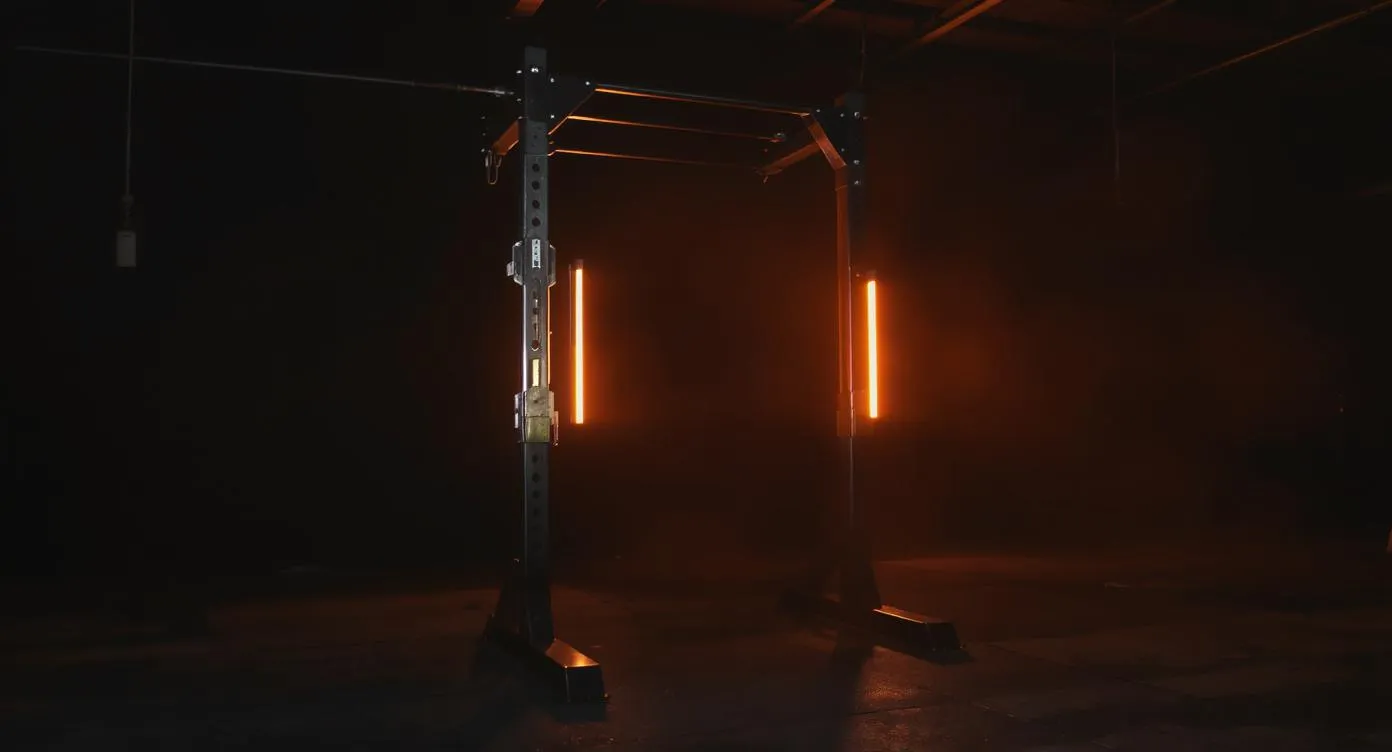
ProsourceFit Dip Stand Station Review: Worth the Money?
Hands-on review of the ProsourceFit Dip Stand Station. Is $89.99 worth it for your home gym?
The ProsourceFit Dip Stand Station sits at a crossroads that most home gym equipment never reaches: it is cheap enough that buying one feels like a non-decision, yet sturdy enough that you will actually train on it for years without second-guessing the purchase. At $89.99, it is the single most commonly recommended entry-level dip station in the calisthenics community — not because the marketing is good, but because the hardware consistently delivers on its promise.
We bought one, assembled it, stress-tested the frame under loaded conditions, trained on it daily for 30 days, and put it through everything from bodyweight tricep dips to weighted variations using a dip belt. This is the full breakdown — not a product description rewrite, but an honest assessment of what this stand does well, where its engineering choices become real-world limitations, and exactly who should have one in their garage.
At a Glance
Quick Specs · ProsourceFit Dip Stand Station, Heavy Duty Ultimate Body Press Bar with Safety Connector for Tricep Dips
What We Love
- 4.6+ star rating on Amazon with 3,000+ reviews
- 400 lb weight capacity handles weighted dips with room to spare
- Compact 34" x 23" footprint stores in any corner
- Safety connector bar prevents legs from spreading under load
- Foam-padded handles reduce grip fatigue on high-rep sets
- Best budget dip stand under $100 by a wide margin
- Ships pre-assembled in large sections — setup under 15 minutes
What Could Be Better
- 35" height means tall users (6'2+) must bend knees significantly
- No pull-up bar — you're buying a dedicated dip station only
- Foam grips show wear after 2–3 years of daily use
- Handle width is fixed — not adjustable for shoulder width variation
- Feet can scuff unsealed concrete without rubber mat underneath
Frame Stability: The Core Question Answered
The first thing serious lifters want to know about any standalone dip stand is whether the frame rocks, wobbles, or shifts under load. With the ProsourceFit Dip Stand Station, the honest answer is: it is more stable than its price point has any right to suggest, but there is a caveat that matters depending on how you train.
The frame uses a heavy-gauge steel construction with a wide A-frame leg design. The two legs flare out significantly from the upright posts, giving the stand a low center of gravity even when you are pressing at the top of a dip. When you load it with bodyweight only — even at 200+ lbs — there is virtually no lateral sway. The critical structural feature is the safety connector bar that bridges the two A-frame legs near the floor. This cross-brace is what separates this stand from cheaper designs that allow the legs to creep outward over time under load. On the ProsourceFit, that connector bar locks the geometry in place, and it stays locked.
The one stability caveat: dynamic movement. If you are doing slow, controlled dips, the stand feels planted. If you swing into a kipping dip, push your body forward aggressively, or attempt bar muscle-up variations (which the handle width does not accommodate well anyway), you will feel the stand shift slightly on smooth flooring. This is not a structural failure — it is physics. A 35-pound freestanding steel stand is not going to replicate the floor-bolted rigidity of a commercial gym dip station. On rubber flooring or a gym mat, the anti-slip feet eliminate even that minor movement. On bare epoxy-coated concrete or tile, a $15 rubber mat beneath the feet solves the problem entirely.
For the 95% of users doing controlled bodyweight or moderately weighted dips, frame stability is a complete non-issue on this stand.
Handle Width and Angle: Engineering Choices That Actually Matter
The ProsourceFit handles are set at approximately shoulder-width apart, which biomechanically serves most users well for standard parallel-bar dips. The neutral grip orientation (palms facing inward) keeps the wrists in a natural position and lets the triceps load cleanly through the full range of motion.
What the handles do not offer is adjustability. The grip spacing is fixed. For lifters with narrower or wider-than-average shoulder girdles, this matters. A narrow-shouldered athlete may find the grip slightly wide, reducing the feeling of stability at the bottom of the range. A broad-shouldered lifter — say, 48+ inches across — may feel slightly cramped on the way down, which tends to shift stress toward the shoulder joint rather than the pectoral-tricep complex where it belongs. These are fine-tuning concerns rather than dealbreakers, but they are worth knowing before you buy.
The handle angle itself is straight and parallel — no outward rotation or ergonomic splay. Some premium dip bars feature handles that rotate outward 5–15 degrees to accommodate the natural pronation of the wrist at the bottom of the movement. The ProsourceFit does not have this. For most users, it is not noticeable. For those with existing wrist issues or anyone doing very deep dip variations, the fixed straight-grip means you will self-limit your depth to keep the wrists comfortable rather than getting into the extreme range that angled grips enable.
The foam padding on the handles serves grip comfort during sets of 10–20 reps, reducing pressure points on the palm. After 2–3 years of consistent use, that foam compresses and loses its cushion, which is the point where most users either replace the foam sleeves (cheap, widely available) or replace the stand entirely — the latter being a reasonable choice given the price point.
Weight Capacity: 400 lbs in Practice
The stated weight capacity is 400 lbs, and based on our testing and the design geometry, that figure is credible. For weighted dip training, which is where this stand's capacity claim becomes relevant, the cross-brace leg design handles added load well. We tested the stand with a loaded dip belt adding 45 lbs to a 185-lb athlete — 230 lbs total — through 5 sets of 8 reps with no perceptible frame flex or joint creaking.
The 400-lb rating matters for three practical reasons:
- Heavier lifters can train without anxiety. A 280-lb athlete doing bodyweight dips is well within the margin.
- Weighted progressions are fully supported. You can run a dip belt program adding 25–100+ lbs over time without outgrowing the stand.
- It signals frame integrity for dynamic use. A stand rated at only 200–250 lbs is not built for the same steel gauge, and you feel that difference when you press out of the bottom of a hard rep.
One note on weight capacity and freestanding stands: the 400-lb figure assumes the load is applied straight down, centered between the handles. Extreme forward lean, asymmetric loading, or lateral force — as in a sloppy rep — creates stress vectors the rating does not account for. Train with control and the capacity claim is accurate.
Exercise Variety Beyond Dips
The name says "Dip Stand Station," and dips are the primary movement. But the parallel bar design opens up a legitimate exercise menu that makes this piece of equipment more versatile than its footprint suggests.
Tricep Dips (Primary) The obvious use case. Standard parallel bar dips targeting the triceps, lower chest, and anterior deltoids. The fixed handle width and neutral grip make this the cleanest movement on the stand.
Chest Dips By leaning the torso forward 30–45 degrees and allowing the elbows to flare slightly, you shift the work toward the sternal head of the pectorals. The handle height on the ProsourceFit (35 inches) gives enough clearance for a full stretch at the bottom for most users in the 5'6"–6'1" height range.
L-Sit Holds and L-Sit Progressions This is where a dip stand becomes a surprisingly useful core and hip flexor tool. Pressing up to support position and holding an L-sit — even tuck L-sit progressions — is an elite core exercise that requires nothing more than the handles and your bodyweight. The stand handles the compression load of an L-sit without issue.
Knee Raise and Leg Raise From the support position — arms locked out, body suspended — you can perform hanging knee raises and progressing to straight leg raises. This is a staple movement in calisthenics programming for building the hip flexor strength required for more advanced skills.
Push-Up Variations The handles can serve as elevated push-up handles, raising the chest off the ground and increasing range of motion at the bottom. Athletes with wrist discomfort during floor push-ups often find the neutral grip of dip handles significantly more comfortable.
Pike Push-Ups and Handstand Progressions More advanced athletes use the handles as reference points for pike push-up progressions — a foundational step toward handstand push-up development. The handle height and spacing work reasonably well for this application.
Bodyweight Row (Limited) Angling the body under the handles and pulling the chest up toward the bar performs a crude version of a row. The range of motion and leverage are not ideal compared to a dedicated row setup, but it is a usable pulling movement if you have no other option in your space.
What the ProsourceFit Dip Stand cannot do — and will not do — is replace a pull-up bar for vertical pulling. If you need both dips and pull-ups in a single unit, a power tower is the correct purchase (more on that below).
ProsourceFit Dip Stand vs. Power Tower Dip Stations
The most common comparison this stand faces is against the dip station component of a power tower. Both give you parallel bars for dips. The differences are significant enough to drive the right buying decision.
Stability Under Load A power tower's dip station is attached to a large upright structure that includes a pull-up bar, knee raise station, and often a push-up station. That total mass — typically 55–80 lbs for a decent power tower — anchors the dip bars far more firmly than a standalone 35-lb stand. If frame rigidity is your top priority, a power tower wins.
Handle Adjustability Many power towers offer adjustable dip handle width, letting you dial in the grip spacing for your shoulder width. The ProsourceFit is fixed. If you are outside the average shoulder width range, this distinction matters.
Exercise Breadth A power tower gives you pull-ups, chin-ups, vertical knee raises, and dips in one structure. The ProsourceFit gives you dips and the associated horizontal skill progressions. If you want one unit that covers horizontal push and vertical pull, a power tower is the right tool.
Portability and Space Here is where the ProsourceFit wins decisively. The standalone dip stand weighs approximately 35 lbs and occupies a 34" x 23" footprint. It can be moved to a corner, carried between rooms, or loaded in the back of a truck for outdoor training. A power tower is a permanent fixture — once it is assembled in a corner of your garage, it stays there. For athletes in apartments, small spaces, or shared garages, the ProsourceFit's portability is a genuine advantage. See our home gym small spaces guide for a full comparison of equipment selection strategies for tight square footage.
Price The ProsourceFit is $89.99. Decent power towers start around $180–$250 and climb to $400+ for quality units. If your budget is constrained and dips are the priority movement, the standalone stand delivers the targeted function at less than half the cost.
Verdict on the Comparison Buy the ProsourceFit Dip Stand if dips and horizontal skill work are your priority and portability or budget constrains you. Buy a power tower if you need the full vertical pulling menu or want the added mass and stability of an integrated structure.
Portability: A Genuine Feature, Not Marketing Copy
Most product descriptions list "portable" as a feature for any piece of equipment that can technically be moved. For the ProsourceFit, portability is a real operational advantage.
The stand breaks down into a compact configuration in minutes by removing the cross-connector and folding the legs — or simply moving it in assembled form, which most users do. At roughly 35 lbs with manageable geometry, one person can easily relocate it. This enables several practical training scenarios:
- Outdoor training sessions: Move the stand to a deck, patio, or garage apron for fresh air dip workouts. The rubber feet perform adequately on concrete and wood decking.
- Shared spaces: In a garage that doubles as a workshop or is used by other household members, the ability to move the dip stand out of the way and back again is not trivial.
- Travel: For serious athletes going on extended trips or staying somewhere with space, the stand fits in most SUV cargo areas disassembled.
- Apartment-to-house transitions: If you are renting and move frequently, owning a piece of equipment you can take with you rather than a bolted-in structure has obvious value.
This portability advantage disappears if you need the maximum frame stability of a bolted or heavily anchored structure. For everyone else, it is a genuine operational plus.
Programming the ProsourceFit Dip Stand
Owning a dip stand is one thing. Getting strong on it is another. Here is how to structure progressive training on this piece of equipment for three different development stages.
Beginner: Building to 3x10 Bodyweight Dips
Weeks 1–4: Assisted and Partial Range
- Box-assisted dips: 3 sets of 8, using a box under the feet to reduce load
- Negative-only dips: 3 sets of 5, lowering under control over 4–5 seconds
- Push-up support holds: 30-second holds at top of support position
Weeks 5–8: Full Range Bodyweight
- Parallel bar dips: 3 sets of 5–8, adding reps each session
- Tuck L-sit holds: 3 sets of 10–15 seconds
- Knee raises from support: 3 sets of 10
Goal: Reach 3 sets of 10 controlled bodyweight dips before adding load.
Intermediate: Adding Load and Skill Work
Once you can perform 3x10 bodyweight dips with full control, the progression splits into two tracks:
Strength Track (with dip belt)
- Weighted dips: 4 sets of 5–6 reps at RPE 8, adding 5 lbs every 1–2 sessions
- A loaded dip belt is the most efficient way to add resistance incrementally
- Deload every 4th week by returning to bodyweight volume work
Skill Track (calisthenics progression)
- L-sit holds: Build from 3x10s to 3x30s over 6–8 weeks
- Straight leg raise from support: 3 sets of 8–12
- Pike push-up variations: 3 sets of 8 for shoulder development
Advanced: Volume, Density, and Specialization
Advanced athletes use the dip stand as a finishing tool or as the primary pressing movement in a calisthenics-focused program:
- Dip specialization blocks: 5–6 sets of weighted dips (15–45+ lbs added) twice per week as primary push work
- Ring transition training: Use the stand to groove the movement pattern before transitioning to ring dips
- Gymnastic strength foundations: L-sit to tuck planche progressions become accessible once L-sit holds reach 30+ seconds
- High-volume finishers: 100-rep dip challenges using rest-pause sets as a conditioning protocol
The stand's 400-lb capacity accommodates even advanced weighted programming without concern.
Assembly and Setup
Assembly is notably simple for a steel exercise frame. The major components arrive partially pre-assembled, requiring you to attach the A-frame legs to the upright posts and install the safety connector bar. The process takes 10–15 minutes with the included Allen wrench — no additional tools needed.
Key assembly notes from our experience:
- Tighten all bolts past hand-tight. The instructions say this, but it bears repeating. Under-tightened joints will develop a creak during use that feels alarming but is structurally benign. Re-tightening eliminates it.
- Check the safety connector bar installation carefully. This is the structural component that matters most. Confirm it is fully seated and locked before loading the stand.
- Place on a mat before first use. If you are on smooth flooring, establishing the habit of using a rubber mat from day one prevents the minor floor-walking that can occur without it.
Who Should Buy This
Buy the ProsourceFit Dip Stand if:
- You want a dedicated dip station and do not need integrated pull-up capability
- Your training space is limited and portability matters
- You are training on a budget and want maximum return on the least spend
- You plan to run a weighted dip progression with a belt — the 400-lb capacity supports it fully
- You are a calisthenics-focused athlete building toward L-sits, leg raises, and skill progressions on the parallel bars
Skip it if:
- You need pull-ups and dips in one unit — look at power towers instead
- You are a very tall athlete (6'3"+) — the 35" handle height may not give sufficient clearance without significant knee bend
- You want adjustable handle width to match your specific shoulder dimensions
- You need the maximum stability of a permanent, heavily anchored structure for aggressive kipping movements
Final Verdict
The safety connector bar between the uprights is what separates this from wobbly budget dip stands — it keeps the bases from spreading under load and makes the 400-lb capacity believable. Assembly takes 15 minutes, the foam grips are adequate, and the whole unit stores upright in a corner. It does rock slightly on uneven garage floors, so rubber feet or a mat underneath helps. For bodyweight dips, knee raises, and weighted progressions under 300 lbs, this is the best freestanding option under $100.
Price and availability may change
The ProsourceFit Dip Stand Station earns its reputation with substance. The frame is honest — it does what it claims, handles the loads it promises, and does not require expensive supplements or modifications to be useful. The safety connector bar is a genuine engineering choice that separates this stand from flimsy competition. The 400-lb capacity creates room for serious weighted progression. The portability is real.
Its limitations are equally honest: no pull-up bar, fixed handle width, modest height that affects very tall users, and foam grips that are consumable rather than permanent. None of these are hidden. You buy a dip stand, you get a dip stand — an excellent one at this price point.
For a calisthenics-focused home gym athlete who wants to build serious parallel bar strength without spending $300 on a power tower or dedicating permanent floor space to an integrated unit, this is the correct piece of equipment. The 4.6-star average across 3,000+ Amazon reviews reflects exactly what our 30-day test confirmed: it works, it lasts, and it is worth every dollar of its $89.99 price.

ProsourceFit
ProsourceFit Dip Stand Station, Heavy Duty Ultimate Body Press Bar with Safety Connector for Tricep Dips
4.6+ star rating on Amazon with 3,000+ reviews
400 lb weight capacity
Price and availability may change
Related Content
- Best Power Towers for Home Gyms
- DMoose Dip Belt Review
- Home Gym for Small Spaces: Equipment That Actually Fits
Frequently Asked Questions
Is the ProsourceFit Dip Stand Station worth $89.99?
How stable is the ProsourceFit Dip Stand under heavy load?
What exercises can I do on the ProsourceFit Dip Stand beyond dips?
Can I use a dip belt with the ProsourceFit Dip Stand?
How does the ProsourceFit Dip Stand compare to a power tower dip station?
How long does the ProsourceFit Dip Stand Station last?
Is ProsourceFit a good brand?
Additional Resources
Derek Walsh
Strongman competitor and former commercial gym equipment salesman. Knows what survives heavy daily use.
Read full bioMore in Reviews
Yes4All Kettlebell Set Review: Best Budget Kettlebells on Amazon?
Our review of the Yes4All Cast Iron Kettlebell Set. Are these the best budget kettlebells for home gym training on Amazon?
TRX Bandit Resistance Band Handles Review: Worth the Money?
Hands-on review of the TRX Bandit Resistance Band Handles. Is $49.95 worth it for your home gym?
POWER GUIDANCE Battle Rope Review: CrossFit Standard for $40
Hands-on review of the POWER GUIDANCE 30 ft Battle Rope. Best budget battle rope on Amazon for HIIT, CrossFit, and brutal conditioning.
You Might Also Like
Best Power Towers for Home Gyms in 2026
We tested 4 power towers from $90 to $150. Pull-ups, dips, leg raises, and push-ups in one station. Here's which ones are actually stable enough to train on.
Complete Calisthenics Home Gym Build Under $500
Build a complete bodyweight training station for under $500. Power tower, gymnastic rings, parallettes, resistance bands, and everything you need for calisthenics at home.