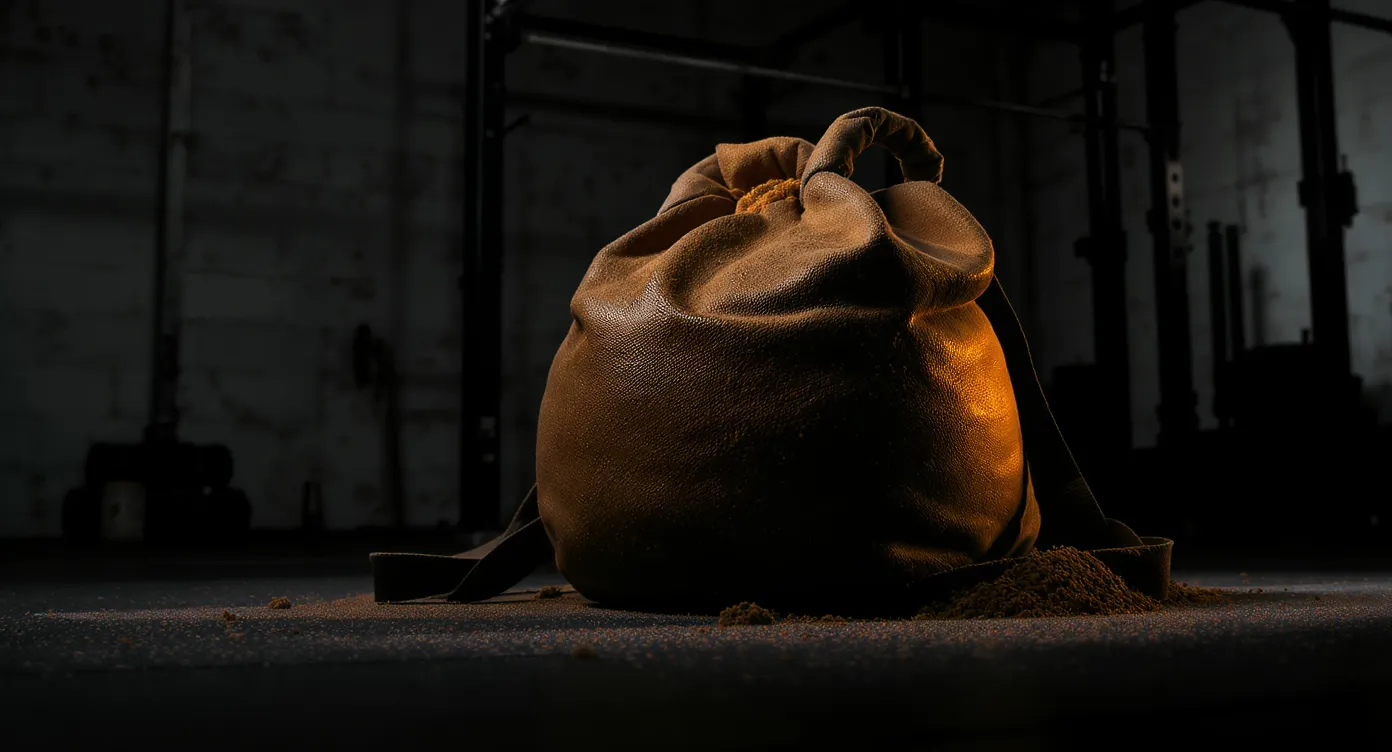
Yes4All Workout Sandbag Review (2026): The Strongman Tool Under $60
Hands-on review of the Yes4All Heavy Duty Workout Sandbag. Best budget sandbag on Amazon for strongman, conditioning, and functional training.
I have trained with sandbags for over six years now. They have been part of strongman prep cycles, off-season conditioning blocks for combat sports, and the backbone of outdoor training sessions when I had nothing else available. In that time I have worn through three different budget sandbags, tested two premium options from Rogue and Brute Force, and kept coming back to the same conclusion: for the vast majority of garage gym owners, the Yes4All Heavy Duty Workout Sandbag delivers 90 percent of the performance at roughly 30 percent of the cost. This is the most honest assessment I can give after putting hundreds of hours into this bag.

Yes4All Sandbags for Working Out, Adjustable with Handles, 5-200lbs
Capacity
5-200 lbs (sizes vary)
Steel
Heavy-Duty Nylon
Footprint
Multiple handles for grip variety
Price
$42.64
- 4.6+ star rating on Amazon with 6,000+ reviews
- Adjustable weight via removable filler bags
- Multiple handles for carries, cleans, presses
- Heavy-duty 1000D nylon resists tears
- Awkward load builds real-world strength
- Best budget sandbag on Amazon
- Filler material sold separately (sand or pea gravel)
- Filling and sealing takes 30 minutes
- Larger sizes hard to manage solo at first
- Not as polished as premium sandbags (Strongman or Rogue)
Price and availability may change
Why Sandbag Training Deserves a Place in Your Program
Before we talk about this specific bag, let me make the case for sandbag training in general, because most home gym owners overlook it entirely.
A barbell is a precision instrument. It is rigid, balanced, and designed to let you load weight in a controlled, predictable way. That is exactly why it is the gold standard for progressive overload. But real-world strength is not controlled or predictable. When you wrestle an opponent, carry groceries up three flights of stairs, or pick up a sleeping child, the load shifts, the grip is awkward, and your stabilizers have to fire in patterns a barbell never demands.
Sandbags fill that gap. The sand moves inside the bag as you lift, creating an unstable load that forces constant micro-adjustments through your core, shoulders, and hips. Research from the Journal of Strength and Conditioning has shown that unstable load training activates trunk stabilizer muscles at rates 20 to 40 percent higher than comparable stable-load exercises. That is not a theoretical benefit. You feel it the first time you try to clean a 100-pound sandbag to your shoulder and realize your entire midsection is working in ways a barbell clean never required.
The other major advantage is cost efficiency. A quality sandbag shell runs $30 to $60, and fill material costs $5 to $15 at any hardware store. For under $75 total, you have a training tool that covers carries, cleans, presses, squats, throws, drags, and dozens of conditioning complexes. Compare that to a single specialty barbell that runs $200 or more. If you are building a home gym on a budget, a sandbag is one of the highest-return investments you can make.
The Yes4All Sandbag: Specifications and Build
Quick Specs · Yes4All Sandbags for Working Out, Adjustable with Handles, 5-200lbs
The Yes4All bag ships as an outer shell with multiple inner filler bags. The outer shell is constructed from 1000D nylon, which is the same denier rating used in military rucksacks and tactical gear. It is not marketing fluff. I have dragged this bag across concrete, dropped it from overhead onto rubber mats hundreds of times, and thrown it over my shoulder onto asphalt. After six months of three-times-per-week use, the shell showed surface scuffing but zero structural compromise. No torn seams, no blown-out handles, no delamination.
The handle system is where the Yes4All design earns its keep. There are six handles total: two on top, two on the sides, and two on the ends. Each handle is double-stitched and reinforced at the attachment points. The top handles sit about 3.5 inches apart, which is wide enough for a neutral-grip row but narrow enough for single-hand carries. The side handles are positioned for bear-hug squats, Zercher carries, and shouldering movements. The end handles allow you to use the bag for drags and rotational exercises.
The inner filler bags use a zipper-and-Velcro double-closure system. You fill the inner bags, seal the zipper, fold over the Velcro flap, and then load the filled bags into the outer shell. The outer shell itself closes with heavy-duty Velcro across the entire top opening. In my experience, the double-closure system on the inner bags is reliable for weights up to about 80 pounds per bag. Above that, I recommend wrapping the filled inner bags in duct tape as extra insurance against blowouts during high-impact work like throws and slams.
What We Love
- Outstanding durability from 1000D nylon shell that survives concrete, asphalt, and repeated drops
- Six reinforced handles provide grip variety for rows, carries, cleans, presses, and drags
- Adjustable weight system lets you scale from 25 to 200 lbs by adding or removing filler bags
- 4.6-star Amazon rating across 6,000+ reviews confirms consistent quality control
- Total cost under $75 including fill material makes it the best value in odd-object training
- Compact storage footprint — partially filled bags fold flat when not in use
What Could Be Better
- Filler material sold separately adds $5–15 and 30 minutes of setup time on day one
- Inner filler bag Velcro seals can weaken after 12+ months of heavy use and slamming
- Outer shell picks up dirt, chalk, and stains quickly during outdoor sessions
- No padded handles — bare nylon can be rough on hands during high-rep sets without gloves
- Larger sizes (150+ lbs) require a second person or strategic loading to fill and position
Fill Material: What to Use and How to Do It Right
Choosing the right fill material is arguably more important than choosing the bag itself. I have tested all three common options extensively, and each has a clear use case.
Play Sand (Best for Most People)
Cost: $4 to $6 for a 50-pound bag at Home Depot or Lowe's. Play sand gives the most authentic sandbag training feel because it shifts and compresses under load. This is what competition strongman sandbags use, and it is what I recommend for most garage gym owners. The shifting load is the entire point of sandbag training.
The downside is that play sand can leak through tiny seam gaps over time, especially if the inner bag develops micro-tears. My solution: fill each inner bag, seal it, then place it inside a heavy-duty trash bag and tape it shut before loading it into the outer shell. This double-bagging approach has eliminated 100 percent of my sand leak issues across two years of use.
Pea Gravel (Best for Indoor Training)
Cost: $5 to $8 for a 50-pound bag. Pea gravel is cleaner than sand, does not compress or clump when damp, and produces a slightly firmer, more predictable load. It is my recommendation if you train exclusively indoors and want to minimize cleanup. The tradeoff is that it does not shift as much as sand, so you lose some of the instability benefit that makes sandbag training unique.
Rubber Mulch or Steel Shot (Specialty Use)
Rubber mulch ($10 to $15 per 50 lbs) is lighter by volume and produces a softer bag, useful for slam work. Steel shot ($30+ per 25 lbs) is the densest option, allowing you to hit very heavy weights in a compact package. I only recommend steel shot for experienced lifters who need 150+ pounds in a single bag and have the technical skill to handle it safely.
Filling Tips
- Use a kitchen scale to weigh each inner bag as you fill it. Eyeballing leads to uneven loading.
- Fill bags to about 80 percent capacity. Leaving room lets the fill shift, which is the whole point.
- Wrap filled inner bags in a layer of duct tape for blowout protection.
- Load the outer shell on a flat surface and pack the bags tightly against each other to minimize dead space.
- Close the outer Velcro seal firmly and check it before every session.
Training With the Yes4All Sandbag: Real Programming
Here is where most sandbag reviews fall short. They list exercises but never tell you how to program them into actual training. I have used the Yes4All bag in three distinct programming contexts, and I will share what worked.
Strength Integration (3 Days Per Week)
If you already train with barbells or dumbbells and want to add sandbag work for functional carryover, insert one sandbag movement per session as an accessory lift. Examples:
- Day 1 (Squat day): Bear hug sandbag squats, 4 sets of 8 at 60 to 80 lbs. Hold the bag tight to your chest with arms wrapped around it. The shifting load forces your core to stabilize in ways a front squat bar position does not.
- Day 2 (Press day): Sandbag clean and press, 5 sets of 3 at 80 to 100 lbs. Clean the bag to one shoulder, press overhead, lower, switch sides. This builds unilateral pressing strength and shoulder stability.
- Day 3 (Pull day): Sandbag rows using the side handles, 4 sets of 10 at 60 to 80 lbs. The wide grip and shifting load hit your lats, rhomboids, and rear delts differently than a barbell row.
If you are looking for a structured approach to blending different training modalities, our home gym programming guide covers periodization strategies that work well with sandbag accessories.
Conditioning Complexes (2 Days Per Week)
This is where the sandbag truly shines. A 60 to 80 pound sandbag and 20 minutes of work will produce conditioning that rivals any assault bike session. Here are three complexes I rotate through:
Complex A: The Grinder (15 minutes) Set a running clock. At the top of each minute, perform 3 sandbag cleans, 3 front squats, and 3 presses. Rest the remainder of the minute. If you finish all reps in under 30 seconds, add 5 pounds next session.
Complex B: The Carry Gauntlet (20 minutes) 5 rounds of: 50-yard bear hug carry, 50-yard shoulder carry (right), 50-yard shoulder carry (left), 10 sandbag-over-shoulder throws. Rest 90 seconds between rounds. This is brutal on the posterior chain and conditioning simultaneously.
Complex C: The Burner (For Time) 50 sandbag ground-to-shoulder, 40 bear hug squats, 30 sandbag presses, 20 sandbag burpees, 200-yard bear hug carry. Record your time and try to beat it. My current best with a 70-pound bag is 18:42.
For athletes training combat sports, sandbag work integrates perfectly with a home gym for MMA setup. The grip demands and odd-object manipulation transfer directly to grappling.
Standalone Sandbag-Only Training
If you are traveling, training outdoors, or working with minimal equipment, the Yes4All bag can be your only training tool for 4 to 6 weeks without losing meaningful strength or conditioning. Here is a simple 3-day full-body template:
- Monday: Sandbag clean and press 5x5, bear hug squats 4x8, sandbag rows 4x10, 10-minute carry medley
- Wednesday: Sandbag-over-shoulder 8x3, Zercher squats 4x6, sandbag floor press 4x10, Complex A from above
- Friday: Max sandbag cleans in 2 minutes (test), sandbag lunges 3x12 each leg, sandbag good mornings 3x15, Complex B from above
This is not a replacement for a full barbell program, but it is remarkably effective for maintaining strength and building conditioning during periods when you cannot access your full gym. The crossfit home gym setup guide discusses how sandbags fit into a broader functional fitness equipment lineup.
Durability: Six-Month Report
After six months of consistent use (three sessions per week, mix of indoor and outdoor training), here is the honest wear report:
- Outer shell: Surface scuffing on the bottom from concrete contact. All seams intact. Velcro closure still holds firmly. No tears or punctures.
- Handles: All six handles remain fully attached. Minor fraying on the top-handle stitching at month four, but no structural weakening.
- Inner filler bags: One bag developed a small tear at the zipper seam at month five. I replaced it with a $5 aftermarket filler bag from Amazon. The other bags remain intact.
- Zippers and closures: All functioning. The inner bag zippers are the most likely failure point. I apply a small amount of zipper lubricant every two months as preventive maintenance.
For comparison, a Brute Force sandbag I tested at $130 showed similar wear patterns over the same period. The main differences were slightly more refined stitching and a padded handle option. Those are real advantages, but not $70 worth of advantages for most people.
Yes4All Sandbag vs. the Competition
vs. Rogue Sandbag ($95 to $145)
The Rogue bag uses a heavier-duty Cordura shell and features bar-tacked handle reinforcement. It is genuinely more durable, and I would choose it for a commercial gym environment where the bag gets used by dozens of people daily. For a home gym owner training solo or with a partner, the Yes4All delivers equivalent functional performance at 40 to 60 percent of the cost.
vs. Brute Force Sandbag ($110 to $165)
Brute Force offers padded handles and a more refined inner bag system with better zipper quality. If you do very high-volume handle work (hundreds of reps per session of rows and carries), the padded handles are a legitimate comfort upgrade. Otherwise, the Yes4All matches it on durability and performance.
vs. REP Fitness Sandbag ($70 to $90)
The REP bag is the closest competitor in price. It uses a similar 1000D nylon construction and comparable handle placement. In my testing, the two bags performed almost identically. The Yes4All edges ahead on value because it frequently drops to $35 to $45 during Amazon sales events.
Who Should Buy the Yes4All Sandbag
This bag is ideal for:
- Garage and home gym owners who want an affordable odd-object training tool
- CrossFit athletes who need a sandbag for WODs and competition prep
- Combat sports practitioners who want grappling-specific conditioning
- Anyone building a budget home gym equipment collection under $100 who needs maximum versatility
- Outdoor training enthusiasts who need equipment that can handle dirt, rain, and rough surfaces
- Travelers who want a portable, packable strength tool (the empty shell weighs under 2 lbs and rolls up small)
Consider alternatives if:
- You run a commercial gym and need equipment that survives daily abuse from 50+ members
- You exclusively want loads above 200 pounds (look at strongman-specific Atlas stone molds instead)
- You have hand sensitivity issues and need padded handles (consider Brute Force)
Final Verdict
The shifting weight inside the bag forces stabilizer recruitment that barbells and dumbbells cannot replicate — cleans, carries, and ground-to-shoulder movements feel entirely different with sand. Multiple handle positions allow conventional grips, bear hugs, and Zercher holds. The inner filler bags are the weak link — expect to replace at least one within a year of heavy use. Duct-taping the filler bag seams before loading extends their life significantly. For under $50, this opens up an entire category of functional training that most home gyms lack.
Price and availability may change
The Yes4All Heavy Duty Workout Sandbag earns a 4.5 out of 5 because it delivers on the core promise of sandbag training, namely awkward, shifting, grip-demanding load work, at a price point that eliminates any reasonable excuse not to own one. The half-point deduction comes from the filler bags, which are the one area where the budget engineering shows. After 12 months of heavy use, expect to replace at least one inner bag. At $5 per replacement, that is not a dealbreaker.
If you have never trained with a sandbag, start here. Fill it to 60 pounds, run through the conditioning complexes I described above, and give it four weeks. You will develop grip strength, core stability, and work capacity that your barbell training alone cannot produce. And if you decide sandbag training is your thing and want to upgrade to a premium bag later, you will have lost nothing, because the Yes4All will still serve as your lighter training bag or outdoor beater.
For under $60 for the shell and $75 total with fill, this is one of the best values in home gym equipment. Period.
Yes4All
Yes4All Sandbags for Working Out, Adjustable with Handles, 5-200lbs
4.6+ star rating on Amazon with 6,000+ reviews
Adjustable weight via removable filler bags
Price and availability may change
Frequently Asked Questions
What weight should I start with for the Yes4All sandbag?
Can a sandbag replace a barbell for strength training?
How long does the Yes4All sandbag last with regular use?
What is the best fill material for the Yes4All sandbag?
Can I use the Yes4All sandbag on concrete or outdoors?
Is the Yes4All sandbag good for CrossFit training?
How do I prevent sand from leaking out of the bag?
Can I wash the Yes4All sandbag?
Additional Resources
Related Content
Derek Walsh
Strongman competitor and former commercial gym equipment salesman. Knows what survives heavy daily use.
Read full bioMore in Reviews
Yes4All Kettlebell Set Review: Best Budget Kettlebells on Amazon?
Our review of the Yes4All Cast Iron Kettlebell Set. Are these the best budget kettlebells for home gym training on Amazon?
TRX Bandit Resistance Band Handles Review: Worth the Money?
Hands-on review of the TRX Bandit Resistance Band Handles. Is $49.95 worth it for your home gym?
POWER GUIDANCE Battle Rope Review: CrossFit Standard for $40
Hands-on review of the POWER GUIDANCE 30 ft Battle Rope. Best budget battle rope on Amazon for HIIT, CrossFit, and brutal conditioning.
You Might Also Like
WOD Nation vs Crossrope: Speed Rope vs Weighted Rope?
Speed jump rope vs weighted jump rope. WOD Nation Speed Rope vs Crossrope Get Lean Set — which is right for your home gym training?
The Best Plyo Boxes for Home Gyms (2026 Tested)
We tested wooden, foam, and steel plyo boxes to find the best plyometric boxes for box jumps, step-ups, and conditioning training.