Mikolo vs Sportsroyals vs ULTRA FUEGO: Budget vs Features vs Price
How to build a travel-friendly home gym setup that works in hotels, Airbnbs, and on the road. Portable equipment and programming.
Travel kills training momentum faster than anything else. A two-week business trip or a month-long family vacation can erase weeks of hard-earned progress if you have no plan. You cannot fit a power rack in overhead luggage, but with the right portable equipment and structured programming, you can maintain 80-90% of your strength and conditioning anywhere in the world — hotel rooms, Airbnbs, parks, and even airport terminals during long layovers.
This guide covers exactly what to pack, how to train, and how to program your sessions based on trip length. Every recommendation comes from real-world testing by lifters who travel 50+ days per year and refuse to let airline schedules dictate their fitness.
Why Travel Training Matters: The Science of Detraining
Before diving into equipment, you need to understand what happens to your body when you stop training. Research published in the Journal of Strength and Conditioning Research shows that measurable strength loss begins after just 2-3 weeks of complete inactivity. After 6 weeks without resistance training, most athletes lose 10-20% of their maximal strength, and it takes approximately the same duration to recover once training resumes.
The good news: maintenance training requires far less volume than building new strength. Studies show that as little as one-third of your normal training volume — performed at the same intensity — can preserve strength for up to 32 weeks. This means even a 20-minute hotel room session with resistance bands can keep your gains intact during a two-week vacation.
The key principle is minimum effective dose. You do not need to replicate your home gym sessions. You need just enough stimulus to tell your muscles "don't atrophy."
The Complete Travel Gym Equipment List
Building a travel gym is about choosing equipment that maximizes training versatility while minimizing weight and packed volume. Here is the essential kit, ranked by priority.
Tier 1: Resistance Bands (The Non-Negotiable)

Bodylastics PRO Series Resistance Band Set (6 Bands, 280 lbs)
Capacity
6 bands stackable to 280 lbs
Steel
Anti-Snap Natural Latex Tubing
Footprint
Handles, ankle straps, door anchor + carry bag
Price
$61.97
- 4.6 star rating on Amazon with 2,600+ reviews
- Patented anti-snap inner cord for safety
- 6 bands stackable up to 280 lbs total resistance
- Includes handles, ankle straps, and door anchor
- Lifetime replacement on bands
- Travel-friendly storage bag
- Resistance feels different than free weights
- Door anchor requires an inward-opening door
- Handles wear faster than the bands
Price and availability may change
A stackable resistance band set is the single most important piece of travel equipment. The Bodylastics Stackable Resistance Bands Set provides 5 bands ranging from 3 to 40 lbs of resistance, which can be combined for up to 96 lbs of total resistance. The entire set weighs under 2 lbs and rolls into a space smaller than a water bottle.
What makes bands irreplaceable for travel:
- They replicate chest press, rows, shoulder press, squats, deadlifts, curls, tricep extensions, and lateral raises
- A door anchor turns any hotel room door into a cable machine
- They provide accommodating resistance (harder at the top of each rep), which research shows is effective for strength maintenance
- Zero risk of noise complaints — no clanging weights at 6 AM
For an in-depth look at band options, check our best resistance bands roundup.
- Weighs under 2 lbs total — fits in any carry-on or backpack
- Provides up to 96 lbs combined resistance for compound movements
- Door anchor enables cable-style exercises in any room with a door
- Variable resistance curve keeps tension through full range of motion
- Costs $30-50 for a complete set that replaces most gym machines
- Maximum resistance is limited compared to barbells and dumbbells
- Resistance curve feels different from free weights — takes adjustment
- Latex bands degrade over time, especially in heat and direct sunlight
- Door anchors can scratch hotel room doors if positioned incorrectly
- Cannot fully replicate heavy squat or deadlift loading patterns
Tier 2: Speed Jump Rope

WOD Nation Adjustable Speed Jump Rope
Capacity
Adjustable up to 11 ft
Steel
Alloy Steel Cable / Aluminum Handles
Footprint
Pocket-sized
Price
$17.99
- 4.5+ star rating on Amazon with 14,000+ reviews
- Blazing-fast alloy steel speed cable
- Tool-free adjustable length up to 11 ft (wire cutter included)
- Smooth 360° ball-bearing rotation for double-unders
- Lightweight aluminum handles
- Great for boxing, MMA, and CrossFit conditioning
- Steel cable can fray on rough concrete over time
- Not weighted — pure speed rope (no strength training)
- Handles are slim — bigger hands may want grip tape
Price and availability may change
A speed jump rope is the most efficient cardio tool in existence relative to its size. The WOD Nation Speed Jump Rope weighs 3 ounces, coils into a 6-inch bundle, and delivers conditioning work that rivals a $2,000 rowing machine. Ten minutes of jump rope at moderate intensity burns roughly 120-150 calories and elevates your heart rate into zone 3-4 territory.
Jump rope training benefits for travelers:
- HIIT intervals (30 seconds on, 30 seconds off) build cardiovascular endurance in under 15 minutes
- Double-unders develop coordination, timing, and calf endurance
- No setup required — just find a flat surface with 8 feet of overhead clearance
- Hotel parking lots, park pavilions, and conference room hallways all work
See our full comparison in the best jump ropes guide.
Tier 3: Suspension Trainer

TRX GO Suspension Trainer, Portable Gym for Full Body Exercise
Capacity
350 lbs user weight
Steel
Mil-Spec Nylon Webbing / Reinforced Hardware
Footprint
Fits in a small bag
Price
$139.95
- 4.6+ star rating on Amazon with 5,000+ reviews
- Original TRX brand quality
- Fits in a backpack (best for travel)
- 300+ exercises possible
- Includes door anchor and carry bag
- Lifetime warranty on hardware
- Pricier than knockoff suspension trainers
- Requires a sturdy anchor point overhead
- Door anchor only works on inward-opening doors
- Not ideal for explosive movements
Price and availability may change
The TRX GO Suspension Trainer System weighs 1.35 lbs and packs into a mesh bag the size of a rolled-up t-shirt. It anchors to any door, tree branch, playground bar, or exposed beam and unlocks over 80 bodyweight exercises with adjustable difficulty. The TRX GO is specifically designed for travel — lighter than the TRX PRO, with a simplified anchor system that works on standard interior doors.
A suspension trainer bridges the gap between pure bodyweight training and loaded resistance work. Exercises like TRX rows, TRX chest press, TRX pistol squats, and TRX fallouts hit muscles at angles that floor-based bodyweight exercises cannot reach. If you are deciding between a suspension trainer and bands, read our detailed TRX vs Bodylastics comparison.
Tier 4: Gymnastic Rings

Double Circle Wood Gymnastics Rings with Quick Adjust Numbered Straps
Capacity
880 lbs
Steel
Wood / Nylon Webbing
Footprint
Multi-size wood rings with numbered straps
Price
$49.97
- 4.7+ star rating on Amazon with 8,000+ reviews
- 880 lb weight capacity handles any user
- Solid birch wood (not plastic)
- 15 ft adjustable nylon straps with metal buckles
- Easy on the hands compared to plastic rings
- Best budget gymnastic rings on Amazon
- No carry bag included
- Wood needs occasional sanding to prevent splinters
- Buckles can slip slightly under heavy load (re-adjust)
Price and availability may change
Wood gymnastic rings with 15-foot adjustable straps weigh about 1.5 lbs and provide the most challenging upper body workout available with portable equipment. Ring dips, ring push-ups, ring rows, and muscle-ups demand stabilizer activation that no machine or cable can replicate. The Double Circle Wood Gymnastics Rings use real birch wood for superior grip — especially when your palms are sweaty from training outdoors in warm climates.
Best ring anchor points while traveling:
- Playground pull-up bars or monkey bars (most common)
- Tree branches at least 6 inches in diameter
- Exposed ceiling beams in garages or carports
- Hotel fitness center pull-up bars or cable crossover frames
Rings are not practical for every trip. They require an overhead anchor point, which you may not always find. Pack them for trips where you know you will have outdoor access or an equipped gym space.
Tier 5: TRX Bandit Resistance Band Handles

TRX Training Bandit Kit, Home Workout Resistance Band Set with Strength-Training Resistance Bands and Universal-Fit Handles for Exercise Bands
Capacity
Fits any loop resistance band
Steel
Reinforced Webbing / Foam Grips
Footprint
Pair of handles + carrying bag
Price
$74.95
- 4.6+ star rating on Amazon
- Converts any loop band into a cable-machine feel
- Works with all standard resistance bands
- Comfortable foam grips reduce hand fatigue
- Includes carry bag for travel
- Turns cheap bands into a full gym system
- Bands sold separately
- Pricey for handles alone
- Webbing can wear with very heavy bands
Price and availability may change
The TRX Bandit Handles snap onto any loop-style resistance band and instantly convert it into a cable handle. They weigh 4 ounces total and dramatically improve the ergonomics of banded exercises like chest flies, lateral raises, and tricep pushdowns. While optional, they make band training feel significantly closer to actual cable machine work.
Tier 6: Portable Massage Gun for Recovery
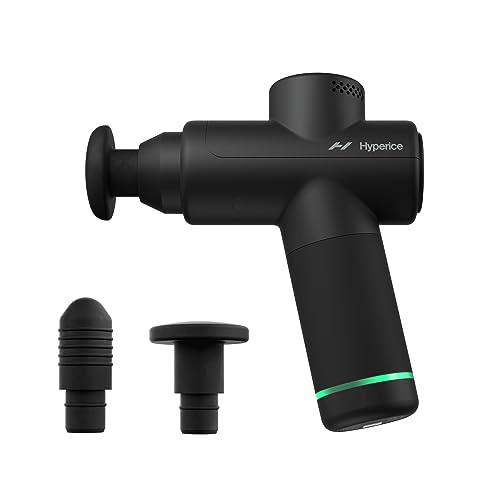
Hyperice Hypervolt Go 2 - Black - Featuring Quiet Glide Technology - Handheld Percussion Massage Gun - 3 Speeds, 2 Interchangeable Heads - Helps Relieve Sore Muscles and Stiffness
Capacity
N/A — recovery tool
Steel
QuietGlide Motor / 3 Speeds
Footprint
6.8" x 4" — portable
Price
$139.00
- 4.5+ star rating on Amazon with 2,000+ reviews
- Ultra-lightweight at 1.5 lbs
- QuietGlide technology — barely audible
- 3 speed settings up to 3200 RPM
- 2.5-hour battery life
- TSA-approved for travel
- Less powerful than full-size Hypervolt
- Only 2 attachment heads included
- Charge port cover can be stiff
Price and availability may change
The Hypervolt GO 2 weighs just 1.5 lbs and fits in any bag. Travel training often means higher-rep, higher-fatigue sessions, and percussion therapy speeds recovery between workouts. Target your quads, hamstrings, and upper back for 60-90 seconds per muscle group post-session.
The Complete Travel Gym Packing List
Equipment Checklist
8 itemsFull kit weight: Under 8 lbs Packed dimensions: Fits in a standard gym drawstring bag or one corner of a carry-on suitcase Total cost: Approximately $290 for everything, or $100 for the essential Tier 1-2 items only
Travel Workout Programming: Three Tested Templates
The biggest mistake travelers make is trying to replicate their home training split on the road. A push/pull/legs split with 90-minute sessions does not translate to a hotel room with resistance bands. Instead, use full-body sessions with higher frequency and lower volume per session.
Template 1: The Minimalist (20 Minutes, Bodyweight Only)
This template works when you have zero equipment — just a floor and a wall. Use it for short trips or as a backup when your gear is in checked luggage.
Warm-Up (3 minutes):
- Jumping jacks: 30 seconds
- Leg swings (front to back): 30 seconds per leg
- Arm circles: 30 seconds each direction
Main Circuit (15 minutes — 3 rounds, minimal rest):
- Bodyweight squats: 20 reps
- Push-ups (feet elevated on bed for added difficulty): 15 reps
- Reverse lunges: 12 reps per leg
- Pike push-ups (feet on chair): 10 reps
- Single-leg Romanian deadlift (bodyweight): 10 per side
- Plank hold: 45 seconds
Finisher (2 minutes):
- Burpees: As many reps as possible in 2 minutes
Programming notes: Perform this workout daily or every other day. To increase difficulty over a multi-week trip, add reps each session (bodyweight squats go from 20 to 25 to 30), slow the eccentric tempo to 4-5 seconds, or reduce rest between exercises.
Template 2: Band-Focused Full Body (30 Minutes)
This is the workhorse travel workout. With a full band set and door anchor, you can train every muscle group with meaningful resistance.
Warm-Up (5 minutes):
- Band pull-aparts: 3 x 15 reps
- Banded hip hinges: 2 x 10 reps
- Band face pulls (door anchor, high position): 2 x 15 reps
- Banded lateral walks: 2 x 10 steps each direction
Strength Block (20 minutes):
| Exercise | Sets x Reps | Band Setup |
|---|---|---|
| Banded squat | 4 x 15 | Stand on band, ends at shoulders |
| Banded chest press | 4 x 12 | Door anchor at chest height |
| Banded bent-over row | 4 x 12 | Stand on band, hinge forward |
| Banded overhead press | 3 x 10 | Stand on band, press overhead |
| Banded Romanian deadlift | 3 x 12 | Stand on band, hinge at hips |
| Banded bicep curl | 3 x 15 | Stand on band, curl up |
| Banded tricep pushdown | 3 x 15 | Door anchor at top position |
Conditioning Finisher (5 minutes):
- Jump rope intervals: 30 seconds max effort, 30 seconds rest x 5 rounds
Programming notes: Use the heaviest band combination that allows you to complete all reps with good form. Tempo should be controlled — 2 seconds up, 3 seconds down. Rest 45-60 seconds between sets. This workout hits every major muscle group and should leave you moderately fatigued, not destroyed.
Template 3: Full Travel Kit Session (45 Minutes)
This template uses bands, suspension trainer, and rings for a comprehensive strength and conditioning session. Reserve this for extended trips where you have 45 minutes and access to an anchor point for rings.
Warm-Up (5 minutes):
- TRX overhead squat (light): 2 x 10
- Band pull-aparts: 2 x 15
- TRX T-spine rotation: 2 x 8 each side
Upper Body Strength (15 minutes):
- Ring dips: 4 x 8 (scale by adjusting ring height)
- Ring rows: 4 x 10 (feet elevated for more difficulty)
- Ring push-ups: 3 x 12
- Ring pike push-ups: 3 x 8
- Band face pulls: 3 x 15
Lower Body Strength (15 minutes):
- Banded front squat: 4 x 15
- TRX single-leg squat (pistol assist): 3 x 8 per leg
- Banded Romanian deadlift: 3 x 12
- TRX hamstring curl: 3 x 10
- Banded lateral walks: 3 x 12 each direction
Conditioning (10 minutes):
- 5 rounds: 30 seconds jump rope, 10 burpees, 30 seconds rest
Training Principles for the Road
Prioritize Frequency Over Volume
At home, you might train each muscle group once or twice per week with high volume. On the road, flip that. Train every muscle group 3-4 times per week with lower volume per session. Research consistently shows that total weekly volume — not single-session volume — drives strength maintenance. Three 20-minute sessions beat one 60-minute session for preserving muscle during caloric deficits and sleep disruption (both common during travel).
Manipulate Tempo for Intensity
Without heavy loads, your primary tool for increasing muscular tension is tempo. A bodyweight squat performed with a 5-second descent, 2-second pause at the bottom, and 2-second ascent creates far more time under tension than a rapid uncontrolled rep. Apply this principle to every exercise: slow the eccentric, pause at the stretch position, and control the concentric.
Use Rest Period Manipulation
Reducing rest periods from 90 seconds to 30-45 seconds increases metabolic stress, which is one of the three primary mechanisms of muscle growth. This also compresses your total workout time — critical when training in a hotel room before a 7 AM meeting.
Train Around Jet Lag
Jet lag disrupts your circadian rhythm, which directly impacts strength output, coordination, and motivation. For the first 2-3 days after crossing multiple time zones, schedule lighter sessions focused on mobility and moderate-intensity band work. Save higher-intensity ring work and conditioning for days 3+ when your sleep cycle begins to normalize.
Accept the Maintenance Mindset
This is the hardest principle for serious lifters. Travel training is not about hitting PRs or adding 5 lbs to your squat. It is about preserving what you have built. Set your ego aside, embrace the bands, and trust the science: maintenance training works. You will return home and resume normal training with minimal strength loss if you stay consistent on the road.
Programming by Trip Length
Weekend Trips (2-3 Days)
Do not overthink this. One 20-minute bodyweight session or a quick hotel gym visit is plenty. You will not lose measurable strength in 72 hours. Enjoy the trip and train when you get home.
One-Week Trips (5-7 Days)
Pack resistance bands and a jump rope. Train 3 sessions during the week using Template 2. This is enough to maintain strength across all muscle groups. If you have a solid home gym programming routine to return to, a week of band training will not set you back.
Extended Trips (2-4 Weeks)
Bring the full Tier 1-3 travel kit (bands, jump rope, suspension trainer). Train 4 days per week alternating between Template 2 and Template 3. Consider finding a local gym for one session per week to get under some real weight — most gyms offer day passes for $10-20 or weekly passes for $30-50.
Long-Term Travel (1+ Months)
At this point, bands and bodyweight are not enough for serious lifters. Research local gyms at your destination before you leave. Many countries have surprisingly well-equipped gyms at fraction of Western prices. Supplement gym sessions with your travel kit on off-days.
For ideas on building a budget-friendly setup when you have a semi-permanent base, see our apartment home gym under $300 guide.
Travel Gym Maintenance and Care
Portable equipment takes more abuse than stationary gym gear. Bands get stuffed into bags, exposed to temperature extremes, and stretched in non-standard directions. Follow these maintenance practices:
Resistance bands:
- Inspect for nicks, tears, or discoloration before every session — a snapped band under load can cause serious injury
- Store bands loosely coiled, never folded or kinked
- Keep bands away from direct sunlight and extreme heat (car trunks in summer)
- Replace any band showing visible wear — latex degrades faster than you expect
- Clean with mild soap and water after sweaty sessions
Jump rope:
- Check the cable for fraying at the bearing connection points
- Adjust length before each trip (different shoes change your ideal length)
- Avoid jumping on rough concrete — asphalt and gym floors extend cable life
Suspension trainer:
- Inspect the door anchor padding for compression or wear
- Test the carabiner locking mechanism before every session
- Wipe down straps with a damp cloth to prevent bacterial buildup
Gymnastic rings:
- Sand wood rings lightly every few months to maintain grip texture
- Check strap buckles for slippage under load before training
- Store straps loosely — tight bundling creates permanent creases that weaken the webbing
Safety Considerations for Hotel Room Training
Training in a non-gym environment creates unique safety challenges. Keep these principles in mind:
-
Test door anchors carefully. Before loading a band through a door anchor, close the door fully, lock it if possible, and pull the band gently to confirm the anchor is seated. Open hotel room doors have injured more than a few travelers mid-set.
-
Check ceiling clearance. Jump rope requires at least 8 feet of overhead clearance. Most hotel rooms have 8-9 foot ceilings, but hanging light fixtures, ceiling fans, and fire sprinkler heads reduce usable height.
-
Protect the floor. Bring a small towel or use the hotel room bath mat under your feet for jump rope. Sweat on tile floors creates a slip hazard.
-
Be mindful of noise. Jump rope, burpees, and jumping lunges create impact noise that travels through hotel floors. Train during reasonable hours and choose ground-floor rooms when possible.
-
Secure your anchor points. Ring straps on tree branches should wrap at least twice. Suspension trainers on doors require the door to swing away from you, not toward you, during pulling exercises.
For more detailed safety protocols in non-traditional training environments, see our garage gym safety guide.
Common Questions
Can you actually maintain strength with just resistance bands and bodyweight?
What is the single most important travel gym item to pack?
How often should I train while traveling?
Can I build muscle with travel equipment only?
What about hotel gyms — are they worth using?
How do I handle nutrition while traveling without losing muscle?
How long before I lose noticeable strength from not training at all?
Is it worth buying a TRX if I already have resistance bands?
Additional Resources
Related Content
- Apartment Home Gym Under $300
- Home Gym in Small Spaces
- Best Resistance Bands
- Best Jump Ropes
- Home Gym Programming Guide
- TRX vs Bodylastics Comparison
- Garage Gym Safety Guide
- 50 Exercises With Just a Barbell
The Bottom Line
A complete travel gym weighs under 8 lbs, fits in a drawstring bag, and costs less than $300. The essential core — resistance bands and a jump rope — costs $50 and weighs under 2 lbs. With structured full-body programming 3-4 times per week, you can maintain the vast majority of your strength and conditioning during any trip, from a weekend business conference to a month-long international adventure.
Stop using travel as an excuse to skip training. The equipment exists, the science supports it, and the programming is simple. Pack the bands, bring the rope, and keep your hard-earned gains intact no matter where your schedule takes you.
Derek Walsh
Strongman competitor and former commercial gym equipment salesman. Knows what survives heavy daily use.
Read full bioMore in Guides
Strength vs Hypertrophy: How to Program for Your Goals (2026)
The definitive guide to programming for strength vs size in your home gym. Rep ranges, volume, intensity, and complete programs for both goals.
The Complete Home Gym Warm-Up Guide (2026)
Stop skipping your warm-up. Complete warm-up protocols for every training style, plus the equipment that makes preparation effortless at home.
Home Gym Deload Guide: When and How to Back Off (2026)
Learn when and how to deload in your home gym. Science-backed protocols, recovery strategies, and signs you need a rest week.