Home Gym for Kids & Teens: Safe Strength Training Guide
How to safely introduce kids and teens to strength training in your home gym. Age-appropriate equipment, exercises, and training advice.
GarageGymBuilders is reader-supported. We may earn a commission through links on this page. Learn more.
Strength training is safe and beneficial for kids and teenagers when done correctly. Research consistently shows that young lifters who follow proper programming build strength, bone density, and athletic ability faster than peers who don't train.
This guide covers exactly how to set up a family-friendly home gym and introduce young lifters to training safely.
The Myth: Lifting Stunts Growth
Let's address the biggest misconception first: lifting weights does NOT stunt growth in kids or teenagers.
This myth comes from decades-old research with flawed methodology. Modern studies consistently show:
- Strength training actually increases bone density
- There's zero evidence of growth plate damage from properly supervised lifting
- Teen athletes who lift outperform non-lifting peers in athletics
- Youth Olympic weightlifters reach elite heights normally
Source: American Academy of Pediatrics and NSCA both endorse strength training for kids (ages 7+) and teens with proper supervision.
Age-Appropriate Guidelines
Ages 7-11: Body Awareness & Light Loading
Focus:
- Bodyweight exercises
- Movement patterns (squat, hinge, push, pull)
- Fun and games (obstacle courses, relay races)
- Light dumbbells (2.5-10 lbs) for form practice
Avoid:
- Maximum effort lifts
- Heavy weights
- Complex Olympic lifts
- Adult programming
Ages 12-14: Introduction to Barbell Lifting
Focus:
- Learn empty barbell movements
- Build strength with bodyweight + light weights
- 2-3 sessions per week maximum
- Emphasis on technique
Allow:
- Empty bar squats, bench, deadlifts
- Light dumbbell work
- Pull-ups (assisted)
- Bodyweight rows
Ages 15+: Adult-Style Programming
By 15-16 years old:
- Most teens can follow adult beginner programs
- Starting Strength, StrongLifts 5x5, or similar linear progression
- 3-4 training sessions per week
- Progressive overload with added weight
Safe Home Gym Setup for Families
Shared Equipment That Works for All Ages
Power Rack with Safety Bars
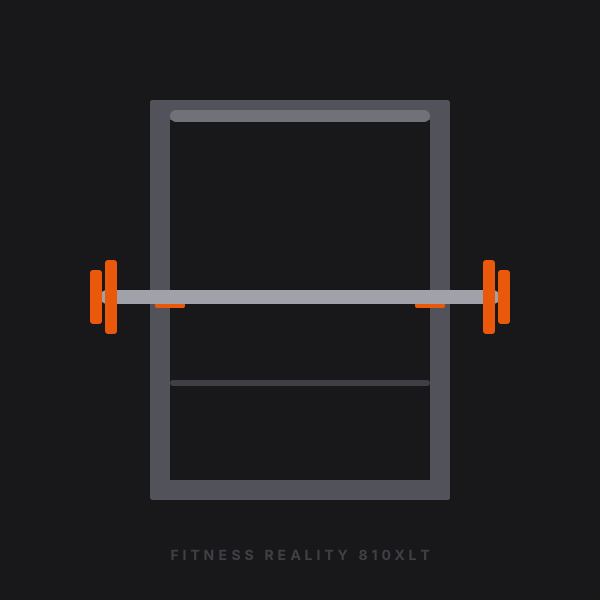
Fitness Reality 810XLT Super Max Power Cage
Capacity
800 lbs
Steel
2x2" 14-Gauge Steel
Footprint
50.5" L x 46.5" W x 83.5" H
Price
$329.99
- 4.5+ star rating on Amazon with 5,000+ reviews
- Excellent value under $350
- 800 lb weight capacity
- Includes multi-grip pull-up bar
- Standard 2x2 hole spacing for attachments
- Optional lat pulldown attachment available
- 14-gauge steel is thinner than premium racks
- Plastic J-cup liners can wear over time
- Not ideal for lifters squatting 600+ lbs
A power rack with adjustable safety bars is essential. You can lower the safety bars for shorter/younger lifters and raise them for adults. Read our Fitness Reality 810XLT review.
Adjustable Dumbbells
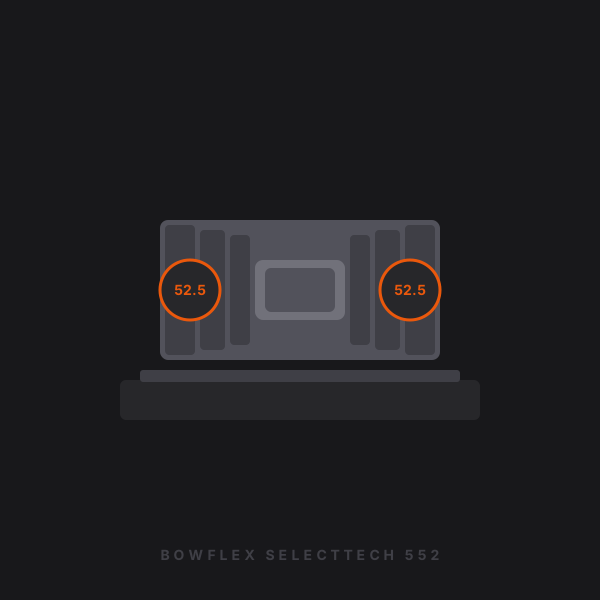
Bowflex SelectTech 552 Adjustable Dumbbells
Capacity
5-52.5 lbs each
Steel
Steel Plates / Nylon Dial Mechanism
Footprint
16.9" L x 8.3" W x 9" H each
Price
$429.00
- 4.7+ star rating on Amazon with 15,000+ reviews
- Replaces 15 sets of dumbbells (5-52.5 lbs)
- Fastest weight change system on the market (2 seconds)
- 2.5 lb increments up to 25 lbs
- Compact cradle storage footprint
- Sold as a pair
- Cannot be dropped — internal mechanism is fragile
- Length at 52.5 lbs feels awkward on some exercises
- Price has increased from original $349 MSRP
- 5 lb increments above 25 lbs
Adjustable dumbbells work for a 50 lb kid doing 5 lb curls and a 200 lb adult doing 50 lb curls. Read our Bowflex 552 review.
Light Kettlebells
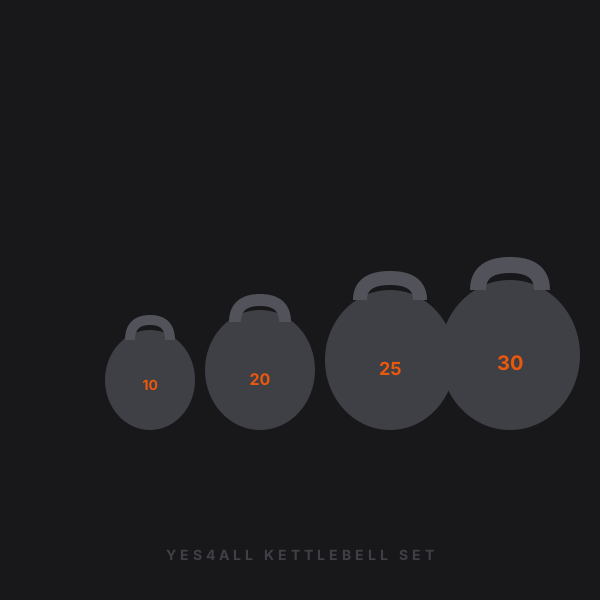
Yes4All Cast Iron Kettlebell Set
Capacity
10, 15, 20, 25, 30 lb set
Steel
Solid Cast Iron with Painted Finish
Footprint
Varies by weight
Price
$149.99
- 4.7+ star rating on Amazon with 12,000+ reviews
- Solid cast iron construction
- Durable painted finish
- Standard grip width for most users
- Available individually or in sets
- Best budget kettlebell option
- Cheaper competition-grade bells exist
- Paint can chip with heavy use
- Not ideal for kettlebell sport (uniform size)
- Handle texture varies between batches
Start kids with 5-15 lb kettlebells for swings and goblet squats. They're safer than barbells and teach excellent movement patterns. Read our Yes4All Kettlebell review.
Kid-Specific Equipment
Kids Training Barbell (Optional)
- 5-10 kg bars (5-22 lbs)
- Shorter length for smaller bodies
- Cost: $60-150
- Good for: Young teens learning barbell lifts
Pull-Up Bar with Kids' Grip
- Adjustable height options
- Non-slip grips
- Cost: $30-80
Lighter Plates
- 2.5 lb and 5 lb plates for gradual progression
- Essential for kid-sized progression jumps
Sample Programs by Age
Ages 7-11: Movement & Games (30 min, 2x/week)
Warm-Up: 5 min play-based movement (crab walks, bear crawls, animal walks)
Main Work:
- Bodyweight squats: 2x10
- Push-ups (knee or full): 2x8
- Assisted pull-ups or hanging: 2x10 sec
- Broad jumps: 2x5
- Plank: 2x15 sec
- Light kettlebell deadlift (5-10 lbs): 2x8
Finisher: 5 min game (obstacle course, tag, etc.)
Ages 12-14: Introduction to Weights (45 min, 2-3x/week)
Warm-Up: 5-10 min dynamic stretching + empty bar movements
Main Work:
- Goblet Squat: 3x8
- Dumbbell Bench Press: 3x8
- Dumbbell Row: 3x8
- Overhead Press (light bar): 2x8
- Deadlift (empty bar or very light): 2x5
- Plank: 3x20 sec
Focus: Form, form, form. Don't chase weight.
Ages 15+: Adult Beginner Program (60 min, 3x/week)
Workout A:
- Squat: 3x5
- Bench Press: 3x5
- Barbell Row: 3x5
Workout B:
- Squat: 3x5
- Overhead Press: 3x5
- Deadlift: 1x5
Alternate A/B three times per week. Add 5 lbs per session (upper body) or 10 lbs per session (lower body).
Critical Safety Rules for Young Lifters
- Adult supervision at all times until age 16+
- Always use safety bars on squats and bench
- Never train to failure — stop 2-3 reps before max
- Form before weight — perfect technique is non-negotiable
- Listen to the body — pain means stop, not push through
- Progress slowly — add weight only when form is perfect
- Rest days required — muscles grow during recovery
Family Training Tips
Train Together
Multi-generation family workouts are amazing. Kids see adults lifting, adults see kids having fun, everyone gets stronger. Make it a weekly event.
Don't Make It Mandatory
Force is the enemy of long-term training. Make the gym available and inviting. Kids who choose to train will train forever.
Celebrate Form Over Weight
Praise good technique, not heavy weight. A 65-lb bench press with perfect form is better than a 95-lb bench press with poor form.
Video Lifts
Film your kids' lifts so they can see their form. Teens especially love seeing their progress visually.
Track Progress
A simple notebook showing weight progress is incredibly motivating. Kids love seeing the numbers go up.
Common Questions
Related Content
- Home Gym Under $1,000 (Family-Friendly Setup)
- Home Gym Programming Guide
- Home Gym Safety: Training Alone
- Best Kettlebells for Home Gyms
- Bowflex 552 Review
- Home Gym Nutrition Basics
The Bottom Line
Kids and teens can train safely in a home gym with adult supervision, age-appropriate loading, and form-focused programming. Start young children with bodyweight and light dumbbells, introduce teens to empty barbell work, and let older teens follow adult beginner programs. A family home gym is one of the best investments in long-term health and athleticism.
Gym Builder Team
Our team tests every product hands-on before recommending it. We buy the equipment with our own money and train with it daily. No sponsored reviews, no pay-to-play rankings. Meet the team →
More in Guides
Bodybuilding Home Gym Setup: Equipment & Training Guide (2026)
How to build the perfect bodybuilding home gym. Equipment priorities, essential machines, and the setup for serious muscle building.
CrossFit Home Gym Setup: Complete Equipment Guide (2026)
How to build a complete CrossFit home gym. Equipment list, budget options, and programming for garage gym CrossFit training.
Garage Gym Summer Cooling: Train Through the Heat (2026)
How to keep your garage gym cool in summer. Fans, AC, ventilation, and timing strategies for hot weather training.