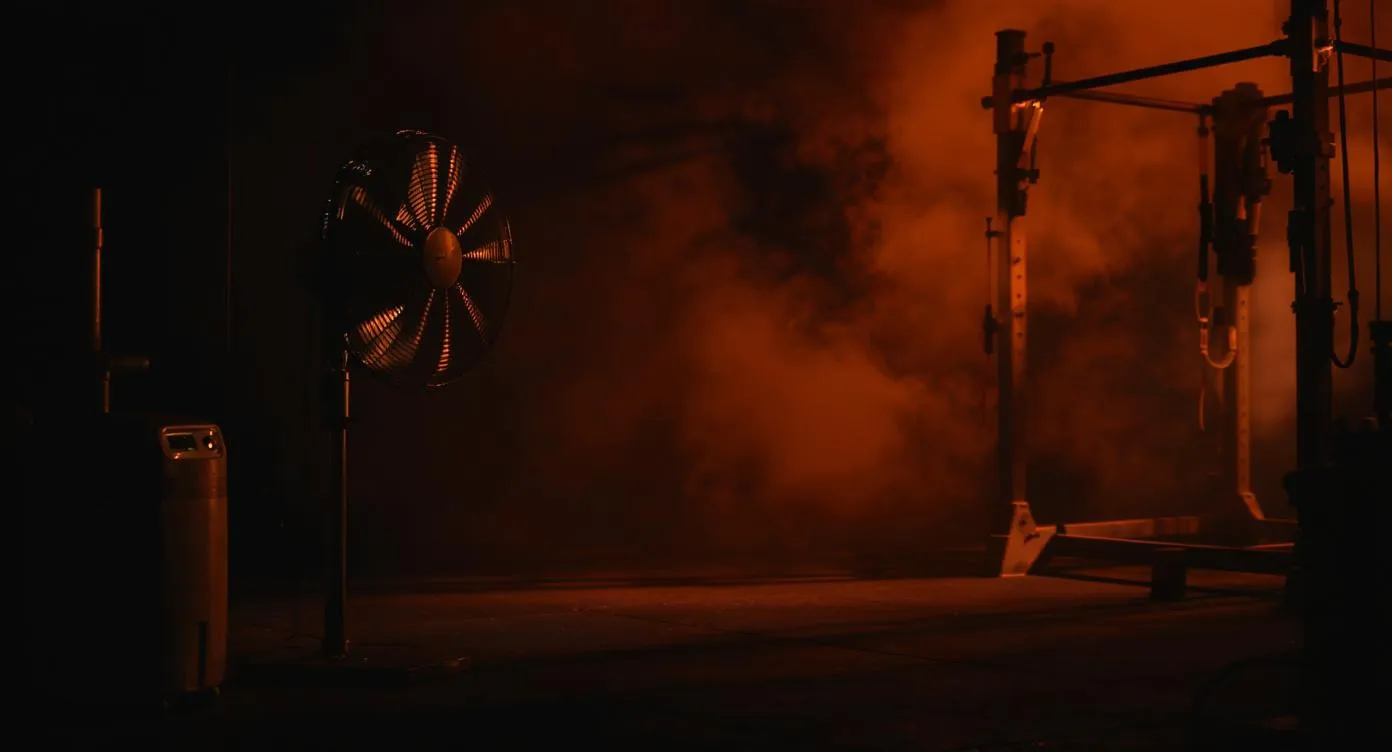
Garage Gym Summer Cooling: Train Through the Heat (2026)
How to keep your garage gym cool in summer. Fans, AC, ventilation, and timing strategies for hot weather training.
GarageGymBuilders is reader-supported. We may earn a commission through links on this page. Learn more.
A garage gym in summer is a brutal place. Direct sun on the roof, no airflow, and 95+ degree heat by 10 AM can turn your gym into an oven. You can either suffer through it, skip workouts, or actually fix the problem. Here's how to fix it.
Why Garage Gyms Get So Hot
Three reasons garages cook in summer:
- Direct sun on the roof — uninsulated roofs hit 140°F+
- No airflow — closed garages have no ventilation
- Concrete heat retention — concrete absorbs heat all day, releases at night
By 2 PM in July, an uninsulated garage in a hot climate can be 110°F+ — hotter than outside.
The Cooling Hierarchy (Cheapest to Most Effective)
Level 1: Time Your Workouts ($0)
Free and effective. Train when the garage is coolest:
- 5-7 AM: Coolest time of day (10-15°F cooler than peak)
- 9-11 PM: Second coolest, after sunset
- Avoid 11 AM - 4 PM: Hottest hours, skip if possible
Just shifting your workout time fixes 50% of the heat problem.
Level 2: Open the Garage Door ($0)
Cross-ventilation works wonders. Open the garage door + a side window or back door for through-flow. Even 5-10 mph of natural breeze drops perceived temperature 8-15°F.
Level 3: Box Fan ($25-50)
A 20-inch box fan moves significant air for ~$30. Place it on the floor pointing toward you while you train. Cools by evaporation, not by dropping air temperature.
Pro tip: Two fans pointing at each other create cross-flow that cools the entire space.
Level 4: Industrial Standing Fan ($75-200)
A high-velocity industrial fan (like Lasko, Maxx Air, Vornado) moves 2-3x more air than a box fan. Worth the upgrade for serious users.
Level 5: Ceiling-Mounted Garage Fan ($150-300)
A ceiling-mounted fan provides constant airflow without floor space. Great for permanent garage gym installations.
Level 6: Portable AC ($300-600)
Portable AC units (10,000-14,000 BTU) can drop a 2-car garage temperature 10-15°F. Requires:
- An exhaust hose to a window or vent
- An electrical outlet (most run on standard 120V)
- A drain line or bucket for condensate
Good brands: Whynter, Black+Decker, LG, Frigidaire.
Level 7: Window AC ($250-500)
If your garage has a window, a window AC unit is more efficient than portable. Same cost range, better cooling, no exhaust hose hassles.
Level 8: Mini-Split AC ($800-2,000 + install)
The premium option. A ductless mini-split AC system installed in the garage:
- Most efficient cooling
- Quiet operation
- Heats AND cools (great for winter too)
- Permanent installation
Worth it for dedicated garage gym owners in hot climates.
Level 9: Insulate the Garage ($500-2,000)
The root cause fix. Adding insulation to walls and ceiling:
- Drops baseline temperature 10-20°F
- Dramatically reduces AC load if you have one
- Helps in winter too
- Long-term investment
Priority order: Ceiling first (biggest impact), then walls, then garage door.
Reducing Body Heat
Cooling the air helps, but managing your body temperature matters more.
1. Hydrate Aggressively
- Drink 16 oz of water 2 hours before training
- Drink 8 oz every 15 minutes during training
- Add electrolytes for sessions over 45 min
- Pre-cool with ice water 30 minutes before training
2. Cooling Towels
A microfiber cooling towel ($15) wet with cold water draped on neck/head drops body temperature 5-10°F. Game-changer for hot training.
3. Wet T-Shirt Cooling
Soak a t-shirt in cold water before training. Wear it during the workout. Evaporative cooling drops body temperature significantly.
4. Lower Volume in Heat
Reduce sets, increase rest periods. Don't try to PR in 95°F heat — you'll just hurt yourself.
5. Pre-Cool Your Body
Cold shower, ice slurry, or cooling vest before training drops core temperature so you can train longer before overheating.
Heat Safety Warning Signs
Stop training immediately if you experience:
- Dizziness or lightheadedness
- Nausea or vomiting
- Skin that feels cool/clammy despite the heat
- Confusion or disorientation
- Stopped sweating despite extreme heat
These are signs of heat exhaustion or heat stroke. Get out of the heat, hydrate with cold fluids, and seek medical attention if symptoms persist.
Sample Hot Weather Training Plan
Morning Session (5:30 AM - 7:00 AM)
Best for: heavy lifts, full intensity work
- Pre-hydrate the night before
- Train in cooler garage temperatures
- Avoid the worst heat entirely
Evening Session (8:00 PM - 9:30 PM)
Best for: moderate intensity work
- Start after sunset
- Garage door open for cross-ventilation
- Use fans aggressively
Skip the Heat (11 AM - 4 PM)
Don't train during peak heat unless you have AC. The risk-reward isn't worth it.
Common Questions
Related Content
- Winter Garage Gym Training
- Garage Gym Ventilation Guide
- Garage Gym Electrical Setup
- How to Build a Garage Gym
- Garage Gym Mistakes to Avoid
The Bottom Line
Summer garage gym training is brutal but manageable with the right strategy. Train early or late, use fans aggressively, hydrate constantly, and consider AC for extreme climates. Insulation is the long-term root cause fix. Don't be a hero in 105°F heat — heat stroke ends careers.
Gym Builder Team
Our team tests every product hands-on before recommending it. We buy the equipment with our own money and train with it daily. No sponsored reviews, no pay-to-play rankings. Meet the team →
More in Guides
Bodybuilding Home Gym Setup: Equipment & Training Guide (2026)
How to build the perfect bodybuilding home gym. Equipment priorities, essential machines, and the setup for serious muscle building.
CrossFit Home Gym Setup: Complete Equipment Guide (2026)
How to build a complete CrossFit home gym. Equipment list, budget options, and programming for garage gym CrossFit training.
Home Gym for Back Pain Sufferers: Train Without Hurting (2026)
How to train safely with chronic or recurring back pain. Equipment, exercises, and programming for lifters with back issues.