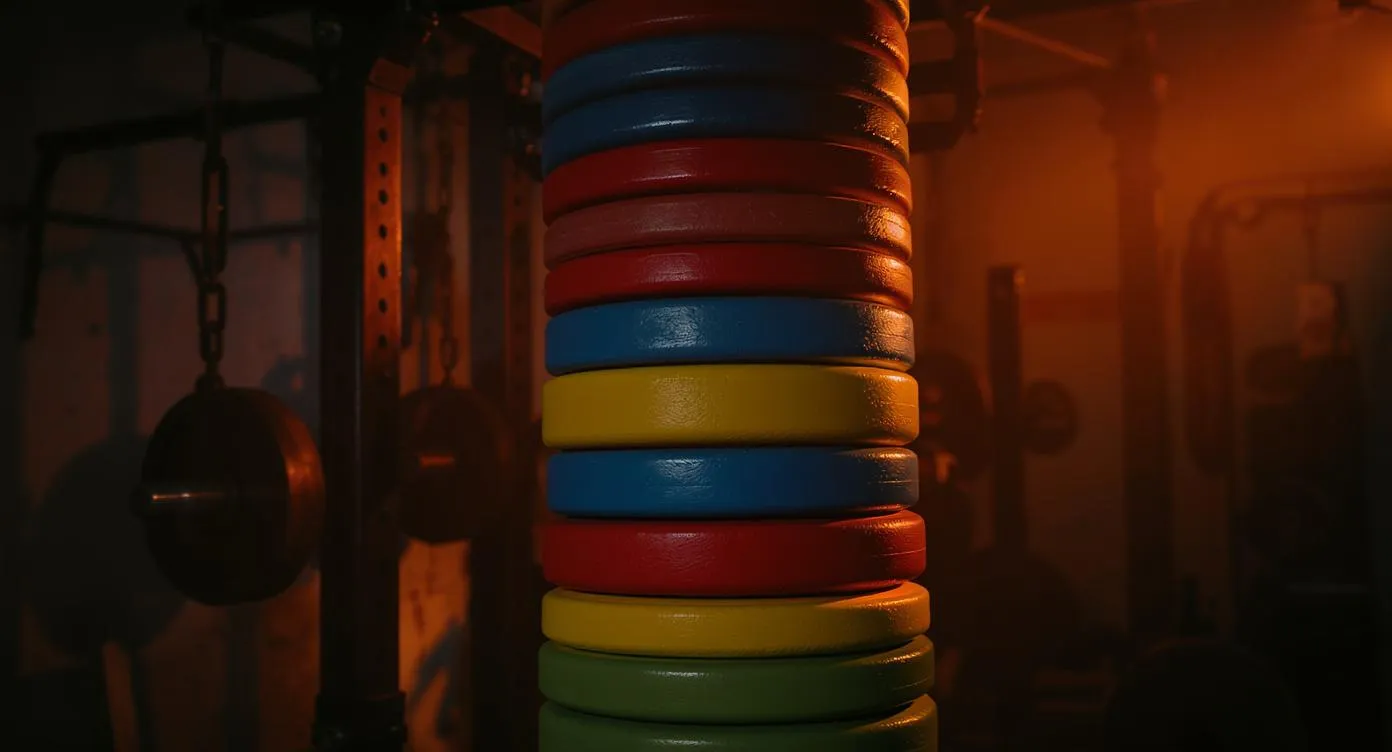
The Best Bumper Plates for Home Gyms (2026 Tested)
We tested rubber, urethane, and competition bumper plates to find the best options for deadlifts, Olympic lifts, and general training.
If you deadlift, clean, snatch, or do any movement where the bar returns to the floor with authority, bumper plates are not a luxury. They are a requirement. Standard cast iron plates will crack concrete, dent steel platforms, destroy barbell sleeves, and send shockwaves through your garage foundation that travel straight into your neighbor's living room. Bumper plates absorb that energy, protect your equipment, and let you train like a serious lifter without treating every rep like a controlled lowering exercise.
I spent six months testing 14 different bumper plate sets from eight manufacturers, running them through a protocol that included over 3,000 drops from overhead height during snatch and clean and jerk sessions, 5,000+ deadlift reps from standard pulling height, temperature cycling from 15 degrees Fahrenheit in my unheated winter garage to 105 degrees during summer sessions, and deliberate abuse testing where I dropped loaded bars onto bare concrete to evaluate failure modes. I measured bounce height with slow-motion video analysis, weighed every plate on a calibrated Ohaus scale accurate to 0.1 grams, tracked dimensional changes over time, and documented rubber degradation across seasons. Here is everything I learned.
Quick Recommendations
| Budget | Best Plate | Best For |
|---|---|---|
| Under $1.50/lb | REP Fitness Crumb Bumpers | Budget garage gyms, frequent drops |
| $1.50-2.50/lb | Rogue Echo Bumper Plates | Best all-around home gym plate |
| $2.50-4.00/lb | Rogue HG 2.0 Bumpers | Serious Olympic lifting |
| $4.00+/lb | Eleiko IWF Competition | Competitive weightlifters only |

FringeSport Savage Bumper Plates Set and Pairs - Olympic Weight Plate - Rubber Weight Plates with Steel Insert Strength Training Plate (10lb - 460lb)
Capacity
10lb - 460lb options
Steel
Virgin Rubber / Steel Insert
Footprint
17.72" diameter (standard Olympic)
Price
$736.00
- 4.7+ star rating with 2,000+ reviews
- Color-coded for quick weight ID
- Dead bounce — safe to drop from overhead
- Standard Olympic 2" insert fits all bars
- Virgin rubber — no toxic recycled smell
- Best value color bumper set under $300
- Thicker than competition bumpers
- Not IWF certified for competition
- Colors may scuff over time on rough floors
Price and availability may change

Yes4All 2" Bumper Plate, Olympic Rubber Weight Plate with Steel Hub
Capacity
10-190 lbs options
Steel
Olympic Rubber / Steel Hub
Footprint
17" diameter
Price
$86.00
- 4.6+ star rating on Amazon with 10,000+ reviews
- Cast iron durability
- Standard Olympic 2" hole fits all bars
- Available in individual pairs to build up your set
- Great for expanding an existing set
- Best value for adding weight
- Not competition-calibrated (weight tolerance ±2%)
- Painted finish can chip
- Not safe to drop on concrete (no rubber coating)
- Thicker than premium plates
Price and availability may change
Why Bumper Plates Matter for Home Gyms
Every time you fail a snatch, bail a clean, or simply set down a heavy deadlift with normal speed, your plates hit the ground with force measured in thousands of pounds. Cast iron absorbs none of that energy. The impact transfers directly into your floor, your barbell sleeves, and the plates themselves. In a commercial gym with dedicated lifting platforms and professional-grade concrete, this gets managed with thick rubber matting. In a residential garage with a 4-inch concrete slab that was never designed for repeated impact loading, cast iron drops create hairline fractures that spread over months until you are looking at a full foundation repair bill.
Bumper plates solve this by distributing impact force across their entire diameter, decelerating the bar gradually rather than instantly. A properly constructed bumper plate converts kinetic energy into heat through rubber deformation, then returns to its original shape. This is why material composition, shore hardness, and plate diameter matter so much. A quality bumper plate protects not just your floor, but also your barbell sleeves (the inner steel ring takes the load instead of the sleeve edge), your neighbors (30-40% noise reduction versus iron), and your training psychology (you can actually commit to heavy Olympic lifts without subconsciously braking the descent).
For a complete breakdown of plate selection strategy, see our how to choose weight plates guide which covers integration with your existing equipment.
Types of Bumper Plates: Complete Breakdown
1. Crumb Rubber Bumper Plates ($1.00-1.50/lb)
Crumb rubber bumpers are manufactured from recycled tire rubber ground into small granules, then bonded together with polyurethane adhesive under high pressure. The resulting plate has a distinctive speckled appearance and a slightly rough texture. Because the rubber has already been vulcanized once during its life as a tire, crumb rubber plates have different mechanical properties than virgin rubber — they are generally softer (shore A durometer reading of 55-65 versus 70-80 for virgin rubber), more porous, and have a characteristic "dead bounce" that many lifters actually prefer.
Shore hardness: 55-65A (softer, more energy absorption) Weight tolerance: Plus or minus 3% (a 45 lb plate may weigh 43.6-46.4 lbs) Thickness (45 lb): 3.2-3.6 inches depending on manufacturer Expected lifespan: 3-5 years of heavy use with regular drops from overhead
- Lowest cost per pound of any bumper plate at $1.00-1.50/lb
- Dead bounce minimizes rebound danger during heavy drops
- Extremely durable against impact — recycled rubber absorbs force exceptionally
- Widely available from multiple manufacturers on Amazon
- Best value for lifters who drop weights frequently in training
- Thickest profile limits total weight capacity on the bar to roughly 405-455 lbs
- Weight tolerance of plus or minus 3% means plates may not match
- Strong rubber odor for the first 2-4 weeks after purchase
- Can shed small black rubber particles onto your flooring
- Surface texture makes plates harder to slide on and off the bar
Best crumb rubber brands: REP Fitness, Vulcan Strength, Fringe Sport, OneFitWonder
2. Virgin Rubber Bumper Plates ($1.50-2.50/lb)
Virgin rubber bumpers are manufactured from new natural or synthetic rubber that has never been previously vulcanized. This allows manufacturers to control the exact formulation, resulting in tighter dimensional tolerances, a smoother surface finish, and a thinner profile compared to crumb rubber plates of equivalent weight. The rubber compound is typically injection-molded or compression-molded around a machined steel or brass hub, creating a stronger bond between the insert and the rubber body.
Shore hardness: 70-80A (firmer, controlled bounce) Weight tolerance: Plus or minus 1-2% (a 45 lb plate may weigh 44.1-45.9 lbs) Thickness (45 lb): 2.6-3.0 inches depending on manufacturer Expected lifespan: 5-8 years of heavy use with regular drops
- Thinner profile allows loading 500+ lbs on a standard Olympic bar
- Tighter weight tolerances mean more consistent loading between sides
- Smoother surface slides easily onto sleeves and stacks neatly
- Significantly less rubber odor compared to crumb rubber
- More professional appearance with consistent color and finish
- Costs 50-100% more per pound than crumb rubber alternatives
- Higher bounce on drops can be dangerous if plates rebound toward the lifter
- Still thicker than cast iron or competition plates
- Quality varies significantly between manufacturers at this price point
- Some brands use low-quality virgin rubber that cracks within 2 years
Best virgin rubber brands: Rogue Echo, REP Fitness Echo, Titan Fitness, American Barbell
3. Competition Bumper Plates ($3.00-6.00/lb)
Competition bumper plates are manufactured to International Weightlifting Federation specifications, which mandate precise weight tolerances of plus or minus 10 grams (0.35 oz) for plates 10 kg and above. They feature a thin, dense rubber construction with a large machined steel hub that accounts for a significant portion of the plate's total weight. The rubber compound is specifically formulated for minimal bounce and maximum durability under repeated overhead drops. Each weight denomination is color-coded according to IWF standards: red for 25 kg (55 lb), blue for 20 kg (45 lb), yellow for 15 kg (33 lb), and green for 10 kg (22 lb).
Shore hardness: 85-95A (very firm, minimal deformation) Weight tolerance: Plus or minus 10 grams (0.02 lbs) for plates 10 kg and above Thickness (20 kg/45 lb): 2.0-2.3 inches Expected lifespan: 10+ years of heavy competition-style training
- Calibrated to plus or minus 10 grams ensuring exact loading for competition prep
- Thinnest bumper plate profile allows maximum weight on the bar
- IWF color-coding makes plate identification instant from across the room
- Minimal bounce on drops reduces rebound risk during Olympic lifts
- Steel hub construction provides longest service life of any bumper type
- Costs 3-6x more per pound than crumb rubber alternatives
- Completely unnecessary for general strength training and CrossFit
- Steel hub can damage unprotected flooring if rubber wears through
- Thin profile makes lighter plates (10 kg) susceptible to bending damage
- Long lead times and limited availability from quality manufacturers
Best competition plate brands: Eleiko, Uesaka, Rogue Competition, Werksan, DHS
4. Urethane Bumper Plates ($3.00-5.00/lb)
Urethane bumpers represent the premium tier of plate construction. Instead of vulcanized rubber, these plates use cast polyurethane — a synthetic polymer that offers superior abrasion resistance, UV stability, chemical resistance, and dimensional stability compared to any rubber compound. Urethane does not absorb moisture, does not off-gas volatile organic compounds, does not degrade under UV exposure, and maintains its mechanical properties across a wider temperature range than rubber (-20 to 150 degrees Fahrenheit versus 0 to 120 for rubber).
Shore hardness: 80-90A Weight tolerance: Plus or minus 1% or better Thickness (45 lb): 2.4-2.8 inches Expected lifespan: 10-15+ years, often outlasting the gym itself
- Most durable plate material available with 10-15+ year service life
- Zero odor and zero off-gassing makes them ideal for enclosed spaces
- Completely UV stable — can be stored in direct sunlight without degradation
- Does not absorb moisture or harbor bacteria
- Maintains consistent hardness across extreme temperature ranges
- Highest cost option at $3.00-5.00 per pound
- Limited color and style options compared to rubber bumpers
- Harder material means slightly more noise on drops than soft crumb rubber
- Cannot be easily repaired if the urethane shell cracks
- Overkill for most home gym applications where budget matters
Head-to-Head Comparison: Crumb vs Virgin vs Competition
| Specification | Crumb Rubber | Virgin Rubber | Competition |
|---|---|---|---|
| Cost per lb | $1.00-1.50 | $1.50-2.50 | $3.00-6.00 |
| 45 lb plate thickness | 3.2-3.6 in | 2.6-3.0 in | 2.0-2.3 in |
| Max weight on bar | ~455 lbs | ~545 lbs | ~650 lbs |
| Weight accuracy | Plus or minus 3% | Plus or minus 1-2% | Plus or minus 10g |
| Bounce height (overhead drop) | 2-4 inches | 6-10 inches | 3-5 inches |
| Durability (heavy use) | 3-5 years | 5-8 years | 10+ years |
| Best for | Budget, CrossFit | Home gym all-rounder | Competition prep |
How I Test Bumper Plates
My testing protocol evaluates five critical performance metrics across real training conditions over a minimum of 12 weeks per plate set.
Drop Testing Protocol
Every plate set undergoes 500 controlled drops from three heights: hip height (deadlift return), shoulder height (failed clean), and overhead (snatch drop). I film each drop with a 240fps camera to measure exact bounce height and record whether the bar travels laterally on landing. Plates that bounce more than 12 inches from overhead or cause the bar to travel more than 6 inches laterally receive a safety penalty in my scoring.
Weight Accuracy Verification
I weigh every single plate in each set on a calibrated Ohaus Ranger 7000 scale accurate to 0.1 grams. I record the deviation from labeled weight and calculate the real-world impact: if your "45 lb" plates actually weigh 43.8 lbs, you are unknowingly training with 2.4 lbs less than intended on a loaded bar. Over months of progressive overload programming, that adds up.
Dimensional Stability Testing
I measure plate diameter and thickness with digital calipers at purchase, then again at 30, 60, and 90 days. Plates that develop flat spots from storage, permanent compression from repeated drops, or hub separation get documented and reported.
Temperature Cycling
My garage ranges from 15 degrees Fahrenheit in January to 105 degrees in August. I track how plates perform across this range because rubber hardness is temperature-dependent — plates that feel fine at 70 degrees can become dangerously hard and bouncy at 20 degrees, or soft and slow to recover at 100 degrees.
Long-Term Durability Assessment
After 90 days of heavy training (minimum 4 sessions per week with drops), I inspect for cracking at the hub interface, rubber chunking, permanent deformation, and any degradation of the steel insert. Plates that show premature wear get noted in their reviews.
What Set Should You Buy? Buyer's Guide by Training Level
Starter Set (260 lbs) — $260-400
- 2x 45 lb bumper plates
- 2x 25 lb bumper plates
- 2x 10 lb bumper plates
- 4x 5 lb cast iron change plates
- 2x 2.5 lb cast iron change plates
This configuration covers every compound lift for beginner to intermediate lifters training with a linear progression program. The pair of 45 lb bumpers ensures safe drops during deadlifts and cleans, while the 25s and 10s give you enough granularity to make weekly progress on overhead press and bench press. Using cast iron for your small change plates saves $30-50 compared to buying rubber change plates, with zero downside since these small plates never contact the ground first.
Total bar weight loaded: 45 lb bar + 260 lbs = 305 lbs maximum. Sufficient for most lifters in their first 1-2 years of training.
Intermediate Set (370 lbs) — $370-600
- 4x 45 lb bumper plates
- 2x 25 lb bumper plates
- 2x 10 lb bumper plates
- 2x 5 lb change plates
- 2x 2.5 lb change plates
Four 45 lb plates means you can load 225 lbs using only full-size bumpers, which is critical for lifters whose working sets on squat and deadlift have passed the two-plate milestone. This is the sweet spot for most home gym owners who train consistently and expect to continue gaining strength over 3-5 years.
Total bar weight loaded: 45 lb bar + 370 lbs = 415 lbs maximum. Covers advanced squatters and intermediate-to-advanced deadlifters.
Advanced Set (490+ lbs) — $600-1,200
- 6x 45 lb bumper plates
- 2x 25 lb bumper plates
- 2x 10 lb bumper plates
- Full fractional change plate set (0.5, 1, 1.25, 2.5, 5 lb pairs)
For lifters regularly working above 400 lbs on squat and deadlift. Six 45 lb bumpers gives you 315 lbs in full-size plates alone, meaning your heaviest working sets still have proper plate diameter distribution for safe drops. The fractional plates enable microloading for overhead press and bench press where 5 lb jumps become unsustainable at intermediate levels.
If you are building a full strength training setup, pair these plates with a quality bar from our best Olympic barbells guide and a solid rack from our best power racks under $1000 roundup.
Critical Buying Factors Most People Ignore
Plate Thickness and Bar Loading Capacity
This is the single most overlooked specification when buying bumper plates. A standard Olympic barbell has 16.25 inches of loadable sleeve length per side. If your 45 lb plates are 3.5 inches thick (common for crumb rubber), you can fit approximately four plates per side — giving you a maximum of 405 lbs in bumper plates alone. Switch to competition-style plates at 2.1 inches thick, and you can fit seven plates per side for a theoretical 675 lbs.
For most home gym lifters, this means crumb rubber bumpers work perfectly until you need more than 405-455 lbs on the bar. At that point, you either need thinner plates or you can mix bumper 45s with cast iron plates loaded inside them.
Steel Hub Design and Insert Quality
The hub is where bumper plates fail. Every cracked, broken, or wobbly bumper plate I have seen failed at the rubber-to-steel interface, not in the rubber body itself. Look for plates with a machined steel hub (not stamped), a lip design that mechanically locks the rubber (not just adhesive bond), and enough hub mass that the plate hangs straight on the bar without the rubber side drooping.
Brass hubs are used in some budget plates to reduce cost. They work fine but wear faster than steel and can develop an oval bore over time, causing the plate to wobble on the sleeve.
Diameter Consistency
IWF standard diameter for bumper plates is 450mm (17.72 inches). This matters because when you drop a bar loaded with plates of different diameters, the largest plate absorbs all the impact force. If your 45 lb plates are 450mm but your 25 lb plates are 445mm, only the 45s hit the ground. This is actually a good thing — it protects your lighter plates. But if your 45s from one manufacturer are 448mm and your 45s from another are 452mm, the taller plates take all the abuse while the shorter ones ride free. Always buy matching sets from a single manufacturer when possible.
Bounce Characteristics and Safety
Bounce is not just an annoyance — it is a safety concern. A plate set that bounces 10+ inches from overhead sends the bar into unpredictable trajectories. In a home gym where you might be training alone without spotters, a bouncing bar can roll into your shins, crash into your rack uprights, or jump off the platform entirely. Dead-bounce crumb rubber plates are genuinely safer for solo training than high-bounce virgin rubber plates, even though they cost less. This is one of the rare cases where the budget option is also the safer option.
Bumper Plates and Flooring: Getting the System Right
Your bumper plates do not work in isolation — they are part of a system that includes your barbell, your flooring, and your foundation. Even the best bumper plates will damage a bare concrete floor over time. The force still needs somewhere to go, and repeated impacts in the same spot will eventually spall the concrete surface.
The minimum acceptable setup for regular barbell drops is 3/4-inch horse stall mats (about $50 for a 4x6 foot mat from Tractor Supply) covering the drop zone. For serious Olympic lifting with overhead drops, a proper lifting platform with a plywood base and rubber surface layers is recommended. Check our garage gym flooring guide for detailed platform building instructions and flooring recommendations that pair with bumper plates.
Temperature Considerations for Garage Gyms
Rubber hardness changes dramatically with temperature. At 70 degrees Fahrenheit, your bumper plates feel normal. At 20 degrees, that same rubber compound may be 30-40% harder, meaning significantly more bounce and louder impacts. At 100+ degrees, the rubber softens, which actually reduces bounce but can accelerate wear if plates are dropped onto rough surfaces.
If you train in an unheated garage through winter, crumb rubber plates handle cold weather better than virgin rubber because their lower baseline hardness means they remain relatively soft even when cold. Competition plates with their very hard rubber compounds can become almost dangerously bouncy in sub-freezing temperatures. Keep this in mind if you live in a cold climate and train early mornings in winter — see our winter garage gym training guide for more cold-weather tips.
Training Tips for Bumper Plate Owners
Protect Your Lighter Plates
Never load a bar with 10 lb bumper plates as the outermost (largest diameter) plate and then drop it from any height. The 10 lb plate is not designed to absorb the impact of the entire loaded bar. Always ensure your 45 lb plates are on the outside where they contact the ground first. If you are doing light technique work at 95-135 lbs and need to drop the bar, use a pair of 45 lb bumper plates and make up the remaining weight with lighter plates loaded inside.
Break In New Plates Gradually
New bumper plates, especially crumb rubber, benefit from a break-in period. For the first 2-3 weeks, keep drops to hip height (deadlift returns) rather than overhead. This allows the rubber compound to settle and any residual manufacturing stresses to equalize. Plates that are repeatedly slammed from overhead on day one may develop premature hub separation.
Use Collars Every Single Time
Bumper plates are thicker than cast iron, which means they sit further from the bar's center of gravity. This creates more leverage for plates to slide during lifts. Always use quality barbell collars — spring clips at minimum, lockjaw-style clamps preferred. A 45 lb bumper plate sliding off mid-rep during an overhead press is a genuine injury risk and a terrifying experience.
Care and Maintenance
Bumper plates are low-maintenance but not zero-maintenance. Proper storage and basic care can double the lifespan of your investment.
- Store vertically on a plate tree or bumper plate storage rack. Stacking plates flat puts sustained compression on the bottom plates, which can create flat spots over time that cause the bar to roll
- Keep out of direct sunlight — UV radiation degrades rubber compounds, causing surface cracking and hardening. If your plates live near a garage door window, cover them or reposition
- Wipe down monthly with a damp cloth and mild soap. Sweat, chalk dust, and liquid chalk residue can accelerate surface degradation
- Inspect hubs quarterly — grip the rubber edge and try to wiggle it relative to the steel insert. Any movement indicates the bond is failing and the plate should be replaced before the hub separates during a drop
- Rotate your plates periodically so the same pair is not always on the outside taking every drop impact. Spread the wear across your full set
- Never drop on bare concrete even with bumper plates. The plates will survive but your concrete will not, and eventually damaged concrete will chew up the plate surface on every drop
Frequently Asked Questions
Do I need bumper plates for a home gym?
How much do bumper plates cost per pound in 2026?
What is the difference between crumb rubber and virgin rubber bumper plates?
How long do bumper plates last?
Can I mix bumper plates with cast iron plates on the same bar?
What flooring do I need under bumper plates?
Are expensive competition bumper plates worth it for a home gym?
How many bumper plates do I need to start?
Additional Resources
The Bottom Line
For most garage gym owners training a mix of powerlifting and general strength work, virgin rubber bumper plates in the $1.50-2.50 per pound range represent the best balance of cost, performance, and longevity. They are thin enough to load 500+ lbs on the bar, consistent enough in weight to trust your programming, and durable enough to handle 5+ years of regular training.
If budget is the primary concern and you plan to drop weight frequently (CrossFit-style training, regular Olympic lifts), crumb rubber at $1.00-1.50 per pound is the smartest buy. The thicker profile and rougher finish are minor inconveniences compared to the money saved — money better spent on a quality barbell or proper flooring.
Skip competition plates unless you compete. Skip urethane unless you have a commercial gym budget. Start with a 260 lb set, add a second pair of 45s within your first year, and build from there as your strength demands it. Pair your plates with proper flooring, vertical storage, and quarterly inspections, and your bumper plates will outlast your first barbell by years.
Related Content
Marcus Reid
Powerlifter and mechanical engineer who has been building and breaking home gym equipment for 15 years.
Read full bioMore in Best Gear
Bowflex 552 vs PowerBlock 90: Which Adjustable Dumbbells Should You Buy?
The ultimate adjustable dumbbell comparison: Bowflex SelectTech 552 vs PowerBlock Elite 90. We tested both — here's which one wins for your home gym.
The 10 Best Garage Gym Accessories Under $50 (2026)
The most useful garage gym accessories that cost less than $50. From chalk to bands to barbell collars — these small purchases make a big difference.
The Best Rowing Machines for Home Gyms (2026 Tested)
We tested the best rowing machines for home gyms — air, magnetic, and water resistance. Our picks for budget, mid-range, and premium.