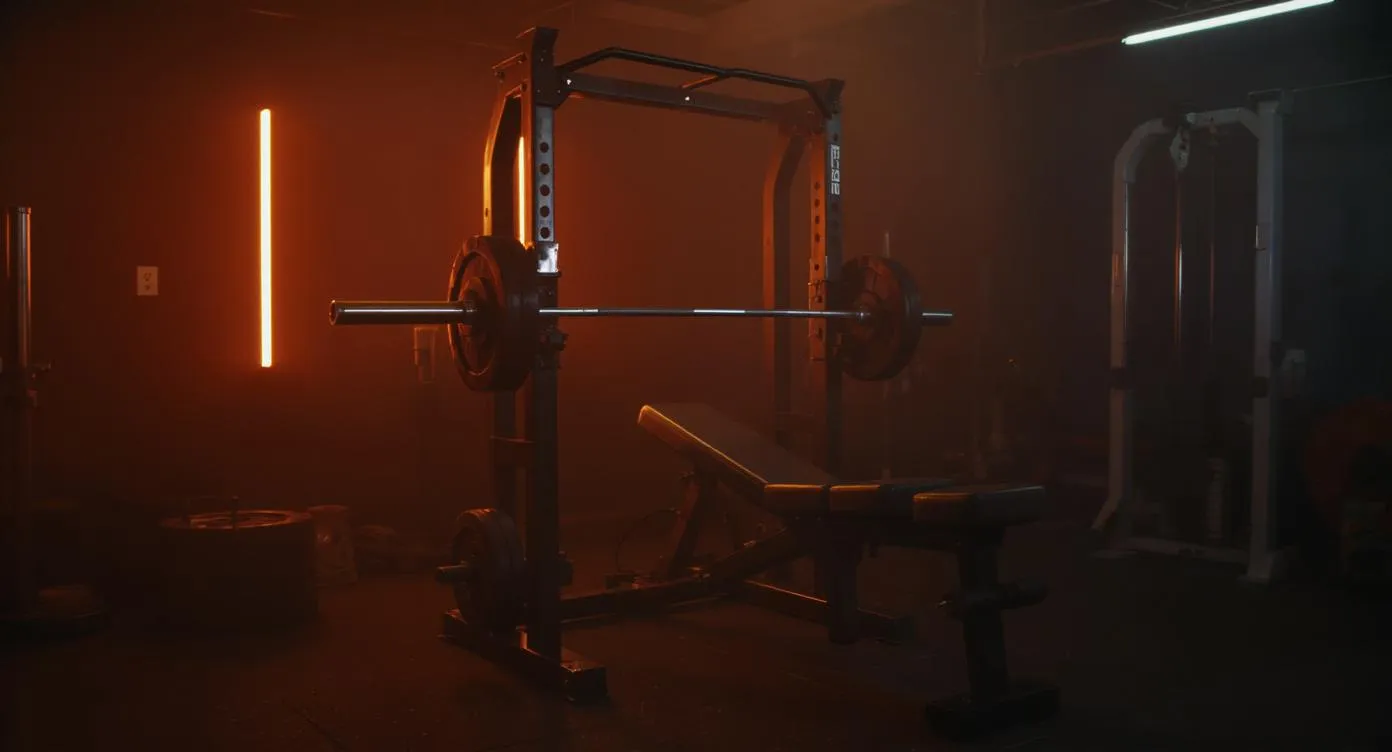
Titan Fitness Wall Mounted Pulley Tower Review: Zero Floor Space Cable Training
We installed and trained on the Titan Fitness Wall Mounted Pulley Tower for 4 months. Full breakdown of installation, cable feel, exercise variety, plate loading, and whether a wall-mounted cable system can replace a full cable machine.
Cable machines are the single most versatile piece of gym equipment — but also the most space-consuming. A full cable crossover station eats 6-8 feet of wall space and 4-5 feet of floor depth. The Titan Fitness Wall Mounted Pulley Tower eliminates the floor space problem entirely. It bolts to your wall, hangs flat when not in use, and gives you both high and low pulley positions for the exercises that matter most. After four months of training, here is whether it can actually replace a full cable machine.

Titan Fitness Selectorized Wall Mounted Pulley Tower, Pin-Loaded 200 LB Weight Stack, Adjustable Trolley Height, Handles, Connector Included, Home Gym Equipment
Capacity
200 lbs pin-loaded stack
Steel
Steel Frame / Selectorized Stack
Footprint
Wall-mounted
Price
$1,379.99
- 4.5+ star rating on Amazon
- Wall-mounted — no floor space needed
- Plate-loaded up to 350 lbs
- High and low pulley positions
- 2:1 cable ratio for smooth resistance
- Best space-saving cable machine
- Requires solid wall or stud mounting
- Plates not included
- Cable routing takes patience during setup
Price and availability may change
At a Glance
Quick Specs · Titan Fitness Selectorized Wall Mounted Pulley Tower, Pin-Loaded 200 LB Weight Stack, Adjustable Trolley Height, Handles, Connector Included, Home Gym Equipment
Why Wall-Mounted Matters
Most garage gym owners face a trade-off: they want cable exercises but cannot sacrifice the floor space. A wall-mounted pulley tower solves this because:
- Zero floor footprint. The unit mounts flush to the wall and extends only 6-8 inches from the surface when the plate loading peg is empty.
- Shared space. You can mount it on the same wall behind your power rack, on a garage wall that also holds tool storage, or in a bedroom gym where floor space doubles as living space.
- Permanent installation. Once mounted, it is always ready. No setup, no teardown, no rolling a floor-standing machine into position.
The trade-off is that wall mounting requires structural support. You need to mount into wall studs, a concrete/block wall, or a dedicated mounting board. Drywall alone will not hold the load.
Installation
What You Need
- Stud finder (if mounting to a wood-framed wall)
- Lag bolts (included) rated for the wall type
- Impact driver or socket wrench
- Level
- Measuring tape
- 15-20 minutes for drilling and mounting (after finding studs)
The Process
The Titan pulley tower mounts via a steel back plate with pre-drilled holes. You locate your wall studs (or mark your concrete anchor points), drill pilot holes, and lag-bolt the plate to the wall. The pulley arms, cable, and loading peg attach to the back plate after it is secured.
Critical detail: The mounting height determines whether the high pulley position is actually useful. If you mount it too low, you lose the overhead angle needed for lat pulldowns and tricep pushdowns. Mount the top of the unit as high as possible — ideally with the high pulley at 7.5-8 feet from the floor. This gives you the proper downward angle for vertical pulling movements.
Wall Requirements
- Wood studs: Mount into at least two studs (16" or 24" on center). Use 3/8" x 3" lag bolts minimum.
- Concrete/block: Use concrete sleeve anchors rated for 350+ lbs shear load.
- Metal studs: Not recommended. Metal studs in residential construction are not designed for this type of lateral loading.
- Drywall only: Absolutely not. The unit plus 200+ lbs of plate loading will rip out of drywall anchors.
If you are renting and cannot drill into walls, this product is not for you. Consider the Valor Fitness cable station or a floor-standing pulley system instead.
The Cable System
The 2:1 Ratio
The Titan pulley uses a 2:1 cable ratio, meaning you pull 2 feet of cable for every 1 foot of plate travel. This halves the effective weight — if you load 100 lbs of plates, you feel approximately 50 lbs of resistance at the handle.
Why this matters:
- You need more plates for heavy exercises. A 200 lb cable pull requires 400 lbs on the loading peg (which exceeds the capacity).
- The reduced resistance is smoother and more forgiving at the start of each rep.
- Light accessories like face pulls and lateral raises become practical with small plate loads.
In practice, the 2:1 ratio is ideal for the exercises most people use a cable machine for: lat pulldowns, tricep pushdowns, face pulls, cable curls, and cable crossovers. These are typically moderate-weight, high-rep exercises where the halved resistance keeps the plate loading manageable.
Cable Feel
The cable runs through steel pulleys with nylon bearings. The feel is good — not commercial-gym smooth, but significantly better than the cheap Amazon pulley attachments that clip onto power rack J-cups. There is minimal friction at the start of each rep and consistent tension through the range of motion.
The cable itself is a coated steel cable that has shown zero fraying after four months of use. The coating prevents rust and reduces noise when the cable contacts the pulleys.
Exercises You Can Do
High Pulley Position
- Lat pulldowns — with included lat bar or a straight bar attachment
- Tricep pushdowns — rope, straight bar, or V-bar attachment
- Face pulls — rope attachment, excellent for shoulder health
- Straight-arm pulldowns — lat isolation for back development
- Cable crunches — kneeling, using rope attachment for ab work
Low Pulley Position
- Cable rows — seated on the floor or a bench
- Bicep curls — standing, constant tension through full range
- Upright rows — close grip for trap activation
- Cable pull-throughs — excellent glute and hamstring exercise
- Cable lateral raises — low pulley provides constant tension unlike dumbbells
Mid-Height (if mounting allows adjustment)
- Cable chest flies — if mounted at appropriate height
- Cable woodchops — core rotational training
- Face pulls from mid-height — alternative angle for rear delt targeting
What We Love
- Zero floor space — mounts flat against the wall and extends only 6-8 inches when unloaded
- High and low pulley positions cover 90% of cable exercise needs
- 2:1 cable ratio provides smooth, forgiving resistance ideal for isolation work
- Plate-loaded design uses your existing Olympic plates — no expensive proprietary weight stack
- 350 lb plate capacity handles any moderate-weight cable exercise
- Steel cable with coating is durable and quiet
- Includes lat bar attachment in the box
- Clean, minimal design does not clutter the gym visually
What Could Be Better
- Requires mounting into wall studs or concrete — not an option for renters or drywall-only walls
- 2:1 cable ratio means you need twice the plates for heavy exercises — 200 lb resistance requires 400 lbs on the peg
- Single station — you cannot do cable crossovers (need two units for that)
- No adjustable height positions between high and low — the pulleys are fixed
- Cable routing during initial setup requires patience and sometimes pliers to thread correctly
- Loading and unloading plates on the wall-mounted peg is slightly awkward compared to a floor-standing stack
- No handle or attachment storage — you need a separate hook or bin for rope, bar, and handle attachments
4-Month Durability Report
After four months of training 3-4 days per week, loading up to 200 lbs on the peg:
- Wall mounting: Rock solid. Zero movement, zero looseness in the lag bolts. We mounted into two studs with 3/8" x 4" lag bolts.
- Cable: No fraying, no kinking, no stretching. The coating is intact.
- Pulleys: Still smooth. No squeaking or grinding noises.
- Loading peg: No bending despite regular 200 lb loads.
- Back plate: No stress marks or deformation.
The only maintenance has been wiping down the cable with a dry cloth monthly. No lubrication needed yet.
Titan Wall Pulley vs Valor Fitness Wall Mount Cable Machine Cable Station
The Valor Fitness Wall Mount Cable Machine is a floor-standing cable station that does not require wall mounting. It costs roughly $200-250 and takes up about 4 x 2 feet of floor space.
Choose the Titan Wall Pulley if: You have wall studs available and need zero floor footprint. The wall mount is a permanent installation that is always ready.
Choose the Valor Fitness if: You rent and cannot drill into walls, or you want the flexibility to move the machine. The trade-off is permanent floor space commitment.
Both provide similar exercise variety and cable feel. The deciding factor is wall mounting capability.
Building a Complete Cable Training Program
Here is a 4-day split using the Titan pulley as the primary accessory machine after barbell compound movements:
Day 1: Push
- After bench press: Tricep pushdowns 4 x 12, Cable lateral raises 3 x 15
Day 2: Pull
- After deadlifts/rows: Lat pulldowns 4 x 10, Face pulls 3 x 15, Cable curls 3 x 12
Day 3: Legs
- After squats: Cable pull-throughs 3 x 15, Cable crunches 3 x 15
Day 4: Upper
- After overhead press: Straight-arm pulldowns 3 x 12, Cable crossovers (if two units) or cable flies from low pulley 3 x 15
Who Should Buy the Titan Wall Pulley
Buy it if:
- Floor space is your biggest constraint and you have mountable walls
- You own a power rack for barbell work and want cable accessories without a second machine eating floor space
- You primarily use cable exercises for isolation and moderate-weight work
- You want a permanent, always-ready cable station
Skip it if:
- You rent and cannot drill into walls
- You want cable crossovers — you would need two units mounted 5-6 feet apart
- You need heavy cable pulls above 175 lbs effective resistance — the 2:1 ratio limits practical max
- You prefer the convenience of a selectorized weight stack over plate loading
Final Verdict
The best cable training solution for space-constrained home gyms. Zero floor footprint, smooth cable action, and enough exercise variety to cover every isolation movement. The wall mounting requirement limits who can use it, but for gym owners with studs or concrete walls, it is the most space-efficient cable machine available.
Price and availability may change
Titan Fitness
Titan Fitness Selectorized Wall Mounted Pulley Tower, Pin-Loaded 200 LB Weight Stack, Adjustable Trolley Height, Handles, Connector Included, Home Gym Equipment
4.5+ star rating on Amazon
Wall-mounted — no floor space needed
Price and availability may change
Related Content
- Best Cable Machines for Home Gyms
- Valor Fitness Wall Mount Cable Machine Cable Station Review
- Marcy SM-4033 Smith Machine Review (Includes Cable System)
- Best Power Racks Under $1,000
- Home Gym Under $2,000 Build
- Bodybuilder Home Gym Build
Frequently Asked Questions
Can you do lat pulldowns on the Titan wall pulley?
How much weight can you actually pull on the Titan wall pulley?
Can you mount the Titan wall pulley on a concrete garage wall?
Do you need two Titan wall pulleys for cable crossovers?
What attachments work with the Titan wall pulley?
Can renters use the Titan wall pulley?
Additional Resources
Marcus Reid
Powerlifter and mechanical engineer who has been building and breaking home gym equipment for 15 years.
Read full bioMore in Reviews
Yes4All Kettlebell Set Review: Best Budget Kettlebells on Amazon?
Our review of the Yes4All Cast Iron Kettlebell Set. Are these the best budget kettlebells for home gym training on Amazon?
TRX Bandit Resistance Band Handles Review: Worth the Money?
Hands-on review of the TRX Bandit Resistance Band Handles. Is $49.95 worth it for your home gym?
POWER GUIDANCE Battle Rope Review: CrossFit Standard for $40
Hands-on review of the POWER GUIDANCE 30 ft Battle Rope. Best budget battle rope on Amazon for HIIT, CrossFit, and brutal conditioning.
You Might Also Like
Best Power Towers for Home Gyms in 2026
We tested 4 power towers from $90 to $150. Pull-ups, dips, leg raises, and push-ups in one station. Here's which ones are actually stable enough to train on.
Complete Calisthenics Home Gym Build Under $500
Build a complete bodyweight training station for under $500. Power tower, gymnastic rings, parallettes, resistance bands, and everything you need for calisthenics at home.