How to Anchor a Power Rack: Concrete & Wood Floor Guide (2026)
Step-by-step guide to anchoring your power rack to concrete or wood subfloor. Tools, hardware, and safety considerations.
GarageGymBuilders is reader-supported. We may earn a commission through links on this page. Learn more.
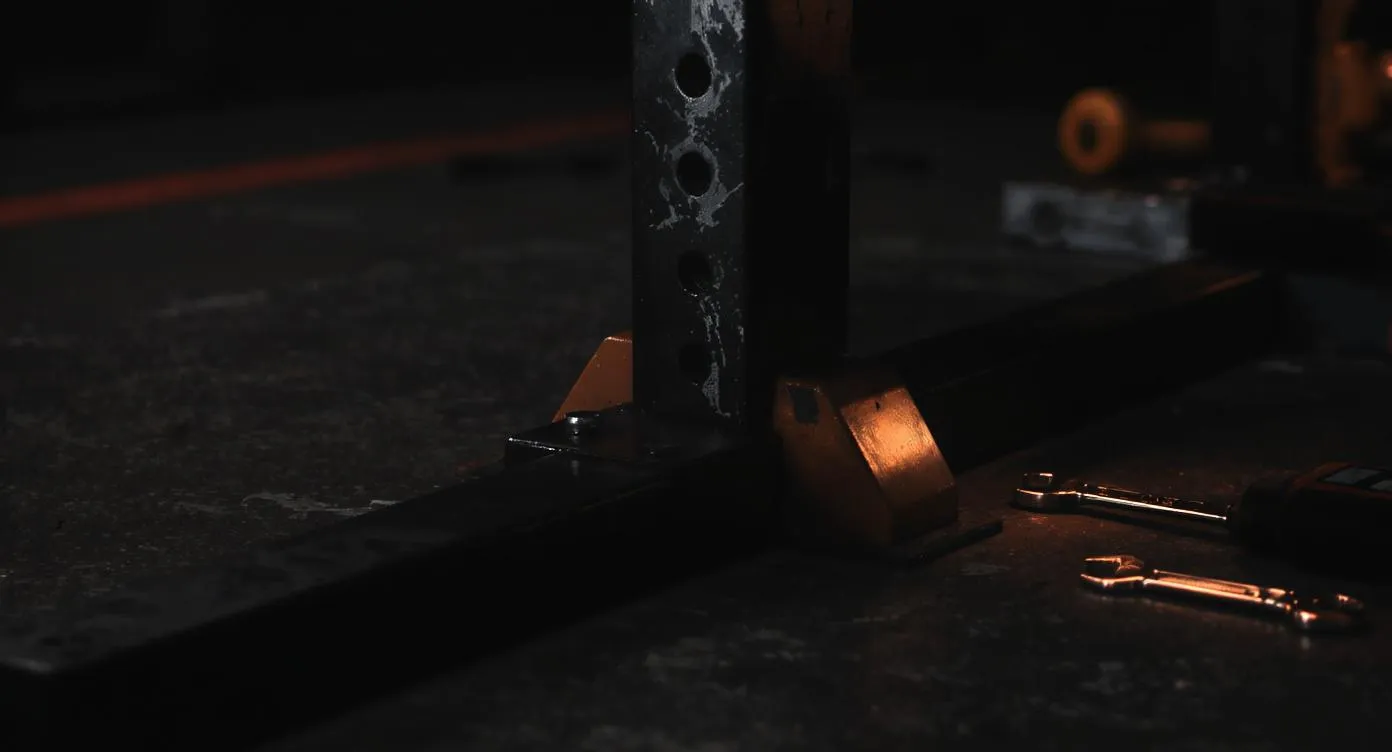
A power rack is the centerpiece of any home gym, but unanchored racks can wobble, tip, or walk across the floor under heavy use. Anchoring solves all of this — and it's easier than most people think. This guide walks through anchoring to both concrete and wood subfloors.
Should You Anchor Your Rack?
Anchor if:
- You squat or press 300+ lbs
- You do kipping pull-ups or muscle-ups
- Your rack wobbles under load
- You have children who could pull on the uprights
- You have a tall rack (90"+) — taller = more leverage = more tip risk
You can skip anchoring if:
- Your rack is heavily loaded (300+ lbs of plates on the storage pegs)
- You only do moderate lifts (150-250 lbs)
- Your rack is short (72" or less)
- You're renting and can't drill into the floor
Anchoring to Concrete
Tools You'll Need
- Hammer drill (rotary drill won't work)
- Concrete drill bit matching your anchor diameter
- Shop vacuum
- Wrench or socket set
- Safety glasses + dust mask
Hardware You'll Need
Best option: Wedge anchors (also called expansion anchors)
- Most racks use 1/2" or 5/8" anchors
- Get 3.5" length minimum for full embedment
- Stainless steel for garage humidity resistance
- Buy 4-8 anchors (typically 4 for most racks)
Cost: $15-25 for hardware
Step-by-Step Process
-
Position your rack in its final location. Anchoring is permanent.
-
Mark anchor holes through the rack feet with a permanent marker.
-
Move the rack to expose the floor markings.
-
Drill pilot holes with the hammer drill. Drill 1/2" deeper than the anchor length to allow for dust buildup. Hold the drill vertical — angled holes weaken the anchor.
-
Vacuum out the holes. This is critical — concrete dust prevents the wedge from setting properly. Vacuum twice if needed.
-
Insert the anchors through the rack feet into the holes. Tap them in with a hammer until the washer sits flush with the rack base.
-
Tighten with a wrench. The wedge expands as you tighten, locking the anchor into the concrete. Tighten until firm — usually 2-3 turns past flush.
-
Test the rack — it should not move at all. If it wobbles, check that anchors are fully tightened.
Anchoring to Wood Subfloor
Wood subfloor anchoring is trickier than concrete — you need the right hardware and you can't drill into joists arbitrarily.
Hardware You'll Need
Best option: Heavy-duty lag bolts
- 1/2" diameter, 4-6" length
- Get matching washers
- Stainless steel for moisture resistance
Cost: $10-15 for hardware
Step-by-Step Process
-
Locate floor joists with a stud finder. Your anchors MUST go into joists, not just the subfloor plywood.
-
Position the rack so anchor holes align with joists. You may need to rotate the rack to make this work.
-
Mark and drill pilot holes through the rack feet AND the subfloor INTO the joists. Pilot hole diameter should be ~75% of the lag bolt diameter.
-
Install lag bolts with washers through the rack feet into the joists. Tighten with a socket wrench until snug.
-
Test for movement — the rack should be solid.
Wood Subfloor Warning
Anchoring to wood is less secure than concrete. If your rack feet don't line up with joists, consider:
- Using a lifting platform with bolted-down rack uprights
- Loading the rack with 300+ lbs of plates instead of anchoring
- Installing a sleeper system underneath for proper anchoring
Anchoring Alternatives
Plate-Loaded Stability
Loading 300+ lbs of plates onto the storage pegs creates enough mass to prevent walking. This works for most lifters and requires no drilling.
Lifting Platform
Build a lifting platform with the rack uprights bolted into the platform itself. The platform sits on the floor (no drilling) and the rack can't move because it's mechanically attached. See our lifting platform build guide.
Sandbag Weights
For very small home gyms, large sandbags placed on the rack feet can provide enough hold-down force for moderate loading.
Common Mistakes
Mistake 1: Skipping the Vacuum Step
Concrete dust prevents wedge anchors from setting. ALWAYS vacuum the holes before installing anchors.
Mistake 2: Using a Regular Drill
Concrete needs a hammer drill (not a regular rotary drill, even with a masonry bit). Borrow or rent one if you don't own it.
Mistake 3: Drilling at an Angle
Vertical drilling is essential. Angled holes weaken the anchor and can crack concrete.
Mistake 4: Using Wood Screws on Concrete
Wood screws split concrete and provide zero holding power. Only use proper concrete anchors.
Mistake 5: Anchoring to Subfloor Plywood Only
Wood subfloor anchors must go into joists. Plywood-only attachment will rip out under load.
Common Questions
Related Content
- How to Choose a Power Rack
- How to Build a Lifting Platform
- How to Build a Garage Gym
- Home Gym Safety
- Garage Gym Mistakes to Avoid
The Bottom Line
Anchoring a power rack takes 30 minutes, costs under $25, and adds enormous stability and safety. For concrete floors, use wedge anchors and a hammer drill. For wood subfloors, use lag bolts into joists. If you can't drill, load the rack heavily with plates or use a lifting platform. Don't skip this step on a tall rack — wobble and walking are not just annoying, they're dangerous.
Gym Builder Team
Our team tests every product hands-on before recommending it. We buy the equipment with our own money and train with it daily. No sponsored reviews, no pay-to-play rankings. Meet the team →
More in Guides
Bodybuilding Home Gym Setup: Equipment & Training Guide (2026)
How to build the perfect bodybuilding home gym. Equipment priorities, essential machines, and the setup for serious muscle building.
CrossFit Home Gym Setup: Complete Equipment Guide (2026)
How to build a complete CrossFit home gym. Equipment list, budget options, and programming for garage gym CrossFit training.
Garage Gym Summer Cooling: Train Through the Heat (2026)
How to keep your garage gym cool in summer. Fans, AC, ventilation, and timing strategies for hot weather training.