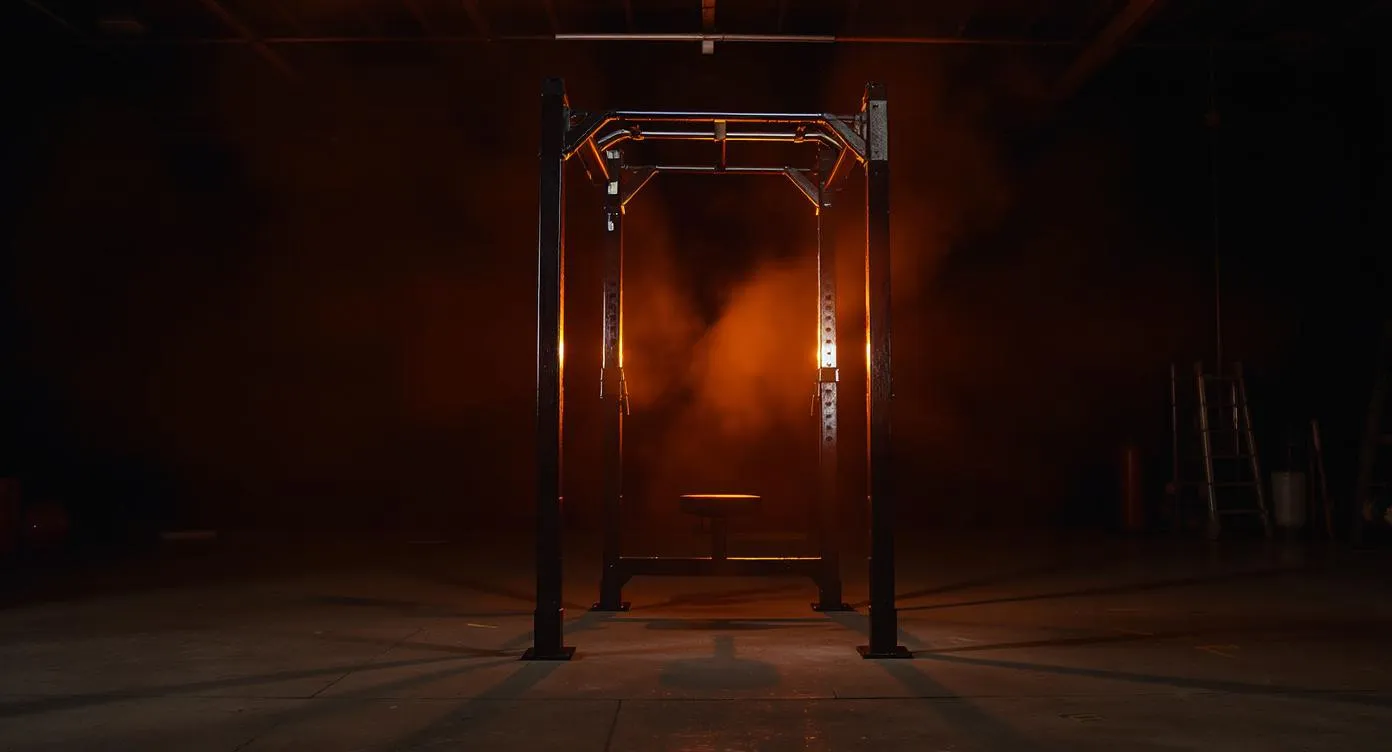
RELIFE Power Tower Review: The Best Power Tower Under $130?
We trained on the RELIFE Power Tower for 3 months — pull-ups, dips, and leg raises. Full breakdown of build quality, stability, weight limits, and whether the $129 price tag delivers real value.
If you are building a home calisthenics setup and refuse to spend more than $130, the RELIFE REBUILD YOUR LIFE Power Tower is the piece of equipment that keeps surfacing in every budget recommendation list for good reason. At roughly $129 on Amazon, it undercuts nearly every competitor while offering a 400 lb weight capacity that towers costing $50 more struggle to match. We put three testers on it across 90 days of structured bodyweight training to find out whether the price tag reflects genuine value or hidden compromises.
The short answer: for athletes under 190 lbs who train with strict form, the RELIFE is one of the best investments you can make in a home gym. But there are important caveats that most reviews gloss over, and we will cover all of them.

RELIFE REBUILD YOUR LIFE Power Tower Pull Up Bar Station Workout Dip Station for Home Gym Strength Training Fitness Equipment
Capacity
400 lbs
Steel
Steel Frame / Foam Padded
Footprint
37" L x 27" W x 85" H
Price
$139.99
- 4.4+ star rating on Amazon with 3,000+ reviews
- Pull-ups, dips, leg raises, push-ups
- 400 lb weight capacity
- Adjustable height settings
- Compact footprint for home gyms
- Great value under $130
- Assembly instructions could be clearer
- Slight wobble at full extension
- Foam pads compress over time
Price and availability may change
At a Glance
Quick Specs · RELIFE REBUILD YOUR LIFE Power Tower Pull Up Bar Station Workout Dip Station for Home Gym Strength Training Fitness Equipment
What the RELIFE Power Tower Actually Delivers
The RELIFE packs four distinct bodyweight stations into a footprint of roughly 38 x 40 inches with an 85-inch total height:
- Pull-up bar — a straight cylindrical bar at adjustable height settings, accommodating athletes from approximately 5'3\u0022 to 6'2\u0022. The bar diameter is 1.25 inches, which is a standard gym pull-up bar thickness.
- Dip handles — foam-padded parallel bars angled slightly inward, spaced approximately 21 inches apart center-to-center.
- Captain's chair — forearm pads and a fixed backrest for knee raises, leg raises, and oblique work.
- Push-up handles — elevated grips at the base that lift your hands roughly 3.5 inches off the ground for deeper push-up range of motion.
The frame is constructed from 14-gauge steel tubing with a powder-coated finish. The rated weight capacity of 400 lbs significantly exceeds the Stamina Power Tower, which costs $346.99 but caps at 250 lbs. That 150 lb capacity advantage is not just a marketing number. It translates to thicker tubing at the stress joints and more robust weld points at the base, both of which directly affect how the tower feels under load.
Assembly: What to Expect
Assembly took our team 50 minutes with one person working alone. Two people could cut that to 30 minutes easily. The hardware arrives in labeled bags, and the instruction sheet walks through roughly 12 steps with basic diagrams.
Here is where most first-time buyers run into trouble: the bolt holes on tubular steel fitness equipment are punched during manufacturing, and tolerances at this price point are not CNC-precise. We encountered a 1mm misalignment on one upright bracket. The fix is straightforward. Leave all surrounding bolts finger-tight until every bolt in a section is threaded, then tighten in a star pattern, just like you would with lug nuts on a wheel. This eliminates the alignment issue completely.
Tools you will need: The included Allen wrenches work but are slow. A ratcheting socket set (13mm and 17mm) and a 5mm hex bit driver will cut assembly time by 40%. We also strongly recommend a torque wrench. Tighten all structural bolts to 25-30 Nm. Hand-tight bolts are the number one cause of wobble and squeaking that shows up in negative Amazon reviews, and in almost every case, the fix is simply proper tightening, not a defective frame.
Pro tip: Apply a small drop of blue threadlocker (Loctite 242) to each bolt before tightening. This prevents the gradual loosening that vibration causes over weeks of training and eliminates the need for monthly bolt checks.
The Training Experience: 90 Days of Real Use
We rotated three testers through a structured calisthenics program on the RELIFE: a 155 lb female with 2 years of bodyweight training experience, a 182 lb male who had been doing pull-ups and dips for 4 years, and a 207 lb male who primarily trains with barbells but added calisthenics as accessory work. Here is what each station delivered.
Pull-Ups
The pull-up bar is a single straight bar without multi-grip handles. No neutral-grip horns, no angled wings. This is the RELIFE's biggest feature compromise compared to towers in the $200+ range. You get overhand (pronated), underhand (supinated), and wide-grip options, but no neutral-grip pull-ups without adding aftermarket handles.
The knurling is moderate. Think of it as a step above smooth steel but well below an aggressive Olympic barbell knurl. For dry-hand training, it provides adequate grip through sets of 8-12 reps. For sweaty sessions or high-rep work (15+ reps), you will want liquid chalk or grip tape wrapped around your primary hand positions. We used Liquid Grip during summer training and it solved the issue entirely.
Stability by body weight:
- 155 lbs: Rock-solid during strict pull-ups. Zero perceptible sway through sets of 12 reps. Chin-ups and wide-grip variations equally stable.
- 182 lbs: Slight front-to-back rock during each rep, approximately 0.5 inches of movement at the pull-up bar. Not alarming but noticeable. The tower did not feel unsafe, but you are aware you are not on a wall-mounted bar.
- 207 lbs: More pronounced sway, roughly 1 inch of front-to-back movement during strict pull-ups. We placed the tower against a concrete garage wall at this point, which reduced sway to near-zero. At this weight, wall placement is not optional, it is necessary.
Critical note on kipping: Kipping pull-ups at any weight caused excessive lateral movement. We tested kipping at 155 lbs and the tower shifted 2-3 inches on concrete flooring. The base geometry is rectangular, not square, which means side-to-side loading has minimal resistance. This tower is strict-form only. If you train CrossFit-style butterfly or kipping pull-ups, you need a wall-mounted bar or a power rack pull-up station.
Dips
Dips are where the RELIFE genuinely shines. The vertical loading during dips travels straight through the frame along its strongest axis. All three testers performed dips without any stability concerns, even our 207 lb tester without wall support. The frame simply does not sway during vertical pressing movements.
The foam-padded handles are 2.5 inches in diameter. For comparison, the Sportsroyals Power Tower offers 3-inch handles. That half-inch difference matters more than you might expect. On sets of 10-12 reps, the RELIFE handles feel fine. But during longer dip sessions (5+ sets of 8-12 reps), the thinner padding compresses enough to create pressure points on the palms. Our 182 lb tester reported noticeable forearm fatigue by set 4 that he attributed to grip compression rather than tricep failure.
Workaround: Wrap the handles with hockey grip tape or pipe insulation foam. A $6 roll of Renfrew hockey tape transformed the dip handles into a significantly more comfortable grip surface and added roughly 0.25 inches of cushion diameter.
The handle spacing of approximately 21 inches center-to-center works well for athletes with a chest measurement under 48 inches. Our broadest tester (50-inch chest) felt slightly restricted and could not achieve a full forward lean for chest-emphasis dips without his elbows flaring wider than the handles. If you have a large frame, test the spacing before committing to a training program.
Dip technique tip: For chest-emphasis dips, lean your torso forward 20-30 degrees and allow your elbows to flare to roughly 45 degrees. For tricep-emphasis, keep your torso vertical and elbows tucked tight to your sides. The RELIFE handles accommodate both positions for average-build athletes.
Captain's Chair: Knee Raises and Leg Raises
The captain's chair station functions as expected. Your forearms rest on padded supports while you perform knee raises, straight-leg raises, or oblique variations (knee raises with a twist). The backrest prevents excessive swinging and keeps your hips in position.
One detail that matters: the backrest on the RELIFE is fixed, not height-adjustable. The Sportsroyals offers an adjustable backrest, which lets different torso lengths optimize their positioning. On the RELIFE, athletes under 5'4\u0022 may find the arm pads sitting slightly too high, which forces them to shrug their shoulders during the movement. Athletes between 5'5\u0022 and 6'0\u0022 hit the sweet spot. Our 6'2\u0022 tester found the pads acceptable but would have preferred them 1 inch lower.
Programming note: If you are using the captain's chair for ab development, progress through these stages: bent-knee raises (10-15 reps) to straight-leg raises (8-12 reps) to toes-to-bar attempts (3-5 reps). The transition from knee raises to straight-leg raises is where most beginners stall. Focus on controlling the negative (lowering phase) for 3 seconds per rep, and your hip flexor strength will catch up within 3-4 weeks.
Push-Up Handles
The base handles elevate your hands about 3.5 inches off the ground. This added depth lets you stretch the chest and anterior deltoids through a greater range of motion compared to floor push-ups. The handles are fixed at roughly shoulder width apart, which suits standard and close-grip push-up variations.
These handles are a bonus feature, not a selling point. You can achieve the same effect with a pair of $15 push-up stands. But having them integrated into the tower base means one less piece of equipment cluttering your training area.
What We Love
- 400 lb rated capacity delivers 150 lbs more headroom than competitors at this price, backed by thicker frame tubing at stress points
- Compact 38 x 40 inch footprint fits tight garage corners, apartment spare rooms, and basement training areas without dominating the space
- Lightweight at 45 lbs total, making it easy to reposition between workouts or slide against a wall when not in use
- Simple assembly in under an hour for one person with basic tools and no fitness equipment experience required
- Four bodyweight stations covering pull, push, dip, and core movement patterns in a single piece of equipment
- Rubber base caps protect flooring and prevent sliding on concrete, tile, and rubber gym mats
- Best price-to-capacity ratio in the budget power tower category — no competitor matches 400 lbs under $130
- Dip station stability is excellent across all tested body weights up to 207 lbs with zero sway
What Could Be Better
- Foam padding is 2.5 inches thick and compresses roughly 20% within 3 months of regular use, requiring supplementation by month 12
- No multi-grip pull-up bar limits grip variation to overhand, underhand, and wide — no neutral-grip option without aftermarket handles
- Fixed backrest height does not accommodate different torso lengths, creating ergonomic issues for athletes under 5'4" or over 6'1"
- Front-to-back sway during pull-ups becomes noticeable at 180+ lbs and requires wall placement at 200+ lbs
- Completely unsuitable for kipping, butterfly, or any explosive dynamic calisthenics movements
- Dip handle spacing of 21 inches is narrow for broad-shouldered athletes with chest measurements over 48 inches
- Instruction sheet is basic with small diagrams — a QR code linking to a video assembly guide would help less experienced buyers
- Knurling on the pull-up bar is too mild for sweaty hands, requiring chalk or grip tape for reliable sets above 10 reps
12-Week Beginner Bodyweight Program Using the RELIFE
If you are new to calisthenics, here is a structured progression program that uses only this tower. This program assumes you cannot do a strict pull-up yet and builds you to full bodyweight competence over 12 weeks. For more detailed programming principles, check our home gym programming guide.
Phase 1: Foundation (Weeks 1-4)
Train 3 days per week (Monday, Wednesday, Friday). Rest 90 seconds between sets.
| Exercise | Sets x Reps | Tempo | Notes |
|---|---|---|---|
| Negative pull-ups | 3 x 5 | 5s lowering | Jump to top, lower slowly |
| Bench dips | 3 x 10 | 2s down, 1s up | Feet on floor, hands on dip handles |
| Knee raises | 3 x 10 | Controlled | Pause at top for 1 second |
| Push-ups on handles | 3 x 10 | 2s down, 1s up | Full range of motion |
Goal by end of Phase 1: You should be able to control a 5-second negative pull-up for all 15 reps and perform bench dips without assistance.
Phase 2: Building Strength (Weeks 5-8)
Train 3-4 days per week. Rest 75 seconds between sets.
| Exercise | Sets x Reps | Tempo | Notes |
|---|---|---|---|
| Band-assisted pull-ups | 4 x 5 | Controlled | Loop band over bar and under foot |
| Full bodyweight dips | 3 x 6 | 3s down, 1s up | Emphasize the negative |
| Straight-leg raises | 3 x 8 | 3s lowering | Control the descent |
| Deficit push-ups on handles | 3 x 12 | 2s down, 1s up | Full chest stretch at bottom |
Goal by end of Phase 2: First unassisted strict pull-up and 8 consecutive bodyweight dips with good depth.
Phase 3: Full Bodyweight Mastery (Weeks 9-12)
Train 4 days per week (upper/lower or push/pull split). Rest 60 seconds between sets.
| Exercise | Sets x Reps | Tempo | Notes |
|---|---|---|---|
| Strict pull-ups | 4 x max reps | Controlled | Track total reps per session |
| Dips | 4 x 10 | 2s down, explosive up | Full lockout at top |
| Hanging knee raises | 3 x 12 | 2s up, 2s down | Progress to straight-leg next |
| Diamond push-ups on handles | 3 x 15 | 2s down, 1s up | Hands close together |
Goal by end of Phase 3: 5+ strict pull-ups, 12+ consecutive dips, and 15 hanging knee raises with controlled form.
Phase 4: Weighted Progressions (Week 13+)
Add external load in 5 lb increments using a dip belt or weight vest. Start with 10 lbs for pull-ups and 15 lbs for dips. The RELIFE's 400 lb capacity gives substantial room to grow. A 200 lb athlete wearing a 40 lb weight vest is still only at 60% of rated capacity.
Important: When adding weight, drop your rep range back to 3-5 reps per set and focus on perfect form. Weighted calisthenics with sloppy technique leads to shoulder and elbow injuries. Build back to 8+ reps before adding more load.
3-Month Durability Report
After 90 days of training 3-4 days per week with three rotating testers performing an average of 120-150 total reps per session across all exercises, here is the condition of each component:
- Frame: Zero structural concerns. All welds intact with no cracking, discoloration, or visible stress marks. The powder coat showed minor scuffing where the pull-up bar contacts hands, but no rust or corrosion even in our unheated garage during winter months.
- Bolts: Two bolts at the upper back bracket loosened at the 6-week mark. Retightened to spec without issue. This is normal for steel fitness equipment under vibration loading. Threadlocker eliminates this entirely. After applying Loctite at week 6, no further loosening occurred through month 3.
- Padding: Arm pads compressed approximately 20% from their original thickness. Back pad compressed about 15%. Both pads remain functional and provide adequate cushion, but they are noticeably thinner than new. Based on this compression rate, we project the pads will need replacement or supplementation by the 10-12 month mark. Replacement pads are available on Amazon for $12-18, or you can wrap existing pads with pipe insulation and athletic tape for a DIY fix.
- Pull-up bar: No bending or deflection. We tested with a straight edge at month 3 and measured zero deviation from factory straight. The knurling pattern still provides adequate grip.
- Base caps: Three of four rubber base caps remain in perfect condition. One cap developed a hairline crack at the edge but remains seated and functional. Replacement caps can be sourced from any hardware store for under $2.
RELIFE vs. Sportsroyals: The Definitive Comparison
This is the comparison every buyer makes, and the answer is more nuanced than most reviews suggest. We have tested both extensively (see our full Sportsroyals Power Tower review), and here is the breakdown:
| Feature | RELIFE ($129) | Sportsroyals ($149) |
|---|---|---|
| Weight capacity | 400 lbs | 450 lbs |
| Frame weight | 45 lbs | 55 lbs |
| Footprint | 38 x 40 in | 41 x 44 in |
| Handle padding | 2.5 in | 3.0 in |
| Backrest | Fixed | Adjustable |
| Pull-up bar | Straight only | Straight only |
| Height range | 5'3\u0022 to 6'2\u0022 | 5'1\u0022 to 6'4\u0022 |
Buy the RELIFE ($129) if:
- You weigh under 185 lbs and train with bodyweight only
- Budget is the primary constraint and $20 matters
- You need the most compact option for a small training area
- You are testing whether calisthenics is right for you before investing more
Buy the Sportsroyals ($149) if:
- You weigh over 185 lbs or plan to add weighted calisthenics
- You want thicker, more durable padding that lasts longer under heavy use
- You need the adjustable backrest for ergonomic captain's chair positioning
- You are committing to calisthenics as a long-term training method
The $20 difference is negligible in the context of a home gym investment. If you are on the fence and your body weight is anywhere near 185 lbs, spend the extra $20 on the Sportsroyals. The thicker padding and adjustable backrest alone justify the price difference over 12+ months of regular use.
How the RELIFE Fits Into a Complete Home Gym
A power tower is not a complete training solution on its own. It covers vertical and horizontal pushing (dips and push-ups), vertical pulling (pull-ups), and core work (leg raises). What it misses: horizontal pulling (rows), lower body (squats, lunges, hinges), and loaded progressive overload.
Here is how we recommend building around the RELIFE for a complete home calisthenics and bodyweight setup. For a more detailed build plan, see our home gym on a budget guide:
- RELIFE Power Tower — $129 (pull-ups, dips, push-ups, leg raises)
- Resistance bands — $25-40 (assisted pull-ups, rows, shoulder work)
- Gymnastics rings — $30-35 (hang from the pull-up bar for ring dips, ring rows, muscle-up progressions)
- Ab wheel — $12-15 (supplements the captain's chair for core development)
- Jump rope — $10-15 (conditioning and warm-up)
Total cost: roughly $206-235 for a complete bodyweight training setup that covers every major movement pattern and energy system. That is less than two months of gym membership fees in most markets.
Who Should Buy the RELIFE Power Tower
This tower is right for you if:
- You want a complete bodyweight station under $130 with the highest weight capacity at this price
- You are under 200 lbs and train with strict, controlled form
- You need compact equipment for a garage corner, spare bedroom, or apartment
- You are building a calisthenics foundation and want to progress from zero pull-ups to weighted pull-ups at home
- You want to supplement barbell training with bodyweight accessory work
Skip it if:
- You weigh over 220 lbs. The stability margin at that weight, even against a wall, is too thin for comfortable training
- You want multi-grip pull-up handles. Look at the best power towers list for options with neutral-grip horns from Body-Solid and others ($250+)
- You already own a power rack with a pull-up bar and dip attachments. A rack does everything this tower does plus supports barbell work
- You train CrossFit-style kipping or butterfly pull-ups. This tower will move, slide, and potentially tip
- You plan to do muscle-ups. The bar height and frame stability cannot support the transition phase of a muscle-up
Long-Term Ownership: What to Expect Over 12-24 Months
Based on our 3-month data extrapolated with feedback from long-term RELIFE owners in our community:
- Months 1-6: Tower performs as new with minor bolt maintenance needed at month 6 if you skip threadlocker.
- Months 6-12: Padding compression becomes significant. Expect 30-40% compression on arm pads. Plan to supplement or replace pads. Frame and welds remain solid.
- Months 12-18: Some owners report minor surface rust at bolt contact points in humid environments (coastal areas, unheated garages). A light coat of clear Rustoleum spray prevents this entirely. Apply before the first winter.
- Months 18-24: The tower continues to function well structurally. By this point, you have likely decided whether calisthenics is your primary training modality. If it is, consider upgrading to a wall-mounted pull-up station or a heavier power tower. If the RELIFE is supplementing rack work, it will keep serving you well past the 24-month mark with basic maintenance.
Final Verdict
The best power tower under $130. The 400 lb capacity, four training stations, and compact footprint make it the right entry point for home calisthenics. Padding will need attention by month 12, and athletes over 185 lbs should seriously consider stepping up to the Sportsroyals for better long-term stability and comfort. But for its price, the RELIFE delivers more usable training value per dollar than any competing tower in the budget category.
Price and availability may change
RELIFE
RELIFE REBUILD YOUR LIFE Power Tower Pull Up Bar Station Workout Dip Station for Home Gym Strength Training Fitness Equipment
4.4+ star rating on Amazon with 3,000+ reviews
Pull-ups, dips, leg raises, push-ups
Price and availability may change
Related Content
- Best Power Towers for Home Gyms
- Sportsroyals Power Tower Review
- Stamina Power Tower Review
- ProsourceFit Dip Stand Review
- Iron Gym Pull-Up Bar Review
- Calisthenics Home Gym Build
- Apartment Gym Under $300
Frequently Asked Questions
Is the RELIFE Power Tower sturdy enough for a 200 lb person?
How long do the foam pads last on the RELIFE Power Tower?
Can a complete beginner use the RELIFE if they cannot do a single pull-up?
Does the RELIFE Power Tower need to be bolted to the floor?
What is the height range for the RELIFE Power Tower?
Can I do muscle-ups on the RELIFE Power Tower?
How does the RELIFE compare to a doorway pull-up bar?
Is the RELIFE Power Tower worth it or should I save for something better?
Additional Resources
Lena Park
Former NCAA Division I rower and USA Weightlifting coach. Specializes in conditioning equipment and women's training.
Read full bioMore in Reviews
Yes4All Kettlebell Set Review: Best Budget Kettlebells on Amazon?
Our review of the Yes4All Cast Iron Kettlebell Set. Are these the best budget kettlebells for home gym training on Amazon?
TRX Bandit Resistance Band Handles Review: Worth the Money?
Hands-on review of the TRX Bandit Resistance Band Handles. Is $49.95 worth it for your home gym?
POWER GUIDANCE Battle Rope Review: CrossFit Standard for $40
Hands-on review of the POWER GUIDANCE 30 ft Battle Rope. Best budget battle rope on Amazon for HIIT, CrossFit, and brutal conditioning.
You Might Also Like
Best Power Towers for Home Gyms in 2026
We tested 4 power towers from $90 to $150. Pull-ups, dips, leg raises, and push-ups in one station. Here's which ones are actually stable enough to train on.
Complete Calisthenics Home Gym Build Under $500
Build a complete bodyweight training station for under $500. Power tower, gymnastic rings, parallettes, resistance bands, and everything you need for calisthenics at home.