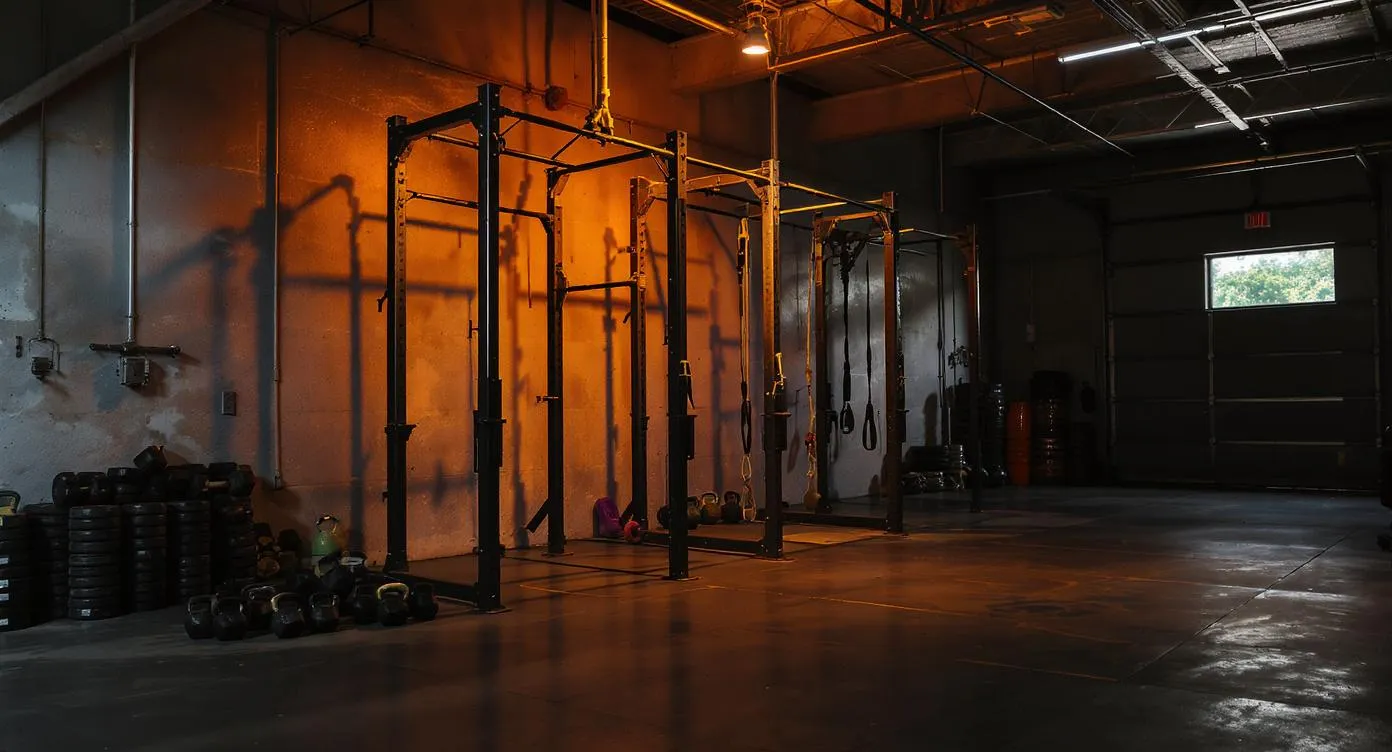
Home Gym for Kids & Teens: Safe Strength Training Guide
How to safely introduce kids and teens to strength training in your home gym. Age-appropriate equipment, exercises, and training advice.
Building a home gym that serves your entire family — including children and teenagers — is one of the smartest long-term investments you can make. Youth strength training, when programmed correctly and supervised by a knowledgeable adult, delivers measurable benefits in bone density, injury resilience, athletic performance, and self-confidence. The garage gym environment eliminates the intimidation factor of a commercial facility and lets young lifters progress at their own pace without peer pressure or overcrowded equipment.
This guide covers everything parents need to know: evidence-based age guidelines, equipment selection for shared family spaces, detailed programming by developmental stage, safety protocols, and long-term progression strategies that keep kids engaged for years.
Debunking the Growth-Plate Myth Once and for All
The single biggest barrier to youth strength training is the persistent myth that lifting weights stunts growth. This claim originated from poorly designed studies in the 1970s that confused correlation with causation, observing child laborers who performed repetitive heavy manual work for hours daily and happened to be shorter — ignoring the obvious confounders of malnutrition and overwork.
Modern research tells a completely different story:
- The American Academy of Pediatrics (AAP) has endorsed supervised resistance training for children aged 7 and older since 2008
- The National Strength and Conditioning Association (NSCA) published a position statement confirming that youth resistance training is safe, effective, and beneficial when properly supervised
- A 2014 meta-analysis in the British Journal of Sports Medicine found zero reported cases of growth-plate fracture in any supervised youth strength training study
- Youth Olympic weightlifters in countries like China, Turkey, and Bulgaria begin training at ages 8-10 and reach normal adult heights
- Resistance training actually increases bone mineral density during the critical window of adolescent development, reducing lifetime fracture risk
The real risk is not the training itself — it is unsupervised training with poor technique, excessive loads, and no structured progression. A properly equipped home gym with safety features and adult oversight eliminates these risks entirely.
Age-Appropriate Training Guidelines
Youth development is not linear. A 10-year-old and a 16-year-old have vastly different neuromuscular capabilities, attention spans, and hormonal profiles. The following guidelines are based on developmental stage rather than calendar age alone, since individual maturation rates vary significantly.
Ages 7-11: Movement Mastery and Body Awareness
At this stage, the nervous system is highly plastic and children learn motor patterns faster than at any other point in life. The goal is building a library of movement skills, not building muscle.
Training objectives:
- Master fundamental movement patterns: squat, hinge, push, pull, brace, carry
- Develop body awareness, coordination, and balance
- Build a positive association with physical training
- Introduce light external loading only after bodyweight mastery
Session structure: 25-35 minutes, 2 sessions per week maximum, with at least 48 hours between sessions. Every session should include play-based elements — obstacle courses, animal walks, relay challenges. If it feels like recess, you are doing it right.
Appropriate loading:
- Bodyweight exercises as the primary training tool
- Light dumbbells: 2.5 to 10 lbs for form reinforcement only
- Light kettlebells: 5 to 15 lbs for goblet squats and deadlifts
- Resistance bands for assisted pull-ups and rotational work
What to avoid:
- Maximum-effort singles or doubles
- Any load that causes form breakdown
- Complex Olympic lifts (clean, snatch, jerk)
- Adult-style programming with sets, reps, and percentages
- Training to muscular failure
Ages 12-14: Introduction to Structured Training
Puberty brings hormonal changes that dramatically increase the body's ability to adapt to resistance training. Most 12-14 year olds can begin learning barbell movements with an empty bar, and many will see rapid strength gains even with conservative loading. This is also the age where sports specialization often begins, making strength training an important injury-prevention tool.
Training objectives:
- Learn the five barbell lifts: squat, bench press, overhead press, deadlift, barbell row
- Develop training discipline: warm-up routines, rest periods, logging workouts
- Build a base of muscular endurance and work capacity
- Support sport-specific demands without overtraining
Session structure: 40-50 minutes, 2-3 sessions per week, alternating upper and lower emphasis or running a simple full-body template.
Appropriate loading:
- Empty barbell (standard 45 lb Olympic bar, or a 15-25 lb training bar for smaller athletes)
- Light plates: 2.5 lb and 5 lb increments for gradual progression
- Dumbbells up to 25-30 lbs for accessory work
- Kettlebells up to 25-35 lbs for swings and carries
Critical rule: Form always trumps load. A 12-year-old who can squat an empty bar with perfect depth, bracing, and knee tracking is progressing faster than one grinding out sloppy reps with 95 lbs.
Ages 15-17: Adult-Style Programming with Guardrails
By age 15, most teenagers have sufficient neuromuscular maturity to follow structured linear progression programs. Hormonal output (particularly testosterone in males) is approaching adult levels, and strength gains can be dramatic — it is not uncommon for a 16-year-old male to add 100+ lbs to his squat in the first year of serious training.
Training objectives:
- Follow a proven beginner barbell program (Starting Strength, StrongLifts 5x5, GZCLP, or similar)
- Learn to self-regulate intensity using RPE (Rate of Perceived Exertion)
- Build training consistency: 3-4 sessions per week, 48-52 weeks per year
- Develop independent gym skills (loading bars, setting safety pins, warming up)
Session structure: 50-70 minutes, 3-4 sessions per week, with structured deload weeks every 4-6 weeks.
Appropriate loading:
- Full progressive overload with barbell compounds
- Add 5 lbs per session on upper-body lifts, 10 lbs per session on lower-body lifts
- Deload by 10-15% when progress stalls, then rebuild
- Accessory work with dumbbells, cables, and machines as available
What still applies:
- No true 1-rep maxes until age 16+ with at least 6 months of consistent training
- Adult supervision recommended until the athlete demonstrates consistent safe behavior
- Competition participation (powerlifting, Olympic lifting) is appropriate for mature 15+ athletes with coaching
Essential Equipment for a Family-Friendly Home Gym
The best family gym setup uses equipment that scales across body sizes and strength levels. A 70 lb child and a 200 lb adult should be able to train in the same space with the same core equipment, adjusted for their individual needs. If you are planning a new build, our guide to building a garage gym covers the full setup process from flooring to layout.
Power Rack: The Non-Negotiable Centerpiece

ULTRA FUEGO Power Cage, Multi-Functional Power Rack
Capacity
800 lbs
Steel
2x2" 14-Gauge Steel
Footprint
50.5" L x 46.5" W x 83.5" H
Price
$389.98
- 4.5+ star rating on Amazon with 5,000+ reviews
- Excellent value under $350
- 800 lb weight capacity
- Includes multi-grip pull-up bar
- Standard 2x2 hole spacing for attachments
- Optional lat pulldown attachment available
- 14-gauge steel is thinner than premium racks
- Plastic J-cup liners can wear over time
- Not ideal for lifters squatting 600+ lbs
Price and availability may change
A full power rack with adjustable J-hooks and safety bars is the single most important piece of equipment for youth training. The safety bars catch a failed rep before it becomes an injury. For a family gym, look for these features:
- Hole spacing of 2 inches or less through the bench zone for precise safety-bar positioning
- Westside hole spacing (1-inch increments) is ideal for accommodating different-sized lifters
- Pull-up bar included — multi-grip options let smaller hands find a comfortable position
- Weight capacity of 500+ lbs — future-proofs the rack as teen lifters get stronger
- Bolt-down capability — prevents tipping when a lighter athlete reracking aggressively
Read our detailed ULTRA FUEGO Power Cage review for a full breakdown. For guidance on selecting a rack that works for multiple family members, see our power rack buying guide.
Adjustable Dumbbells: One Set Serves Everyone

BowFlex Results Series SelectTech Dumbbells
Capacity
5-52.5 lbs each
Steel
Steel Plates / Nylon Dial Mechanism
Footprint
16.9" L x 8.3" W x 9" H each
Price
$429.00
- 4.7+ star rating on Amazon with 15,000+ reviews
- Replaces 15 sets of dumbbells (5-52.5 lbs)
- Fastest weight change system on the market (2 seconds)
- 2.5 lb increments up to 25 lbs
- Compact cradle storage footprint
- Sold as a pair
- Cannot be dropped — internal mechanism is fragile
- Length at 52.5 lbs feels awkward on some exercises
- Price has increased from original $349 MSRP
- 5 lb increments above 25 lbs
Price and availability may change
Adjustable dumbbells eliminate the need for a full dumbbell rack and cover the enormous strength range between a young child and a grown adult. The Bowflex SelectTech 552 adjusts from 5 to 52.5 lbs in 2.5 lb increments at the low end — ideal for a 9-year-old doing lightweight lateral raises and a parent doing heavy rows in the same session. Read our Bowflex 552 review.
Kettlebells: The Best First Free Weight for Kids

Yes4All Cast Iron Kettlebell 5-80 Lb for Full Body Workout
Capacity
5-80 lbs options
Steel
Solid Cast Iron
Footprint
Varies by weight
Price
$79.97
- 4.7+ star rating on Amazon with 12,000+ reviews
- Solid cast iron construction
- Durable painted finish
- Standard grip width for most users
- Available individually or in sets
- Best budget kettlebell option
- Cheaper competition-grade bells exist
- Paint can chip with heavy use
- Not ideal for kettlebell sport (uniform size)
- Handle texture varies between batches
Price and availability may change
Kettlebells are arguably the single best tool for introducing children to loaded movement. The offset center of gravity teaches bracing and coordination simultaneously. A goblet squat with a 10 lb kettlebell is nearly self-correcting — the weight pulls the child into proper depth and upright posture. Start with 5, 10, and 15 lb bells for younger kids, and add a 25 lb and 35 lb for teens. Read our Yes4All Kettlebell review and our complete kettlebell selection guide for sizing recommendations.
Kid-Specific Equipment Worth Considering
Youth Training Barbell (Ages 10-14) Standard Olympic barbells weigh 45 lbs and are 7 feet long — too heavy and unwieldy for many pre-teens. A youth training bar weighing 10-25 lbs and measuring 5-6 feet provides a proper learning tool without the excess weight. Brands like Rogue (The Bella Bar at 15 kg / 33 lbs) and Fringe Sport offer shorter, lighter bars with proper knurling. Budget: $60-180.
Fractional Plates Children and early teens cannot make 10 lb jumps between sessions. Fractional plates (0.5 lb, 1.25 lb, and 2.5 lb pairs) allow micro-progressions that keep training productive without exceeding the young lifter's recovery capacity. Budget: $25-50 for a complete set.
Resistance Bands A set of looped resistance bands ($15-35) serves multiple purposes: assisted pull-ups for lighter athletes, warm-up activation work, and standalone resistance exercises. They take up zero floor space and last for years.
Gymnastics Rings or TRX Suspension Trainer Bodyweight pulling movements (rows, assisted pull-ups) are foundational for young lifters. A pair of wooden gymnastic rings ($30-45) or a TRX-style suspension trainer hung from the rack's pull-up bar provides scalable pulling options for every strength level.
Family Gym Equipment Checklist
10 itemsPros and Cons of a Home Gym for Youth Training
- Complete parental supervision without relying on a commercial gym's staff or policies
- No minimum age restrictions — commercial gyms typically ban children under 13-16 from the weight floor
- Training schedule flexibility around school, homework, sports practice, and family life
- Equipment scales from child to adult without buying separate machines or memberships
- Eliminates the intimidation factor of training around older, stronger strangers
- Builds a lifelong training habit when the gym is 30 seconds from the kitchen
- No monthly membership fees for multiple family members ($100-300/month saved)
- Hygienic environment you control — no shared benches, bars, or locker rooms
- Higher upfront cost ($1,000-2,500 for a complete family setup versus monthly gym fees)
- Requires dedicated space (minimum 100 sq ft, ideally 150+ sq ft)
- No professional coaching on-site — parents must learn proper form themselves first
- Limited equipment variety compared to a fully outfitted commercial facility
- Kids may associate the home gym with chores rather than fun if parents push too hard
- Climate control in a garage gym requires additional investment for summer and winter comfort
- Resale logistics if your family outgrows the space or moves homes
Detailed Programming by Age Group
Ages 7-11: Movement and Games Program (30 min, 2x per week)
Warm-Up (5 minutes): Play-based movement — bear crawls across the garage, crab walks, frog jumps, inchworms. Rotate games weekly to maintain novelty.
Main Work (20 minutes):
| Exercise | Sets x Reps | Load | Coaching Cue |
|---|---|---|---|
| Bodyweight Squat | 2 x 10 | None | "Sit down like there's a chair behind you" |
| Push-Ups (knee or incline) | 2 x 6-8 | None | "Chest touches the bench, then push" |
| Dead Hang from Pull-Up Bar | 2 x 10-15 sec | None | "Squeeze the bar like you're making orange juice" |
| Kettlebell Goblet Squat | 2 x 8 | 5-10 lb | "Hug the bell to your chest" |
| Broad Jumps | 2 x 5 | None | "Jump as far as you can and stick the landing" |
| Front Plank | 2 x 15-20 sec | None | "Stiff as a board from head to heels" |
Finisher (5 minutes): Obstacle course, sled drag race (use a towel on the gym floor), or timed challenges (most squats in 30 seconds with perfect form).
Progression: When the child completes all reps with solid form for two consecutive sessions, add one rep per set or increase kettlebell weight by 5 lbs. Do not rush progression — consistency matters far more than intensity at this age.
Ages 12-14: Introductory Barbell Program (45 min, 3x per week)
Warm-Up (8 minutes): 3 minutes of light cardio (jump rope or air bike), followed by 5 minutes of dynamic stretching and empty-bar technique work.
Day A:
| Exercise | Sets x Reps | Starting Load | Progression |
|---|---|---|---|
| Goblet Squat | 3 x 8 | 15-25 lb KB | +5 lb when all reps clean |
| Dumbbell Bench Press | 3 x 8 | 10-15 lb per hand | +2.5 lb per hand |
| Dumbbell Row | 3 x 10 | 10-15 lb per hand | +2.5 lb per hand |
| Front Plank | 3 x 20-30 sec | Bodyweight | +5 sec per session |
Day B:
| Exercise | Sets x Reps | Starting Load | Progression |
|---|---|---|---|
| Barbell Squat (empty bar or training bar) | 3 x 5 | 15-45 lb | +5 lb per week |
| Overhead Press (training bar) | 3 x 8 | 10-25 lb | +2.5 lb per week |
| Barbell Deadlift (training bar) | 2 x 5 | 15-65 lb | +5-10 lb per week |
| Assisted Pull-Ups or Band Rows | 3 x 6-8 | Bodyweight | Reduce band assistance |
Day C:
| Exercise | Sets x Reps | Starting Load | Progression |
|---|---|---|---|
| Kettlebell Swing | 3 x 10 | 15-25 lb | +5 lb when form is solid |
| Incline Dumbbell Press | 3 x 8 | 10-15 lb per hand | +2.5 lb per hand |
| Dumbbell Romanian Deadlift | 3 x 8 | 10-15 lb per hand | +2.5 lb per hand |
| Farmer's Carry | 3 x 30 sec | 15-25 lb per hand | +5 lb per hand |
Key coaching point: Log every session in a notebook. Writing down weights and reps builds accountability and lets you track that form precedes load increases. Teens respond well to visible evidence of their own progress.
Ages 15-17: Linear Progression Program (60 min, 3x per week)
This program follows a classic A/B alternating structure. The athlete trains Monday, Wednesday, and Friday (or any three non-consecutive days), alternating between Workout A and Workout B.
Workout A:
| Exercise | Sets x Reps | Progression |
|---|---|---|
| Barbell Back Squat | 3 x 5 | +10 lb per session (first month), then +5 lb |
| Barbell Bench Press | 3 x 5 | +5 lb per session |
| Barbell Row (Pendlay style) | 3 x 5 | +5 lb per session |
| Dumbbell Curl | 2 x 10 | +2.5 lb when all reps complete |
Workout B:
| Exercise | Sets x Reps | Progression |
|---|---|---|
| Barbell Back Squat | 3 x 5 | +10 lb per session (first month), then +5 lb |
| Overhead Press | 3 x 5 | +5 lb per session (stalls faster than other lifts) |
| Barbell Deadlift | 1 x 5 | +10 lb per session |
| Weighted Plank or Ab Wheel | 3 x 10-15 sec or reps | Add plate or reps |
Week example: Monday = Workout A, Wednesday = Workout B, Friday = Workout A. The following week: Monday = B, Wednesday = A, Friday = B.
Stall protocol: When the athlete fails to complete 3 x 5 at a given weight for two consecutive sessions, reduce that lift by 10% and rebuild. This is normal and expected — most teens will hit their first squat stall around 135-185 lbs and their first bench stall around 95-135 lbs.
Critical Safety Rules for Young Lifters
Safety in a youth training environment is non-negotiable. Post these rules on the wall of your gym and enforce them without exception:
-
Adult supervision at all times for athletes under 16. An adult who understands barbell mechanics must be present during every training session. This means parents need to learn proper form themselves first — our home gym programming guide is a solid starting point.
-
Safety bars must be set before every barbell set. Squats and bench press require the rack's safety pins positioned 1-2 inches below the bottom of the range of motion. Teach athletes to bail onto the pins rather than fighting a failed rep.
-
Never train to absolute failure. Young lifters should stop every set with 2-3 reps in reserve (RPE 7-8). Training to failure increases injury risk and does not produce meaningfully greater strength gains in beginners.
-
Form earns weight. The rule is simple: demonstrate perfect technique for two consecutive sessions before adding load. If form breaks down at a new weight, strip back to the previous load immediately.
-
Pain means stop. Muscular discomfort during a set is normal. Sharp, stabbing, or joint pain is not. Teach children the difference early, and never dismiss a pain complaint.
-
Mandatory rest days. Young athletes need at least 48 hours between resistance training sessions targeting the same muscle groups. Sleep is equally critical — 8-10 hours per night for teens, 9-12 hours for children under 12.
-
No solo barbell work until proven competent. Even 16-17 year olds should demonstrate six months of consistent, supervised training before training alone with a barbell. Dumbbells, kettlebells, and bodyweight exercises are safe for independent sessions at earlier stages.
-
Hydration and nutrition. Keep a water bottle in the gym at all times. Young athletes burning calories during training need adequate protein (0.6-0.8 g per lb of bodyweight) and overall caloric intake to support growth and recovery. Our home gym nutrition guide covers the fundamentals.
Making Family Training Work Long-Term
Train Together Whenever Possible
The single best predictor of a child's long-term training adherence is whether their parents also train. When kids see adults squatting, pressing, and pulling — and struggling, failing, and persisting — they internalize that training is a normal part of life, not a chore imposed on them. Schedule at least one weekly family session where everyone trains in the gym together.
Keep It Voluntary
Forced training creates resentment. Make the gym available, keep it organized and inviting, and let children choose to participate. A child who walks into the gym because they want to be there will train for the rest of their life. A child who is dragged into the gym will quit the day they leave home.
Celebrate Technique, Not Numbers
Praise a well-executed squat with good depth and bracing, not the number on the bar. When a 13-year-old hears "that was the cleanest rep I've ever seen you do" instead of "nice, let's add more weight," they learn that quality matters. This mindset prevents the ego-lifting injuries that plague unsupervised teen lifters in commercial gyms.
Use Video Feedback
Film your child's working sets from the side and front angles. Most teens are highly visual learners, and seeing their own squat depth or bench press bar path on camera is more instructive than any verbal cue. Review the footage together after the session, not during — it breaks training flow and can feel like criticism.
Maintain a Training Log
A simple paper notebook or phone app where each session's exercises, weights, and reps are recorded provides objective evidence of progress. When a 14-year-old flips back three months and sees their squat went from an empty bar to 95 lbs, the motivation effect is powerful and self-sustaining.
Manage Expectations Around Puberty
Boys and girls develop differently during adolescence. Boys typically experience rapid strength gains between ages 14-17 due to testosterone increases. Girls will also get significantly stronger but may not see the same rate of absolute load progression. Frame progress in terms of personal bests and technical improvement rather than comparing between siblings or peers.
Gym Flooring and Space Considerations
A minimum footprint of roughly 8 x 12 feet (96 sq ft) accommodates a power rack, a bench, and a small dumbbell/kettlebell area. For a family gym where multiple people may warm up while one person lifts, 10 x 15 feet (150 sq ft) is more comfortable.
Flooring matters for youth safety. Rubber stall mats (3/4-inch thick, available at farm supply stores for $40-50 each) protect the concrete floor and provide a non-slip surface. For families with younger children, consider doubling up mats in the area around the rack for extra impact absorption in case of a dropped weight. Our garage gym flooring guide has detailed recommendations.
Frequently Asked Questions
Is it safe for kids to lift weights?
At what age can kids start lifting weights?
Does lifting weights stunt growth in kids and teenagers?
What is the best first exercise for a child?
How often should kids and teens lift weights?
Do kids need a power rack to train safely at home?
What about CrossFit or high-intensity training for kids?
How much does a family-friendly home gym cost?
Additional Resources
The Bottom Line
A home gym is the best environment for introducing kids and teens to strength training. You control the supervision, the equipment, the programming, and the culture. Start young children with bodyweight movements, play-based sessions, and light kettlebells. Introduce pre-teens to structured training with empty barbells and light dumbbells. Let older teens follow proven linear progression programs with progressive overload and proper deload protocols.
The evidence is overwhelming: children who strength train under competent supervision build stronger bones, suffer fewer sports injuries, perform better athletically, and develop a physical confidence that carries into every area of their lives. Your garage gym is the perfect place to start.
Lena Park
Former NCAA Division I rower and USA Weightlifting coach. Specializes in conditioning equipment and women's training.
Read full bioMore in Guides
Strength vs Hypertrophy: How to Program for Your Goals (2026)
The definitive guide to programming for strength vs size in your home gym. Rep ranges, volume, intensity, and complete programs for both goals.
The Complete Home Gym Warm-Up Guide (2026)
Stop skipping your warm-up. Complete warm-up protocols for every training style, plus the equipment that makes preparation effortless at home.
Home Gym Deload Guide: When and How to Back Off (2026)
Learn when and how to deload in your home gym. Science-backed protocols, recovery strategies, and signs you need a rest week.