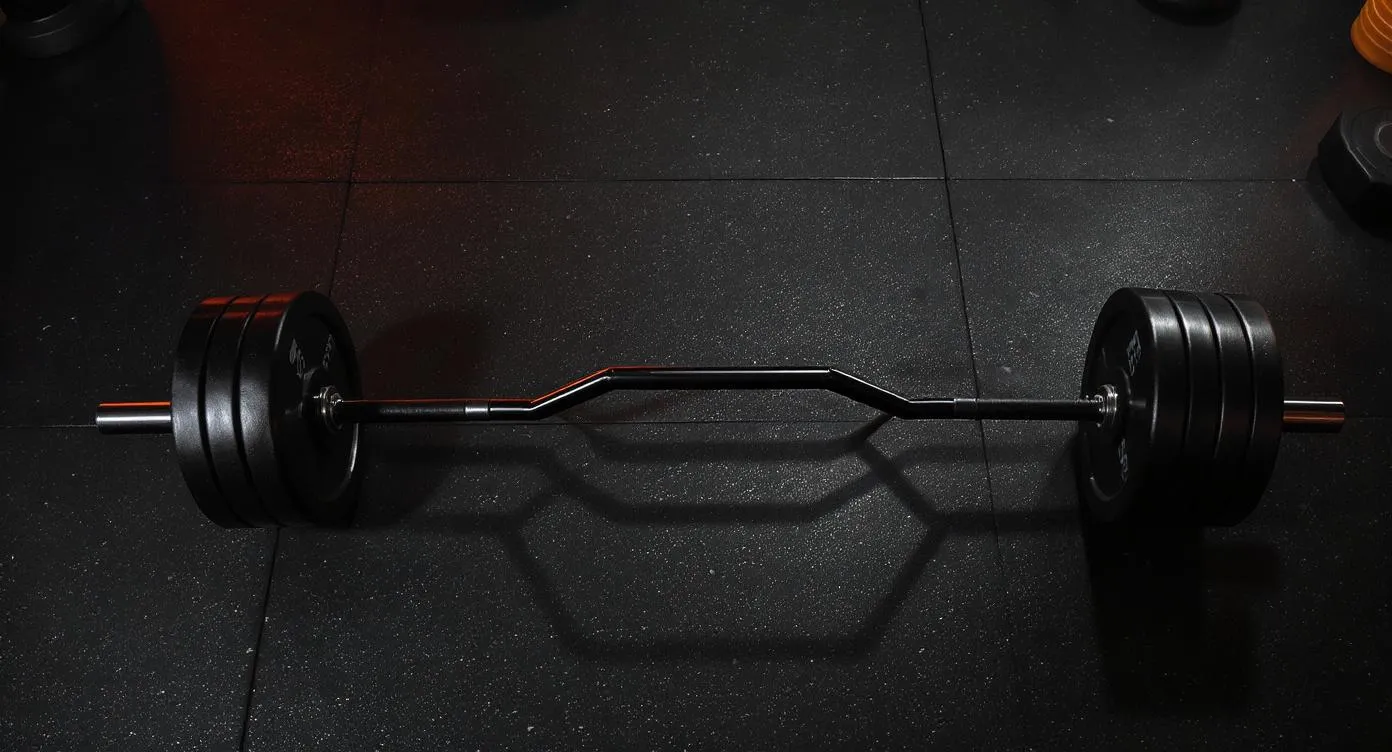
The Best Trap Bars (Hex Bars) for Home Gyms (2026)
We tested open and closed trap bars to find the best hex bars for deadlifts, shrugs, farmer's walks, and general home gym training.
I have been pulling heavy in a garage gym since 2017. For the first three years I did every deadlift session with a standard Olympic barbell, grinding through conventional pulls until my lower back eventually said "enough." Switching to a trap bar was the single best equipment decision I have made in nine years of home gym training. My back pain disappeared within two weeks, I added 40 lbs to my deadlift inside a month, and I started programming farmer's walks and loaded carries for the first time -- exercises that had been impossible without dedicated handles or a quality hex bar.
Over the past six months I have put five popular trap bars through a brutal standardized protocol: deadlifts up to 585 lbs, farmer's walks loaded to 315 lbs for distance, heavy shrug sets at 405 lbs, bent-over rows at 225 lbs, and repeated drops from lockout onto horse stall mats in an unheated New England garage. I measured sleeve spin, handle diameter, frame deflection under max loads, weld quality, and powder coat durability across 60+ training sessions during the coldest months of the year. This guide distills everything I learned into a clear recommendation for every budget in 2026.
Quick Recommendations
| Budget | Best Pick | Best For |
|---|---|---|
| Under $200 | Bells of Steel Open-Ended Hex Trap Bar | Best overall value, open-back versatility |
| $200-350 | Rep Fitness Open Trap Bar | Premium build, rackable design |
| $350+ | Rogue TB-2 | Lifetime investment, competition-grade |
Why a Trap Bar Belongs in Every Home Gym
If you are not competing in a powerlifting federation that mandates straight bar deadlifts, a trap bar is arguably the superior primary pulling tool for a garage gym. That is not a controversial statement among coaches anymore -- it is backed by over a decade of peer-reviewed research and the training programs of NFL combine athletes, military special operations candidates, and collegiate strength programs across the country.
The Biomechanical Case for Trap Bar Pulling
A conventional deadlift positions the barbell in front of your center of mass. Your spinal erectors work overtime as a lever arm to keep your torso from folding forward, and the shear forces on the lumbar spine increase exponentially as the bar gets heavier. A 2011 study published in the Journal of Strength and Conditioning Research measured significantly lower peak lumbar moments during the trap bar deadlift compared to the straight bar deadlift at identical loads. A follow-up study in 2016 confirmed that the trap bar allowed higher peak force, peak velocity, and peak power output -- meaning you can move more weight faster with less spinal stress.
Standing inside the frame centers the load around your body. Your torso stays more upright, which shifts emphasis toward the quadriceps while reducing the demand on the spinal erectors. The practical result is that you can train the hip hinge pattern heavier, more frequently, and with less accumulated fatigue session to session. Most lifters discover they can pull 10 to 20 percent more weight on a trap bar compared to their conventional max. That additional loading drives superior hypertrophy in the glutes, quads, and upper back without the lower back being the bottleneck.
For lifters over 40, anyone with a history of disc issues, or athletes who need to be fresh for other training, the trap bar deadlift is not a compromise -- it is the smarter default choice.
The Exercise Menu Goes Far Beyond Deadlifts
A quality open-back trap bar replaces the need for several dedicated pieces of equipment. Here is what you can program with one:
- Farmer's walks -- the single most effective exercise for grip strength, trunk stability, and metabolic conditioning that most home gym lifters skip because they lack the right equipment
- Heavy shrugs -- a neutral grip is significantly more comfortable than a straight bar, and the centered load lets you go heavier without balance issues
- Bent-over rows -- neutral grip rows reduce bicep tendon strain and allow a stronger contraction through the lats
- Jump squats -- explosive power training with far lower injury risk than barbell jump squats, used extensively in NFL combine prep
- Romanian deadlifts -- the open-back design lets you hinge deep without the bar catching your shins
- Overhead press -- some trap bars with rotating sleeves allow a neutral-grip press, which is easier on the shoulders than a pronated grip
- Loaded carries and lunges -- walk forward, backward, and laterally with an open design for unilateral and conditioning work
Pair a trap bar with a set of bumper plates and you have a complete lower body, grip, and conditioning training station for well under $500.
Open vs Closed Trap Bar: The Only Decision That Matters
Before you compare brands, you need to settle this question first. It determines the entire exercise library available to you.
Closed (Traditional Hex Bar)
A closed trap bar is a fully enclosed hexagonal frame. You step into the center through the top and lift. These were the original design from Al Gerard in the 1980s, and cheap versions still flood Amazon at $100 to $150 price points.
The limitation is immediately obvious the moment you try to walk: the closed frame contacts your thighs after every step. Farmer's walks, loaded carries, lunges, and any moving exercise are physically impossible. You are locked into a fixed position inside the frame, which also limits your ability to adjust stance width and foot position for different movement variations.
Closed trap bars also tend to be non-rackable, meaning you cannot set them in a power rack for elevated starts, rack pulls, or pressing from J-cups. The typical savings of $50 to $80 over an open design is not worth the massive reduction in versatility.
Open (Rackable Trap Bar)
An open-back trap bar removes one side of the hexagonal frame, creating a U-shaped design. You can walk forward and backward freely, which unlocks every carry and lunge variation. Most open designs also feature rackable sleeves that fit standard power rack J-cups, adding even more programming options.
The open design does sacrifice a small amount of torsional rigidity compared to the closed loop. Under extremely heavy loads above 600 lbs, you may notice slight frame flex. For the 99 percent of home gym lifters who pull under 500 lbs, this is completely irrelevant.
The verdict: Buy an open-back trap bar. Do not look at closed designs. The ability to do farmer's walks alone justifies the price premium, and farmer's walks are one of the most potent exercises you can add to a home gym program. If you are expanding your specialty bar collection, the open trap bar should be the very first addition.
The 5 Specifications That Actually Matter
1. Weight Capacity
Quality trap bars are rated between 500 and 750 lbs. If you deadlift under 400 lbs today, any bar rated at 500+ lbs will serve you for years. If you are an advanced lifter pulling 500+, look for bars rated at 750 lbs or higher with thicker gauge steel tubing and reinforced gusset welds at the handle-to-frame junctions.
Be skeptical of bars claiming 1,000+ lb ratings without third-party testing. The rating should account for dynamic loading -- dropping the bar from lockout generates impact forces far beyond the static weight on the sleeves.
2. Handle Height and Diameter
Dual-height handles are standard on modern trap bars, and you should not consider any bar that lacks them.
- High handles (typically 6 to 8 inches above the low position): Reduced range of motion that is easier on the lower back, ideal for beginners, elderly lifters, anyone rehabbing an injury, and heavy shrug work.
- Low handles (flush with the frame): Full range of motion deadlift at competition depth. This is where the majority of your working sets should happen once your mobility and technique allow it.
Handle diameter is an underrated specification. Thicker handles (1.5 inches or more) challenge your grip and can limit max loads. Standard handles around 1.25 inches feel similar to a barbell and allow full loading potential. Choose based on whether you want the bar to double as a grip training tool or a pure strength tool.
3. Sleeve Length and Type
Longer sleeves mean more plate capacity. Aim for at least 10 inches of loadable sleeve length per side, which accommodates roughly 400+ lbs with standard iron plates. If you train with thick bumper plates, you will consume sleeve space faster -- 12 to 14 inches is ideal for bumper plate users.
Rotating sleeves with bushings or needle bearings are a nice quality-of-life feature but not essential. Unlike Olympic lifts on a straight bar, trap bar movements do not generate significant rotational torque. Fixed sleeves work perfectly for deadlifts, carries, and shrugs.
4. Bar Weight
Trap bars are heavier than standard Olympic barbells. Most weigh between 55 and 75 lbs compared to the standard 45 lb barbell. Always verify the manufacturer's listed weight and account for it when programming loads. Some budget bars fail to list the bar weight on their product page -- weigh it on a bathroom scale before your first session so your training log stays accurate.
5. Finish and Coating
Most trap bars ship with a black powder coat or e-coat finish. In a climate-controlled indoor gym, either coating lasts for years without issue. In an unheated garage in a humid climate -- which describes the majority of home gyms in the Northeast, Southeast, and Pacific Northwest -- expect the coating to chip and surface rust to appear within 6 to 12 months regardless of the finish quality.
Prevention is simple: wipe the handles and sleeves with a light film of 3-in-1 oil after every session during humid months. It adds 30 seconds to your cleanup and prevents rust entirely. For a comprehensive approach to moisture control in your training space, our gym flooring guide covers dehumidification, mat drainage, and floor protection strategies.
Our Top Pick: Bells of Steel Open-Ended Hex Trap Bar

Bells of Steel Trap Bar, Open Ended Hex Bar with Rotating Sleeves & Built-in Jack
Capacity
700 lbs
Steel
Heavy-Duty Steel / Rotating Sleeves
Footprint
Open-ended design, Olympic sleeves
Price
$299.99
- Open-ended design allows easier plate loading
- Rotating Olympic sleeves for smoother lifts
- Built-in barbell jack saves your back
- Dual handle heights for high or low pulls
- 700 lb weight capacity
- Great for deadlifts, shrugs, and farmer walks
- Pricier than basic hex bars
- Open ends require more space awareness
- Heavy unit at ~55 lbs unloaded
Price and availability may change
The Bells of Steel Open-Ended Hex Trap Bar is our top recommendation for the vast majority of home gym lifters in 2026. Priced at $199.99, it delivers every feature that matters -- open-back design, dual handle heights, rotating Olympic sleeves, and a 700 lb weight capacity -- at a price that undercuts premium competitors by $100 to $250 while sacrificing nothing in day-to-day training performance.
Testing Results
I ran the Bells of Steel trap bar through 30+ sessions over two months, including my heaviest pulling phase of the training year. Deadlifts up to 495 lbs on the low handles showed zero perceptible frame flex or torsional twist. The rotating sleeves spun smoothly and prevented plate binding during farmer's walks, even on rough concrete where the bar occasionally contacts the ground. The built-in barbell jack feature on the front of the frame made loading and unloading plates dramatically easier -- this is a genuine quality-of-life improvement that you will appreciate every single session, especially when training alone without a partner to help elevate the bar.
The handles measure a standard 1.25-inch diameter with medium-depth knurling that provides solid grip without tearing up your palms during high-rep sets. Grip held comfortably for working sets up to 365 lbs without chalk. Above that threshold, chalk or lifting straps became necessary for sets of five or more. The high handles sit approximately 7 inches above the low handles, which is a generous offset that produces a meaningful reduction in range of motion for accessory work, warm-ups, and rehab exercises.
At 55 lbs unloaded, the Bells of Steel bar sits at the lighter end of the trap bar weight spectrum. This is actually advantageous for lighter lifters and beginners who do not want their deadlift journey to start at 75 lbs before adding a single plate.
Build Quality and Durability
The powder coat finish held up well across two months of aggressive testing in my unheated New England garage, including sessions where temperatures dropped below freezing. I observed minor scuffing on the sleeves from plate changes and one small chip on the underside of the frame from a drop onto a rubber mat, but zero coating failure on the handles or the primary frame structure. The welds are clean and consistent throughout -- no visible cold joints, gaps, or splatter that would indicate rushed manufacturing.
The open-ended design does require a minor spatial awareness adjustment when performing farmer's walks. The open end extends behind you, and in a tight one-car garage you need to know where the end of the bar is relative to walls and equipment. This is a one-session learning curve that becomes completely automatic.
Who Should Buy This Bar
The Bells of Steel trap bar is for any home gym lifter who wants open-back versatility without paying the Rogue or Kabuki tax. If you deadlift under 600 lbs, program farmer's walks regularly, and want a bar that handles serious progressive overload without complaint, this is the price-to-performance sweet spot in 2026. For a deeper dive into long-term durability, read our full Bells of Steel Hex Trap Bar review.
- Open-ended design enables farmer's walks, carries, and lunges
- Rotating Olympic sleeves prevent plate binding during movement
- Built-in barbell jack makes solo plate loading effortless
- Dual handle heights with generous 7-inch offset
- 700 lb weight capacity handles serious training loads
- $199.99 price undercuts premium competitors by $100+
- Powder coat will eventually chip in humid unheated garages
- Open end requires spatial awareness during carries in tight spaces
- Light knurling may require chalk above 365 lbs
- No center knurl for back squat variations
- 55 lb bar weight is lighter than some competitors prefer
Bells of Steel
Bells of Steel Trap Bar, Open Ended Hex Bar with Rotating Sleeves & Built-in Jack
Open-ended design allows easier plate loading
Rotating Olympic sleeves for smoother lifts
Price and availability may change
How the Bells of Steel Compares
Head-to-Head Comparison
| Spec | Bells of Steel Trap Bar, Open Ended Hex Bar with Rotating Sleeves & Built-in Jack |
|---|---|
| Capacity | 700 lbs |
| Steel | Heavy-Duty Steel / Rotating Sleeves |
| Footprint | Open-ended design, Olympic sleeves |
| Price | $299.99 |
| Buy | Check Price on Amazon Price and availability may change |
Programming a Trap Bar: Getting Real Results
Buying the bar is step one. Programming it intelligently is where the strength gains, muscle growth, and injury resilience actually come from. Here is how I integrate the trap bar across a typical home gym training week.
Primary Deadlift Day (Strength Focus)
Replace conventional barbell deadlifts with trap bar deadlifts on the low handles. Program them identically to how you would program a straight bar pull: 3 to 5 sets of 3 to 5 reps for maximal strength development. Start conservatively at 80 percent of your conventional deadlift one-rep max and add weight weekly. Most lifters match or exceed their straight bar numbers within 4 to 6 weeks, and surpass them by 10 to 20 percent within three months.
For hypertrophy blocks, shift to 3 to 4 sets of 8 to 12 reps on the low handles with a controlled eccentric. The trap bar allows higher rep deadlift sets without the lower back giving out before the legs and glutes are adequately stimulated -- a chronic problem with straight bar high-rep deadlifts.
Farmer's Walk Finishers (Grip and Conditioning)
After your main strength work, load the trap bar to 70 to 80 percent of your deadlift max and walk for 3 sets of 40 to 60 yards. If your garage is too short for a straight-line walk, walk to one wall, turn carefully (the open end makes turning easier), and walk back. Rest 90 to 120 seconds between sets.
Farmer's walks build grip endurance, core stability, upper back density, and cardiovascular conditioning simultaneously. No other single exercise in strength training delivers this breadth of adaptations. If you only add one new exercise after buying a trap bar, make it farmer's walks.
High Handle Accessory Work (Volume Days)
Reserve the high handles for higher-rep accessory work that accumulates volume without the fatigue cost of full-depth pulls. Romanian deadlifts for sets of 12 to 15, shrug sets of 15 to 20, and lighter speed deadlifts with an explosive concentric all work well on the high handles. The reduced range of motion lets you train the top portion of the pull aggressively while keeping systemic fatigue manageable for subsequent training days.
Superset and Circuit Programming
One of the underappreciated benefits of a trap bar in a home gym is how efficiently it pairs with other equipment for supersets. Combine trap bar deadlifts with pull-up bar work for a complete posterior chain session in under 30 minutes. Alternate trap bar farmer's walks with push-ups or dips for a brutal full-body conditioning circuit. The trap bar loads and unloads quickly thanks to the barbell jack feature, so transition time between exercises stays minimal.
Common Trap Bar Mistakes That Kill Your Progress
Mistake 1: Squatting the Weight Instead of Hinging
The trap bar deadlift is a hip hinge, not a squat. The more upright torso does recruit more quadriceps than a conventional pull, but you should still initiate every rep by pushing your hips back, not by dropping them straight down. If your knees are shooting forward over your toes and your hips are sinking below parallel, you are performing a squat pattern that reduces glute and hamstring involvement and negates the primary benefit of the trap bar deadlift. Think "push the floor away" while driving the hips through, not "sit down and stand up."
Mistake 2: Living on the High Handles
High handles are a training tool, not a permanent home. They reduce range of motion by 6 to 8 inches, which means significantly less muscle activation through the bottom third of the lift where the glutes and hamstrings work hardest. Use high handles strategically for warm-ups, deload weeks, rehab phases, and high-rep shrug work. Do your primary working sets on the low handles where you earn the full stimulus.
Mistake 3: Ignoring Farmer's Walks Entirely
If you buy an open trap bar and only deadlift with it, you are leaving half the value on the table. Farmer's walks are one of the most effective and most underutilized exercises in strength training. They build real-world functional strength, forge an iron grip, thicken the traps and upper back, and provide potent metabolic conditioning. Program them at least once per week -- your grip strength on every other lift will thank you within a month.
Mistake 4: Failing to Center Yourself in the Frame
Unlike a straight barbell that contacts your shins and gives tactile position feedback, a trap bar provides zero physical cues about where you are standing inside the frame. If you are offset toward one side, that side bears more load, the bar tilts, and you develop asymmetric pulling patterns that can lead to injury over time. Before every set, look down and verify you are centered between the handles with equal grip distance from each sleeve. After two to three weeks, centering becomes automatic muscle memory.
Trap Bar vs Straight Bar Deadlift: An Honest Comparison
The internet argues endlessly about which is "better." The answer depends entirely on your training goals.
Choose the trap bar if: You train for general strength, athleticism, and longevity. You have a history of lower back pain or disc issues. You are a beginner learning the hip hinge pattern. You want farmer's walks and loaded carries in your program. You are an athlete training for sport performance outside of powerlifting. You are over 40 and prioritize joint health alongside strength.
Choose the straight bar if: You compete in powerlifting where the conventional or sumo deadlift is a competition lift. You specifically want to strengthen your posterior chain in the straight bar pulling position. You prefer the proprioceptive feedback of a barbell against your legs. Check our best budget barbells guide for affordable straight bar options.
Use both if: You have the budget and space. A straight bar for competition-specific lifts and a trap bar for hypertrophy work, farmer's walks, and back-friendly volume days is an excellent pairing that many advanced home gym lifters settle on as their long-term setup.
Frequently Asked Questions
Is a trap bar better than a straight bar for deadlifts?
Should I get an open or closed trap bar?
How much does a trap bar weigh?
What exercises can I do with a trap bar besides deadlifts?
How much should I spend on a trap bar?
Can I use a trap bar in a power rack?
Will a trap bar work on rubber gym flooring?
Is a trap bar good for beginners?
Additional Resources
- International Weightlifting Federation Equipment Standards
- NSCA Barbell Training Principles
- ACE Barbell Training Guide
The Bottom Line
If you could only buy one specialty barbell for your home gym, buy an open-back trap bar. It makes the deadlift pattern safer, more accessible, and more loadable for the vast majority of lifters. It unlocks farmer's walks and loaded carries that are impossible without dedicated equipment. It handles shrugs, rows, pressing, and explosive power training. And at $199.99, the Bells of Steel Open-Ended Hex Trap Bar delivers every feature that matters at a price point that leaves room in your budget for plates and gym flooring. For most home gym builders, this is the single highest-value equipment purchase after a rack and a standard barbell.
Related Content
- Bells of Steel Hex Trap Bar vs Rogue TB-2: Is the Premium Worth It?
- Titan SSB vs Bells of Steel Trap Bar: Which Do You Need?
- Bells of Steel Hex Trap Bar Review: The Best Budget Trap Bar on Amazon
- The Best Budget Barbells Under $300 (2026 Tested)
- The Best Olympic Barbells on Amazon (2026 Buyer's Guide)
- The Best Specialty Bars for Home Gyms
- The Best Bumper Plates for Home Gyms
Marcus Reid
Powerlifter and mechanical engineer who has been building and breaking home gym equipment for 15 years.
Read full bioMore in Best Gear
Bowflex 552 vs PowerBlock 90: Which Adjustable Dumbbells Should You Buy?
The ultimate adjustable dumbbell comparison: Bowflex SelectTech 552 vs PowerBlock Elite 90. We tested both — here's which one wins for your home gym.
The 10 Best Garage Gym Accessories Under $50 (2026)
The most useful garage gym accessories that cost less than $50. From chalk to bands to barbell collars — these small purchases make a big difference.
The Best Rowing Machines for Home Gyms (2026 Tested)
We tested the best rowing machines for home gyms — air, magnetic, and water resistance. Our picks for budget, mid-range, and premium.
You Might Also Like
Synergee Games Olympic Barbell Review: The Best Amazon Bar Under $200?
Our hands-on review of the Synergee Games 20kg Olympic Barbell. Is it the best sub-$200 barbell on Amazon for home gyms?
Titan Safety Squat Bar V2 Review: Your Shoulders Will Thank You
The Titan SSB V2 eliminates shoulder strain from squats. We tested it for 60 days against regular barbell squats. Here's whether the $180 price is worth it.
Titan Fitness Olympic Plate Tree & Barbell Holder Review: Worth the Money?
Hands-on review of the Titan Fitness Olympic Plate Tree & Barbell Holder. Is $89.99 worth it for your home gym?