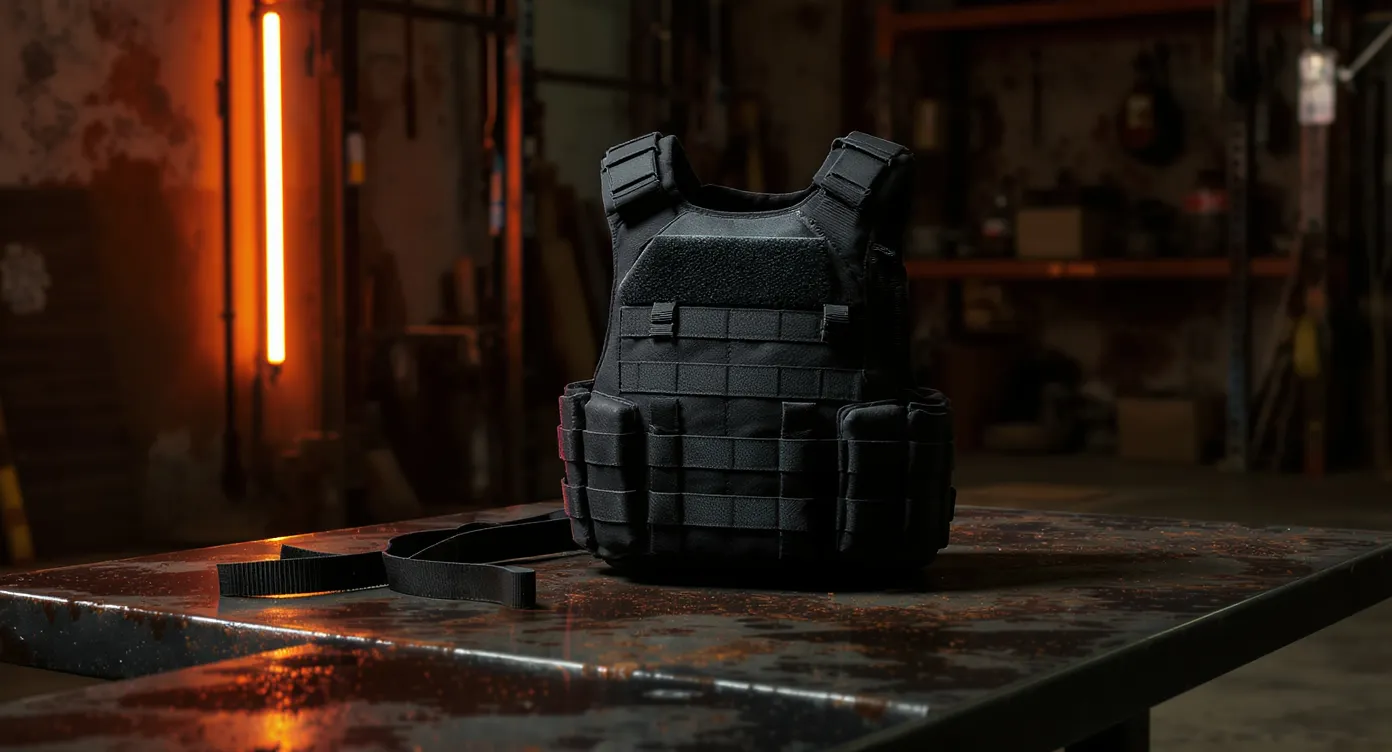
RUNFast Pro Weight Vest Review (2026): Best Budget Weight Vest
Hands-on review of the RUNFast Pro Adjustable 40 lb Weight Vest. Best budget weight vest on Amazon for rucking, conditioning, and pull-ups.
I have owned four weight vests over the past nine years. Two broke within months, one cost three times what it should have, and one -- the RUNFast Pro Adjustable 40 lb Weight Vest -- has been on my body for rucking sessions, Murph attempts, and hundreds of weighted push-up sets since early 2024. At roughly $55.99, it remains the best value proposition in the loaded vest category. But it is not perfect, and the specifics matter if you are going to strap 40 pounds to your torso multiple times per week. Here is everything I have learned.

RUNFast 40lbs Pro Weighted Vest
Capacity
40 lbs
Steel
Heavy-Duty Nylon / Iron Plates
Footprint
One-size adjustable, fits most adults
Price
$51.04
- 4.5+ star rating on Amazon with 9,000+ reviews
- Adjustable from 12 to 40 lbs in 2 lb increments
- Heavy-duty nylon construction lasts years
- Comfortable shoulder padding
- Adjustable straps fit most body sizes
- Doubles as conditioning and ruck training tool
- Iron weight plates are loud against each other
- 40 lb max isn't enough for advanced athletes
- Sizing can run small for very large users
- Sweat absorbs into nylon over time
Price and availability may change
Why a Weight Vest Belongs in Every Home Gym
If you are training in a garage or basement gym, you already know that bodyweight movements hit a ceiling fast. Once you can knock out 20 clean pull-ups or 50 push-ups, adding reps stops building strength and starts building endurance you may not need. A weight vest solves this problem instantly. Strap on 20 pounds and your 20-rep pull-up set becomes a grinding 8-rep strength set again.
But the utility goes well beyond pull-ups. I use the RUNFast Pro for weighted walks (rucking) three to four times per week, covering 2.5 to 4 miles per session at a 15-16 minute per mile pace with 30 pounds loaded. That single habit has done more for my body composition than any structured cardio program I have tried. Research from the Journal of Strength and Conditioning Research shows that walking with a load equal to 15-30% of body weight increases caloric expenditure by 40-70% compared to unloaded walking, with significantly less joint impact than running.
Here is a non-exhaustive list of what a weight vest improves in a home gym setup:
- Pull-ups and chin-ups -- progressive overload without needing a dip belt
- Push-ups -- 20 lbs turns a warmup movement into a legitimate chest and tricep builder
- Step-ups and box step-overs -- pair it with a plyo box for brutal lower body conditioning
- Walking and rucking -- the simplest and most underrated cardio modality
- Air squats -- bodyweight squats at 160 lbs feel nothing like bodyweight squats at 200 lbs
- Burpees and HIIT circuits -- every rep becomes exponentially harder
- Stair climbing -- if you have stairs in your house, you already own the best cardio machine
For under $100, a weight vest may be the single highest-ROI purchase in a garage gym after a pull-up bar and a set of resistance bands.
The Specs
Quick Specs · RUNFast 40lbs Pro Weighted Vest
Build Quality and Materials
The RUNFast Pro uses 1000D nylon for the outer shell, which is the same denier rating you find on tactical backpacks and military-grade rucksacks. After 18+ months of use, mine shows surface wear and some fading from sweat and sun exposure, but zero structural failures. No ripped seams, no broken buckles, no loose stitching.
The weight system uses small cast iron plates that slot into individual pockets across the front and back panels. Each plate weighs approximately 2.5 lbs, and you can add or remove them in roughly 2 lb increments to scale from 12 lbs up to 40 lbs. The pockets close with a fold-over flap secured by a hook-and-loop strip. I have never had a plate fall out during training, though I will note that the plates shift and rattle against each other during dynamic movements like burpees, box jumps, and running. If noise bothers you, wrapping individual plates in athletic tape or thin neoprene reduces rattling by about 80%.
The shoulder straps use 1.5-inch-wide webbing with stitched-in foam padding. The padding is adequate for sessions under 45 minutes but can create pressure points on longer rucks if you do not adjust the vest to sit higher on your torso. The adjustment buckles are standard side-release clips, not the roller buckles you find on $200+ vests. They hold fine but require re-tightening every 15-20 minutes during vigorous sessions as the webbing creeps slightly.
The vest fits chest sizes from approximately 30 to 50 inches. I wear it at a 42-inch chest measurement and have plenty of adjustment room. Users above a 48-inch chest should measure carefully -- the side straps can max out, and the vest will ride up rather than hugging your torso.
What We Love
- 4.5+ star rating on Amazon with 9,000+ reviews validates long-term durability
- Adjustable from 12 to 40 lbs in ~2 lb increments using individual iron plates
- 1000D nylon construction survives outdoor rucking, rain, and heavy sweat
- Shoulder padding distributes load effectively for sessions under 45 minutes
- Fits chest sizes 30-50 inches with side-release buckle adjustment
- At ~$90, it costs 60-70% less than comparable vests from 5.11, Condor, and others
- Front and back loading keeps weight centered on your midline for balanced posture
- Plates are removable so you can hand-wash the vest shell separately
What Could Be Better
- Iron plates rattle audibly during dynamic movements like running and burpees
- 40 lb max limits advanced athletes who need 60-80+ lbs for progressive overload
- Side-release buckles creep under load and require periodic re-tightening
- No moisture-wicking liner -- sweat soaks directly into the nylon shell
- Sizing runs tight for users above 48-inch chest measurement
- Plates are proprietary dimensions and not easily replaceable from third-party sources
- No padding on the lower back panel where the vest contacts your spine
- Hook-and-loop plate pocket closures lose grip after 12-18 months of heavy use
Real-World Performance Testing
Rucking
This is where the RUNFast Pro earns its keep. I load it to 30 lbs and walk 3-4 miles on mixed terrain (sidewalk, gravel trail, moderate hills) three to four times per week. At that weight and pace, I burn approximately 450-550 calories per session according to my chest strap heart rate monitor, compared to roughly 250-300 calories for the same walk unloaded. The vest stays in place, the weight distribution feels natural, and I can wear it over a t-shirt or directly against skin in summer without significant chafing.
One key detail for ruckers: cinch the vest tight enough that it does not bounce when you walk. If it bounces, it will create hotspots on your shoulders and upper traps within 20 minutes. The vest should feel like a snug hug, not a loose backpack.
Weighted Calisthenics
For pull-ups, I load the vest to 20-25 lbs and perform 5 sets of 5-8 reps. The weight sits higher on your torso than a dip belt, which changes the pull mechanics slightly -- you will feel more lat engagement and less bicep compared to a belt hanging weight between your legs. For push-ups, 20 lbs in the vest makes sets of 15-20 feel like genuine work again. I program these as 4 sets of 12-15, three times per week, and the strength carryover to bench press is noticeable.
For dips, I actually prefer a dedicated dip belt because the vest can restrict shoulder mobility at the bottom of the dip. But for push-ups, pull-ups, and inverted rows, the vest is superior to a belt because the load moves with your body rather than swinging below you.
Running and HIIT
This is where the RUNFast Pro shows its limitations. Running with iron plates that shift inside nylon pockets creates a jostling, rattling experience that ranges from mildly annoying to genuinely distracting. The vest also bounces more during running than during walking, even when cinched tight. For short sprints (100-200m intervals), it is manageable. For sustained runs over a quarter mile, I would choose a purpose-built running vest with form-fitting neoprene and smaller, sand-filled weight bags.
For HIIT circuits that combine burpees, box jumps, and air squats, the 20 lb loading works well. The rattling is less noticeable when you are gasping for air. I program the vest into one HIIT session per week, usually a 20-minute AMRAP with 5 movements.
How Much Weight Should You Actually Use
The single biggest mistake people make with weight vests is loading too heavy too soon. Your joints, tendons, and connective tissue need 4-6 weeks to adapt to loaded movement patterns. Here is the progression I recommend based on body weight and training experience:
Beginner (first 4 weeks):
- Rucking/Walking: 10-15 lbs (6-8% of body weight)
- Push-ups: 10-12 lbs
- Pull-ups: 8-10 lbs
- Air squats: 12-15 lbs
Intermediate (months 2-6):
- Rucking/Walking: 20-30 lbs (12-15% of body weight)
- Push-ups: 20-25 lbs
- Pull-ups: 15-25 lbs
- Air squats: 20-30 lbs
Advanced (6+ months of consistent vest training):
- Rucking/Walking: 35-40 lbs (18-22% of body weight)
- Push-ups: 30-40 lbs
- Pull-ups: 25-40 lbs
- Air squats: 35-40 lbs
At the advanced level, the RUNFast Pro maxes out at 40 lbs. If you weigh over 200 lbs and have been training with a vest for more than a year, 40 lbs represents less than 20% of your body weight, which may not provide sufficient stimulus for continued adaptation. At that point, you will need to upgrade to a 60 lb or 80 lb vest. But for 90% of home gym users, 40 lbs is more than enough resistance for 2-3 years of progressive training.
Weight Vest Programming: How to Integrate It Into Your Training
Simply throwing on a vest for random workouts is fine for general fitness. But if you want measurable results, here are three structured programs I have used with the RUNFast Pro.
Program 1: The Rucking Base (General Fitness / Fat Loss)
This is the simplest and most effective weight vest program. It requires zero additional equipment beyond shoes.
- Monday: 30-minute ruck, 20 lbs, moderate pace (15 min/mile)
- Wednesday: 45-minute ruck, 25 lbs, easy pace (16-17 min/mile)
- Friday: 30-minute ruck, 30 lbs, moderate pace with hills if available
- Saturday: 60-minute ruck, 20 lbs, conversational pace
Add 2-5 lbs every two weeks until you reach your target load. This program alone will burn an additional 1,500-2,200 calories per week compared to unloaded walking.
Program 2: Weighted Calisthenics Strength (Pair with Barbell Work)
Use this if you already have a power rack or cage and want to supplement barbell training with loaded bodyweight work.
- Pull-up day: 5x5 weighted pull-ups at 20-30 lbs, rest 2-3 minutes between sets
- Push day: 4x12 weighted push-ups at 20 lbs, superset with 4x8 weighted dips (or use a dip belt)
- Leg day: 3x20 weighted air squats at 25-30 lbs, followed by 3x10 weighted step-ups per leg on a 20-inch box
Program 3: The Murph Prep (12-Week Build)
The Murph workout (1-mile run, 100 pull-ups, 200 push-ups, 300 air squats, 1-mile run, all wearing a 20 lb vest) is the benchmark test for weight vest fitness. Here is how to build to it:
- Weeks 1-4: Perform the movements partitioned (20 rounds of 5 pull-ups, 10 push-ups, 15 squats) with NO vest. Target: complete in under 50 minutes.
- Weeks 5-8: Add a 10 lb vest to the partitioned workout. Target: complete in under 55 minutes.
- Weeks 9-11: Increase to 15 lbs, then 20 lbs vest. Target: complete in under 60 minutes.
- Week 12: Full Murph with 20 lb vest. A sub-45-minute time is competitive. Sub-35 is elite.
RUNFast Pro vs. More Expensive Alternatives
The weight vest market breaks into three tiers:
Budget ($60-$120): RUNFast Pro, ZFOsports, CROSS101. Iron plate systems with nylon shells. Functional and durable but noisy and basic.
Mid-range ($150-$250): Condor Sentry, 5.11 TacTec. Plate carrier designs with MOLLE webbing, better shoulder padding, and more adjustability. The plates are thinner and rattle less. Significantly more comfortable for long rucks.
Premium ($250-$400+): Rogue Plate Carrier, Goruck Training Weight Vest. Purpose-built for fitness with curved plates that conform to your torso, elite materials, and bombproof construction.
The RUNFast Pro delivers about 75% of the functionality of a mid-range vest at 40% of the price. Where it loses ground is comfort during extended wear (90+ minutes), noise during dynamic movements, and maximum weight capacity. If you are new to vest training or working within a tight home gym budget, the RUNFast Pro is the correct starting point. If you already know you will ruck 4+ times per week for years, consider investing in a plate carrier from the mid-range tier.
Maintenance and Longevity
The RUNFast Pro will absorb sweat. There is no moisture-wicking liner. After every session, hang the vest (without plates) in a well-ventilated area or in direct sunlight. Once every two weeks, remove all plates, hand-wash the shell in cold water with mild detergent, and air dry completely before reloading. Skipping this step will result in a vest that smells like a high school wrestling room within a month.
Inspect the hook-and-loop closures on the plate pockets every few months. After 12-18 months of heavy use, the hook side starts losing grip. A quick fix is to cut small strips of adhesive-backed Velcro from a hardware store and press them over the worn sections. Total cost: about $4. Total time: 10 minutes.
The iron plates themselves are essentially indestructible. They may develop surface rust if exposed to moisture for extended periods. A light coat of 3-in-1 oil or WD-40 once every six months prevents this entirely.
Who Should Buy the RUNFast Pro
Buy it if:
- You want to add progressive overload to bodyweight training without buying a full rack setup
- You are interested in rucking as your primary cardio modality
- You weigh under 220 lbs (40 lb max provides meaningful relative load)
- You want one of the most versatile pieces of garage gym accessories under $100
- You are training for the Murph, GoRuck events, or military/LEO fitness tests
- You need a vest that handles outdoor use including rain and trail walking
Skip it if:
- You are strong enough that 40 lbs is no longer challenging for your target movements
- You exclusively do barbell training and have no interest in loaded calisthenics or rucking
- You need silent equipment for apartment or shared-wall training
- You plan to run more than a mile at a time in the vest (get a purpose-built running vest instead)
- You weigh over 250 lbs and need 60+ lbs for adequate relative loading
Frequently Asked Questions
How much does the RUNFast Pro Weight Vest weigh empty?
Can you run in the RUNFast Pro Weight Vest?
How do you wash the RUNFast Pro Weight Vest?
Is 40 lbs enough weight for the Murph workout?
Does the RUNFast Pro fit women?
How does a weight vest compare to a weighted backpack for rucking?
Can you wear the RUNFast Pro under a jacket or hoodie?
Additional Resources
- NSCA Training Equipment and Accessories
- ACE Strength Training Fundamentals
- ASTM Fitness Equipment Safety Standards
Final Verdict
Adjustable from 12-40 lbs using iron plate inserts, which means you can scale the load as fitness improves. The 1000D nylon shell handles outdoor use and the shoulder padding distributes weight well enough for 30-60 minute sessions. The iron plates rattle during running — this is inherent to the plate-insert design and there is no fix. The 40 lb ceiling will eventually limit advanced athletes. For weighted walks, Murph training, and bodyweight progressions, it adds meaningful resistance at a price that does not require justification.
Price and availability may change
The RUNFast Pro Adjustable Weight Vest earns its 4.5/5 rating because it delivers genuine training value at a price point that makes it accessible to anyone building a home gym. The iron plate system is adjustable, the nylon shell is durable, and the vest handles everything from 30-minute rucks to weighted Murph attempts without structural failure. The rattling plates and 40 lb ceiling are real limitations, but they are limitations you can train around for years before they become dealbreakers. For the vast majority of garage gym owners, this is the only weight vest you will need.
RUNFast
RUNFast 40lbs Pro Weighted Vest
4.5+ star rating on Amazon with 9,000+ reviews
Adjustable from 12 to 40 lbs in 2 lb increments
Price and availability may change
Derek Walsh
Strongman competitor and former commercial gym equipment salesman. Knows what survives heavy daily use.
Read full bioMore in Reviews
Yes4All Kettlebell Set Review: Best Budget Kettlebells on Amazon?
Our review of the Yes4All Cast Iron Kettlebell Set. Are these the best budget kettlebells for home gym training on Amazon?
TRX Bandit Resistance Band Handles Review: Worth the Money?
Hands-on review of the TRX Bandit Resistance Band Handles. Is $49.95 worth it for your home gym?
POWER GUIDANCE Battle Rope Review: CrossFit Standard for $40
Hands-on review of the POWER GUIDANCE 30 ft Battle Rope. Best budget battle rope on Amazon for HIIT, CrossFit, and brutal conditioning.
You Might Also Like
The 10 Best Garage Gym Accessories Under $50 (2026)
The most useful garage gym accessories that cost less than $50. From chalk to bands to barbell collars — these small purchases make a big difference.
Doorway vs Wall-Mounted Pull-Up Bar: Which Should You Buy?
Doorway pull-up bar or wall-mounted? We compare the Iron Gym doorway bar vs wall-mounted options for home gyms, apartments, and serious lifters.
15 Best Home Gym Accessories Under $50 (2026)
We tested the top budget gym accessories on Amazon. Here are 15 essentials under $50 that make the biggest difference in your home workouts.