How to Organize Your Garage Gym (Layout & Storage Guide)
How to lay out, organize, and store equipment in your garage gym. Space planning, wall storage, plate organization, and keeping your gym clean.
GarageGymBuilders is reader-supported. We may earn a commission through links on this page. Learn more.
A disorganized garage gym kills motivation. Tripping over plates, searching for collars, and navigating a cluttered floor make training feel like a chore instead of a highlight. Good organization makes your gym feel twice as large and three times as inviting.
Floor Layout Rules
Rule 1: Rack Goes Against the Wall
Place your power rack with the back against a wall. This maximizes open floor space in front for barbell work, deadlifts, and conditioning.
Rule 2: Leave 4-Foot Clearance
You need at least 4 feet of clear space on each side of the barbell for plate loading. If your rack is centered, that means 4 feet of clearance left and right.
Rule 3: Cardio Goes in the Corner
Bikes, rowers, and treadmills need less surrounding clearance. Tuck them in a corner where they won't interfere with barbell movements.
Rule 4: Keep a Clear Path to the Door
Never block the garage door with equipment. You need to be able to open it for ventilation, deliveries, and emergencies.
Wall Storage Solutions
Pegboard ($30-50)
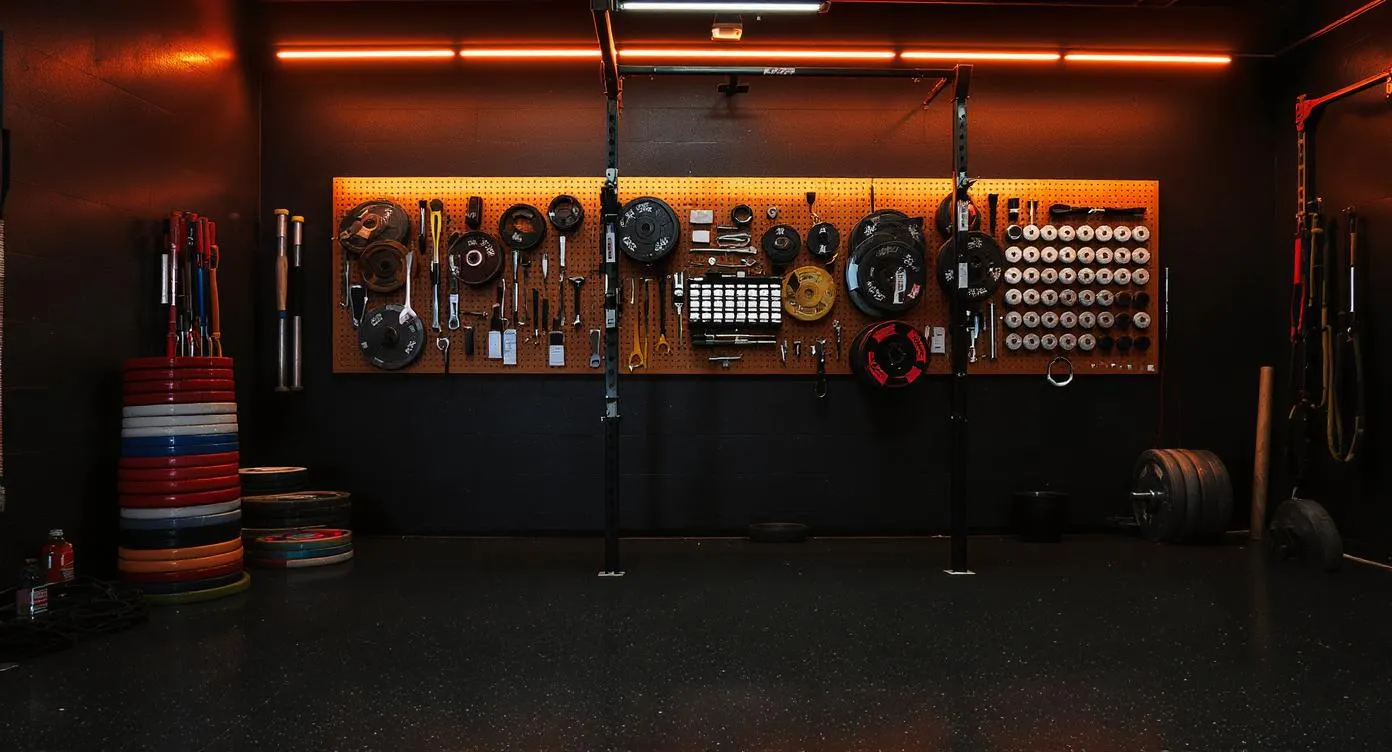
A 4x8 sheet of pegboard with hooks is the cheapest wall storage solution. Hang bands, jump ropes, collars, wrist wraps, and belts.
Wall-Mounted Barbell Holders ($25-40)
Horizontal or vertical barbell holders keep your bars off the floor and organized. Most mount to wall studs with 4 screws.
Plate Trees ($50-150)
A plate storage tree organizes your plates vertically and saves significant floor space compared to stacking plates on the ground.
Shelf Unit ($40-80)
A basic metal shelf unit stores chalk, bands, foam rollers, belts, and smaller accessories. Mount to the wall for stability.
Organization System
Common Layout Mistakes
- Rack in the middle of the garage — wastes space on all four sides
- No plate storage — plates on the floor are a trip hazard and look messy
- Equipment facing the garage door — you'll stare at a blank door all session (put a mirror on the wall instead)
- Ignoring vertical space — walls hold storage. Use them.
- Cramming too much equipment — less is more. If you don't use it weekly, remove it.
The Bottom Line
Organization takes 2 hours and under $200 in wall storage. The payoff is a gym that feels professional, stays clean, and makes you actually want to train. The most important rule: put everything back after every session. Five minutes of cleanup prevents hours of frustration.
Gym Builder Team
Our team tests every product hands-on before recommending it. We buy the equipment with our own money and train with it daily. No sponsored reviews, no pay-to-play rankings. Meet the team →
More in Guides
Bodybuilding Home Gym Setup: Equipment & Training Guide (2026)
How to build the perfect bodybuilding home gym. Equipment priorities, essential machines, and the setup for serious muscle building.
CrossFit Home Gym Setup: Complete Equipment Guide (2026)
How to build a complete CrossFit home gym. Equipment list, budget options, and programming for garage gym CrossFit training.
Garage Gym Summer Cooling: Train Through the Heat (2026)
How to keep your garage gym cool in summer. Fans, AC, ventilation, and timing strategies for hot weather training.