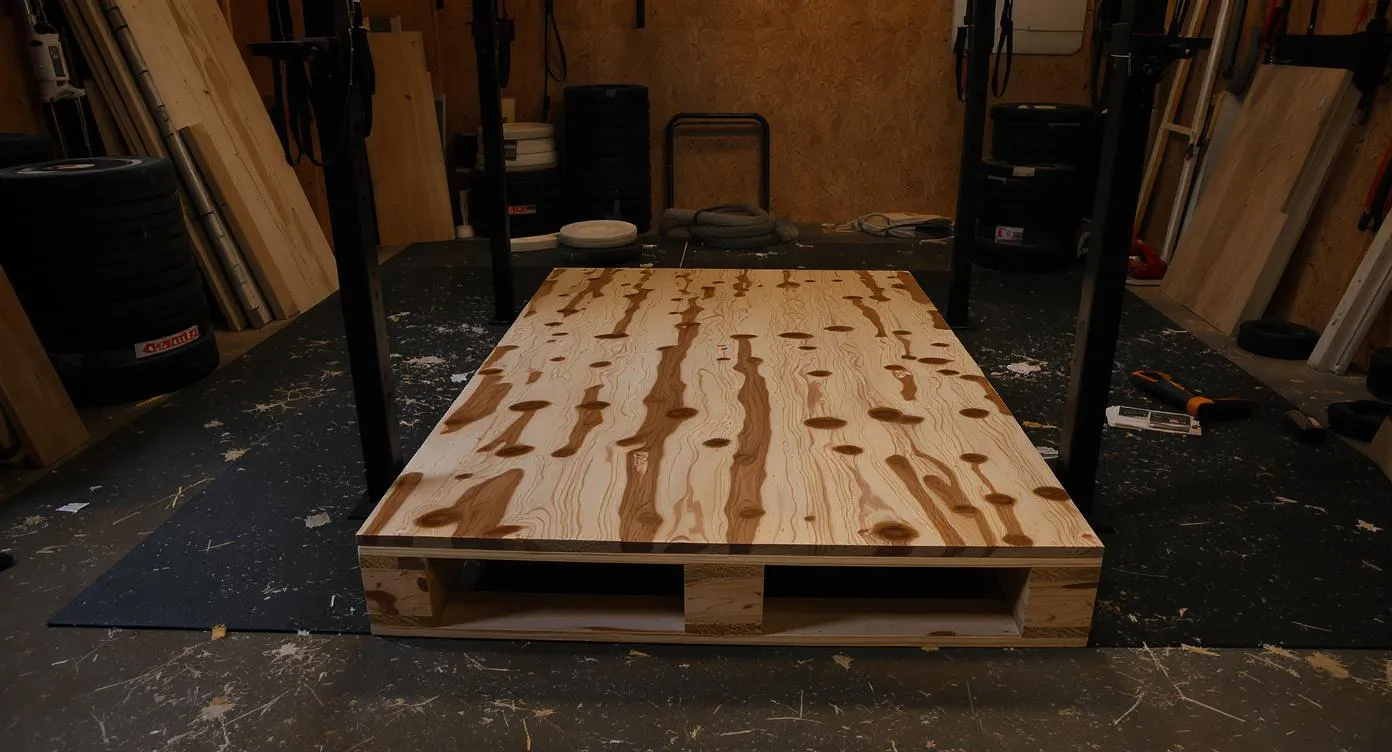
How to Build a DIY Lifting Platform (Step-by-Step Guide)
Build a sturdy, professional lifting platform for under $200. Complete step-by-step guide with materials list, tools needed, and construction photos.
GarageGymBuilders is reader-supported. We may earn a commission through links on this page. Learn more.
A lifting platform protects your floor, reduces noise, provides a stable surface, and makes your gym look professional. Best of all, you can build one for under $200 in a single afternoon.
Why Build a Platform?
- Floor protection — distributes impact force across a wide area
- Noise reduction — plywood + rubber absorbs dropped weight vibration
- Stable surface — no wobble or mat shifting during heavy lifts
- Rack anchoring — bolt your rack to the platform instead of the concrete
- Looks professional — a platform defines your lifting space
Materials List
Total materials cost: ~$200
Platform Dimensions
Standard platform: 8' x 8' (fits a full barbell with plates on both sides)
Compact platform: 8' x 6' (tight fit but works for single-car garages)
Step-by-Step Build
Step 1: Prepare the Base
Lay the first two sheets of plywood side by side on your garage floor. These form the bottom layer. If your platform is 8x8, cut the third sheet in half lengthwise (4x8 becomes two 2x8 pieces) to complete the base.
Step 2: Glue and Screw the Middle Layer
Apply construction adhesive to the top of the base layer. Lay the second layer of plywood on top, offsetting the seams from the bottom layer for strength. Screw together with 1.5" wood screws every 12 inches.
Step 3: Cut the Rubber Mats
Cut each 4x6 stall mat to 4x4 (or whatever fills the sides of your platform). The rubber goes on the left and right sides — the drop zones where weight plates contact the platform.
Step 4: Center Section
The center 4x4 section stays as bare plywood (or add a thin rubber mat). This is where you stand. The firm surface is better for squats and deadlifts than thick rubber.
Step 5: Attach Rubber Sections
Apply construction adhesive to the plywood and press the cut rubber mats into place on both sides. Let the adhesive cure for 24 hours before heavy use.
Final Layout
[  RUBBER  |  PLYWOOD  |  RUBBER  ]
[  4' x 8' |  4' x 8'  |  4' x 8' ]
The center plywood section is where you stand. The rubber sections are where plates land during deadlifts and drops.
Optional Upgrades
- Bolt your rack to the platform for extra stability
- Stain or seal the center plywood section for moisture protection
- Add a logo with spray paint and a stencil for the gym aesthetic
- Install rubber edge trim around the perimeter for a clean look
Common Mistakes
- Using OSB instead of plywood — OSB delaminates with moisture and impact
- Skipping the glue — screws alone allow layers to shift over time
- Making it too thin — two layers of 3/4" plywood minimum for adequate strength
- Not offsetting seams — aligned seams create a weak point
The Bottom Line
A DIY lifting platform takes 2-3 hours to build, costs under $200, and transforms your garage gym. It's one of the best weekend projects you can do for your training space.
Gym Builder Team
Our team tests every product hands-on before recommending it. We buy the equipment with our own money and train with it daily. No sponsored reviews, no pay-to-play rankings. Meet the team →
More in Guides
Bodybuilding Home Gym Setup: Equipment & Training Guide (2026)
How to build the perfect bodybuilding home gym. Equipment priorities, essential machines, and the setup for serious muscle building.
CrossFit Home Gym Setup: Complete Equipment Guide (2026)
How to build a complete CrossFit home gym. Equipment list, budget options, and programming for garage gym CrossFit training.
Garage Gym Summer Cooling: Train Through the Heat (2026)
How to keep your garage gym cool in summer. Fans, AC, ventilation, and timing strategies for hot weather training.