Garage Gym Ventilation & Climate Control Guide (2026)
How to keep your garage gym cool in summer and warm in winter. Complete guide to fans, heaters, insulation, and airflow.
GarageGymBuilders is reader-supported. We may earn a commission through links on this page. Learn more.
A garage gym with no ventilation is miserable. In summer, you're training in a 120-degree oven. In winter, the barbell is so cold it burns your hands. Climate control isn't optional — it's what separates a gym you use from a gym that collects dust.
The Summer Problem
Garages trap heat. A closed garage in direct sunlight can easily hit 100-120°F in summer. This isn't just uncomfortable — it's dangerous. Heat exhaustion is real and it doesn't care about your PR.
Solution: Airflow First
Before buying expensive cooling systems, maximize airflow:
- Open the garage door 12-18 inches — creates a low-intake airflow channel
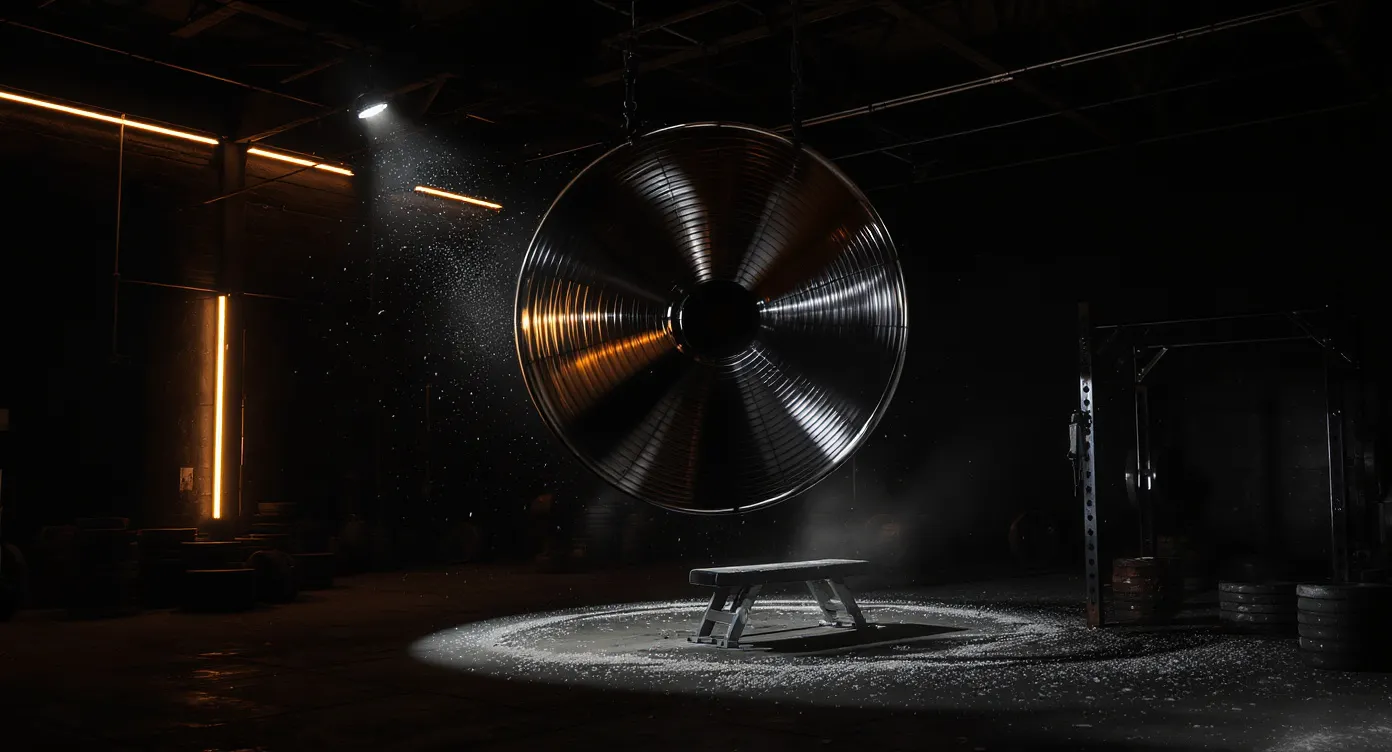
- Add a high-velocity fan — a 20" floor fan or wall-mounted fan moves serious air
- Train early morning or late evening — avoid peak heat hours (12-4 PM)
Upgrade: Portable AC or Evaporative Cooler
If airflow alone isn't enough:
- Evaporative coolers ($100-300) — work great in dry climates, useless in humidity
- Portable AC units ($300-600) — work everywhere, but need a window or vent for exhaust
- Mini-split system ($1,500-3,000 installed) — the nuclear option for year-round climate control
The Winter Problem
Cold steel bars and cold concrete floors make winter training brutal. The good news: heating a garage is easier than cooling one.
Solution: Insulate First
The garage door is the biggest heat leak. A foam board insulation kit ($80-150) for the garage door panels cuts heat loss dramatically.
Heating Options
- Ceramic space heater ($40-80) — heats a small area quickly, safe around equipment
- Propane heater ($100-200) — heats faster, but requires ventilation (crack the door)
- Infrared heater ($100-300) — heats objects directly, not the air. Great for garages.
- Mini-split with heat pump — year-round solution if you've already invested
Ventilation for Air Quality
Even in mild weather, a closed garage has air quality issues:
- Rubber mat off-gassing — new horse stall mats release volatile compounds
- Chalk dust — accumulates over time
- CO2 buildup — heavy breathing in a sealed space
The fix: Keep at least one source of fresh air — a cracked door, an open window, or an exhaust fan.
Budget Priority Order
If you're on a budget, invest in this order:
- High-velocity fan ($40) — immediate impact, year-round use
- Garage door insulation ($100) — biggest winter improvement
- Space heater ($60) — makes winter training possible
- Portable AC ($350) — summer game-changer
Total cost for year-round comfort: ~$550
The Bottom Line
Don't skip climate control. A $40 fan and a $100 insulation kit transform a miserable garage into a gym you'll actually use year-round. It's the best per-dollar investment you can make after your rack and barbell.
Gym Builder Team
Our team tests every product hands-on before recommending it. We buy the equipment with our own money and train with it daily. No sponsored reviews, no pay-to-play rankings. Meet the team →
More in Guides
Bodybuilding Home Gym Setup: Equipment & Training Guide (2026)
How to build the perfect bodybuilding home gym. Equipment priorities, essential machines, and the setup for serious muscle building.
CrossFit Home Gym Setup: Complete Equipment Guide (2026)
How to build a complete CrossFit home gym. Equipment list, budget options, and programming for garage gym CrossFit training.
Garage Gym Summer Cooling: Train Through the Heat (2026)
How to keep your garage gym cool in summer. Fans, AC, ventilation, and timing strategies for hot weather training.