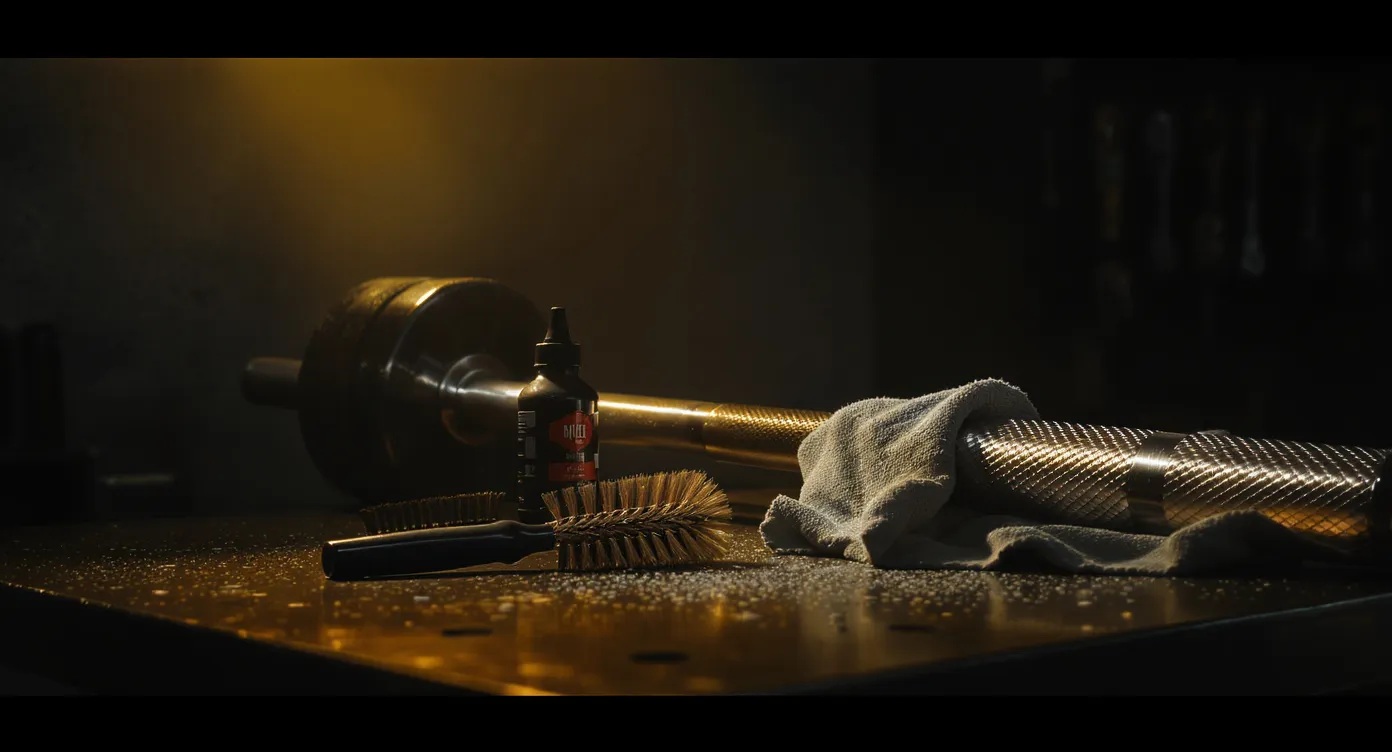
How to Maintain Your Barbell: Cleaning & Care Guide
Keep your barbell in peak condition. How to clean, oil, and prevent rust on your Olympic barbell — plus when to replace it.
GarageGymBuilders is reader-supported. We may earn a commission through links on this page. Learn more.
A quality barbell can last a lifetime with proper maintenance. A neglected barbell can develop rust, lose its spin, and become unsafe in under a year — especially in a garage environment where humidity and temperature swings are common.
The Enemies of Your Barbell
1. Moisture & Sweat
Sweat is corrosive. Every time you grip a barbell, you're depositing salt and moisture into the knurling. In humid garages, this accelerates rust formation dramatically.
2. Chalk Buildup
Chalk absorbs moisture and traps it against the steel. Packed chalk in the knurling holds water against the bar like a sponge.
3. Plate Contact
Metal-on-metal contact with cast iron plates creates micro-scratches in the sleeve finish. This exposes bare steel to oxidation.
Weekly Maintenance (5 Minutes)
This is the routine that prevents 90% of barbell problems:
- Wipe down the shaft with a dry microfiber cloth after every session
- Brush the knurling with a nylon brush once a week to remove chalk buildup
- Oil the sleeves with a drop of 3-in-1 oil and spin them to distribute
What Oil to Use
- 3-in-1 oil — the standard recommendation, works great
- Camellia oil — premium option, used by Japanese toolmakers
- WD-40 — for rust removal only, NOT as a lubricant (it dries out)
Monthly Deep Clean (15 Minutes)
Once a month, do a thorough cleaning:
- Remove all plates and collars
- Scrub the entire shaft with a nylon brush and a light coating of 3-in-1 oil
- Wipe down with a clean cloth
- Apply oil to the sleeves, spin them, and wipe off excess
- Inspect for any developing rust spots
Dealing with Rust
Light Surface Rust
Scrub with a brass brush and 3-in-1 oil. The brass is softer than steel and won't damage the barbell. Wipe clean and apply a protective oil coating.
Heavy Rust
Soak the affected area with WD-40, let it sit for 10 minutes, then scrub with a brass brush. Repeat as needed. Once clean, apply 3-in-1 oil.
When to Replace
Replace your barbell if:
- The shaft has permanent bend
- Rust has deeply pitted the knurling
- Sleeves no longer spin
- You can feel structural weakness during heavy loads
Storage Tips
- Store vertically or horizontally on a rack — never lean against a wall
- Keep in a climate-controlled area if possible
- Don't leave plates loaded when not in use — extended pressure can affect the bar
- Use a gun sock if storing long-term — the silicone treatment prevents rust
Barbell Finish and Maintenance Needs
| Finish | Rust Resistance | Maintenance Level | |--------|----------------|-------------------| | Bare Steel | Low | High (weekly oiling) | | Black Oxide | Low-Medium | Medium | | Zinc | Medium | Low | | Cerakote | High | Very Low | | Stainless Steel | Very High | Almost None | | Chrome | High | Low |
The Bottom Line
Five minutes of weekly maintenance extends your barbell's life by decades. Wipe it down, brush the chalk out, oil the sleeves. It's the cheapest insurance policy in your gym.
Gym Builder Team
Our team tests every product hands-on before recommending it. We buy the equipment with our own money and train with it daily. No sponsored reviews, no pay-to-play rankings. Meet the team →
More in Guides
Bodybuilding Home Gym Setup: Equipment & Training Guide (2026)
How to build the perfect bodybuilding home gym. Equipment priorities, essential machines, and the setup for serious muscle building.
CrossFit Home Gym Setup: Complete Equipment Guide (2026)
How to build a complete CrossFit home gym. Equipment list, budget options, and programming for garage gym CrossFit training.
Garage Gym Summer Cooling: Train Through the Heat (2026)
How to keep your garage gym cool in summer. Fans, AC, ventilation, and timing strategies for hot weather training.