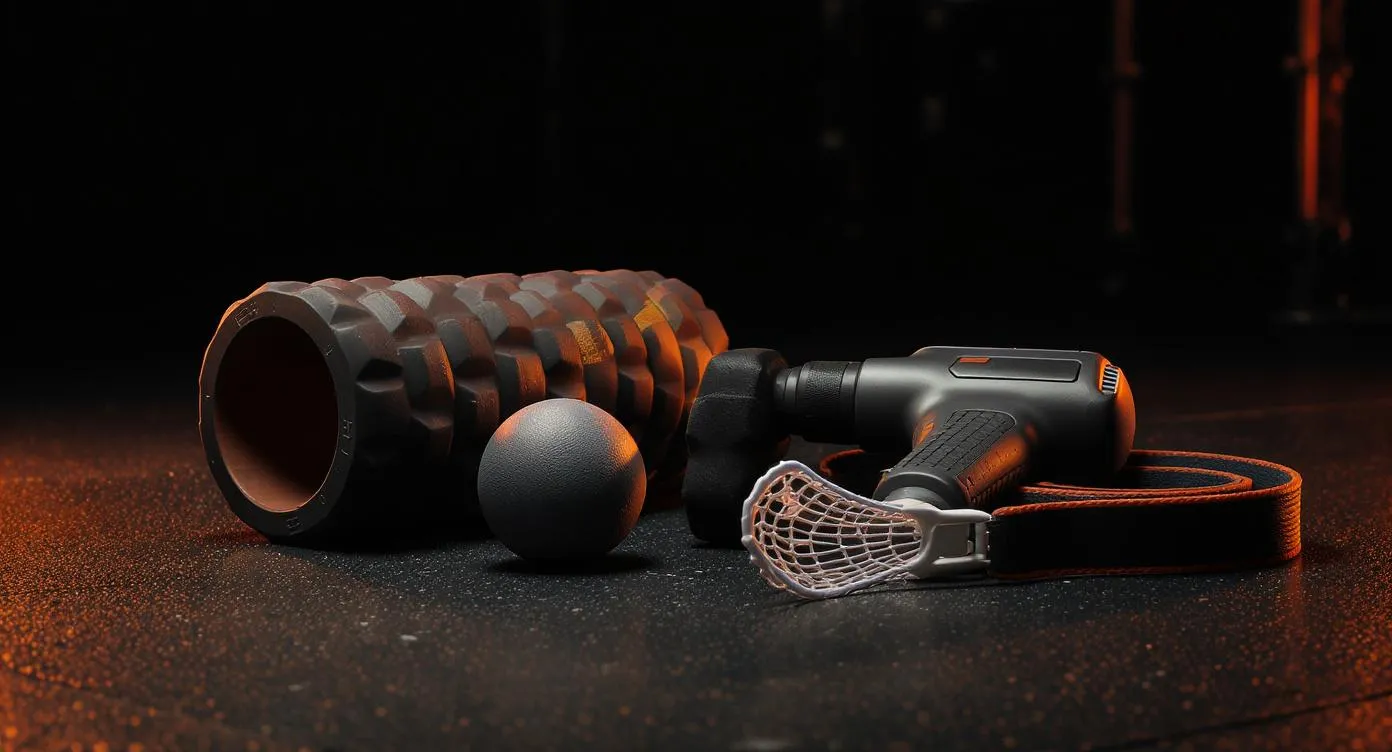
The Best Recovery Tools for Home Gyms (2026)
Foam rollers, massage guns, lacrosse balls, and stretching equipment. The recovery tools that actually work for home gym athletes.
GarageGymBuilders is reader-supported. We may earn a commission through links on this page. Learn more.
Recovery isn't optional — it's what lets you train hard tomorrow. The right recovery tools reduce soreness, improve mobility, and keep you training consistently without injury.
We tested the most popular recovery tools to separate what works from what's marketing hype.
Tier 1: The Essentials ($30-60 total)
Foam Roller ($15-25)
The single most effective recovery tool. A basic 18" or 36" high-density foam roller handles quads, IT band, thoracic spine, lats, and calves.
What to buy: A high-density round foam roller. Avoid soft rollers (they compress too quickly) and textured rollers (unnecessary for most people).
Lacrosse Ball ($5-8)
For targeted trigger point work that a foam roller can't reach — glutes, pec minor, rotator cuff, feet, and upper traps.
Pro tip: Pin the ball between your body and the wall instead of the floor for easier pressure control.
Resistance Band for Stretching ($10-15)
A light resistance band doubles as a stretching strap. Use it for hamstring stretches, shoulder dislocates, and hip flexor stretches.
Tier 2: Worth the Upgrade ($100-300)
Massage Gun ($100-250)
Percussion therapy guns deliver rapid pulses to muscle tissue. They're effective for pre-workout activation and post-workout soreness.
What actually matters: Stall force (how hard you can press before it stops), battery life, and noise level. Brand name matters less than you think — a $150 gun performs similarly to a $400 Theragun for most users.
Yoga Mat ($20-40)
For stretching, core work, and mobility routines. A thick (6mm+) mat provides cushioning on concrete garage floors.
Tier 3: Nice to Have ($50-200)
Percussion/Vibration Roller ($80-150)
A foam roller with built-in vibration. Studies show minor additional benefit over a standard foam roller, but some lifters swear by it.
Compression Boots ($200-600)
Pneumatic compression devices for legs. Popular with endurance athletes and CrossFitters. The science is mixed, but they feel good after heavy leg days.
Our take: Skip these until you've maxed out the basics. Sleep, nutrition, and a foam roller handle 95% of recovery.
The Recovery Protocol That Actually Works
Do this after every training session (5-10 minutes):
The Bottom Line
A $15 foam roller and a $5 lacrosse ball are the highest-ROI recovery tools you can buy. Master those before spending $300 on a massage gun or $500 on compression boots. Recovery is built on sleep, nutrition, and consistency — tools are just accessories.
Gym Builder Team
Our team tests every product hands-on before recommending it. We buy the equipment with our own money and train with it daily. No sponsored reviews, no pay-to-play rankings. Meet the team →
More in Best Gear
CAP Hex Dumbbells vs Bowflex 552: Fixed or Adjustable?
Fixed cast iron dumbbells vs adjustable. CAP Barbell Hex vs Bowflex SelectTech 552 — which is the smarter buy for your home gym?
Iron Bull vs Spud Inc Dip Belt: Which Is Worth the Price?
Iron Bull Strength Dip Belt vs Spud Inc Deluxe — budget vs premium dip belt comparison for weighted pull-ups, dips, and belt squats.
Doorway vs Wall-Mounted Pull-Up Bar: Which Should You Buy?
Doorway pull-up bar or wall-mounted? We compare the Iron Gym doorway bar vs wall-mounted options for home gyms, apartments, and serious lifters.